
lovethailand home >Northeastern Travel Attractions >Sakon Nakhon Travel Attractions >Warit Chaphum >Warit Phum > Phu Thai Remembrance Festival
TL;DR: Phu Thai Remembrance Festival, Sakon Nakhon attractions : Art, Culture and Heritage, Art, Craft Centres, Tradition.
Phu Thai Remembrance Festival
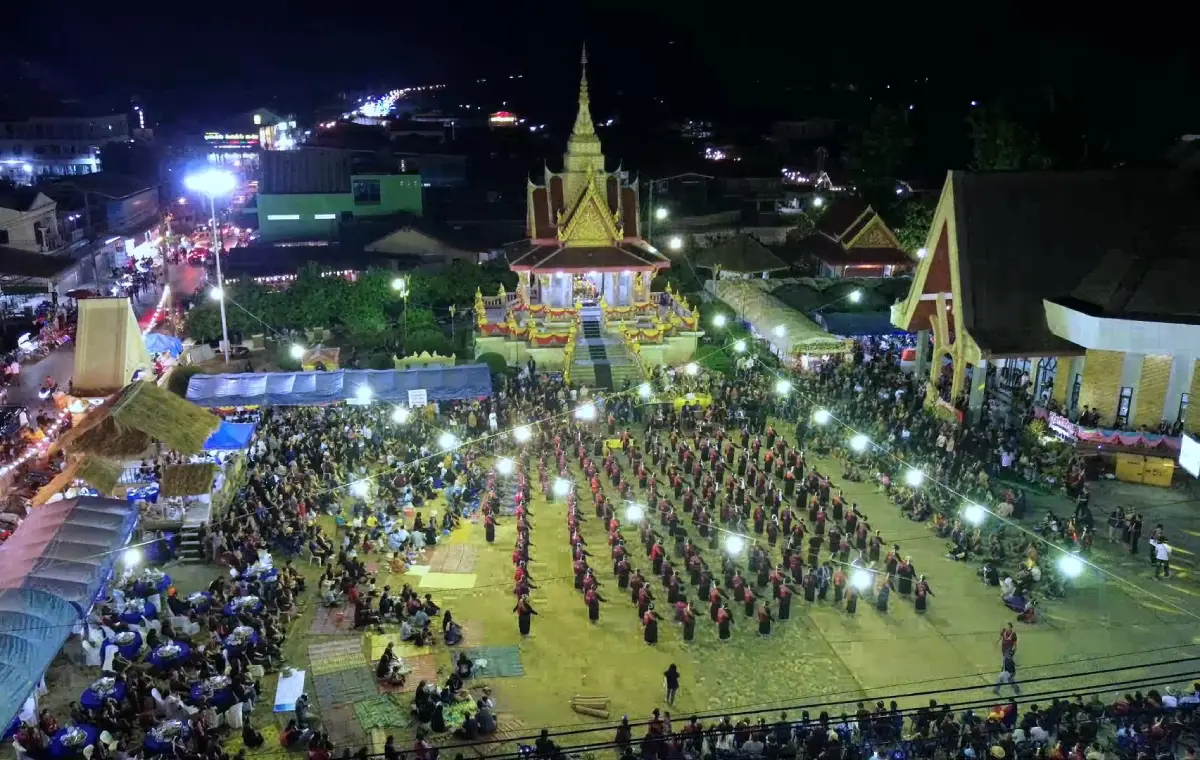
Open Days: Held Annually Around 4 - 6 April, With The Main Ceremony On 6 April According To The Annual Schedule Of Waritchaphum District And The Phu Thai Waritchaphum Community
Opening Hours: According To The Annual Event Program, With Activities Held In The Morning, Afternoon, Evening, And Night
The Phu Thai Remembrance Festival In Waritchaphum District, Sakon Nakhon Province is one of the most meaningful annual traditions of the Phu Thai community in Northeastern Thailand. The festival is held at the Chao Pu Mahesak Shrine in Waritchaphum District, Sakon Nakhon Province, to honor Chao Pu Mahesak, the sacred guardian spirit whom the Phu Thai people regard as a powerful ancestral protector and the spiritual guardian of their community. The festival brings together worship, remembrance, Phu Thai tribute dance, traditional clothing, bai si blessing, wrist-tying, elder blessings, folk music, cultural exhibitions, and the annual homecoming of Phu Thai descendants. For foreign travelers, this event offers a rare opportunity to see a living ethnic tradition that still carries strong meaning for the people who preserve it.
The importance of the Phu Thai Remembrance Festival lies in its role as a bridge between ancestral belief and modern community life. Chao Pu Mahesak is not viewed as a distant figure of the past. He is a sacred presence that continues to protect the descendants of the Phu Thai Waritchaphum community. People come to the shrine to pay respect, ask for blessings, remember their roots, and reaffirm their connection to their hometown. The act of worship is therefore also an act of cultural memory. It reminds people where they come from, who their ancestors were, and why their shared identity continues to matter.
Local narratives connect Chao Pu Mahesak with the migration and settlement history of the Phu Thai people in Waritchaphum. The community remembers a period when Phu Thai groups moved from the left bank of the Mekong River into the Upper Northeast. Their journey involved forests, mountains, rivers, illness, uncertainty, and the search for a new place to live. During such difficult movement, the belief in a guardian spirit helped give people courage and unity. When the community settled, the shrine of Chao Pu Mahesak became a sign of belonging, protection, and spiritual settlement. It marked not only a sacred place but also the emotional center of a new homeland.
The phrase “Phu Thai Remembrance” refers to the act of remembering Phu Thai roots in a broad and complete sense. It includes history, migration, language, dress, music, dance, belief, kinship, and community pride. During the festival, these elements become visible. Participants wear Phu Thai or contemporary Phu Thai clothing, perform tribute dances for Chao Pu Mahesak, join bai si and wrist-tying ceremonies, receive blessings from elders, and take part in cultural performances. The festival therefore allows Phu Thai identity to be seen, heard, worn, danced, and experienced in a living public space.
The festival is also closely related to the older Phi Mahesak spirit-feeding tradition. In the past, the ritual was commonly performed after the rice harvest, when farmers had finished the agricultural season, had rice and resources available, and could travel before the rainy season began. In some periods, the larger ceremony followed the saying “two years pause, three years return,” meaning that a major spirit-feeding event might be held every 3 years. Over time, as the ceremony developed into a district-level cultural festival, it became associated with the annual Phu Thai Remembrance Festival held around 4 - 6 April, with 6 April becoming the main day of remembrance and tribute.
The traditional spirit-feeding ceremony included ritual offerings, savory food, bai si trays, khan 5, khan 8, flowers, incense, candles, and the role of the ritual elder known locally as thao cham. Older beliefs described cattle or buffalo that had reached the end of life coming to die at the shrine. The descendants of Chao Pu would prepare ritual food such as red larb, white larb, and meat offerings, first presenting them to Chao Pu before eating together at the ritual site. The food was not taken home. This rule reflected the special status of ritual food and the sacred boundary of the ceremony.
Today, the ritual has changed in form while retaining its core meaning. Offerings are prepared in a way that suits present-day community life, but the ceremony still expresses respect for Chao Pu Mahesak. Ritual elders and local organizers prepare ceremonial food, bai si arrangements, flowers, incense, candles, khan 5, khan 8, and other items according to local custom. The role of the ritual elder remains important because the ceremony requires knowledge of ritual order, sacred words, offerings, and inherited practice. This makes the event more than a performance. It remains a ceremony rooted in belief and community trust.
Morning activities often begin with worship and preparation at the shrine. Families arrive with elders, children, and relatives who have returned from other provinces. Some bring flowers, incense, candles, or offerings. Many wear Phu Thai clothing or Phu Thai-inspired dress. The shrine courtyard becomes a gathering space filled with woven textiles, local patterns, traditional colors, and a sense of respectful excitement. The atmosphere is calm, emotional, and deeply connected to the idea of returning home.
The Phu Thai dance tribute to Chao Pu Mahesak is the central highlight of the festival. Dancers dress in Phu Thai or contemporary Phu Thai clothing and perform graceful movements with devotion and discipline. This is not simply entertainment. It is a ritual expression through the body. The dance shows respect for Chao Pu, gratitude to ancestors, pride in ethnic identity, and unity among the community. Young people who participate learn not only dance movements but also cultural meaning, costume, timing, respect, and the emotional value of honoring a sacred guardian.
Phu Thai clothing gives the festival its strong visual identity. The dress reflects textile knowledge, color selection, weaving patterns, local aesthetics, and ethnic pride. Women often wear traditional or adapted Phu Thai outfits, while men wear local formal clothing or woven textiles. The clothing is not worn only for beauty. It helps participants embody their cultural inheritance. By wearing Phu Thai dress in the sacred space of the shrine, participants bring ancestral memory into the present and make their identity visible to the community and visitors.
During the day, the festival includes cultural performances, folk music, mor lam, local music contests, solo phin performances, exhibitions on Phu Thai history, and community activities. These programs help visitors see Phu Thai culture from several angles. The festival is not limited to worship at the shrine. It also presents language, music, dress, historical stories, local arts, and community knowledge. When children and young people join performances or contests, they are not only appearing on stage. They are learning culture through action.
The evening atmosphere is especially meaningful because the festival becomes a homecoming gathering for the Phu Thai people of Waritchaphum. Descendants who have moved to other provinces or work far from home return to honor Chao Pu, meet relatives, receive blessings, and join the community. The shrine courtyard fills with people in Phu Thai clothing, music, blessings, conversations, and reunion. This is why the festival is much more than a formal ceremony. It is a cultural family gathering that renews relationships among people who share the same roots.
The bai si and wrist-tying rituals add another layer of meaning. Bai si is associated with blessing, the calling of khwan, and the restoration of inner strength. The tying of sacred thread around the wrist transfers goodwill from elders to younger generations. Within the Phu Thai Remembrance Festival, these acts help connect the public ceremony with personal emotion. Participants receive not only a thread on the wrist, but also blessing, affection, and recognition from the community.
The festival plays an important role in building community unity. It requires cooperation from Waritchaphum District, Waritchaphum Subdistrict Municipality, Sakon Nakhon Provincial Administrative Organization, cultural offices, local schools, security authorities, community leaders, ritual elders, dancers, youth groups, and local residents. Each group contributes to the ceremony, performances, venue preparation, public safety, traffic management, and visitor welcome. The event therefore becomes a clear example of how a community can work together to preserve culture.
As cultural preservation, the festival serves as a living classroom. Children and youth learn by seeing, wearing, dancing, listening, helping, and participating. They see how elders treat Chao Pu with respect. They learn the importance of Phu Thai clothing and dance. They hear local music and historical narratives. They see that their culture is valued by their parents, grandparents, teachers, and community leaders. This direct experience is one of the strongest ways to pass culture from one generation to the next.
The Chao Pu Mahesak Shrine is the sacred center of the festival. People can pay respect at the shrine throughout the year, but the Phu Thai Remembrance Festival is the time when the site becomes most alive with ceremony, dance, reunion, and cultural expression. For visitors, the shrine is the best starting point for understanding Waritchaphum. It reveals that this district is not only an administrative area of Sakon Nakhon, but also a cultural landscape shaped by Phu Thai memory, spirit belief, and strong ethnic pride.
The festival shows how traditional belief can continue within modern society. Although the event now includes stages, exhibitions, contests, public programs, and official support, its core remains the worship of Chao Pu, respect for ancestors, the honoring of the town’s guardian, and the unity of the Phu Thai community. This adaptation has helped the tradition survive. It allows the sacred meaning to remain strong while also creating space for younger people and visitors to participate.
For travelers, the Phu Thai Remembrance Festival is a valuable cultural experience. It is not an event created only for tourism. It has real owners, real belief, and real meaning for the people who join it. Visitors can see the tribute dance, traditional dress, bai si ritual, wrist-tying, local music, cultural exhibitions, and the emotional return of Phu Thai families. These elements make the festival a powerful introduction to Sakon Nakhon’s ethnic culture beyond ordinary sightseeing.
Visitors should attend with respect. The shrine is a sacred space. Clothing should be modest. Visitors should not touch offerings without permission, stand in the way of rituals or dancers, interrupt the ceremony, or take close-up photographs of elders, ritual leaders, or important ritual moments without asking. Respectful behavior allows outsiders to learn while preserving the dignity of the host community.
Getting There to the Phu Thai Remembrance Festival is most convenient by private car, rental car, or local transport. From Sakon Nakhon city, travel toward Waritchaphum District. The distance is about 70 - 75 km, and the drive usually takes about 1 hour 15 minutes to 1 hour 30 minutes. Travelers coming from Phang Khon or Sawang Daen Din can also connect to Waritchaphum by local roads. During 4 - 6 April, visitors should allow extra travel time because many Phu Thai descendants and cultural travelers enter the district for the festival.
Visitors who want to experience the festival fully should allow at least 1 full day or stay overnight in Waritchaphum. Daytime is suitable for worship, exhibitions, and cultural performances. Evening and night are ideal for the homecoming atmosphere, Phu Thai dancing, and community gatherings. Arriving before the main ceremony gives visitors time to pay respect, observe the shrine area, appreciate the clothing, and understand the rhythm of the event.
The surrounding travel route can be combined easily with the festival. Phra That Si Mongkhon, a major sacred stupa of Waritchaphum, is located near the shrine. Visitors can also continue to Wat Tham Phra Phuttha Saiyat, also known as Tham Phra Thong, which contains important Buddhist images and local sacred elements. For natural scenery, Hat Suan Hin Waritchaphum and the Nam Un Dam area offer riverside and reservoir landscapes. This route allows travelers to experience spirit belief, Buddhism, Phu Thai culture, and the natural landscape of western Sakon Nakhon in one trip.
Food options in Waritchaphum include local restaurants, barbecue restaurants, shabu restaurants, cafés, coffee shops, and festival stalls. Visitors can eat in the town area or at the event zone, depending on the schedule. Those who want a full meal should plan around the main ceremony because the area can become crowded during peak periods. Local accommodation includes small hotels and resorts, which are useful for visitors who want to stay near the festival and continue exploring the district the next day.
The Phu Thai Remembrance Festival is one of the clearest expressions of Phu Thai Waritchaphum identity. It brings together ritual, belief, clothing, music, dance, gratitude, and the return of descendants in a single annual event. Its beauty is not measured only by the number of participants or the scale of the stage, but by the meaning people give to Chao Pu Mahesak, the emotion of returning home, the grace of the dance, and the pride of a community that continues to protect its cultural roots.
This festival should be understood as living heritage. Worshiping Chao Pu Mahesak keeps ancestral memory alive. Wearing Phu Thai clothing makes ethnic identity visible. Dancing as an offering transforms faith into movement. Gathering as a community restores kinship and belonging. For travelers who want to understand Sakon Nakhon beyond temples and scenery, the Phu Thai Remembrance Festival opens a deeper view of Waritchaphum and the living heart of Phu Thai culture.
The Phu Thai Remembrance Festival in Waritchaphum is therefore a tradition worth experiencing with attention and respect. It shows how gratitude to ancestors can bring people home each year, and how pride in cultural roots can continue across generations. For anyone seeking to understand the ethnic richness of Sakon Nakhon, this festival is one of the most meaningful cultural experiences in the province.
| Tradition Name | Phu Thai Remembrance Festival / Chao Pu Mahesak Tribute Ceremony Of Phu Thai Waritchaphum |
| Main Event Area | Chao Pu Mahesak Shrine, Waritchaphum District, Sakon Nakhon Province |
| Address | Waritchaphum Subdistrict, Waritchaphum District, Sakon Nakhon 47150, Thailand |
| Highlights | Chao Pu Mahesak worship ceremony, Phu Thai tribute dance, Phu Thai traditional dress, bai si dance, wrist-tying, elder blessings, folk music, Phu Thai cultural exhibitions, and the homecoming of Phu Thai descendants |
| History / Importance | An annual tradition of the Phu Thai Waritchaphum community held to honor Chao Pu Mahesak, the sacred guardian spirit of the community, and to preserve ancestral gratitude, ethnic unity, and Phu Thai cultural identity |
| Name Origin | “Phu Thai Remembrance” refers to remembering Phu Thai roots, ancestors, ways of life, and identity, while “Chao Pu Mahesak” is the sacred guardian spirit respected by the Phu Thai people of Waritchaphum |
| Distinctive Features | A festival combining ancestral belief, guardian-spirit worship, Phu Thai tribute dance, Phu Thai clothing, folk performance, bai si blessing, wrist-tying, and community homecoming |
| Travel Information | From Sakon Nakhon city, travel by private car, rental car, or local transport to Waritchaphum District, about 70 - 75 km away. The journey usually takes about 1 hour 15 minutes to 1 hour 30 minutes |
| Current Status | Still organized annually by Waritchaphum District, local administrative organizations, ritual elders, community leaders, and the Phu Thai Waritchaphum community |
| Festival Period | Around 4 - 6 April Every Year, With The Main Ceremony On 6 April |
| Opening Hours | According To The Annual Event Program, With Activities In The Morning, Afternoon, Evening, And Night |
| Fees | No Standard Admission Fee For The Public Festival |
| Facilities | Shrine Ceremony Area, Cultural Performance Stage, Community Stalls, Temporary Parking, Restrooms, Information Points, Security Staff, And Traffic Assistance |
| Main Areas / Zones | Chao Pu Mahesak Shrine Worship And Offering Area Phu Thai Tribute Dance Area Cultural Performance Stage Bai Si And Wrist-Tying Area Phu Thai Cultural Exhibition Zone Food And Community Product Zone |
| Caretaker / Organizers | Waritchaphum District, Waritchaphum Subdistrict Municipality, Sakon Nakhon Provincial Administrative Organization, Waritchaphum Cultural Council, Local Administrative Organizations, Ritual Elders, Community Leaders, And The Phu Thai Waritchaphum Community |
| Local Contact Numbers | Waritchaphum Subdistrict Administrative Organization Tel. 042-973-769 Waritchaphum Police Station Tel. 096-539-4565 Sakon Nakhon Provincial Cultural Office Tel. 086-859-4892 |
| Visitor Guidelines | Dress Respectfully, Respect The Sacred Shrine Area, Do Not Touch Offerings Without Permission, Do Not Obstruct Rituals Or Dance Areas, Ask Before Taking Close-Up Photos, And Check The Annual Schedule Before Traveling |
| Nearby Tourist Attractions | 1. Chao Pu Mahesak Shrine, About 0 km 2. Phra That Si Mongkhon, About 3 km 3. Wat Tham Phra Phuttha Saiyat, About 16 km 4. Hat Suan Hin Waritchaphum / Nam Un Dam Area, About 18 km 5. Phang Khon District, About 26 km 6. Phra That Narai Cheng Weng, About 62 km 7. Wat Phra That Choeng Chum Worawihan, About 75 km |
| Nearby Restaurants | 1. Heng 9 Korean BBQ, About 1 km, Tel. 086-239-6590, 081-060-1578 2. ICHI SHABU @ Waritchaphum, About 1 km, Tel. 093-354-3545 3. PunThai Coffee Waritchaphum 1, About 1 km 4. ROCK IN CAFE x Waritchaphum, About 1 km 5. Café Amazon - DD3333 Akkarach Ex Nee Service Station, About 2 km 6. Nam Un Dam Club Restaurant, About 18 km |
| Nearby Accommodations | 1. Thale Thong Resort Hotel, About 1 km, Tel. 081-739-7506, 084-955-1376 2. Tawan Resort, About 2 km, Tel. 086-226-5518 3. Chai Thung Grand Resort, About 2 km, Tel. 042-781-224, 087-218-5448, 089-843-4582 4. Sai Thong Resort, About 3 km, Tel. 089-575-1756 5. Rachawadee Resort, About 3 km, Tel. 087-856-3230 6. Aphawat Place Resort, About 3 km, Tel. 081-853-9177 |
Frequently Asked Questions (FAQ)
Q: What is the Phu Thai Remembrance Festival?
A: It is an annual tradition of the Phu Thai Waritchaphum community in Sakon Nakhon, held to honor Chao Pu Mahesak, the sacred guardian spirit and spiritual center of the community.
Q: When is the Phu Thai Remembrance Festival held?
A: It is held around 4 - 6 April every year, with the main ceremony on 6 April at the Chao Pu Mahesak Shrine in Waritchaphum District.
Q: Where does the festival take place?
A: The main event takes place at the Chao Pu Mahesak Shrine in Waritchaphum District, Sakon Nakhon Province.
Q: What can visitors see at the festival?
A: Visitors can see the Chao Pu Mahesak worship ceremony, Phu Thai tribute dance, traditional Phu Thai dress, bai si blessing, wrist-tying, elder blessings, folk music, cultural exhibitions, and the homecoming of Phu Thai descendants.
Q: Is there an admission fee?
A: No. The public festival has no standard admission fee, but visitors should respect the shrine area and follow community guidelines.
Q: How should visitors dress?
A: Visitors should dress modestly and respectfully. Traditional Phu Thai clothing or polite local-style clothing is suitable for the festival atmosphere.
Q: How far is Waritchaphum from Sakon Nakhon city?
A: Waritchaphum is about 70 - 75 km from Sakon Nakhon city, and the drive usually takes about 1 hour 15 minutes to 1 hour 30 minutes.
Q: What places can visitors see nearby after the festival?
A: Nearby places include Phra That Si Mongkhon, Wat Tham Phra Phuttha Saiyat, Hat Suan Hin Waritchaphum, Nam Un Dam area, Phra That Narai Cheng Weng, and Wat Phra That Choeng Chum Worawihan.
 Category: ●Art, Culture and Heritage
 Group: ●Art, Craft Centres, Tradition
Last Update : 2 MonthAgo
 Last Update : 2 MonthAgo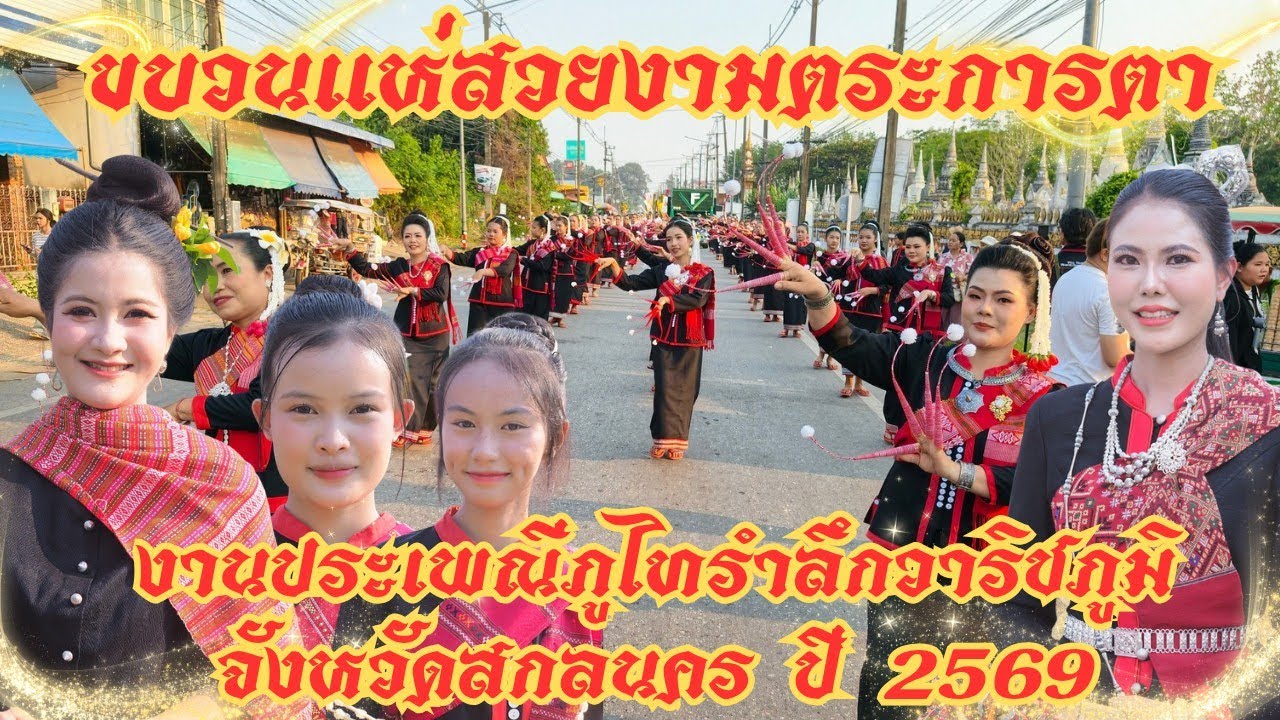

 Historical Sites and Monuments(9)
 Landmarks and Memorials(2)
 Royal Palace(1)
Art, Craft Centres, Tradition(8)
Royal Palace(1)
Art, Craft Centres, Tradition(8)
 Museums(3)
 Educational Places
 Educational Gardens, Farm(2)
 Places of Worship
 Temple(18)
 Church(2)
 Other Sacred Sites(4)
 Research and Development
 Royal Project(3)
 Suburban Living
 Village, Community(7)
 Nature and Wildlife
 National Parks and Marine Reserves(4)
 Mountain (Doi)(3)
 Dam, Reservoir, Lake(14)
 Waterfalls(4)
 Caves(4)
 River, Canal(9)
 Bays and Beaches(1)
 Islands(1)
 Other natural attractions(5)
 Entertainment and Agricultural
 Zoos and Aquariums(1)
 Farms, Parks and Ecotourism(4)
 Outdoor and Adventure Activities(1)


