
lovethailand home >North Travel Attractions >Mae Hong Son Travel Attractions >Muang Mae Hong Son >Huai Pu Ling > Huai Tong Kor
TL;DR: Huai Tong Kor is located at Ban Huai Tong Kor, Moo 7, Huai Pu Ling Subdistrict, Mueang Mae Hong Son District, Mae Hong Son, open Advance arrangement with the community is recommended, hours Daytime visits are the most suitable.
Huai Tong Kor
Open Days: Advance arrangement with the community is recommended
Opening Hours: Daytime visits are the most suitable
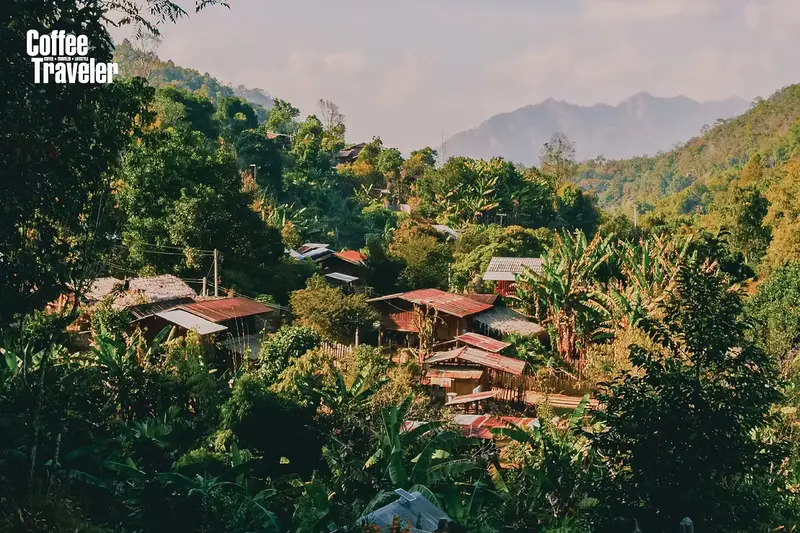
Huai Tong Kor is a long-established Pga K’nyau community in Huai Pu Ling Subdistrict, Mueang Mae Hong Son District, Mae Hong Son Province. For travelers looking beyond standard sightseeing spots, this village offers a rare chance to experience a highland community where traditional life, rotational farming, terraced rice fields, forest knowledge, weaving, and local craftsmanship still form part of everyday life. Rather than being defined by modern tourism infrastructure, Huai Tong Kor stands out through its authenticity, its quiet setting among mountains and forest, and the way the community has protected its cultural identity over generations.
The village is located at House No. 95, Moo 7, Huai Pu Ling Subdistrict, Mueang Mae Hong Son, Mae Hong Son 58000. It sits in a mountainous landscape surrounded by forest, which helps explain both its beauty and its relative remoteness. The community’s coordinates are approximately 19.1391794, 98.1229329. Reaching the village from Mae Hong Son town takes planning and patience, but that effort is also part of the appeal. Huai Tong Kor remains peaceful and unhurried because it is still shaped by the rhythms of mountain life rather than by mass tourism.
The history of the village is one of its strongest cultural assets. The name “Tong Kor” comes from a local tree whose leaves resemble those of the palmyra palm. These leaves can be used for roofing in a way similar to thatch, which shows how closely the village name is tied to practical local knowledge. In other words, the name is not just geographical. It reflects the relationship between the people and the natural materials that support everyday life. That connection between landscape and livelihood remains one of the clearest ways to understand the spirit of Huai Tong Kor.
According to local historical accounts, the village was founded in 1789, giving it a history of more than 200 years. The community is Karen, or Pga K’nyau, and its social life continues to place great importance on cultural values, customary practice, and collective memory. This is one reason Huai Tong Kor feels different from more commercialized destinations. It is not a village rebuilt for visitors. It is a living community with its own continuity, its own internal structure, and its own way of balancing change while staying rooted in tradition.
Life here is known for its simplicity and self-reliance. The community’s main occupations include rotational farming, terraced rice cultivation, and livestock raising. For visitors, these are not just economic activities but visible expressions of a worldview in which people live with the land rather than against it. The terraced fields speak to labor, adaptation, and inherited knowledge. Rotational farming reflects ecological timing and land stewardship. Livestock contributes to food security and household resilience. Together, these practices show how the village has sustained itself in a demanding mountain environment.
The population information provided for the community states that Huai Tong Kor has 294 residents in 48 households. Of these, 40 households follow Buddhism and 8 households follow Christianity. This religious diversity exists within a shared community framework rather than as a dividing line. It also reflects the broader social history of highland communities in northern Thailand, where belief systems, missionary contact, state development, and local tradition have intersected in complex ways over time.
Another important feature of Huai Tong Kor is its dual system of governance. One layer is traditional community governance. In Pga K’nyau terms, ritual and customary responsibilities are connected to a role known locally as “Hu Khor,” which is concerned with ceremonies and the traditional moral order of the village. The second layer is the formal administrative structure under Thai law. Current local government information identifies the village headman of Moo 7, Ban Huai Tong Kor, as Mr. Jo Lae Kha Ledo. This coexistence of customary leadership and formal administration helps the village maintain cultural continuity while also engaging with public administration and community development.
Huai Tong Kor is especially valuable for cultural travelers because it offers more than scenery. Sources on the community consistently point to local knowledge in weaving, natural dyeing, knife making, and forest conservation. These are not isolated demonstrations designed only for tourists. They are tied to lived knowledge and community memory. Travelers who spend time here gain insight into how cultural survival depends on practice, not display. That makes Huai Tong Kor one of the most meaningful community-based travel destinations in Mae Hong Son for visitors who want a deeper and more respectful experience.
The atmosphere of the village is one of quiet immersion. Morning mist, mountain air, forest edges, simple homes, working paths, and cultivated slopes all shape the visitor experience. Nothing feels overstaged. Huai Tong Kor’s appeal lies precisely in that absence of artificial performance. The village invites people to slow down, observe, listen, and learn. For many travelers, that shift in pace becomes one of the most memorable parts of the trip.
Community-based tourism has also become part of the village’s contemporary identity. Recent tourism information shows that Huai Tong Kor still operates community-based activities and homestay-style arrangements by prior coordination. One accessible source lists the distance from Mae Hong Son town to Ban Huai Tong Kor at around 57 kilometers and provides a community contact number: 095-441-6296. This confirms that the village remains active as a community destination, but in a form that is careful, small-scale, and more suitable for planned visits than casual walk-ins.
Getting There is best done by private vehicle or with local coordination, especially for travelers unfamiliar with mountain roads. The route from Mae Hong Son town involves upland terrain and winding stretches, so leaving early and allowing extra time is advisable. During the rainy season, road conditions should always be checked in advance. Travelers interested in joining local activities or staying overnight should contact the community ahead of time rather than arriving without notice.
Huai Tong Kor also works well as part of a broader Mae Hong Son itinerary. Nearby or same-day onward destinations include Wat Chong Kham–Wat Chong Klang, Wat Phra That Doi Kong Mu, Su Tong Pae Bamboo Bridge, Pha Bong Hot Springs, and nearby Karen communities such as Ban Huai Hi. A practical way to plan the trip is to stay in Mae Hong Son town, visit the community during the day or by arranged program, and combine the village experience with restaurants and accommodations in town that have clearer public contact information.
For travelers who care about ethical and meaningful tourism, Huai Tong Kor has a great deal to offer. It shows that a destination does not need luxury facilities to leave a lasting impression. What matters here is the chance to understand a way of life shaped by mountains, forest, farming, ritual, and local craftsmanship. Huai Tong Kor is not simply a place to visit. It is a place to learn from.
| Name | Huai Tong Kor |
| Location | Ban Huai Tong Kor, Moo 7, Huai Pu Ling Subdistrict, Mueang Mae Hong Son District, Mae Hong Son |
| Address | 95 Moo 7, Huai Pu Ling, Mueang Mae Hong Son, Mae Hong Son 58000 |
| Coordinates | 19.1391794, 98.1229329 |
| Overview | A Pga K’nyau highland community over 200 years old, known for simple living, terraced rice fields, weaving, knife making, and forest-based knowledge |
| Highlights | Community-based tourism, Karen cultural heritage, mountain scenery, traditional livelihoods, peaceful village atmosphere |
| History | Founded in 1789, with a history of more than 200 years |
| Name Origin | “Tong Kor” refers to a local tree whose leaves are used for roofing, similar to thatch |
| Distinctive Features | Mountain village surrounded by forest, rotational farming, terraced fields, livestock raising, and strong cultural continuity |
| Travel Information | Accessible from Mae Hong Son town by mountain road; advance community coordination is recommended; distance from town about 57 km |
| Current Status | The community remains active and continues to receive visitors through community-based tourism arrangements |
| Fees | No standard public entrance ticket listed; visits should be arranged with the community in advance |
| Caretaker | Village Headman of Moo 7: Mr. Jo Lae Kha Ledo, together with the Huai Tong Kor community network |
| Main Contact Number | Huai Tong Kor Community: 095-441-6296 |
| Official Website / Official Page | CBT Huay Tong Kor |
| Nearby Tourist Attractions | 1. Ban Huai Hi – about 18 km 2. Wat Chong Kham–Wat Chong Klang – about 57 km 3. Wat Phra That Doi Kong Mu – about 59 km 4. Su Tong Pae Bamboo Bridge – about 63 km 5. Pha Bong Hot Springs – about 65 km |
| Nearby Restaurants | 1. Mae Rong Son Restaurant – about 57 km – Tel. 091-580-0072 2. Khao Soi Pa Noon – about 57 km – Tel. 084-369-6690 3. Pa Hom Noodle Shop – about 57 km – Tel. 062-926-3553 4. Kaimook Restaurant – about 58 km – Tel. 053-612-092 5. 1095Garden – about 61 km – Tel. 091-479-9060 6. TaiTai Brand Restaurant – about 65 km – Tel. 090-316-3176, 053-684-033 |
| Nearby Accommodations | 1. The Imperial Mae Hong Son Resort – about 60 km – Tel. 053-684-444 2. Ngamta Hotel Mae Hong Son – about 57 km – Tel. 053-612-794 3. B2 Mae Hong Son Premier Resort – about 58 km – Tel. 052-040-205 4. Fern Resort Mae Hong Son – about 63 km – Tel. 093-314-8222, 081-881-5281 5. Green Mountain Resort – about 57 km – Tel. 063-123-3998 6. Sarm Mork Guest House – about 57 km – Tel. 082-192-2488, 093-198-7459 7. Panorama Hotel Mae Hong Son – about 57 km – Tel. 053-611-757 8. Palmhouse Mae Hong Son – about 57 km – Tel. 085-969-0989 |
Frequently Asked Questions (FAQ)
Q: Where is Huai Tong Kor located?
A: It is located at 95 Moo 7, Huai Pu Ling Subdistrict, Mueang Mae Hong Son District, Mae Hong Son 58000.
Q: What is Huai Tong Kor known for?
A: The village is known for Pga K’nyau cultural life, terraced rice fields, weaving, knife making, forest knowledge, and community-based tourism.
Q: What does the name “Tong Kor” mean?
A: It refers to a local tree whose leaves can be used for roofing, which is how the village got its name.
Q: Is there an entrance fee?
A: There is no clearly listed public entrance ticket. Visits are best arranged directly with the community.
Q: Is Huai Tong Kor easy to reach?
A: The route is mountainous and takes planning, so private transport or advance local coordination is recommended.
Q: When is the best time to visit?
A: The rainy season through the cool season is especially scenic, with green landscapes, terraced fields, and misty mountain views.
Q: What should visitors prepare before going?
A: Warm clothing, comfortable shoes, rain protection during the wet season, and advance contact with the community are all recommended.
Fax : 0843725516
 Fax : 0843725516
 Category: ●Suburban Living
 Group: ●Village, Community
Last Update : 3 MonthAgo
 Last Update : 3 MonthAgo
 Click to Access the Navigation Map GPS
Huai Tong Kor Map
Recommend

 Art, Culture and Heritage
 Historical Sites and Monuments(1)
 Landmarks and Memorials(1)
 Art, Craft Centres, Tradition(10)
 Museums(3)
 Educational Places
 Educational Gardens, Farm(1)
 Places of Worship
 Temple(81)
 Other Sacred Sites(1)
 Research and Development
 Royal Project(4)
Village, Community(19)
Royal Project(4)
Village, Community(19)
 Local Market(4)
 Nature and Wildlife
 National Parks and Marine Reserves(5)
 Mountain (Doi)(5)
 Dam, Reservoir, Lake(2)
 Waterfalls(12)
 Hot Springs(6)
 Caves(13)
 Flower Field(2)
 River, Canal(3)
 Other natural attractions(1)
 Entertainment and Agricultural
 Farms, Parks and Ecotourism(2)
 Shopping
 Shopping and Night Market(1)
 Travel Articles, Recipes
 Travel Review, Food Review(1)


