
lovethailand home >North Travel Attractions >Mae Hong Son Travel Attractions >Pang Mapha >Pang Mapha > Mae Lana Cave
TL;DR: Mae Lana Cave is located at Ban Mae Lana, Pang Mapha Subdistrict, Pang Mapha District, Mae Hong Son Province, open Daily, hours 08:00 – 18:00.

Mae Lana Cave
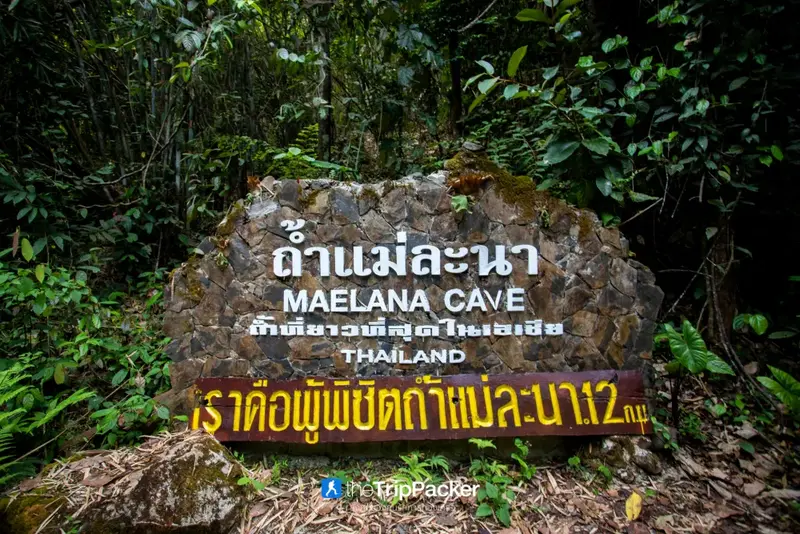
Open Days: Daily
Opening Hours: 08:00 – 18:00
Mae Lana Cave is one of the largest and most demanding cave systems in Pang Mapha District, Mae Hong Son Province. It is widely known among cave explorers, adventure travelers, and serious nature enthusiasts because it is not simply a beautiful cave to stroll through. It is a massive underground route shaped by the Mae Lana stream, extending for roughly 12 kilometers through the mountain. That scale alone makes Mae Lana Cave one of the most important cave destinations in northern Thailand and one of the most serious adventure objectives in the Pang Mapha area.
What makes Mae Lana Cave truly distinctive is not just its length, but the nature of the experience inside. The cave includes underground water, large chambers, rocky passages, dark sections, climbing points, and parts where visitors may need to wade or even swim. A full traverse from one end to the other, without major rest stops, is often described as taking at least 15 hours. That immediately places Mae Lana Cave in a different category from ordinary cave tourism. It is not designed for casual sightseeing. It is a demanding underground expedition that requires strong physical condition, solid preparation, and experienced local guidance.
The cave is located at Ban Mae Lana in Pang Mapha Subdistrict, around 12 kilometers from Pang Mapha town. Ban Mae Lana is the key community base for access, guiding, and coordination. This matters because Mae Lana Cave has no mass-tourism infrastructure inside. There are no built walkways, no installed lighting, and no comfort facilities within the cave itself. Its appeal comes precisely from that raw and unmodified condition. The cave remains a true natural environment, and that is both its greatest attraction and its greatest challenge.
The visiting season is also limited. Mae Lana Cave is generally suitable for exploration only during the cool season through the hot season, essentially the first half of the year. In the rainy half of the year, water levels in the Mae Lana stream rise significantly, making cave travel unsafe or impossible. This is one of the most important practical facts for anyone planning a visit. Mae Lana Cave is not a place to decide on at the last minute. Timing, water conditions, weather, and guide coordination all matter.
In terms of natural beauty, Mae Lana Cave offers a reward that experienced cave travelers often describe as well worth the effort. Inside are huge chambers, striking stalactites and stalagmites, stone curtains, columns, and cave pearls. Some formations are exceptionally large and visually dramatic. At the same time, the cave also contains more delicate details that reveal how slowly and precisely nature shapes limestone over time. This mixture of scale and subtlety is one of the reasons Mae Lana Cave is so respected. It is physically punishing, but visually extraordinary.
One especially fascinating feature mentioned by travelers is the presence of shimmering cave pearls, small mineral formations that seem almost too intricate to be natural. The cave is also home to specialized life adapted to total darkness, including blind fish and small cave-dwelling creatures. These details add another layer of significance. Mae Lana Cave is not only an adventure site, but also an underground ecosystem and a place of real scientific interest.
The temperature inside the cave is cool for most of the journey, which can feel pleasant at first but becomes part of the challenge during a long traverse. After many hours in darkness, water, and humidity, even moderate coolness affects energy and endurance. For this reason, proper clothing, waterproof preparation, safety gear, helmets, lighting, food, and backup planning are all essential. A trip into Mae Lana Cave is not simply a walk underground. It is a full expedition environment where poor preparation can quickly become serious.
The most important point for general readers is that Mae Lana Cave is suitable only for highly prepared adventure travelers when it comes to a full route. While tourism listings may state that the attraction is open daily and free to enter in general terms, real cave traversal should not be interpreted as casual independent access. A full underground journey requires a local guide from Ban Mae Lana and honest self-assessment from every participant. Those without prior experience in long cave routes should not treat Mae Lana Cave as an ordinary challenge to “just try.”
Part of Mae Lana Cave’s appeal lies in the fact that it has not been transformed into a standard tourist product. It still feels raw, serious, and real. Visitors who enter it are exposed to the cave on the cave’s own terms, not through staged convenience. For experienced explorers, this is exactly what makes it meaningful. It preserves the sense of discovery, effort, and respect that is often lost in easier commercial cave visits.
Mae Lana Cave also plays an important role in the identity of Pang Mapha as a district. Pang Mapha is not only a place of viewpoints and highland villages. It is also one of the key limestone and cave regions of Mae Hong Son. Mae Lana Cave represents the most demanding and least softened version of that identity. It shows how deep, complex, and physically serious the underground landscape of this region can be.
For many travelers, the cave becomes memorable precisely because it pushes the body so hard while rewarding the eyes so generously. Moving through darkness, stream passages, and giant chambers for hour after hour gives the route a rhythm that feels closer to expedition travel than sightseeing. The effort changes the way the cave is perceived. The formations are not just “pretty rocks.” They become hard-earned moments of wonder in a place that few people ever truly experience from the inside.
For travel planning, Mae Lana Cave should be treated as a core activity day, not an add-on stop. Some travelers stay near Pang Mapha or Ban Mae Lana in advance so they can begin early, properly equipped, and with local guides arranged beforehand. Others use community-based travel services that help organize transport, guiding, and meals. This level of preparation is not excessive; it is normal for a site of this nature. In a cave this long and demanding, timing, pacing, and logistics matter enormously.
At the same time, Ban Mae Lana itself is not merely a gateway. It is an important community landscape, especially for travelers who want to connect adventure with local culture. Spending time in the village, learning about the area, and approaching the cave with respect for community knowledge makes the journey more meaningful. The guide is not just a practical necessity. Local guidance is part of what makes travel in places like Mae Lana possible and responsible.
Mae Lana Cave also works well in a broader Pang Mapha itinerary if handled properly. A full cave day can be balanced by lighter travel on the following day, such as Tham Lod, Ban Jabo, Doi Kiew Lom, or cafés and accommodations in the Pang Mapha and Soppong area. This combination allows travelers to experience both the hardest underground side of the district and the easier scenic mountain atmosphere above ground.
Another reason the cave leaves such a deep impression is that its beauty is not just grand, but unexpectedly refined. The stone curtains, columns, and cave pearls represent the slow patience of geological time. When visitors reach these formations after hours of effort, their visual impact becomes even stronger. Beauty inside Mae Lana Cave is inseparable from the physical journey required to reach it.
In the end, Mae Lana Cave deserves to be understood clearly and honestly. For general travelers, it may be a place to admire, research, and respect rather than attempt in full. For trained and properly prepared adventure travelers, it may become one of the most unforgettable cave journeys in Thailand. And for anyone interested in the natural power of Mae Hong Son, Mae Lana Cave proves that the province is not only about misty viewpoints and winding mountain roads. It also contains an immense underground world of real scale, challenge, and wonder.
Getting There from Pang Mapha District, follow Highway 1095 on the Pai – Mae Hong Son route until around kilometer marker 152, then turn onto Highway 1126 toward Ban Mae Lana for about 6 kilometers. Continue toward Ban Mae Lana for about 1 kilometer more, then head another 4 kilometers toward the cave access point. Private transport or locally arranged transport is the most practical option, and all serious cave entry should be coordinated with guides in Ban Mae Lana in advance.
| Name | Mae Lana Cave |
| Place Summary | A major cave system in Ban Mae Lana, Pang Mapha, with the Mae Lana stream running through a route of roughly 12 kilometers and a reputation as a very difficult adventure cave. |
| Location | Ban Mae Lana, Pang Mapha Subdistrict, Pang Mapha District, Mae Hong Son Province |
| Highlights | Long underground route, giant chambers, stalactites, stalagmites, stone curtains, columns, cave pearls, and cave-adapted creatures such as blind fish |
| History / Importance | Widely recognized as one of the major cave destinations of Pang Mapha and frequently referenced as one of Thailand’s most significant long cave systems |
| Name Origin | Named after Ban Mae Lana and the Mae Lana stream flowing through the cave |
| Distinctive Features | A highly demanding cave with no internal visitor facilities, requiring local guides and strong prior preparation |
| Travel Information | From Pang Mapha, use Highway 1095 to km 152, turn onto Highway 1126 for about 6 km toward Ban Mae Lana, continue into the village, then travel about 4 km to the cave access point |
| Current Status | General attraction listings show it as open, but real cave entry depends on season, water level, and coordination with local guides |
| Open Days | Daily |
| Opening Hours | 08:00 – 18:00 |
| Fees | General attraction listing shows free admission, but full cave traverse programs require guide and community service fees |
| Facilities | No internal visitor facilities; all serious cave entry requires self-prepared equipment and local guiding support |
| Caretaker | Ban Mae Lana community / CBT Ban Mae Lana |
| Main Contact Number | 0 5361 2982-3, CBT Ban Mae Lana 095-795-9681 |
| Nearby Tourist Attractions | 1. Ban Mae Lana – 1 km 2. Phi Man Long Long Rak Cave – 7 km. Tel. Soppong SAO 080-034-6787 3. Tham Lod Wildlife and Nature Education Center – 16 km. Tel. 0-5361-7218 4. Doi Kiew Lom Viewpoint – 14 km 5. Ban Jabo Community – 24 km |
| Nearby Restaurants | 1. Baan Suan Homestay & Café Mae Lana – 2 km. Tel. 086-433-3142 2. Kiew Lom Café – 14 km. Tel. 094-969-3949 3. Ban Kaew Mora – 16 km. Tel. 081-765-2144 4. Ton Chok – 17 km. Tel. 084-950-1319, 094-636-4040 5. Ban Jabo Hanging Leg Noodles – 24 km. Tel. 096-195-2685 |
| Nearby Accommodations | 1. Baan Suan Homestay Mae Lana – 2 km. Tel. 086-433-3142 2. Baan Rim Lang – 8 km. Tel. 086-916-2647, 085-334-2373 3. Soppong River Inn – 8 km. Tel. 053-617-107, 081-250-8425 4. Little Eden Guesthouse – 8 km. Tel. 089-952-8870 5. Cave Lodge – 16 km. Tel. 053-617-203, 091-890-0764 |
Frequently Asked Questions (FAQ)
Q: How long is Mae Lana Cave?
A: The route followed by the Mae Lana stream is roughly over 12 kilometers long, making it one of the major cave systems in the Pang Mapha area.
Q: Is Mae Lana Cave suitable for ordinary tourists?
A: Not for a full traverse. The cave is considered difficult to very difficult and requires strong preparation and experienced local guides.
Q: What is the best season to enter Mae Lana Cave?
A: The best period is the cool season to the hot season, generally the first half of the year, because water levels are lower.
Q: What can be seen inside Mae Lana Cave?
A: Visitors encounter large chambers, stalactites, stalagmites, stone curtains, columns, cave pearls, and cave-dwelling species such as blind fish.
Q: How long does a full cave traverse take?
A: A continuous full traverse is commonly described as taking at least 15 hours.
Q: Who should I contact before entering Mae Lana Cave?
A: You should coordinate with local guides or CBT Ban Mae Lana in advance and check current water conditions and route readiness.
Q: Is there an entrance fee for Mae Lana Cave?
A: General tourism listings show free admission, but full expedition-style cave trips involve guide and local service costs.
 Category: ●Nature and Wildlife
 Group: ●Caves
Last Update : 6 MonthAgo
 Last Update : 6 MonthAgo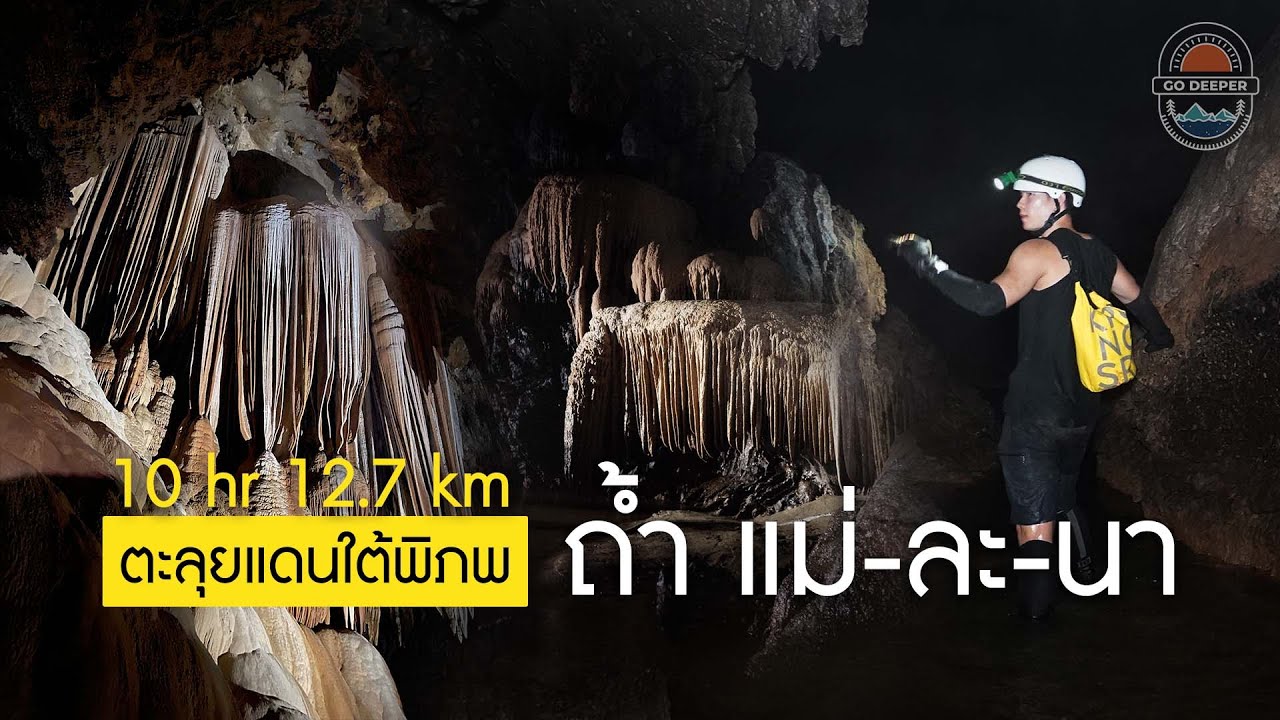
 Click to Access the Navigation Map GPS
Mae Lana Cave Map
Recommend

 Art, Culture and Heritage
 Historical Sites and Monuments(1)
 Landmarks and Memorials(1)
 Art, Craft Centres, Tradition(10)
 Museums(3)
 Educational Places
 Educational Gardens, Farm(1)
 Places of Worship
 Temple(81)
 Other Sacred Sites(3)
 Research and Development
 Royal Project(4)
 Suburban Living
 Village, Community(19)
 Local Market(4)
 National Parks and Marine Reserves(7)
 Mountain (Doi)(5)
 Dam, Reservoir, Lake(2)
 Waterfalls(12)
 Hot Springs(6)
Caves(13)
Hot Springs(6)
Caves(13)
 Flower Field(2)
 River, Canal(3)
 Other natural attractions(1)
 Entertainment and Agricultural
 Farms, Parks and Ecotourism(2)
 Shopping
 Shopping and Night Market(1)
 Travel Articles, Recipes
 Travel Review, Food Review(2)


