
lovethailand home >North Travel Attractions >Mae Hong Son Travel Attractions >Sop Moei >Mae Sam Laep > Ban Mae Sam Laep
TL;DR: Ban Mae Sam Laep is located at Village No. 1, Mae Sam Laep Subdistrict, Sop Moei District, Mae Hong Son 58110, open Open Daily, hours Visit Throughout the Day.
Ban Mae Sam Laep
Open Days: Open Daily
Opening Hours: Visit Throughout the Day
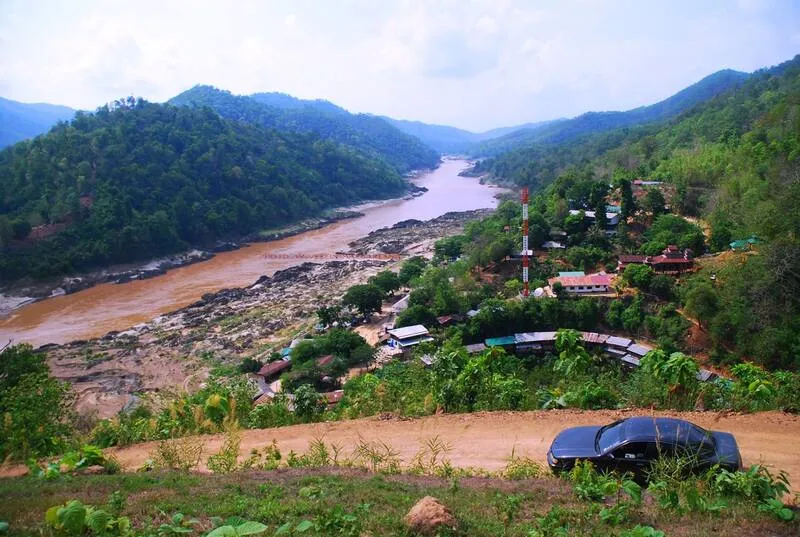
Ban Mae Sam Laep is one of the most distinctive travel destinations in Mae Hong Son because it is not simply a scenic village. It is a riverside border community on the Salawin River, where local life, mountain geography, cross-border history, and river tourism all come together in one place. The village is located in Mae Sam Laep Subdistrict, Sop Moei District, around 62 kilometers from the district center along Highway 1194. By the time visitors arrive, the setting already feels different from many other attractions in northern Thailand.
The strongest identity of Ban Mae Sam Laep is its role as a gateway to boat trips on the Salawin River. The river flows between steep mountain slopes, and the opposite bank in many sections lies in Myanmar. This gives the boat journey a dramatic borderland atmosphere that is both scenic and memorable. Rather than offering only a viewpoint or a quick stop, Mae Sam Laep gives travelers a moving experience through landscape, river culture, and local history.
One of the most popular boat routes is the section from Mae Sam Laep to Sop Moei, where the Moei River meets the Salawin River. Another well-known route continues from Mae Sam Laep toward Tha Song Yang in Tak Province. These routes are appealing because the river journey is framed by high mountains, quiet forested slopes, and stretches of white sandbanks during suitable seasons. It is this combination of geography and atmosphere that makes Mae Sam Laep so special.
Ban Mae Sam Laep is more than a tourist pier. It is a living village with a rich local story. In Karen, the village is called “So Ler Tha,” the name of the stream that flows through the settlement. The community was founded in 1961 by Nai La Mhong and Nang Por Cha, who fled conflict in Myanmar and established a place of refuge here. What began as only a few houses later expanded as border trade grew and more people from across the border moved into the area.
Before Mae Sam Laep became an officially recognized village, movement between the Thai and Myanmar sides was much more fluid. People crossed for trade, marriage, and daily life. Later, as state authorities and official administration became more established, the place was more clearly recognized as a border village. This history gives Mae Sam Laep an identity that is deeply connected to both geography and human movement. It is one of the reasons why the village feels so layered and culturally interesting.
The village also stands out because of its ethnic diversity. Community information describes Mae Sam Laep as home to Karen, Tai Yai, and Muslim Karen communities. The settlement pattern within the village reflects this diversity, with different parts of the village associated with different community groups. This makes walking through the village especially interesting because the atmosphere, buildings, and community life subtly shift from one area to another.
Architecturally, Ban Mae Sam Laep is striking. Because flat land is limited, most of the houses line the roadside descending toward the river. From eye level, many homes appear to be small one-story structures built close together. But when viewed from the side or from below, they often extend down the slope by two or three more levels. This unusual riverside mountain architecture gives the village a character that visitors rarely see elsewhere.
For travelers, Mae Sam Laep feels alive in a way that many scenic spots do not. Long-tail boats wait at the pier, local shops operate along the road, people move through the village as part of daily life, and the Salawin River continues to flow quietly but powerfully beside it all. This is not a staged attraction. It is a working border settlement, and that is exactly what gives it its appeal.
Boat travel remains the heart of the Mae Sam Laep experience. Looking back at the village from the water gives visitors a panoramic sense of how the settlement clings to the slope between the road and the river. From there, the scenery opens into mountain walls, wide water, and a sense of remoteness that is increasingly rare. The ride does not depend on high-adrenaline activities. Its value lies in the quiet scale of the landscape and the cultural depth of the border river itself.
Mae Sam Laep is also important as a starting point for onward travel into nearby mountain routes, including trips toward Ban Gloselo and other scenic locations in the Mae Sam Laep area. This gives the village another role beyond being a destination in its own right. It is also a transit point and logistical base for exploring more remote parts of Sop Moei District.
Visitors who enjoy photography will find many compelling scenes here: houses stepping down the slope, long-tail boats at the pier, the wide river, mountain ridges, and the rhythm of daily life in a border community. Mae Sam Laep is photogenic not because it is polished or overly curated, but because it is visually honest and full of lived detail.
Accommodation in the area is simple but useful, especially for travelers who want to stay overnight before an early boat trip or continue further into the surrounding region. The lodging options are generally small guesthouses and local rooms rather than large hotels. That simplicity fits the village well and helps preserve the atmosphere that makes Mae Sam Laep unique.
Getting There usually starts from Sop Moei District center and follows Highway 1194 for about 62 kilometers. The road runs through mountainous terrain, so visitors should allow enough travel time and drive carefully. Although the route is fairly long, the journey gradually reveals the landscape that defines this part of Mae Hong Son: mountain roads, forest views, and the sense of approaching a true border river settlement.
Overall, Ban Mae Sam Laep is one of the most meaningful places to visit in Mae Hong Son for travelers who want more than a quick scenic stop. It offers river journeys, dramatic mountain landscapes, border history, local community life, and a village form shaped by both geography and migration. For anyone interested in the Salawin River and the cultural landscape around it, Mae Sam Laep deserves serious attention.
| Name | Ban Mae Sam Laep |
| Location Summary | A border village on the Salawin River in Sop Moei District, known for river boat trips, dramatic mountain scenery, multicultural community life, and unique hillside riverside architecture |
| Location | Village No. 1, Mae Sam Laep Subdistrict, Sop Moei District, Mae Hong Son 58110 |
| Coordinates | 17.9799, 97.9006 |
| Highlights | Mae Sam Laep Pier, Salawin River boat trips, mountain border scenery, multicultural border village, stepped hillside riverside houses |
| History | Founded in 1961 by Nai La Mhong and Nang Por Cha, who fled conflict from Myanmar. The village later expanded through border trade and migration from across the river. |
| Name Origin | In Karen, the village is called “So Ler Tha,” after the stream that flows through the settlement. |
| Distinctive Features | A Salawin riverside border settlement with houses built in stepped levels down the slope because of limited flat land |
| Travel Information | About 62 km from Sop Moei District center via Highway 1194; best reached by private vehicle or local transport |
| Current Status | An active border community and a continuing Salawin River tourism gateway open to visitors |
| Open Days | Open Daily |
| Opening Hours | Visit Throughout the Day |
| Fees | No separate village entrance fee found. Boat costs depend on route and local boat service arrangements. |
| Facilities | Pier, boat services, community shops, health station, school, Mae Sam Laep SAO office, small local lodging |
| Main Areas / Zones | Mae Sam Laep Pier, community shop zone, Mae Sam Laep SAO office, school, health station, riverside housing area |
| Caretaker | Ban Mae Sam Laep Community / Mae Sam Laep Subdistrict Administrative Organization |
| Main Contact Number | 053-615-975 (Mae Sam Laep SAO), 052-044-002 (local tourism information for Mae Sam Laep area) |
| Official Website / Official Page | www.maesamlab.go.th, Facebook: Mae Sam Laep SAO |
| Nearby Tourist Attractions | 1. Mae Sam Laep Pier – 1 km 2. Mae Sam Laep–Sop Moei River Route – 1 km 3. Salawin River – 1 km 4. Ban Gloselo Sea of Mist – 22 km 5. Moei–Salawin Confluence near Sop Moei – 30 km |
| Nearby Restaurants | 1. Mae Sam Laep Cafe – 1 km 2. Relaxkuma Cafe, Sop Moei – 62 km Tel. 098-246-1999, 098-750-6199 3. Larb Nong Jeab, Sop Moei – 62 km 4. Jay Wor Restaurant, Sop Moei – 62 km 5. Local eateries near Mae Sam Laep Pier – 1 km |
| Nearby Accommodations | 1. Salaween Guesthouse – 1 km Tel. 094-954-3798, 099-243-6928 2. Thitiwat Pharmacy / Rooms near Mae Sam Laep SAO – 1 km Tel. 062-810-6928 3. Mor Khwan Rooms – 1 km Tel. 085-149-2334 4. Ban Rai Udom Homestay & Coffee – 22 km Tel. 089-999-1463, 084-505-7128 5. Community lodging on the Gloselo–Mae Sam Laep route – 22 km |
Frequently Asked Questions (FAQ)
Q: Where is Ban Mae Sam Laep located?
A: It is in Mae Sam Laep Subdistrict, Sop Moei District, Mae Hong Son Province, about 62 km from Sop Moei.
Q: What is Ban Mae Sam Laep best known for?
A: It is best known for Salawin River boat trips, border-river scenery, and the atmosphere of a real riverside border village.
Q: What are the most popular boat routes?
A: The most popular sections are Mae Sam Laep to Sop Moei and Mae Sam Laep toward Tha Song Yang in Tak Province.
Q: Is there accommodation in the area?
A: Yes. There are small guesthouses and simple local lodging near the pier and along nearby travel routes.
Q: What kind of trip is Mae Sam Laep suitable for?
A: It is ideal for river travel, community-based travel, scenic border routes, and travelers interested in local history and geography.
Q: Is there an entrance fee?
A: No separate village entrance fee was found, but boat charges depend on the route and local service arrangements.
Q: Can I visit with a private car?
A: Yes, but the road is long and mountainous, so careful driving and sufficient travel time are recommended.
 Category: ●Suburban Living
 Group: ●Village, Community
Last Update : 5 MonthAgo
 Last Update : 5 MonthAgo
 Click to Access the Navigation Map GPS
Ban Mae Sam Laep Map
Recommend

 Art, Culture and Heritage
 Historical Sites and Monuments(1)
 Landmarks and Memorials(1)
 Art, Craft Centres, Tradition(10)
 Museums(3)
 Educational Places
 Educational Gardens, Farm(1)
 Places of Worship
 Temple(81)
 Other Sacred Sites(1)
 Research and Development
 Royal Project(4)
Village, Community(19)
Royal Project(4)
Village, Community(19)
 Local Market(4)
 Nature and Wildlife
 National Parks and Marine Reserves(5)
 Mountain (Doi)(5)
 Dam, Reservoir, Lake(2)
 Waterfalls(12)
 Hot Springs(6)
 Caves(13)
 Flower Field(2)
 River, Canal(3)
 Other natural attractions(1)
 Entertainment and Agricultural
 Farms, Parks and Ecotourism(2)
 Shopping
 Shopping and Night Market(1)
 Travel Articles, Recipes
 Travel Review, Food Review(1)


