
TL;DR: Huai Hom Karen Village is located at Village No. 1, Huai Hom Subdistrict, Mae La Noi District, Mae Hong Son 58120, open Open Daily, hours Visit Throughout the Day.
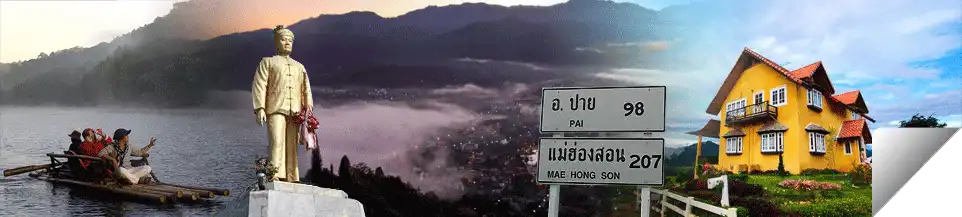
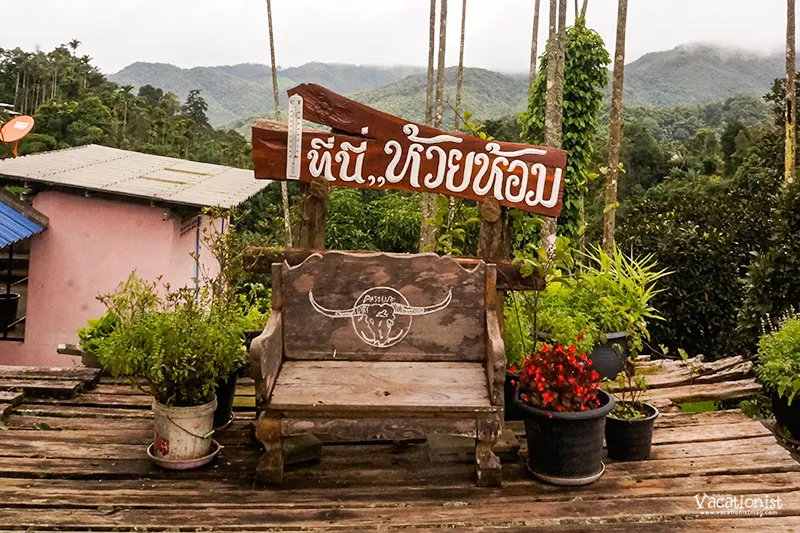
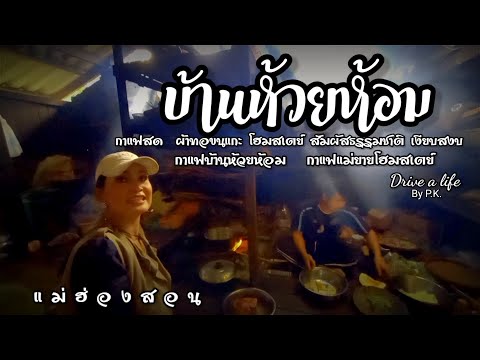
Huai Hom Karen Village
Open Days: Open Daily
Opening Hours: Visit Throughout the Day
Huai Hom Karen Village is one of the most distinctive highland destinations in Mae Hong Son. Located in Huai Hom Subdistrict, Mae La Noi District, about 35 kilometers from Mae La Noi town and around 4 kilometers from Ban La Oop, this mountain village is widely known for three things in particular: high-quality Arabica coffee, sheep raising, and handwoven wool textiles. More than just a scenic village, Huai Hom is a living Pga K’nyau community with a long history, a strong cultural identity, and a calm atmosphere that leaves a lasting impression on travelers.
Huai Hom’s reputation for coffee comes from the natural advantages of its location. The village sits at high elevation with cool temperatures and soil conditions that are especially suitable for Arabica cultivation. Over time, Huai Hom coffee has become one of the best-known local products of Mae La Noi. Many travelers visit specifically to drink coffee close to the source, enjoy the mountain air, and experience the connection between local agriculture and community life.
What makes Huai Hom even more unique is that coffee is not the village’s only identity. The community is also famous for sheep farming and for weaving wool into local products. This combination is rare in Thailand and gives Huai Hom a character unlike other mountain villages. Wool weaving here is not simply a craft for display. It is part of the village’s livelihood and one of the best-known community products in the area.
Huai Hom is a Karen village of the ethnic group known as Pga K’nyau. According to community history, the village was founded around 200 years ago by Pu Chao Kro Bo and Mae Chao Ae Por. Local oral tradition says that the settlement began with only three families before gradually expanding as people migrated from nearby villages such as Mae Sa Kua, Mae Nga, Mae Sa Pueng Nuea, Mae Sa Maeng, and Nong Muan. Later, it was formally organized as Huai Hom Village, Village No. 1, Huai Hom Subdistrict, with Nai Kae Hae remembered as the first village headman.
In local language, the village has also been called “Soti” or “Sopi,” referring to a spirit of a small chicken said to chase people. This story reflects the oral traditions of the community and adds another cultural layer to the village’s identity. Huai Hom is therefore not only a place of beautiful scenery, but also a place where memory, belief, and community history remain deeply rooted.
The village atmosphere is one of its strongest attractions. The residents are known for being gentle, polite, and serious about their religious life. Visitors often feel a sense of order, peace, and warmth as soon as they arrive. Huai Hom does not rely on loud attractions or artificial entertainment. Its charm comes from the people, the landscape, and the fact that this is still a real mountain community with its own daily rhythm.
Huai Hom’s environment is another reason why it stands out. At around 1,100 meters above sea level, the village enjoys cool weather for much of the year. It also lies in an important watershed area of Mae La Noi, surrounded by forests, mountains, and natural streams. This setting supports both daily life and farming, and it helps explain why coffee, wool products, and cool-climate crops have developed so well here.
The village is also closely linked to royal development initiatives. Community and local records note that His Majesty the King and Her Majesty the Queen visited Huai Hom several times in the 1970s, and that sheep were among the royal support given to the villagers. These visits became an important turning point in the development of local livelihoods and natural resource conservation. The royal message encouraging the community to protect forests, water sources, and natural resources still shapes the identity of Huai Hom today.
That is why Huai Hom is often described as a model highland village. It is not only beautiful, but also meaningful in the way it combines local culture, sustainable livelihoods, and environmental care. The village became known for community development through wool weaving, cool-climate agriculture, coffee cultivation, and hospitality. For travelers, this makes a visit more rewarding because the destination has both scenic value and social depth.
One of the best ways to experience Huai Hom is to stay overnight. The village offers homestays, and spending a night here allows visitors to enjoy the cool air, mountain views, early morning mist, and the slower pace of life that cannot be fully appreciated on a short day trip. Waking up on the mountain, drinking locally grown coffee, and watching the village come to life is one of the most memorable parts of visiting Huai Hom.
Huai Hom also works very well as part of a broader Mae La Noi route. Travelers can combine it with nearby Ban La Oop, Royal Project Development Center Mae La Noi, local temples, and attractions in the district. This makes Huai Hom both a destination in its own right and a key stop within a larger cultural and mountain travel itinerary.
Getting There is fairly manageable. From Mae La Noi town, take Highway 108 and then turn onto Highway 1266 near the area opposite Mae La Noi Post Office. From there, continue up the mountain road to the village. The road follows highland terrain with curves, so careful driving is recommended, especially during rain or heavy mist. Standard passenger cars can generally make the trip.
Overall, Huai Hom Karen Village is one of the most rewarding places in Mae Hong Son for travelers who want more than just a scenic viewpoint. It offers good coffee, handmade wool products, a long village history, community-based accommodation, and a genuine chance to experience the life of a Pga K’nyau mountain village in a peaceful and meaningful setting.
| Name | Huai Hom Karen Village / Ban Huai Hom |
| Location Summary | A highland Pga K’nyau village in Mae La Noi, famous for Arabica coffee, sheep raising, woven wool products, and community homestays |
| Location | Village No. 1, Huai Hom Subdistrict, Mae La Noi District, Mae Hong Son 58120 |
| Coordinates | 18.3439, 98.0165 |
| Highlights | Huai Hom coffee, sheep farming, woven wool textiles, Pga K’nyau community life, mountain atmosphere, village homestays |
| History | A Pga K’nyau village with an oral history of around 200 years, founded by Pu Chao Kro Bo and Mae Chao Ae Por, later expanding through migration from nearby villages and becoming a model highland community |
| Name Origin | Locally known as “Soti” or “Sopi,” linked to a story about a small chicken spirit said to chase people |
| Distinctive Features | A model highland village developed through coffee farming, wool weaving, cool-climate crops, and community-based tourism |
| Travel Information | About 35 km from Mae La Noi town via Highway 108 and Highway 1266; standard cars can reach the village |
| Current Status | An active community tourism village with homestay services |
| Open Days | Open Daily |
| Opening Hours | Visit Throughout the Day |
| Fees | Amazing Thailand lists a group entry fee for 1–8 people at 300–500 THB |
| Facilities | Community homestays, coffee shops, wool textile products, local coffee products, community tourism areas |
| Main Areas / Zones | Coffee plots, wool weaving product area, homestay zone, sheep area, community coffee shops |
| Caretaker | Ban Huai Hom Community / Main contact: Khun Maliwan Nakrobphrai |
| Main Contact Number | 089-555-3900, 095-448-2350 |
| Official Website / Official Page | Amazing Thailand attraction page, Facebook: บ้านห้วยห้อม Huay Hom | Mae La Noi |
| Nearby Tourist Attractions | 1. Ban La Oop Lawa Village – 4 km 2. Royal Project Development Center Mae La Noi, Ban Dong – 18 km 3. Phra That Dhammikarat – 33 km 4. Wat Wohan Khun – 35 km 5. Doi Mae U Kho Mexican Sunflower Field – 46 km |
| Nearby Restaurants | 1. Mae Yay Specialty Coffee & Mae yay Home – 1 km Tel. 095-572-6722 2. Baan Suan Coffee Huai Hom – 1 km Tel. 084-810-6448 3. Sook Coffee Mae La Noi – 35 km Tel. 095-446-5312 4. APPS CAFE’ Mae La Noi – 35 km Tel. 096-670-1688 5. Krua Herntai – 35 km Tel. 086-915-3555, 053-689-033 6. Shakif Islamic Food Mae La Noi – 35 km Tel. 090-474-9291 |
| Nearby Accommodations | 1. Ban Huai Hom Homestay by Mae Maliwan – 1 km Tel. 089-555-3900, 095-448-2350 2. Mae Yay Homestay – 1 km Tel. 095-572-6722 3. Baan Khunkhao Krasib – 1 km Tel. 096-885-5790, 093-132-4946 4. Baan Suan Coffee Huai Hom (with lodging) – 1 km Tel. 084-810-6448 5. Herntai Resort Mae La Noi – 35 km Tel. 086-915-3555, 053-689-033 6. Ban Wang Khan Homestay – 35 km Tel. 062-271-0087 |
Frequently Asked Questions (FAQ)
Q: What is Huai Hom best known for?
A: It is best known for high-quality Arabica coffee, sheep raising, woven wool textiles, and Pga K’nyau community life.
Q: How far is Huai Hom from Mae La Noi?
A: The village is about 35 km from Mae La Noi town and around 4 km from Ban La Oop.
Q: Can regular cars reach the village?
A: Yes. Standard cars can usually reach Huai Hom, though careful driving is recommended because the road follows mountain terrain.
Q: Is there accommodation in the village?
A: Yes. Huai Hom has community homestays, and there are also more accommodation options nearby.
Q: What can visitors buy as souvenirs?
A: Popular local products include Huai Hom coffee, woven wool textiles, and other community-made goods.
Q: What type of trip is Huai Hom suitable for?
A: It is ideal for community-based travel, cultural travel, coffee-focused trips, and slow travel in the mountains.
Q: Is there an entrance fee?
A: Tourism information lists a group entry fee of 300–500 THB for 1–8 people, but it is best to confirm directly with the community before visiting.
Category: ●Suburban Living
 Category: ●
Group: ●Village, Community
 Group: ●
 Last Update : 1 DayAgo
 Click to Access the Navigation Map GPS
 Art, Culture and Heritage
 Historical Sites and Monuments(
 Landmarks and Memorials(
 Art, Craft Centres, Tradition(
 Museums(
 Educational Places
 Educational Gardens, Farm(
 Places of Worship
 Temple(
 Other religious and spiritural sites(
 Research and Development
 Royal Project(
 Local Market(
 Nature and Wildlife
 National Parks and Marine Reserves(
 Mountain (Doi)(
 Dam, Reservoir, Lake(
 Waterfalls(
 Hot Springs(
 Caves(
 Flower Field(
 River, Canal(
 Other natural attractions(
 Entertainment and Agricultural
 Farm, Parks, Gardens and Ecotourism(
 Shopping
 Shopping and Night Market(
 Travel Articles, Recipes
 Travel Review, Food Review(


