
lovethailand home >North Travel Attractions >Mae Hong Son Travel Attractions >Mae Sariang >Ban Kat > Wat Sop Han Nuea
TL;DR: Wat Sop Han Nuea is located at Ban Sobhan, Moo 2, Ban Kat, Mae Sariang, Mae Hong Son, open Daily, hours 08:00 – 17:00. Highlights include Yuam riverside temple, peaceful rural atmosphere, active role in community development, venue for Poi Sang Long festival.
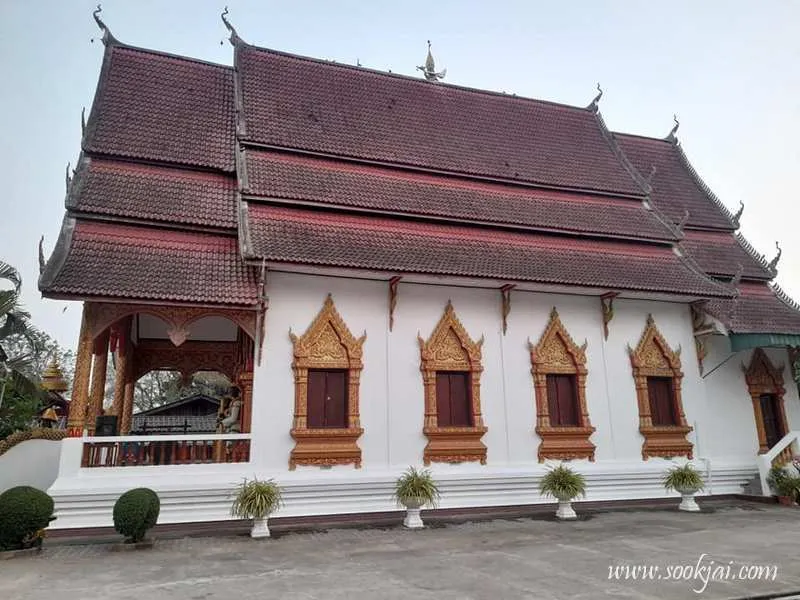
Wat Sop Han Nuea
Open Days: Daily
Opening Hours: 08:00 – 17:00
Wat Sobharn Nuea is a local Buddhist temple under the Maha Nikaya sect, located in Ban Sobhan Village, Moo 2, Ban Kat Subdistrict, Mae Sariang District, Mae Hong Son Province. :contentReference[oaicite:0]{index=0} The temple has long played an important role in the daily life of the local community, not only in terms of religion but also in social and community development. One of its most distinctive features is its location along the Yuam River, offering a peaceful riverside atmosphere typical of Mae Sariang’s cultural landscape. Within the temple grounds are key religious structures such as the viharn, sala, and monks’ residences, supporting various Buddhist activities. In addition, the temple extends its role beyond religious practices by hosting a community rice bank, a royal initiative project known as “Silpachip,” and even serving as a location for the Subdistrict Administrative Organization (SAO) of Ban Kat.
Overall, Wat Sobharn Nuea is not merely a place for merit-making on religious occasions, but a true community center. It connects faith, daily life, and local development in a tangible way. This makes it especially suitable for travelers who want to explore Mae Hong Son beyond natural attractions, as the temple reflects the deep relationship between Buddhism, river-based communities, and the lifestyle of people in Mae Sariang.
The temple was established in 1920 and has developed alongside the growth of the Ban Sobhan community. The temple occupies approximately 2 rai and 92.10 square wah of land, officially documented under title deed number 5020. Its boundaries are clearly defined, with public roads on the north, south, and west sides, and the Yuam River bordering the east. This geographical setting gives the temple a unique landscape and atmosphere compared to typical community temples.
Being located along the Yuam River enhances the temple’s tranquil and refreshing environment. The riverside setting provides a calm and relaxing experience, especially during the morning and evening when cool breezes flow through the open community space. Visitors seeking an authentic local temple experience—one that has not been overly commercialized—will find Wat Sobharn Nuea particularly appealing.
The temple’s structures include a viharn, a multipurpose sala, and monks’ quarters, which are essential components of a northern Thai community temple. The viharn is used for worship and religious ceremonies, while the sala serves as a gathering space for sermons, meetings, merit-making, and community events. The monks’ quarters are used for daily monastic life. Although these buildings may not be grand in scale like those in major tourist cities, they represent practical and meaningful religious spaces that are actively used by the community.
Another key feature that distinguishes Wat Sobharn Nuea is its role in improving the quality of life for local residents. The temple houses a “rice bank” and the “Silpachip Project,” both of which are aligned with royal development initiatives. The rice bank reflects a community-based support system, helping villagers manage food security, especially in rural agricultural areas. This initiative strengthens cooperation and reinforces the temple’s role as a center of mutual support.
The Silpachip Project further demonstrates that the temple is not only a spiritual center but also a place that integrates moral values with livelihood development. This concept emphasizes ethical living and sustainable occupations, helping to improve the dignity and quality of life of the community. Hosting such projects within the temple highlights its expanded role in both spiritual and socio-economic development.
Additionally, Wat Sobharn Nuea also serves as the location of the Subdistrict Administrative Organization (SAO) of Ban Kat. This detail is particularly significant as it reflects the temple’s role as a trusted central space for both religious and administrative functions. It becomes a place for coordination, meetings, and community management, reinforcing its importance in all aspects of local life.
In terms of administration, historical records mention Phra Daeng Suttiko as abbot since 1986. Later, Phra Apichai Apichayo took on the role of acting abbot and has continued to oversee the temple. Recent references identify the current abbot as Phra Khru Anusornchaikhun Apichayo, reflecting continuity in leadership and stability in temple administration.
This continuity of leadership is crucial for a community temple, as it requires a monk who understands both Buddhist teachings and the real-life conditions of local residents. The temple continues to function effectively because of the strong connection between religion and community, with monks playing key roles in ceremonies, social coordination, and maintaining the temple’s relevance in daily life.
The temple remains active today, as evidenced by its involvement in important local events such as Kathin ceremonies and the Poi Sang Long festival in recent years. Poi Sang Long is a significant Shan tradition in Mae Hong Son, involving novice ordination ceremonies. The temple’s participation in such events confirms its ongoing role as a living cultural and religious center.
From a tourism perspective, Wat Sobharn Nuea offers value beyond its historical significance. It is part of a cultural network that reflects the traditions of the Shan community in Mae Sariang. Visitors traveling during festival periods may witness authentic cultural activities and gain deeper insights into local traditions.
Geographically, the temple benefits from its proximity to Mae Sariang town and other key attractions, including local markets, riverside viewpoints, and important temples. This makes it suitable for half-day or full-day travel itineraries, adding cultural depth to trips that might otherwise focus solely on nature or dining.
Architecturally, while the temple does not feature grand structures, it possesses a unique charm as a functional community temple that has evolved alongside local residents. Its buildings reflect simplicity, practicality, and harmony with the surrounding river landscape.
In terms of visitor experience, the most notable aspect of Wat Sobharn Nuea is its peaceful atmosphere and authenticity. It remains a genuine community temple rather than a commercial tourist attraction. Visitors can experience a slower pace of life and observe how the temple continues to serve as a place for worship, gathering, and mutual support.
Getting There The temple can be reached from Mae Sariang town via local roads leading to Ban Kat and Ban Sobhan. The distance is approximately 10–12 kilometers and can be accessed easily by car or motorcycle. The route is straightforward and suitable for travelers seeking a relaxed journey through local communities.
| Name | Wat Sobharn Nuea |
| Overview | A historic riverside community temple in Ban Sobhan, notable for its religious, cultural, and community development roles, including a rice bank, Silpachip project, and administrative functions. |
| Location | Ban Sobhan, Moo 2, Ban Kat, Mae Sariang, Mae Hong Son |
| Address | Ban Kat Subdistrict, Mae Sariang District, Mae Hong Son 58110 |
| Highlights | Yuam riverside temple, peaceful rural atmosphere, active role in community development, venue for Poi Sang Long festival |
| History / Era | Established in 1920, received Wisungkhamasima in 1937 |
| Key Features | Community-scale Maha Nikaya temple with viharn, sala, monks’ quarters, and strong integration with local life |
| Transportation | Approx. 10–12 km from Mae Sariang town via local roads; accessible by car or motorcycle |
| Current Status | Active temple with ongoing religious and cultural activities |
| Open Days | Daily |
| Opening Hours | 08:00 – 17:00 |
| Entrance Fee | Free |
| Facilities | Sala, monks’ quarters, merit-making areas, community activity space |
| Zones / Key Areas | Viharn, sala, monks’ quarters, rice bank area, Silpachip project area, riverside zone |
| Abbot | Phra Khru Anusornchaikhun Apichayo |
| Contact | 053-681-384, 081-960-2886 |
| Nearby Attractions | 1. Mae Sariang Market – 10 km 2. Yuam River – 1 km 3. Wat Chong Sung – 11 km 4. Wat Chong Kham – 11 km 5. Yuam River Bridge – 10 km |
| Nearby Restaurants | 1. Coriander in Redwood – 10 km Tel. 053-683-070 2. Pa Ka Yor’s Pub & Restaurant – 10 km Tel. 053-683-067 3. Na Laan Kham – 11 km Tel. 096-264-6442 4. Rim Yuam Restaurant – 10 km 5. Local Jungle Food Restaurant – 11 km |
| Nearby Accommodations | 1. Riverhouse Resort – 10 km Tel. 053-683-066 2. Mitaree Guesthouse – 10 km Tel. 053-681-109 3. Mitaree Hotel – 10 km Tel. 053-681-110 4. Kamolsorn Hotel – 10 km Tel. 053-681-524 5. Riverbank Resort – 7 km Tel. 053-682-787 |
Frequently Asked Questions (FAQ)
Q: When was Wat Sobharn Nuea established?
A: The temple was established in 1920.
Q: What makes this temple unique?
A: It serves as both a religious and community center, featuring a rice bank, Silpachip project, and cultural festival activities.
Q: What is located next to the temple?
A: The temple is located along the Yuam River, offering a peaceful riverside atmosphere.
Q: Is the temple open daily?
A: Yes, it is open every day from 08:00 to 17:00.
Q: Who is the current abbot?
A: The current abbot is Phra Khru Anusornchaikhun Apichayo.
Q: What type of traveler is this place suitable for?
A: It is ideal for travelers seeking peaceful temples, local culture, and authentic community experiences.
Mobile : 0819602886
 Mobile : 0819602886
 Category: ●Places of Worship
 Group: ●Temple
Last Update : 2 MonthAgo
 Last Update : 2 MonthAgo
 Click to Access the Navigation Map GPS
 Art, Culture and Heritage
 Historical Sites and Monuments(1)
 Landmarks and Memorials(1)
 Art, Craft Centres, Tradition(10)
 Museums(3)
 Educational Places
 Educational Gardens, Farm(1)
Temple(81)
Educational Gardens, Farm(1)
Temple(81)
 Other Sacred Sites(1)
 Research and Development
 Royal Project(4)
 Suburban Living
 Village, Community(19)
 Local Market(4)
 Nature and Wildlife
 National Parks and Marine Reserves(5)
 Mountain (Doi)(5)
 Dam, Reservoir, Lake(2)
 Waterfalls(12)
 Hot Springs(6)
 Caves(13)
 Flower Field(2)
 River, Canal(3)
 Other natural attractions(1)
 Entertainment and Agricultural
 Farms, Parks and Ecotourism(2)
 Shopping
 Shopping and Night Market(1)
 Travel Articles, Recipes
 Travel Review, Food Review(1)


