
lovethailand home >North Travel Attractions >Mae Hong Son Travel Attractions >Mae Lanoi >Mae La Noi > Wat Mae La Noi
TL;DR: Wat Mae La Noi is located at Mae La Noi Subdistrict, Mae La Noi District, Mae Hong Son Province, open Open Daily, hours Please Contact in Advance.
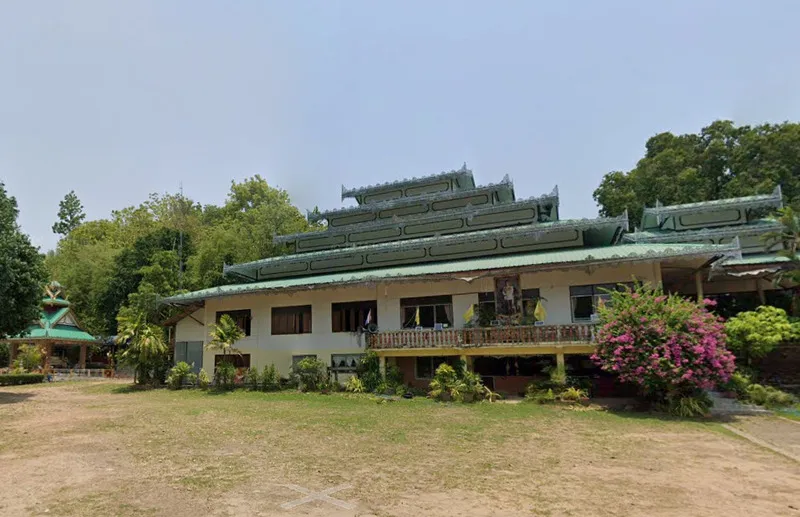
Wat Mae La Noi
Open Days: Open Daily
Opening Hours: Please Contact in Advance
Wat Mae La Noi, also widely known by local people as Wat Nuea, is one of the most important temples in Mae La Noi District, Mae Hong Son Province. It serves not only as a community temple and a place for Buddhist worship, but also as a site that preserves the collective memory of local people. The temple is significant not simply because it is a public Mahanikaya temple established in 1912, but also because it houses Phra That Wat Nuea, a revered stupa that has long been regarded as one of the spiritual landmarks of Mae La Noi. For local residents, this is a place of worship on important occasions and a venue for village merit-making ceremonies that continue to this day.
In a broader sense, Wat Mae La Noi helps explain the identity of Mae La Noi District itself. The temple stands in the main community zone of Mae La Noi Subdistrict on Rungroj Road, in a location that is easy to reach and deeply connected to everyday local life. When visitors arrive, the experience feels very different from a quick stop at a generic sightseeing temple. Instead, the atmosphere reflects a lived-in temple community in a small northern district, peaceful yet active, with visible layers of faith and continuity.
According to the temple’s historical record, Wat Mae La Noi was officially established in 1912. It later received royal boundary consecration in 1972 and was recognized as a model development temple in 1987. These milestones show that the temple is not only old, but also institutionally important and continuously active across several generations. Its role extends beyond religious function into the social and cultural life of Mae La Noi.
One of the most important features of the temple is Phra That Wat Nuea, the temple’s principal stupa. It is a Lanna-style stupa built of brick and mortar. The stupa was created by Phra Kunna Wuttho around 1961, with Mr. Kanta Ma as the chief builder and Mr. Chai Chai Prasit assisting in the construction. This history gives the monument a strong local meaning. It is not simply an attractive structure, but also a reflection of craftsmanship, communal effort, and the devotion of the people who helped build an important sacred monument for the district.
The importance of Phra That Wat Nuea lies in its role as a paired stupa of the community, one that local people have long worshipped on important Buddhist and community occasions. It is also used as a place for village merit-making ceremonies. That makes Wat Mae La Noi more than an ordinary temple. It is a public sacred space closely tied to the rhythm of local life and to the shared memory of people in Mae La Noi.
From an artistic point of view, the Lanna-style stupa connects Wat Mae La Noi with the wider cultural landscape of northern Thailand. Mae Hong Son is a province with diverse ethnic traditions and local artistic forms, and the presence of a brick Lanna-style stupa here highlights the connection between northern artistic heritage and community faith in Mae La Noi. Travelers interested in temple culture can therefore understand part of the district’s history through the stupa itself.
Another reason the temple is especially interesting is that it is also linked to local learning and heritage preservation. The Mae La Noi District Museum is located within the temple grounds and preserves knowledge related to ethnic communities, local ways of life, and regional wisdom. Because of this, the temple plays a broader role than that of a ritual site alone. It also functions as a place where visitors can learn about Mae La Noi’s historical and cultural identity in a more complete way.
In terms of current administration, Wat Mae La Noi is presently under the care of Phra Khru Yanasampayut Yanasophono, whose name also appears in publicly available monastic records. This confirms that the temple remains active, institutionally recognized, and still important in local religious administration. The temple is therefore not simply a historic site remembered from the past, but a living religious institution with an ongoing role in the district.
The charm of Wat Mae La Noi lies in its simplicity. It does not depend on monumental scale or dramatic temple tourism in order to stand out. Instead, it draws strength from its long history, its central role in the community, and the continuing devotion associated with Phra That Wat Nuea. Visitors can walk through the grounds at an unhurried pace, admire the stupa, listen to the sounds of everyday life around the temple, and experience the calm that naturally exists in this kind of living community temple.
For travelers, Wat Mae La Noi is especially suitable for those who want to understand Mae La Noi beyond scenic viewpoints and mountain routes along the Mae Hong Son loop. The temple reveals another side of the district: religion, tradition, and community continuity. A 1-day itinerary in Mae La Noi can easily combine the temple with the Mae La Noi District Museum, Mae La Luang Viewpoint, Tham Kaeo Komon, the Mae La Noi Royal Project Development Center, and Ban Huai Hom. That creates a fuller trip with spiritual, cultural, and natural dimensions together.
The temple also remains meaningful to local people because it is still used for village merit-making ceremonies. This is important because it shows that the temple has never been separated from local life. It continues to be part of the annual and ceremonial rhythm of the community. The continued reverence for Phra That Wat Nuea is one of the clearest signs that faith here is still active and shared collectively.
For visitors interested in religious sites, Wat Mae La Noi offers several meaningful layers at once: a clear establishment history, a continuing role in community life, a recognized abbot, a Lanna-style stupa, and a connection to a local museum. It is therefore a temple with substantial depth, suitable both for worshippers who wish to make merit and for travelers who want to understand Mae La Noi through local history and cultural context.
The most pleasant times to visit are in the morning and late morning, when the atmosphere is calm and the air is fresh. During the rainy and cool seasons, the temple also fits naturally into a wider district itinerary that includes viewpoints and community-based attractions. Visitors who are interested in local heritage may want to allow extra time to see the Mae La Noi District Museum within the temple grounds as well.
For travelers who enjoy older temples without heavy crowds, Wat Mae La Noi is a strong choice. It offers a peaceful and welcoming atmosphere while remaining closely tied to the real life of a small district in Mae Hong Son. Together with the story of Phra That Wat Nuea as a community stupa of Mae La Noi, the temple becomes more than a place to pay respects. It becomes a destination through which visitors can understand the relationship between religion, community, and local identity.
Overall, Wat Mae La Noi is one of the most meaningful places for getting to know Mae La Noi more deeply. It brings together history, faith, Lanna artistic heritage, the role of the temple in community life, and the continuity of local ceremonies in one place. For anyone passing through Mae La Noi and looking for somewhere both peaceful and culturally important, this temple deserves a clear place on the itinerary.
Getting There Wat Mae La Noi is easy to reach from the center of Mae La Noi District. The temple is located at 95 Moo 1, Rungroj Road, Mae La Noi Subdistrict, Mae La Noi District, Mae Hong Son Province. Visitors traveling by private car can follow Highway 108 into the district and continue into the community streets leading to the temple. Those staying in Mae La Noi or passing through the Hot–Mae Sariang route can stop here conveniently for worship and a visit to the stupa. The temple also works well as a starting point for further travel to the Mae La Noi District Museum, Mae La Luang Viewpoint, Tham Kaeo Komon, and Ban Huai Hom.
| Name | Wat Mae La Noi (Wat Nuea) |
| Location | Mae La Noi Subdistrict, Mae La Noi District, Mae Hong Son Province |
| Address | 95 Moo 1, Rungroj Road, Mae La Noi Subdistrict, Mae La Noi District, Mae Hong Son 58120 |
| Coordinates | 18.38132, 97.9366 |
| Highlights | Home to Phra That Wat Nuea, a brick-and-mortar Lanna-style stupa revered as an important community stupa of Mae La Noi |
| History | Officially established in 1912, granted royal boundary consecration in 1972, and recognized as a model development temple in 1987 |
| Name Origin | The temple is formally known as Wat Mae La Noi and is also locally referred to as Wat Nuea, reflecting its identity within the Mae La Noi community |
| Distinctive Features | A long-established community temple with a Lanna-style stupa, village merit-making role, and the Mae La Noi District Museum within the temple grounds |
| Travel Information | Easy to reach from Mae La Noi town via Highway 108 and the local community road network; suitable to combine with other district attractions |
| Current Status | Still active and continuing its religious, community, and local learning functions |
| Open Days | Open Daily |
| Opening Hours | Please Contact in Advance |
| Fees | No Admission Fee |
| Facilities | Stupa worship area, temple buildings, Mae La Noi District Museum, and community activity space |
| Main Areas / Zones | Phra That Wat Nuea, temple grounds, village merit-making area, and Mae La Noi District Museum |
| Abbot / Caretaker | Phra Khru Yanasampayut Yanasophono |
| Main Contact Number | 097-946-2055 |
| Official Website / Official Page | Facebook: Office of Phra Thamma Charik, Mae Hong Son Province – Wat Mae La Noi |
| Nearby Tourist Attractions | 1. Mae La Noi District Museum 0 km 2. Mae La Luang Viewpoint 15 km 3. Tham Kaeo Komon 16 km 4. Mae La Noi Royal Project Development Center 18 km 5. Ban Huai Hom 20 km |
| Nearby Restaurants | 1. Sook Coffee 1 km, Tel. 095-446-5312 2. APPS CAFE’ Mae La Noi 1 km, Tel. 096-670-1688 3. Chakif Muslim Food Mae La Noi 1 km, Tel. 090-474-9291 4. Krua Hern Tai 3 km, Tel. 086-915-3555, 053-689-033 5. Thana Phochana Branch 2 1 km |
| Nearby Accommodations | 1. Hern Tai Resort 3 km, Tel. 086-915-3555, 053-689-033 2. Patipan Guesthouse 1 km 3. Ban Wangkan Homestay 2 km, Tel. 062-271-0087 4. Mae Yay Home 20 km, Tel. 095-572-6722 5. Huai Hom Homestay 20 km |
Frequently Asked Questions (FAQ)
Q: Where is Wat Mae La Noi located?
A: The temple is located at 95 Moo 1, Rungroj Road, Mae La Noi Subdistrict, Mae La Noi District, Mae Hong Son 58120, within the main community area of the district.
Q: When was Wat Mae La Noi established?
A: Wat Mae La Noi was officially established in 1912 and is one of the long-standing temples of Mae La Noi District.
Q: Why is Phra That Wat Nuea important?
A: Phra That Wat Nuea is regarded as a community stupa of Mae La Noi and is used for worship on important occasions as well as for village merit-making ceremonies.
Q: When was Phra That Wat Nuea built?
A: The stupa was built around 1961 by Phra Kunna Wuttho, with Mr. Kanta Ma serving as the chief builder and Mr. Chai Chai Prasit assisting in the construction.
Q: Who is the current abbot of Wat Mae La Noi?
A: The current abbot is Phra Khru Yanasampayut Yanasophono.
Q: What kind of visit is Wat Mae La Noi best suited for?
A: It is ideal for worship, merit-making, cultural travel, and learning about the local history of Mae La Noi District.
Q: Is there anything else to see inside the temple besides the stupa?
A: Yes. The Mae La Noi District Museum is also located within the temple grounds and presents local ethnic history, ways of life, and regional wisdom.
Q: What places can be visited after Wat Mae La Noi?
A: Visitors can continue to Mae La Luang Viewpoint, Tham Kaeo Komon, the Mae La Noi Royal Project Development Center, and Ban Huai Hom.
Tel : 053689095
 Tel : 053689095
 Category: ●Places of Worship
 Group: ●Temple
Last Update : 2 MonthAgo
 Last Update : 2 MonthAgo
 Click to Access the Navigation Map GPS
 Art, Culture and Heritage
 Historical Sites and Monuments(1)
 Landmarks and Memorials(1)
 Art, Craft Centres, Tradition(10)
 Museums(3)
 Educational Places
 Educational Gardens, Farm(1)
Temple(81)
Educational Gardens, Farm(1)
Temple(81)
 Other Sacred Sites(1)
 Research and Development
 Royal Project(4)
 Suburban Living
 Village, Community(19)
 Local Market(4)
 Nature and Wildlife
 National Parks and Marine Reserves(5)
 Mountain (Doi)(5)
 Dam, Reservoir, Lake(2)
 Waterfalls(12)
 Hot Springs(6)
 Caves(13)
 Flower Field(2)
 River, Canal(3)
 Other natural attractions(1)
 Entertainment and Agricultural
 Farms, Parks and Ecotourism(2)
 Shopping
 Shopping and Night Market(1)
 Travel Articles, Recipes
 Travel Review, Food Review(1)


