
lovethailand home >North Travel Attractions >Mae Hong Son Travel Attractions >Muang Mae Hong Son >Mok Cham Pae > Wat Mae Sa Nga
TL;DR: Wat Mae Sa Nga is located at Ban Mae Sanga, Moo 2, Mok Champae, Mueang Mae Hong Son, Mae Hong Son, open Daily, hours 08.00 - 17.00.
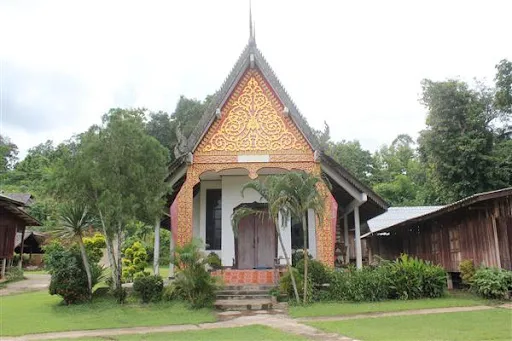
Wat Mae Sa Nga
Open Days: Daily
Opening Hours: 08.00 - 17.00
Wat Mae Sanga is an old community temple in Ban Mae Sanga, Moo 2, Mok Champae Subdistrict, Mueang Mae Hong Son District, Mae Hong Son Province. For travelers who want to see a quieter and more local side of Mae Hong Son, this temple is one of those places that may not be the province’s most commercialized landmark, yet it carries strong cultural weight. Its value lies in its long history, its close connection to the founding of the village, and its continuing role as a spiritual and communal center for local residents.
According to temple history, Wat Mae Sanga was established in 1856 at the same time as Ban Mae Sanga itself. This detail is important because it shows that the temple was not a later addition to an already settled village. Instead, it was part of the village’s original foundation. In many traditional Thai and northern communities, a temple is not simply a religious structure. It is one of the pillars of local life, standing alongside homes, farmland, and shared public space. Wat Mae Sanga clearly reflects that pattern.
The temple was founded under the leadership of Pho Chong Takha Jongsing, a wealthy and respected villager who helped organize the construction. The first structure was built entirely of teak wood, which immediately gives the temple historical and architectural interest. Teak was one of the most important building materials in the region, valued for its strength and durability. A teak temple also reflects local craftsmanship and the practical wisdom of communities who built with the materials available to them.
Over time, the original structure deteriorated. In 1978, local residents dismantled the old building and constructed a new one. The new hall was built by Thun Laeng Chaopikun, a former village headman of Ban Mae Sanga. This rebuilding period is one of the most meaningful parts of the temple’s story because it shows that the villagers did not allow the temple to fade away. They chose to restore it together, preserving it not just as an old structure, but as a living center of faith and community life.
Locally, the temple is also known as “Wat Chong Mae Nga.” That local name adds another layer of cultural identity and reflects how the temple continues to live in the memory and speech of the community. Temples in Mae Hong Son often carry local names or older names that preserve traces of local history, ethnic identity, and regional language traditions. In this sense, Wat Mae Sanga is not only a religious site, but also a keeper of local memory.
Architecturally, the temple is centered around its preaching hall, which remains one of the key monastic buildings on the grounds. The temple’s important sacred objects include the principal Buddha image and a standing carved Buddha image. Publicly available information also identifies the main Buddha image as a Mara-Vijaya image in Mandalay style, which gives the temple additional artistic value. Even though Wat Mae Sanga is a village temple rather than a monumental royal temple, details like this show that its religious art deserves attention.
For visitors interested in Buddhist art and local temple culture, this is part of what makes Wat Mae Sanga rewarding. The temple offers a chance to experience sacred art in its natural setting, not as a museum object separated from the community, but as a living object of worship. That difference matters. It means the temple can still be understood through the actual rhythm of local religious life.
The administration history of the temple also reflects continuity. The abbots known by name include Phra Ajarn Puk, Phra Ajarn Yom, Phra Ariya, Phra Athikan Lek, Phra Suk, Phra Wan, Phra Bunrat, Phra Wiriya, and Phra Noi Dhammanando from 1986 onward in older historical records. More recent public information shows that Phra Samu Mai Suthammo was appointed abbot of Wat Mae Sanga in July 2024. This recent appointment is highly useful for current travel and cultural writing because it confirms that the temple remains active, administered, and connected to the present-day community.
Wat Mae Sanga is significant not only because of its age, but also because of its role beyond formal religious ceremonies. The temple has an early childhood training center inside the temple grounds, and the community uses the temple for merit-making, meetings, training activities, seminars, and moral education programs. This is one of the clearest signs that the temple still functions as a community hub. In many small villages, the temple remains the central shared space where different generations come together, and Wat Mae Sanga clearly continues to serve that purpose.
For travelers, this makes the temple especially appealing if you prefer meaningful places over highly staged attractions. You are not coming here for grand-scale spectacle. You are coming for a more intimate understanding of Mae Hong Son’s local culture. The atmosphere is quiet, simple, and rooted in everyday village life. It is the kind of place where the value of the visit grows when you slow down, observe carefully, and approach the site respectfully.
Wat Mae Sanga is also well positioned for route planning. Mok Champae Subdistrict is a well-known travel zone for people heading from Mae Hong Son town toward Ban Rak Thai, Pang Ung, Phu Klon, and other attractions in the northern part of the district. This means the temple can be added naturally to a one-day or half-day route without requiring a major detour. For travelers who want a better balance of nature, local culture, and religious heritage, the temple works well as a stop before or after visiting the better-known scenic attractions nearby.
One of the best ways to appreciate Wat Mae Sanga is to see it as part of the broader story of Mae Hong Son rather than as a stand-alone postcard site. Many visitors know Mae Hong Son for its misty lakes, pine forests, and mountain roads. But the province is also defined by small communities that have preserved their spiritual and social institutions over generations. Wat Mae Sanga is one of those institutions. It tells the story of settlement, faith, rebuilding, community leadership, and continuity.
The temple’s surroundings contribute to this feeling. Ban Mae Sanga is part of a travel corridor that still retains a strong local atmosphere. Even when tourists pass through the area on the way to Ban Rak Thai or Pang Ung, village temples like this one remind us that the landscape is not just scenic. It is inhabited, meaningful, and layered with community history. A visit here can therefore deepen your understanding of the district in a way that scenic viewpoints alone cannot.
Wat Mae Sanga is especially suitable for travelers interested in cultural tourism, temple visits, Buddhist heritage, and village life. It is also appropriate for photographers and writers who are looking for a quieter, less crowded religious site. However, because it is first and foremost an active community temple, visitors should dress modestly, behave respectfully, and avoid disturbing religious activities or local residents who come to make merit.
If you are building a cultural itinerary around Mae Hong Son, Wat Mae Sanga pairs well with Phu Klon Country Club, Ban Rak Thai, Pang Ung, and Tham Pla. This makes the temple particularly useful for visitors who want a fuller experience of the area rather than a single-purpose trip. In one route, you can combine temple heritage, local village culture, hot mineral mud attractions, mountain scenery, and Yunnan-influenced food culture.
Although public sources do not clearly specify the temple’s official visiting hours, it is best visited during the daytime, especially in the morning or late morning when the atmosphere is calm and the weather in Mae Hong Son is still pleasant. Because the temple remains part of village life, daytime visits are the most appropriate and practical for travelers. A short but unhurried visit of 30 to 45 minutes is usually enough to pay respects, observe the buildings, and absorb the atmosphere.
Visitors who are planning a route between Ban Rak Thai and Pang Ung and want to add a cultural stop will find Wat Mae Sanga a worthwhile choice. It offers a slower, more grounded experience of the region, balancing scenic travel with a clearer sense of local religious life and village identity.
In short, Wat Mae Sanga is a historic village temple with a deeply rooted role in Ban Mae Sanga. It was founded together with the village in 1856, rebuilt by the community in 1978, and continues to function today as a religious and communal center. Its preaching hall, principal Buddha image, standing carved Buddha image, early childhood center, and strong village connection make it much more than a simple roadside temple. For anyone exploring Mae Hong Son with an interest in cultural depth, Wat Mae Sanga is worth a respectful visit.
Getting There from Mae Hong Son town is fairly straightforward. Take Highway 1095 in the direction of Mok Champae, then continue along the local road into Ban Mae Sanga. Travelers driving their own car can conveniently combine Wat Mae Sanga with Phu Klon Country Club, Ban Rak Thai, Pang Ung, and Tham Pla in the same general route. As with most Mae Hong Son road travel, it is wise to allow extra time because of mountain curves and to travel during daylight for the most comfortable experience.
| Name | Wat Mae Sanga |
| Summary | A historic village temple in Ban Mae Sanga, founded in 1856 together with the village, and still serving as a spiritual and community center today. |
| Location | Ban Mae Sanga, Moo 2, Mok Champae, Mueang Mae Hong Son, Mae Hong Son |
| Address | Wat Mae Sanga, Moo 2, Mok Champae, Mueang Mae Hong Son, Mae Hong Son 58000, Thailand |
| Highlights | Historic village temple, linked to the founding of Ban Mae Sanga, preaching hall, principal Buddha image, standing carved Buddha image, and strong community role. |
| History | Founded in 1856 together with the village. Originally built entirely from teak wood. The old structure was dismantled and a new hall was built by local residents in 1978. |
| Name Origin | The temple is named after Ban Mae Sanga village and is also locally known as “Wat Chong Mae Nga.” |
| Distinctive Features | A quiet, community-based temple with a preaching hall, a principal Buddha image, a standing carved Buddha image, and a continuing role in local social life. |
| Current Status | An active temple with ongoing religious and community activities. |
| Facilities | Preaching hall, community activity space, and an early childhood training center within the temple grounds. |
| Main Areas / Zones | Preaching hall, the area of the principal Buddha image, and shared community-use areas. |
| Latest Abbot | Phra Samu Mai Suthammo |
| Official Page | Facebook: Wat Mae Sanga, Mok Champae, Mueang Mae Hong Son |
| Nearby Tourist Attractions | 1. Phu Klon Country Club about 2 km, Tel. 053-282579 2. Wat Mok Cham Pae about 4 km 3. Ban Rak Thai about 12 km 4. Pang Ung about 16 km, Tel. 084-3650776 5. Tham Pla about 13 km |
| Nearby Restaurants | 1. MIWO SLOW BAR about 5 km, Tel. 096-774-7722 2. Rim Na Story about 6 km, Tel. 088-236-8733 3. Leewine Rukthai about 12 km, Tel. 089-262-1335, 089-552-9650 4. Chasa Rakthai about 12 km, Tel. 086-118-2067 5. Ta Lao Sue Rukthai Resort Restaurant about 12 km, Tel. 089-557-2258 |
| Nearby Accommodations | 1. 168 Rakthai Resort about 12 km, Tel. 082-965-5137 2. Nihao Rakthai Resort about 12 km, Tel. 062-312-1009, 097-210-5584 3. Rakthai Guesthouse about 12 km, Tel. 083-486-8060 4. Yunnan Rakthai Resort about 12 km, Tel. 081-992-1855 5. Mulan Ban Rakthai Resort about 12 km, Tel. 090-902-4868 |
Frequently Asked Questions (FAQ)
Q: Where is Wat Mae Sanga located?
A: Wat Mae Sanga is located in Ban Mae Sanga, Moo 2, Mok Champae Subdistrict, Mueang Mae Hong Son District, Mae Hong Son Province.
Q: When was Wat Mae Sanga founded?
A: The temple was founded in 1856 and was established together with Ban Mae Sanga village.
Q: Does Wat Mae Sanga have another local name?
A: Yes. Local residents also refer to it as “Wat Chong Mae Nga.”
Q: What is special about Wat Mae Sanga?
A: It is a historic village temple with a strong community role, a preaching hall, a principal Buddha image, a standing carved Buddha image, and a long history connected directly to the village itself.
Q: Is Wat Mae Sanga still active today?
A: Yes. It is still an active temple with ongoing religious and community activities.
Q: Who is the latest known abbot of Wat Mae Sanga?
A: The latest publicly verified information identifies Phra Samu Mai Suthammo as the abbot.
Q: Can I combine Wat Mae Sanga with other nearby attractions?
A: Yes. It can be visited on the same route as Phu Klon Country Club, Ban Rak Thai, Pang Ung, and Tham Pla.
 Category: ●Places of Worship
 Group: ●Temple
Last Update : 2 MonthAgo
 Last Update : 2 MonthAgo
 Click to Access the Navigation Map GPS
Wat Mae Sa Nga Map
Recommend

 Art, Culture and Heritage
 Historical Sites and Monuments(1)
 Landmarks and Memorials(1)
 Art, Craft Centres, Tradition(10)
 Museums(3)
 Educational Places
 Educational Gardens, Farm(1)
Temple(81)
Educational Gardens, Farm(1)
Temple(81)
 Other Sacred Sites(1)
 Research and Development
 Royal Project(4)
 Suburban Living
 Village, Community(19)
 Local Market(4)
 Nature and Wildlife
 National Parks and Marine Reserves(5)
 Mountain (Doi)(5)
 Dam, Reservoir, Lake(2)
 Waterfalls(12)
 Hot Springs(6)
 Caves(13)
 Flower Field(2)
 River, Canal(3)
 Other natural attractions(1)
 Entertainment and Agricultural
 Farms, Parks and Ecotourism(2)
 Shopping
 Shopping and Night Market(1)
 Travel Articles, Recipes
 Travel Review, Food Review(1)


