
lovethailand home >North Travel Attractions >Mae Hong Son Travel Attractions >Kun Yuam >Khun Yuam > Labyrinth Tradition (Mangka Pa)
TL;DR: Labyrinth Tradition (Mangka Pa), open Depends on local community traditions, hours Varies by location. Highlights include Maze constructed from natural materials for spiritual protection.
Labyrinth Tradition (Mangka Pa)
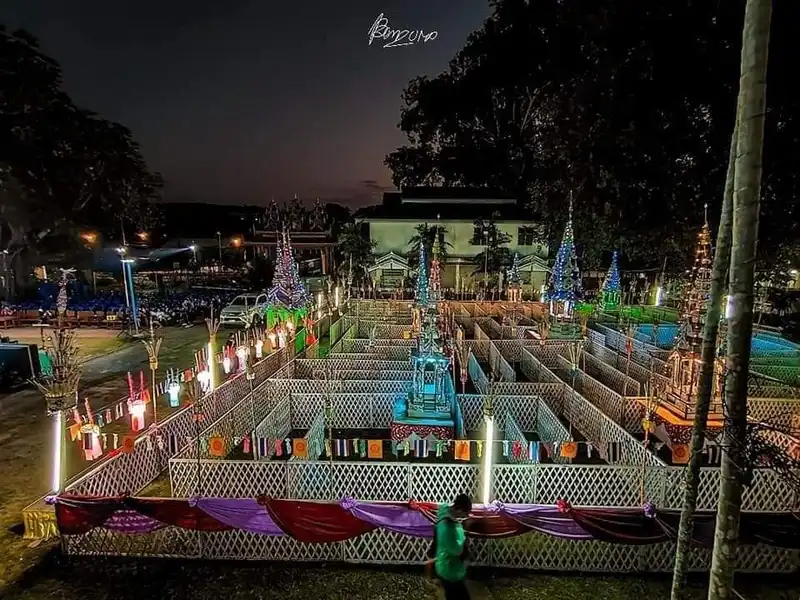
Open Days: Depends on local community traditions
Opening Hours: Varies by location
The Maze Tradition (Mang Ka Pa) is a unique cultural ritual found in Thai local communities, particularly in the northeastern region of Thailand. This tradition reflects ancient beliefs about the spiritual world and the need to protect human settlements from unseen forces. At the center of this ritual is the construction of a maze, designed not for recreation but as a symbolic structure to confuse or trap wandering spirits.
The primary purpose of this tradition is to safeguard the community from harmful spiritual influences. The maze serves as a symbolic barrier, based on the belief that spirits can become disoriented within complex pathways and therefore cannot reach the village or its inhabitants.
The term “Mang Ka Pa” refers to a traditional concept related to boundary-making or spiritual protection, especially in areas associated with forests or natural environments. It represents the idea of separating the human world from the spirit realm, reinforcing safety through ritual and symbolism.
The maze itself is typically constructed using natural materials such as bamboo, ropes, or branches. Its layout is intentionally complex, featuring winding paths and misleading directions. This design is meant to prevent spirits from navigating through it successfully.
The ritual process involves the community working together to build the maze in a designated area. Once completed, ceremonies may be performed, including prayers, offerings, or traditional rites led by local spiritual leaders to enhance the sacred power of the structure.
Participants may interact with the maze as part of the ritual, symbolizing purification, transition, or the removal of negative influences. After the ceremony, the maze may remain temporarily or be dismantled, depending on local beliefs.
This tradition plays a significant role in strengthening community bonds, as it requires collective participation and shared cultural understanding. It also serves as a means of preserving local knowledge and passing it on to younger generations.
Interestingly, similar concepts can be found in other cultures around the world. For example, labyrinths in European traditions are often used for spiritual journeys or symbolic protection, suggesting a universal human tendency to use complex pathways as a form of metaphysical defense.
Today, the Maze Tradition (Mang Ka Pa) is less commonly practiced due to modernization, but it continues to exist in some communities that actively preserve their cultural heritage.
| Name | Maze Tradition (Mang Ka Pa) |
| Type | Folk Ritual / Cultural Tradition |
| Region | Northeastern Thailand |
| Main Belief | Using a maze to confuse and block spirits |
| Highlights | Maze constructed from natural materials for spiritual protection |
| Purpose | Protect community and bring good fortune |
| Current Status | Still preserved in some communities |
Frequently Asked Questions (FAQ)
Q: What is the Maze Tradition?
A: It is a traditional ritual that uses a maze structure to protect communities from spirits.
Q: What does Mang Ka Pa mean?
A: It refers to a ritual concept of creating boundaries or barriers to protect against spiritual forces.
Q: Where can this tradition be found?
A: It is mainly found in northeastern Thailand.
Q: Why is a maze used?
A: The maze is believed to confuse spirits, preventing them from reaching the community.
Q: Is this tradition still practiced today?
A: Yes, but only in some communities that continue to preserve their cultural heritage.
 Category: ●Art, Culture and Heritage
 Group: ●Art, Craft Centres, Tradition
Last Update : 3 MonthAgo
 Last Update : 3 MonthAgo
 Click to Access the Navigation Map GPS
Labyrinth Tradition (Mangka Pa) Map
Recommend

 Historical Sites and Monuments(1)
 Landmarks and Memorials(1)
Art, Craft Centres, Tradition(10)
Landmarks and Memorials(1)
Art, Craft Centres, Tradition(10)
 Museums(3)
 Educational Places
 Educational Gardens, Farm(1)
 Places of Worship
 Temple(81)
 Other Sacred Sites(1)
 Research and Development
 Royal Project(4)
 Suburban Living
 Village, Community(19)
 Local Market(4)
 Nature and Wildlife
 National Parks and Marine Reserves(5)
 Mountain (Doi)(5)
 Dam, Reservoir, Lake(2)
 Waterfalls(12)
 Hot Springs(6)
 Caves(13)
 Flower Field(2)
 River, Canal(3)
 Other natural attractions(1)
 Entertainment and Agricultural
 Farms, Parks and Ecotourism(2)
 Shopping
 Shopping and Night Market(1)
 Travel Articles, Recipes
 Travel Review, Food Review(1)


