
lovethailand home >Northeastern Travel Attractions >Roi Et Travel Attractions >Muang Roi Et >Rop Muang > Vessantara Jataka Public Park
TL;DR: Vessantara Jataka Public Park is located at Ban Noi Hua Fai, Moo 8, Rob Mueang Subdistrict, Mueang Roi Et District, Roi Et Province, open Daily, hours 08.00 – 18.00.
Vessantara Jataka Public Park
Open Days: Daily
Opening Hours: 08.00 – 18.00
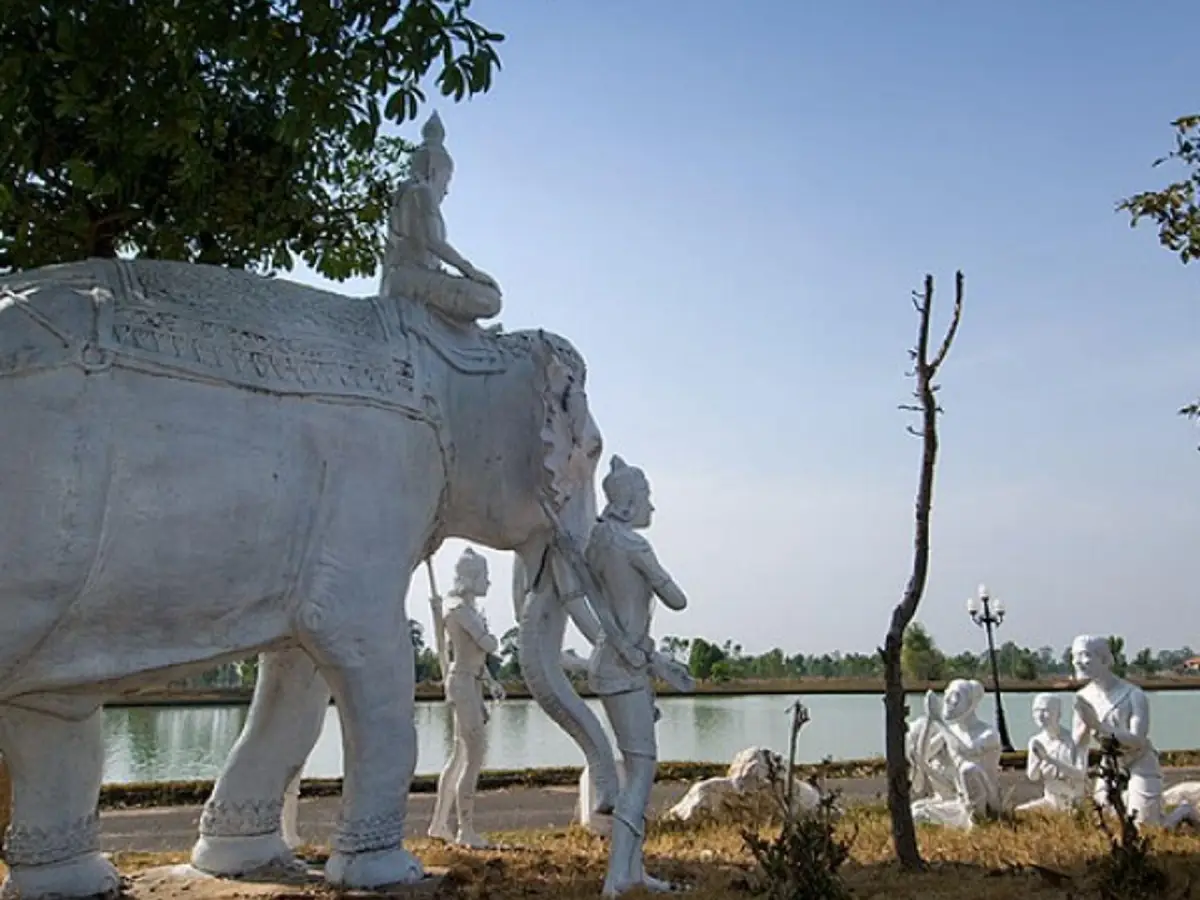
Vessantara Jataka Public Park is a Buddhist literature-themed public park and cultural attraction located in Ban Noi Hua Fai, Moo 8, Rob Mueang Subdistrict, Mueang Roi Et District, Roi Et Province. It is situated about 10 kilometers from Roi Et city center on the route toward Chaturaphak Phiman District. The park is open daily from 08.00 to 18.00. It was created as a tourist attraction, a public recreation area, and an exercise space for local residents. The site is surrounded by a large pond and features sculptural scenes from all 13 chapters of the Vessantara Jataka. Visitors can drive around the park area, making it convenient for families, elderly visitors, and travelers who want to explore the site at a relaxed pace.
For foreign travelers, Vessantara Jataka Public Park offers a different kind of Roi Et experience. Many visitors know the province through Bueng Phalan Chai, Roi Et Tower 101, Wat Burapha Phiram, and the city center, but this park introduces a quieter and more contemplative side of the province. It combines an open waterside landscape with Buddhist storytelling, Thai literary heritage, public art, and local recreation. The result is a park that is not only pleasant to visit, but also meaningful as a cultural learning space.
The central idea of the park is the Vessantara Jataka, one of the most important Buddhist stories in Thai and Isan culture. The story tells of Prince Vessantara, a Bodhisattva who perfected the virtue of generosity. In northeastern Thailand, this story is closely connected with the Bun Phawet tradition, also known as the Great Birth Sermon festival. By presenting the story through outdoor sculptures around a lake, the park allows visitors to understand the narrative visually, even if they are not already familiar with the text.
The landscape of the park is defined by a large pond, open sky, quiet surroundings, and white sculptural groups placed at intervals around the area. These sculptures function almost like an open-air exhibition. Instead of reading the story only in a book or hearing it only in a temple sermon, visitors can walk or drive through the park and encounter each major episode in visual form. This makes the site accessible for children, students, families, photographers, and travelers interested in Buddhist culture.
The 13 chapters represented in the park are Thotsaphon, Himmaphan, Thanakan, Wan Prawet, Chuchok, Chunlaphon, Mahaphon, Kumar, Matcha, Sakka Bap, Maharaj, Chokkasat, and Nakhonkan. Together, these chapters form the complete story of the Vessantara Jataka. They lead visitors through the background of the Bodhisattva, the act of great generosity, the departure into the forest, trials involving family and sacrifice, and the final restoration of harmony. This full sequence gives the park a strong educational structure.
The early chapters introduce the moral setting of the story. Thotsaphon and Himmaphan establish a sense of divine blessing, symbolic landscape, and narrative preparation. Thanakan is especially important because it shows the act of giving, the key virtue of the story. Wan Prawet marks the movement from the city into the forest, changing the setting from royal life to spiritual testing. Chuchok brings in one of the most memorable characters in the story and represents greed, desire, and moral contrast.
The middle chapters deepen the emotional and spiritual meaning of the story. Chunlaphon and Mahaphon expand the forest journey and create a sense of distance from ordinary city life. Kumar and Matcha are among the most moving sections because they involve family, love, sacrifice, and suffering. These chapters are powerful because they show that the practice of generosity is not only a simple act of giving, but a profound test of attachment, compassion, and endurance.
The later chapters bring the story toward resolution. Sakka Bap, Maharaj, Chokkasat, and Nakhonkan move the narrative from trial to recognition, reunion, and restoration. For visitors, the complete sequence of sculptures makes the park feel like a journey. Each sculptural scene is not isolated; it belongs to a larger moral story. This is one reason the park is valuable as a cultural and educational attraction.
The visual character of the park is simple but memorable. The white sculptures stand out against the blue sky, open water, and surrounding greenery. Their color gives a sense of calm and purity, while their size and placement make them easy to see from the road around the park. Some groups show key characters, some show important actions, and others suggest movement through the story. The park is especially photogenic in the morning and late afternoon, when the light is softer and the sculptures cast clearer shadows.
The construction of Vessantara Jataka Public Park cost 28,700,000 baht and was implemented by the Roi Et Provincial Administrative Organization, with construction beginning in 2002. This investment reflects the intention to create a public space that serves more than one purpose. The park is a tourism site, a place for exercise, a cultural education area, and a local recreation space. It shows how public landscape design can be used to preserve literature, religion, and community wellbeing at the same time.
Ban Noi Hua Fai in Rob Mueang Subdistrict is close enough to Roi Et city for a short trip, but far enough to feel quieter than the city center. The drive from town changes the mood from urban activity to a more open suburban environment. This makes the park a suitable stop for visitors who want a calm destination without traveling far from Roi Et. It is a good choice for a morning excursion before returning to the city for lunch and other attractions.
The ability to drive around the park is one of its practical advantages. Families with children, elderly visitors, and travelers with limited time can first drive through the area to understand the layout. They can then stop at selected points for closer viewing, photography, or a short walk. This makes the park easier to visit than many sites that require a long walking route from start to finish.
The best time to visit is in the morning or late afternoon. Morning is suitable for walking, exercise, and quiet photography. Late afternoon is good for lakeside views, soft light, and a more relaxed atmosphere before closing time. Midday visits are possible, but visitors should prepare for heat because much of the park is outdoors. Drinking water, sun protection, comfortable shoes, and a camera are useful for the visit.
For photographers, the park offers several strong subjects: white sculptural groups beside the lake, the elephant scene, character groups from the Jataka, the open road around the park, water reflections, and wide views of the pond and sky. The attraction here is not bright decoration, but the calm contrast between sculptures, water, and landscape. Patient observation usually produces better images than rushing through the site.
For families, the park is both enjoyable and educational. Children can see the story as sculpture, walk in open space, and learn about moral ideas through visual scenes. Parents can explain simple themes such as generosity, kindness, patience, family love, and the results of greed. This allows the visit to become more than a sightseeing stop; it becomes a relaxed family learning experience.
For travelers interested in Buddhism, the park is useful because it presents the ideal of giving in a visual form. Prince Vessantara is remembered for completing the perfection of generosity. The story is central to the Bun Phawet tradition of Isan, where the entire Vessantara Jataka is recited or preached during a major merit-making festival. Walking through the 13 sculptural chapters gives visitors a visual foundation for understanding that tradition.
The park is also suitable for light exercise. The road and open areas around the pond can be used for walking, jogging, and slow recreational movement during opening hours. The waterside setting helps make exercise more pleasant. Local people and visitors can combine physical activity with cultural appreciation by walking past the sculptural scenes and resting near the water.
Compared with central Roi Et attractions, Vessantara Jataka Public Park feels more peaceful and spacious. Bueng Phalan Chai and Roi Et Tower 101 are more central and lively, while this park is more reflective and narrative-based. This difference makes it a good addition to a Roi Et itinerary. It gives travelers a broader view of the province: city landmarks, religious sites, museums, public parks, and cultural storytelling landscapes can all be experienced in one trip.
A practical half-day route can begin at Vessantara Jataka Public Park in the morning. Visitors can drive around the park, stop to see the main sculptural groups, take photographs, and enjoy the lakeside atmosphere. After that, they can return to Roi Et city for lunch and continue to Roi Et Tower 101, Bueng Phalan Chai, Roi Et Municipal Aquarium, or Wat Burapha Phiram. This route combines a quiet cultural landscape with the main attractions of the city.
During the Bun Phawet period in Roi Et, the meaning of the park becomes even stronger. Bun Phawet is a major Isan merit-making tradition associated with the Vessantara Jataka and the Great Birth Sermon. Visitors who have seen the 13 sculptural chapters at this park will understand the cultural and religious background of the festival more clearly. The park therefore works well as a companion destination for anyone interested in Isan Buddhist traditions.
Because the park is outside the densest part of the city, visitors should prepare their transport carefully. Private car is the easiest option, especially because the park is designed so that vehicles can move around the area. Travelers using hired transport should arrange the return trip clearly. This is different from visiting Bueng Phalan Chai or Roi Et Tower, where transport and shops are more concentrated in the city center.
Dining options are most convenient on the route back toward Roi Et city. Chanmueang 101 Roi Et Branch is a practical stop for noodles and casual meals. Hom Nuan is a café and dining option in the Rob Mueang area. Pak Mor Phu Phan Roi Et is suitable for Vietnamese-style breakfast. Lakeview Restaurant and Indy Cafe are useful choices near Bueng Phalan Chai after visiting the park. This makes it easy to combine the park with a meal in the city.
For accommodation, staying in Roi Et city is the most practical choice. Hotels such as M Grand Hotel Roi Et, The Premium Residence, Ruan Rim Nam Hotel, HOP INN Roi Et, The Rice Hotel Roi Et, and Petcharat Garden Hotel provide convenient access to the park and other city attractions. A city stay allows travelers to visit the park in the morning, return for sightseeing around Bueng Phalan Chai in the afternoon, and enjoy restaurants or cafés in the evening.
Visitors should treat the park as a shared public space and cultural site. Do not litter, damage the sculptures, climb on the figures, write on signs, or disturb other visitors. Drivers should move slowly and carefully around the park because pedestrians, families, and children may be present. Respectful behavior helps preserve the park as a clean, safe, and meaningful place for both local residents and future visitors.
Overall, Vessantara Jataka Public Park is a valuable cultural public park in Roi Et. It combines Buddhist literature, outdoor sculpture, a large pond, local recreation, and public learning in one setting. It is especially suitable for travelers who want a quiet destination with cultural depth. Instead of being only a photo stop, the park gives visitors a way to understand the Vessantara Jataka, Bun Phawet culture, and the role of public space in Roi Et Province.
In the wider context of Roi Et travel, this park adds an important layer to the city and provincial experience. Bueng Phalan Chai represents the symbolic heart of the city, Roi Et Tower 101 represents the modern landmark of the province, and Wat Burapha Phiram represents urban Buddhist faith. Vessantara Jataka Public Park represents Buddhist storytelling in a landscape form. Together, these places help foreign travelers understand Roi Et as a province of faith, literature, community life, public space, and Isan identity.
| Name | Vessantara Jataka Public Park |
| Location | Ban Noi Hua Fai, Moo 8, Rob Mueang Subdistrict, Mueang Roi Et District, Roi Et Province |
| Address | Ban Noi Hua Fai, Moo 8, Rob Mueang Subdistrict, Mueang Roi Et District, Roi Et 45000, Thailand |
| Coordinates | 16.024655, 103.636896 |
| Highlights | A large lakeside public park with outdoor sculptures depicting all 13 chapters of the Vessantara Jataka. Cars can drive around the park area. |
| History / Importance | Created as a tourism site, public recreation area, and exercise space. The project cost 28,700,000 baht and was implemented by the Roi Et Provincial Administrative Organization, with construction beginning in 2002. |
| Distinctive Features | A Buddhist literary landscape that presents the Vessantara Jataka through outdoor sculptures around a large pond, suitable for cultural learning, relaxation, photography, and exercise. |
| Main Areas / Zones | 1. Large Pond Area Around The Park 2. Vehicle Route Around The Park 3. Thotsaphon Chapter Sculpture Zone 4. Himmaphan Chapter Sculpture Zone 5. Thanakan Chapter Sculpture Zone 6. Wan Prawet Chapter Sculpture Zone 7. Chuchok Chapter Sculpture Zone 8. Chunlaphon Chapter Sculpture Zone 9. Mahaphon Chapter Sculpture Zone 10. Kumar Chapter Sculpture Zone 11. Matcha Chapter Sculpture Zone 12. Sakka Bap Chapter Sculpture Zone 13. Maharaj Chapter Sculpture Zone 14. Chokkasat Chapter Sculpture Zone 15. Nakhonkan Chapter Sculpture Zone 16. Lakeside Resting And Photography Area |
| Travel Information | From Roi Et city center, drive toward Chaturaphak Phiman District for about 10 km to Ban Noi Hua Fai, Moo 8, Rob Mueang Subdistrict. Search for “Vessantara Jataka Public Park” or use the coordinates 16.024655, 103.636896 in a navigation app. |
| Current Status | Open as a public park, tourism attraction, and recreation area for local residents and visitors |
| Open Days | Daily |
| Opening Hours | 08.00 – 18.00 |
| Facilities | Vehicle route around the park, walking areas, lakeside resting spots, exercise areas, and outdoor photography points |
| Caretaker / Local Authority | The Roi Et Provincial Administrative Organization implemented the construction. The park is located within the jurisdiction of Rob Mueang Subdistrict Administrative Organization. |
| Main Contact Number | Roi Et Provincial Administrative Organization Tel. 043-511-055 Rob Mueang Subdistrict Administrative Organization Tel. 043-519814 |
| Nearby Tourist Attractions | 1. Roi Et Tower 101, about 10 km, Tel. 043-511222 2. Bueng Phalan Chai, about 10 km 3. Somdet Phra Srinagarindra Park Roi Et, about 10 km, Tel. 043-511222 4. Wat Bueng Phra Lan Chai Royal Temple, about 10 km 5. Roi Et Municipal Aquarium, about 10.5 km, Tel. 0 4351 1286 6. Roi Et National Museum, about 11 km 7. Wat Burapha Phiram, about 12 km |
| Nearby Restaurants | 1. Chanmueang 101 Roi Et Branch, about 7 km, Tel. 098-102-3015 2. Hom Nuan, about 8 km, Tel. 082-652-9592 3. Pak Mor Phu Phan Roi Et, about 10 km, Tel. 062-332-2465 4. Bai Mo, about 10 km, Tel. 043-511-559 5. Indy Cafe, about 10 km, Tel. 083-328-6446 6. Lakeview Restaurant, about 10.5 km, Tel. 093-320-8126 |
| Nearby Accommodations | 1. M Grand Hotel Roi Et, about 10 km, Tel. 061-021-4848 2. The Premium Residence, about 11 km, Tel. 043-518-655 3. Ruan Rim Nam Hotel, about 11 km, Tel. 043-518-967 4. HOP INN Roi Et, about 12 km, Tel. 02-080-2222 5. The Rice Hotel Roi Et, about 13 km, Tel. 043-519-999 6. Petcharat Garden Hotel, about 13 km, Tel. 043-519-007 |
Frequently Asked Questions (FAQ)
Q: Where is Vessantara Jataka Public Park located?
A: It is located in Ban Noi Hua Fai, Moo 8, Rob Mueang Subdistrict, Mueang Roi Et District, Roi Et Province, about 10 km from Roi Et city center toward Chaturaphak Phiman District.
Q: What are the opening days and hours of Vessantara Jataka Public Park?
A: The park is open daily from 08.00 to 18.00.
Q: What is the main highlight of Vessantara Jataka Public Park?
A: The main highlight is the complete set of outdoor sculptures depicting all 13 chapters of the Vessantara Jataka around a large pond.
Q: Who is this park suitable for?
A: It is suitable for families, students, visitors interested in Buddhist literature, photographers, walkers, and travelers who want a quiet cultural park near Roi Et city.
Q: What are the 13 chapters of the Vessantara Jataka shown in the park?
A: They include Thotsaphon, Himmaphan, Thanakan, Wan Prawet, Chuchok, Chunlaphon, Mahaphon, Kumar, Matcha, Sakka Bap, Maharaj, Chokkasat, and Nakhonkan.
Q: How can visitors get to Vessantara Jataka Public Park?
A: From Roi Et city center, drive toward Chaturaphak Phiman District for about 10 km to Ban Noi Hua Fai, Rob Mueang Subdistrict, or use the coordinates 16.024655, 103.636896 in a navigation app.
Q: What nearby attractions can be visited with the park?
A: Nearby and onward attractions include Roi Et Tower 101, Bueng Phalan Chai, Somdet Phra Srinagarindra Park Roi Et, Wat Bueng Phra Lan Chai, Roi Et Municipal Aquarium, Roi Et National Museum, and Wat Burapha Phiram.
Q: Who can visitors contact for local information?
A: Visitors can contact the Roi Et Provincial Administrative Organization at 043-511-055 or the Rob Mueang Subdistrict Administrative Organization at 043-519814.
 Category: ●Entertainment and Agricultural
 Group: ●Farms, Parks and Ecotourism
Last Update : 2 MonthAgo
 Last Update : 2 MonthAgo
 Click to Access the Navigation Map GPS
Vessantara Jataka Public Park Map
Recommend

 Art, Culture and Heritage
 Historical Sites and Monuments(3)
 Landmarks and Memorials(5)
 Art, Craft Centres, Tradition(2)
 Museums(1)
 Educational Places
 Educational Gardens, Farm(3)
 Places of Worship
 Temple(35)
 Other Sacred Sites(6)
 Suburban Living
 Village, Community(1)
 Local Market(1)
 Nature and Wildlife
 National Parks and Marine Reserves(1)
 Mountain (Doi)(2)
 Dam, Reservoir, Lake(8)
 Waterfalls(1)
 Flower Field(1)
 River, Canal(4)
 Zoos and Aquariums(1)
 Stadium(1)
Farms, Parks and Ecotourism(5)
Stadium(1)
Farms, Parks and Ecotourism(5)
 Shopping
 Shopping and Night Market(1)


