
lovethailand home >Northeastern Travel Attractions >Nakhon Ratchasima Travel Attractions >Pak Thong Chai >Thong Chai Nuea > New Theory Demonstration Project
TL;DR: New Theory Demonstration Project is located at Moo 14, Ban Chat Mongkhon, Thong Chai Nuea Subdistrict, Pak Thong Chai District, Nakhon Ratchasima Province 30150, open Advance Contact Required.
New Theory Demonstration Project
Open Days: Advance Contact Required
Visiting Hours: Please contact the project in advance at 081-712-1576 or 083-754-1248
The New Theory Demonstration Project under the Royal Initiative (Pak Thong Chai) is located in Moo 14, Ban Chat Mongkhon, Thong Chai Nuea Subdistrict, Pak Thong Chai District, Nakhon Ratchasima Province 30150. It is an important agricultural learning site created to demonstrate the practical application of the New Theory Agriculture concept, integrated farming, and the Sufficiency Economy philosophy. The site shows how a small agricultural area can be managed through water storage, rice cultivation, mixed crops, household space, academic learning areas, and farm activities that reduce dependence on a single crop. For foreign visitors, this project provides a clear and practical example of how Thailand’s royal development ideas were translated into a real agricultural landscape.
The value of the project is not limited to being a model farm. It is a living demonstration of how land and water can be organized systematically to help farmers become more self-reliant. Many small farmers face water shortages, irregular rainfall, crop risk, and limited land. The New Theory approach responds to these problems by dividing farmland into clear functional zones. A farm household can reserve water, grow rice for consumption, plant mixed crops, raise animals, and maintain a living area within one integrated system. This makes the project especially useful for visitors who want to understand sustainable agriculture in a Thai rural context.
The project began from the royal initiative of His Majesty King Bhumibol Adulyadej The Great on 30 June 1997. The initiative was to accept land offered by local people in Ban Chat Mongkhon, Pak Thong Chai District, Nakhon Ratchasima Province, and use it as a small demonstration site for New Theory Agriculture. On 29 July 1997, Mrs. Janya Pandee offered 2 plots of land totaling 21 rai, 3 ngan, and 39 square wah in Moo 14, Ban Chat Mongkhon, Thong Chai Nuea Subdistrict, Pak Thong Chai District. The land was later granted to the Chaipattana Foundation for the development of the project.
Additional land was offered on 5 June 1998 by Mrs. Somkhuan Maneesuriya, adding another 7 rai, 2 ngan, and 85 square wah adjoining the southern side of the original land. Later, another 3 rai was also offered, bringing the project’s total area to 32 rai, 2 ngan, and 24 square wah. This area was organized as a practical demonstration farm with New Theory zones, rice fields, mixed crop plots, herbal plant areas, nursery facilities, general management space, and an academic pavilion for learning and knowledge transfer.
The main objectives of the project are to demonstrate New Theory Agriculture based on the Sufficiency Economy philosophy, provide agricultural technical services, and serve as a training and knowledge-transfer site for farmers and interested visitors. These objectives make the site more than a display farm. It is designed so that visitors can understand why the land is divided in a certain way, how water storage supports farming, why mixed crops reduce risk, and how farm activities can be organized to support both household consumption and small-scale income.
The New Theory activity area covers 15 rai. It includes a water storage pond of 2 rai and 2 ngan, or about 17 percent of the activity area; rice fields of 4 rai and 2 ngan, or about 30 percent; other agricultural activities covering 7 rai, or about 47 percent; and a residential area of 1 rai, or about 6 percent. This real division reflects the well-known 30:30:30:10 model, while also showing that the ratio can be adapted according to local conditions. The important point is not to follow numbers mechanically, but to manage land and water for the highest practical benefit.
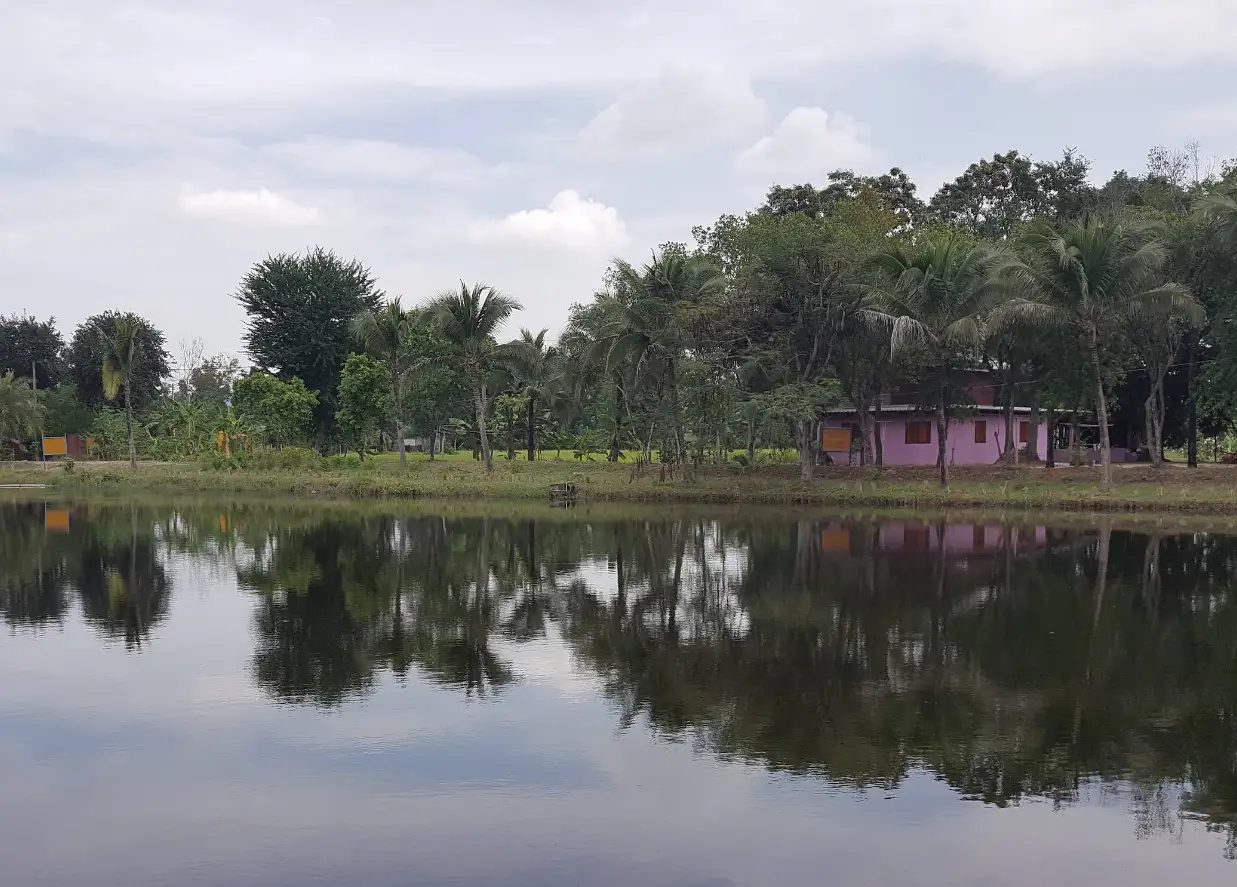
The water storage pond is the heart of the project. In rainfed agricultural areas, water is one of the most serious limiting factors. A pond allows rainwater to be stored for use during dry periods or when crops need additional water. At this project, the pond was developed with dimensions of about 40 by 83 meters and a depth of 4 meters, with an approximate storage capacity of 10,000 cubic meters. This water supports rice cultivation, mixed crops, fruit trees, and plants around the pond area.
Vetiver grass was planted around the pond to prevent soil erosion. Vetiver has a deep and dense root system that helps hold soil in place, especially around slopes, pond edges, and embankments. At this project, vetiver is not a decorative plant. It is part of a practical soil and water conservation system that works together with the pond, crop areas, and the overall land-management plan. This makes the site valuable for learning about simple and appropriate environmental techniques in agriculture.
The rice area demonstrates the importance of food security at the household level. In the New Theory approach, farmers first produce enough food for the family. Only after household needs are met should surplus production be sold. Rice fields are therefore not only production areas; they represent the foundation of self-reliance. The project also allows visitors to compare rice cultivation under the New Theory approach with more traditional farming practices, making the learning process more concrete.
The mixed agricultural area demonstrates how crop diversity can reduce risk and increase household resilience. Fruit trees, vegetables, short-term crops, herbs, and post-rice-season crops can be grown together in one system. Some crops are used for household consumption, some can be sold locally, and some help improve the environment of the farm. A diverse system protects farmers from the risk of relying on only one crop and allows production to occur at different times of the year.
The residential area shows that New Theory Agriculture does not separate farming from everyday life. A household area may include a home, storage space, livestock area, access road, tools, and other practical facilities. When the home is integrated with the pond, rice field, and crop plots, farmers can manage the land more efficiently. This layout also helps visitors understand that the New Theory is a way of organizing life, not only a method of planting crops.
Beyond the 15 rai New Theory activity area, the project also includes about 9 rai for rice-related activities and about 8 rai and 2 ngan for general management. These areas support demonstration, training, technical displays, group visits, and the daily operation of the project. As a result, the site functions as a farm, an experiment area, a training center, and a place for transmitting royal development knowledge to farmers, students, officials, and general visitors.
Several physical improvements were made to prepare the land as a practical demonstration site. These included land adjustment for field crops and orchard areas, rice-field preparation, construction of an academic pavilion for displaying agricultural information and storing equipment, and the development of internal access roads. These details show that New Theory Agriculture requires organized land planning. It is not simply a matter of planting many crops together, but of designing the whole farm system according to water, land use, household needs, and practical management.
The project is valuable as a learning site because it shows both principles and real practice. Visitors can see the pond, rice fields, mixed crop plots, fruit trees, livestock activities, vetiver planting, nursery areas, herb plots, and academic display areas in the same site. Learning in the field makes the New Theory easier to understand than reading a diagram alone. It also shows that the model is flexible and must be adapted to land size, climate, soil, labor, household needs, and local markets.
The first stage of the New Theory focuses on production for self-sufficiency. The goal is to help farmers secure enough food and water for the household, reduce risk, and create some surplus if possible. This is the foundation of household stability. Once basic needs are met, farmers can move toward stronger group organization and more advanced economic activities. The project demonstrates this first stage through its clear division of water, rice, mixed crops, and residential space.
The second stage of the New Theory focuses on cooperation. Farmers are encouraged to form groups or cooperatives to plan production, marketing, education, living conditions, welfare, social life, and religious activities together. This matters because small farmers often face limitations in capital, tools, markets, labor, and bargaining power. Group cooperation can reduce costs, improve knowledge exchange, and build community strength. The project therefore helps visitors understand that farm design and social organization are connected.
The third stage of the New Theory focuses on business and external support. Farmers and groups may coordinate with funding sources, mills, cooperative shops, fuel stations, or other supporting organizations to improve income and quality of life. This stage builds upon household stability and group cooperation. For visitors, the project makes it clear that sustainable farming involves more than production alone. It also involves social structure, local economy, and access to support systems.
Visitors should approach the project as a learning destination rather than a conventional tourist attraction. Advance contact is recommended so that the project team can arrange an appropriate visit, briefing, or field walk. Important areas to study include the pond, rice field, mixed crop plots, fruit trees, vetiver areas, nursery, herb plots, academic pavilion, and the overall land-use plan. A guided visit helps visitors understand the reasoning behind each zone.
Getting There is easiest by private car. Visitors can search for Moo 14, Ban Chat Mongkhon, Thong Chai Nuea Subdistrict, Pak Thong Chai District, Nakhon Ratchasima Province, or use the coordinates 14.784518, 102.04898. From Nakhon Ratchasima city, take Highway 304 toward Pak Thong Chai, then continue to Thong Chai Nuea Subdistrict and Ban Chat Mongkhon by local roads.
Travelers from Bangkok can enter Nakhon Ratchasima via Mittraphap Road and continue toward Pak Thong Chai. Another option is to travel through Wang Nam Khiao and Pak Thong Chai depending on the planned route. A private car is the most practical choice, especially for visitors who want to combine the project with Jim Thompson Farm, Lam Phra Phloeng Dam, local silk-learning areas, or nature attractions around Takhob and Pak Thong Chai.
The best time for a learning visit is in the morning or late afternoon, when outdoor walking is more comfortable. The rainy season and the period after the rains are good for seeing plant growth and water-management systems. The dry season is useful for understanding why stored water is important and how farm planning helps reduce risk. Visitors should prepare a hat, umbrella, walking shoes suitable for farm areas, and drinking water.
Farmers, student groups, researchers, local officials, and organizations that want a deeper study visit should contact the project in advance. The project is an active agricultural learning area, not an entertainment venue. Advance coordination allows the visit to include a useful explanation, key demonstration points, and a meaningful route through the project. This makes the visit more efficient and respectful of the site’s working purpose.
People interested in integrated farming can use this project as a framework for thinking about their own land. It is not necessary to copy the exact layout. The more important lesson is how to evaluate land, water, labor, household needs, crops, and local market conditions before planning a farm. By observing the project, visitors can understand the principles and adapt them to their own situation.
The project can also be included in a broader route through Pak Thong Chai. The district is known for silk, agriculture, and natural attractions. Visitors may combine the project with silk-learning areas, Jim Thompson Farm during its seasonal opening period, Lam Phra Phloeng Dam, Wat Na Phrathat, Nakhon Ratchasima Zoo, and local restaurants in Pak Thong Chai town. This makes the route suitable for visitors interested in agriculture, culture, family learning, and local livelihoods.
Overall, the New Theory Demonstration Project under the Royal Initiative (Pak Thong Chai) is one of Nakhon Ratchasima’s important agricultural learning destinations. Its key value lies in the demonstration of water storage, rice cultivation, mixed cropping, residential planning, vetiver use, fruit trees, livestock activities, technical learning, and knowledge transfer. The project is suitable for focused study visits, agricultural learning, and understanding how the Sufficiency Economy philosophy can be applied in real farm management.
| Name | New Theory Demonstration Project Under The Royal Initiative (Pak Thong Chai) |
| Location | Moo 14, Ban Chat Mongkhon, Thong Chai Nuea Subdistrict, Pak Thong Chai District, Nakhon Ratchasima Province 30150 |
| Address | Ban Chat Mongkhon, Moo 14, Thong Chai Nuea Subdistrict, Pak Thong Chai District, Nakhon Ratchasima Province 30150 |
| Coordinates | 14.784518, 102.04898 |
| Highlights | New Theory Agriculture demonstration area, integrated farming, water storage pond, rice field, mixed crop plots, nursery, herb plots, and academic pavilion |
| History | The project began from the royal initiative on 30 June 1997 to accept land offered by local people in Ban Chat Mongkhon, Pak Thong Chai District, and develop it as a small New Theory Agriculture demonstration project |
| Project Area | 32 rai, 2 ngan, and 24 square wah |
| Project Type | Agricultural development project and New Theory Agriculture learning site |
| Objectives | To demonstrate New Theory Agriculture based on the Sufficiency Economy philosophy, provide agricultural technical services, and serve as a training and knowledge-transfer site for integrated farming |
| Main Areas / Zones | 1. New Theory Activity Area: 15 Rai 2. Water Storage Pond: 2 Rai 2 Ngan 3. Rice Field: 4 Rai 2 Ngan 4. Other Agricultural Activities: 7 Rai 5. Residential Area: 1 Rai 6. Rice Activity Area: 9 Rai 7. General Management Area: 8 Rai 2 Ngan 8. Nursery, Plant Propagation Plots, Herbal Plant Plots, And Academic Pavilion |
| Learning Points | Land and water management, rice cultivation, integrated cropping, vetiver planting, fruit trees, livestock, land zoning, and applying the New Theory model to small farms |
| Travel Information | From Nakhon Ratchasima city, take Highway 304 toward Pak Thong Chai, then continue to Thong Chai Nuea Subdistrict and Ban Chat Mongkhon by local roads |
| Current Status | A New Theory Agriculture demonstration and learning site under the care of the Chaipattana Foundation and partner agencies |
| Open Days | Advance Contact Required |
| Visiting Hours | Please contact the project in advance at 081-712-1576 or 083-754-1248 |
| Facilities | Demonstration plots, water storage pond, academic pavilion, nursery, rice plots, crop plots, internal farm routes, and areas for study visits |
| Caretaker / Coordinator | Chaipattana Foundation and partner agencies / Mr. Kulawat Sri-in-ngam, Project Manager |
| Contact Number | 081-712-1576, 083-754-1248 |
| Nearby Tourist Attractions | 1. Pak Thong Chai Silk Learning Area – About 12 Km 2. Wat Na Phrathat, Taku Subdistrict – About 20 Km 3. Jim Thompson Farm – About 30 Km – Tel. 02-216-7368, 085-660-7336, 044-373-117 4. Nakhon Ratchasima Zoo – About 30 Km – Tel. 044-934532, 044-934647, 083-3720404 5. Lam Phra Phloeng Dam – About 40 Km 6. Lam Sam Lai Reservoir – About 35 Km |
| Nearby Restaurants | 1. Meeting Cafe’, Pak Thong Chai – About 12 Km – Tel. 087-261-5884 2. Kam Thong Restaurant, Pak Thong Chai – About 12 Km – Tel. 044-442602 3. Kung Ten Moo Kratha – About 12 Km – Tel. 087-870-0596 4. Krua Sumalee – About 13 Km – Tel. 087-871-6184 5. Takhobbar, Takhob Subdistrict – About 32 Km – Tel. 087-8723273, 089-9480434 6. Lan Kuai Tiao Ruea Khao Tha, Takhob Subdistrict – About 32 Km – Tel. 082-8749464 |
| Nearby Accommodations | 1. PTC_sp Pak Thong Chai – About 5 Km – Tel. 082-530-9858 2. Pak Thong Chai Resort – About 12 Km – Tel. 044-969-222 3. Pak Thong Chai Inn Hotel – About 12 Km – Tel. 061-108-2456 4. Goldenland Resort – About 14 Km – Tel. 044-756341, 089-8446109 5. Permsuk Resort / Permsuk-Cafe, Takhob Subdistrict – About 30 Km – Tel. 091-0208967, 084-9581266 6. Earth Elements Eco Resort – About 33 Km – Tel. 093-329-9666 |
Frequently Asked Questions (FAQ)
Q: Where is the New Theory Demonstration Project under the Royal Initiative (Pak Thong Chai) located?
A: It is located in Moo 14, Ban Chat Mongkhon, Thong Chai Nuea Subdistrict, Pak Thong Chai District, Nakhon Ratchasima Province 30150.
Q: What is the main highlight of this project?
A: The main highlight is a practical New Theory Agriculture and integrated farming demonstration area with a water storage pond, rice fields, mixed crop plots, residential area, nursery, herb plots, and academic pavilion.
Q: Should visitors contact the project before visiting?
A: Yes. Visitors should contact the project in advance at 081-712-1576 or 083-754-1248 to coordinate the visit date, time, and study format.
Q: When did the project begin?
A: The project began from the royal initiative on 30 June 1997, and land was formally offered for the project on 29 July 1997.
Q: What areas can visitors study inside the project?
A: Visitors can study the water storage pond, rice fields, integrated crop area, residential area, rice activity zone, general management area, nursery, herb plots, and academic pavilion.
Q: How can travelers get to the project?
A: From Nakhon Ratchasima city, take Highway 304 toward Pak Thong Chai, then continue to Thong Chai Nuea Subdistrict and Ban Chat Mongkhon by local roads. The coordinates are 14.784518, 102.04898.
Q: What attractions are near the project?
A: Nearby attractions include Pak Thong Chai silk-learning areas, Wat Na Phrathat, Jim Thompson Farm, Nakhon Ratchasima Zoo, Lam Phra Phloeng Dam, and Lam Sam Lai Reservoir.
 Category: ●Research and Development
 Group: ●Royal Project
Last Update : 3 MonthAgo
 Last Update : 3 MonthAgo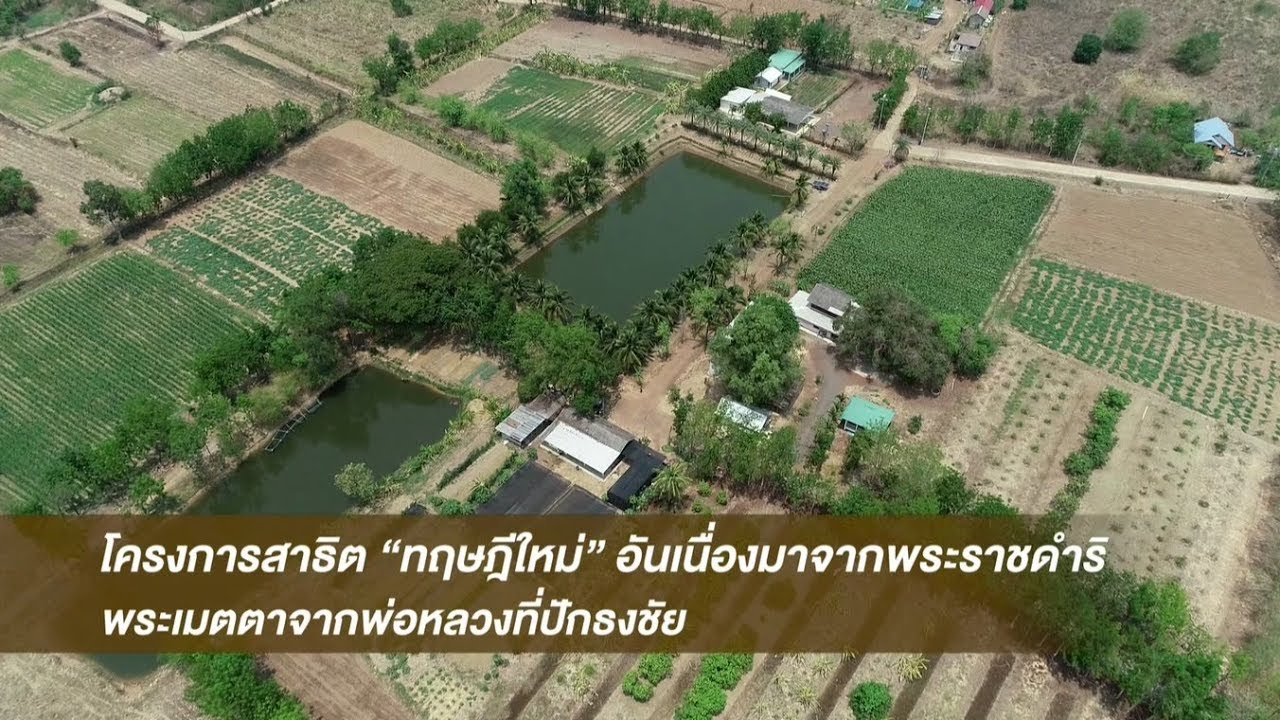
 Click to Access the Navigation Map GPS
New Theory Demonstration Project Map
Recommend

 Art, Culture and Heritage
 Historical Sites and Monuments(20)
 Landmarks and Memorials(5)
 Art, Craft Centres, Tradition(7)
 Museums(6)
 Art Gallery(1)
 Educational Places
 Educational Gardens, Farm(4)
 Places of Worship
 Temple(29)
 Mosque(1)
 Other Sacred Sites(6)
Royal Project(3)
Other Sacred Sites(6)
Royal Project(3)
 Suburban Living
 Village, Community(6)
 Local Market(4)
 Floating Market(1)
 Nature and Wildlife
 National Parks and Marine Reserves(3)
 Mountain (Doi)(5)
 Dam, Reservoir, Lake(8)
 Waterfalls(9)
 Hot Springs(1)
 Caves(2)
 Flower Field(1)
 River, Canal(8)
 Bays and Beaches(2)
 Other natural attractions(3)
 Entertainment and Agricultural
 Zoos and Aquariums(1)
 Animal camps and shows(1)
 Farms, Parks and Ecotourism(21)
 Waterpark(2)
 Outdoor and Adventure Activities(6)
 Shopping
 Shopping and Night Market(2)
 Travel Articles, Recipes
 Travel Review, Food Review(6)


