
lovethailand home >Northeastern Travel Attractions >Nakhon Ratchasima Travel Attractions >Kham Sakae Saeng >Kham Sakae Saeng > Ban Nook Integrated Farming Occupational Group
TL;DR: Ban Nook Integrated Farming Occupational Group is located at Moo 4, Kham Sakaesaeng Subdistrict, Kham Sakaesaeng District, Nakhon Ratchasima Province 30290, open Daily, hours 08.30 – 16.30.
Ban Nook Integrated Farming Occupational Group
Open Days: Daily
Opening Hours: 08.30 – 16.30
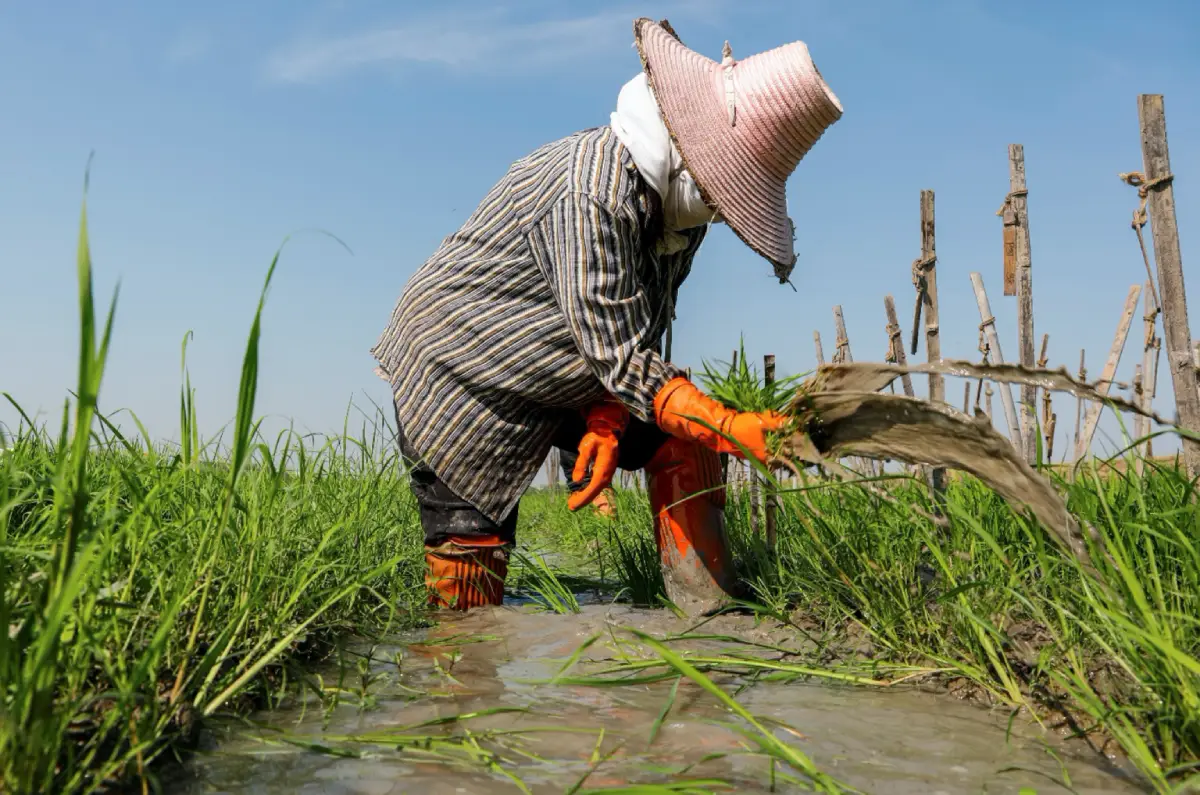
Ban Nook Integrated Farming Occupational Group is located in Moo 4, Kham Sakaesaeng Subdistrict, Kham Sakaesaeng District, Nakhon Ratchasima Province 30290. It is a community-based agricultural learning site developed around the mixed farm of Mr. Salit Mungfaengklang. The site is about 5 km from the Kham Sakaesaeng District Office along the Kham Sakaesaeng–Non Sung route. Its main value lies in its practical demonstration of integrated farming, with clear activity zones such as rice fields, banana plots, guava orchards, and fish ponds. For international visitors, Ban Nook offers a direct view of how a rural Thai farming household can organize land, water, crops, and fish production in one small agricultural system.
The character of Ban Nook is rooted in everyday rural life. This is not a large commercial farm or a modern tourist attraction built mainly for photography. It is a real mixed-farming area where household production, local knowledge, and practical land management are brought together. The farm shows how different activities can support one another: rice provides a food base, bananas provide a versatile crop, guava adds fruit income, and fish ponds create both food and additional production. The result is a farming model that reduces dependence on a single crop and creates more resilience for the household.
The integrated farming system at Ban Nook reflects an important direction in Thai rural development. Many farmers once depended heavily on single-crop production, which exposed households to market price changes, weather uncertainty, pest problems, and seasonal income gaps. Integrated farming provides another way of organizing the farm. Instead of using the whole area for only one crop, the land is divided into sections that serve different purposes. Some areas are used for rice, some for fruit trees, some for bananas, and some for water and fish. This makes the farm more diverse and more stable.
The rice field is the foundation of the system. Rice is not only a crop but also the core of Thai food culture and household food security. By keeping rice within the mixed-farming system, the farm maintains a strong connection with traditional agriculture while adding other income-generating activities around it. The rice area demonstrates that integrated farming does not replace rice cultivation. It strengthens it by adding complementary activities that support the household throughout the year.
The banana plot plays an important role because banana is one of the most useful plants in a Thai farming household. The fruit can be eaten fresh or processed, banana leaves are useful in cooking and wrapping, banana blossom can be used as food, and young shoots can be replanted. Banana plants also create shade and organic matter. In a mixed farm, bananas are more than a fruit crop. They are a flexible plant that contributes to food, income, and farm ecology at the same time.
The guava orchard adds another layer to the farming system. Guava is a familiar fruit in Thailand and has a clear local market. It can be managed as a fruit crop through pruning, watering, fruit protection, and harvest planning. By including guava, Ban Nook demonstrates how a farming household can diversify beyond rice and bananas into fruit production with market potential. Guava also helps visitors understand the different levels of care required by fruit trees compared with rice and short-term crops.
The fish pond completes the system by adding water management and animal production. A pond is not only a water-storage area. It can also become a food-production zone. Fish provide protein for the household and can become an additional source of income. Water from the pond can support nearby crops and help maintain moisture in the farm area. The pond therefore plays both ecological and economic roles in the mixed-farming model.
Mr. Salit Mungfaengklang is the key figure behind this learning site. His farm was recognized for its outstanding integrated farming system and won first prize at the regional level in 1998. This recognition gives Ban Nook historical importance as a local agricultural case study. The award reflects not only the presence of several crops in the same farm, but also the organization of land, water, crops, and fish ponds into a practical and understandable model.
The demonstration areas at Ban Nook are easy to understand because they show concrete elements of integrated farming. Visitors can see where rice is grown, where bananas are planted, where guava trees are managed, and how fish ponds fit into the overall system. This visual clarity makes the site useful for farmers, students, community groups, and travelers who want to understand rural Thai agriculture through a real field rather than through diagrams or lectures.
Ban Nook also shows the value of household-scale learning sites. Large agricultural centers may have formal buildings, equipment, and official demonstration plots, but a real household farm reveals the decisions that farmers make every day. It shows how land is divided, how labor is used, how water is managed, how crops are selected, and how risks are reduced. This kind of practical knowledge is important because it comes from actual farming conditions, not from theory alone.
Diversification is the main strength of the Ban Nook model. Rice, bananas, guava, and fish have different production cycles and different uses. Rice supports household food needs. Banana can provide food and saleable produce in several forms. Guava adds fruit income. Fish provide protein and another source of value from the farm pond. Because the outputs do not all depend on the same season or the same market, the household becomes less exposed to a single risk.
In environmental terms, integrated farming increases diversity within the farm. A rice field, fruit trees, banana plants, and a fish pond create different micro-environments. Some areas hold water, some provide shade, some produce fruit, and some support aquatic life. This is very different from a single-crop field. The diversity helps create a more balanced farm landscape and allows organic matter and resources to circulate more effectively within the area.
Ban Nook is also significant for local community identity in Kham Sakaesaeng District. The district is primarily rural and agricultural, and places like Ban Nook show how local farmers can create learning value from ordinary farmland. A farm that once served mainly household production can become a model for community learning. This gives young people, farmers, and local visitors a clearer understanding of agriculture as a system of knowledge, planning, skill, and adaptation.
For travelers, Ban Nook presents another side of Nakhon Ratchasima. Korat is often associated with ancient sites, temples, city landmarks, national parks, and famous food routes. Ban Nook adds a quieter agricultural dimension. It shows the daily world of rural households, where rice, fruit, fish ponds, and village roads form the landscape. This kind of visit is especially meaningful for those who want to understand local life beyond major attractions.
Getting There is straightforward by private car. From Kham Sakaesaeng District Office, follow the Kham Sakaesaeng–Non Sung route for about 5 km to reach Ban Nook, Moo 4, Kham Sakaesaeng Subdistrict. Travelers coming from Nakhon Ratchasima city can use the main road network toward Kham Sakaesaeng, then continue by local roads into the district. Private-car travel also allows visitors to continue toward Non Sung, Ban Prasat, Thung Samrit, or Phimai on the same wider route.
The location can be included in a half-day or full-day rural route. A visit can begin with the integrated farming demonstration at Ban Nook, continue into Kham Sakaesaeng town for local food or drinks, and then connect to Wat Khok Khu Khat or nearby community places. Longer routes can continue toward Ban Prasat Archaeological Site, Thung Samrit Memorial, and Phimai Historical Park. This allows travelers to combine agriculture, village life, archaeology, and local food in one journey.
The general visiting period follows the daily opening time of 08.30 to 16.30. A simple visit for observing the farming layout may take about one hour. Study groups may spend longer if they focus on land division, water use, crop selection, fruit-tree management, rice cultivation, and fish-pond roles. The value of Ban Nook is best understood through slow observation of the relationship between each farming zone.
The internal learning areas include the rice field, banana plot, guava orchard, fish pond, mixed-farming space, local paths, and the surrounding Ban Nook community. Each part shows a different function. The rice field represents food security. The banana plot represents multi-use plants. The guava orchard represents fruit production. The fish pond represents water and protein. Together, they form a practical example of integrated farming at household level.
For families and students, Ban Nook helps explain where food comes from. Rice is seen not as a product in a bag but as a crop in a field. Bananas and guava are seen as plants requiring care, water, pruning, and harvesting. Fish are seen as part of a pond system rather than only as market food. This direct connection with food production makes the site useful for learning about rural livelihoods and agricultural responsibility.
For farmers and people interested in mixed farming, Ban Nook provides a practical example of how one household can divide land into several productive functions. The model does not need to be copied exactly. Its main lesson is the relationship between land, water, crops, household food, and income. The farm shows that resilience can come from diversity, careful land use, and the ability to combine several production activities in a manageable way.
Food options near Ban Nook are mostly found in Kham Sakaesaeng town and along the route toward Non Sung. Visitors can find cafés, local eateries, drink shops, noodle shops, and small community restaurants. Accommodation in Kham Sakaesaeng is limited, so visitors who need more lodging options may stay in Non Sung District or Nakhon Ratchasima city and travel to Ban Nook as a day trip.
Overall, Ban Nook Integrated Farming Occupational Group is a valuable agricultural learning site in Kham Sakaesaeng District. Its highlights are the mixed farm of Mr. Salit Mungfaengklang, the rice field, banana plot, guava orchard, fish pond, and its recognition as a regional award-winning model in 1998. The site shows how a rural farming household can organize diverse production activities into one balanced system. It is a meaningful destination for understanding community agriculture, household food security, and practical integrated farming in Nakhon Ratchasima.
| Name | Ban Nook Integrated Farming Occupational Group |
| Location | Moo 4, Kham Sakaesaeng Subdistrict, Kham Sakaesaeng District, Nakhon Ratchasima Province 30290 |
| Address | Ban Nook, Moo 4, Kham Sakaesaeng Subdistrict, Kham Sakaesaeng District, Nakhon Ratchasima 30290, about 5 km from Kham Sakaesaeng District Office on the Kham Sakaesaeng–Non Sung route |
| Highlights | The mixed farm of Mr. Salit Mungfaengklang, with rice fields, banana plots, guava orchards, and fish ponds as a community-level integrated farming demonstration site |
| Type | Integrated farming learning site, mixed farm, community demonstration plot, and household-scale agricultural study area |
| History / Significance | A mixed farm developed by Mr. Salit Mungfaengklang. It won first prize at the regional level in 1998 and became a local example of integrated farm management |
| Distinctive Features | Clear division of farming zones, including rice cultivation, banana growing, guava production, and fish ponds in one household-based agricultural system |
| Main Produce / Activities | Rice, bananas, guava, fish, and seasonal mixed-farming products |
| Travel Information | From Kham Sakaesaeng District Office, follow the Kham Sakaesaeng–Non Sung route for about 5 km to Ban Nook, Moo 4, Kham Sakaesaeng Subdistrict |
| Current Status | Open as a community integrated farming learning site and mixed-farming demonstration area in Kham Sakaesaeng District |
| Open Days | Daily |
| Opening Hours | 08.30 – 16.30 |
| Facilities | Demonstration farm areas, walking areas within the mixed farm, agricultural learning points, community rest areas, and road access to Kham Sakaesaeng town |
| Main Areas / Zones | 1. Rice Field 2. Banana Plot 3. Guava Orchard 4. Fish Pond 5. Mixed-Farming Area 6. Land And Water Management Learning Area 7. Ban Nook Community Area 8. Kham Sakaesaeng–Non Sung Route Connection |
| Caretaker / Coordinator | Mr. Salit Mungfaengklang, owner of the mixed farm / Ban Nook Integrated Farming Occupational Group |
| Nearby Tourist Attractions | 1. Wat Ban Nook – about 1 km 2. Kham Sakaesaeng Fresh Market – about 5 km 3. Wat Khok Khu Khat – about 14 km 4. Bueng Ban Khok Khu Khat – about 14 km 5. Ban Prasat Archaeological Site – about 31 km 6. Thung Samrit Memorial – about 36 km 7. Phimai Historical Park – about 45 km – Tel. 044-471-568 |
| Nearby Restaurants | 1. Jungle Cafe, Kham Sakaesaeng Branch – about 5 km – Tel. 089-848-6579 2. Nobicha 397 Kham Sakaesaeng – about 5 km – Tel. 098-656-6621 3. Panupornpong Restaurant, Kham Sakaesaeng – about 5 km – Tel. 044-385-195 4. noom rong mee – about 13 km – Tel. 081-876-2250 5. Tor Mai Restaurant, Mueang Kaset Subdistrict – about 17 km – Tel. 082-144-8699 |
| Nearby Accommodations | 1. Muangthong Resort, Kham Sakaesaeng – about 6 km 2. Duna Green Resort, Kham Sakaesaeng – about 9 km 3. Sublunary Home Stay, Non Sung – about 33 km – Tel. 086-648-5329 4. Saeng Khan Resort, Non Sung – about 34 km – Tel. 083-378-9159 5. Attitude The Resort, Non Sung – about 35 km – Tel. 090-975-3230 6. My Home Resort, Non Sung – about 36 km – Tel. 088-359-0599 7. Leelawadee Resort, Non Sung – about 38 km – Tel. 087-960-0442 |
Frequently Asked Questions (FAQ)
Q: Where is Ban Nook Integrated Farming Occupational Group located?
A: It is located in Moo 4, Kham Sakaesaeng Subdistrict, Kham Sakaesaeng District, Nakhon Ratchasima Province 30290, about 5 km from Kham Sakaesaeng District Office on the Kham Sakaesaeng–Non Sung route.
Q: What are the opening days and hours?
A: The site is open daily from 08.30 to 16.30.
Q: What is the main highlight of Ban Nook Integrated Farming Occupational Group?
A: The main highlight is the mixed farm of Mr. Salit Mungfaengklang, featuring rice fields, banana plots, guava orchards, and fish ponds in one integrated farming system.
Q: What award did the Ban Nook mixed farm receive?
A: The mixed farm won first prize at the regional level in 1998 for its outstanding integrated farming arrangement.
Q: What zones can visitors see inside the demonstration farm?
A: Visitors can see rice fields, banana plots, guava orchards, fish ponds, mixed-farming areas, land and water management learning points, and the Ban Nook community area.
Q: How can travelers get to Ban Nook Integrated Farming Occupational Group?
A: From Kham Sakaesaeng District Office, follow the Kham Sakaesaeng–Non Sung route for about 5 km to Ban Nook, Moo 4, Kham Sakaesaeng Subdistrict.
Q: What nearby attractions can be combined with Ban Nook?
A: Nearby places include Wat Ban Nook, Kham Sakaesaeng Fresh Market, Wat Khok Khu Khat, Bueng Ban Khok Khu Khat, Ban Prasat Archaeological Site, Thung Samrit Memorial, and Phimai Historical Park.
 Category: ●Suburban Living
 Group: ●Village, Community
Last Update : 1 MonthAgo
 Last Update : 1 MonthAgo
 Click to Access the Navigation Map GPS
Ban Nook Integrated Farming Occupational Group Map
Recommend

 Art, Culture and Heritage
 Historical Sites and Monuments(20)
 Landmarks and Memorials(5)
 Art, Craft Centres, Tradition(7)
 Museums(6)
 Art Gallery(1)
 Educational Places
 Educational Gardens, Farm(4)
 Places of Worship
 Temple(29)
 Mosque(1)
 Other Sacred Sites(6)
 Research and Development
 Royal Project(3)
Village, Community(6)
Royal Project(3)
Village, Community(6)
 Local Market(4)
 Floating Market(1)
 Nature and Wildlife
 National Parks and Marine Reserves(3)
 Mountain (Doi)(5)
 Dam, Reservoir, Lake(8)
 Waterfalls(9)
 Hot Springs(1)
 Caves(2)
 Flower Field(1)
 River, Canal(8)
 Bays and Beaches(2)
 Other natural attractions(3)
 Entertainment and Agricultural
 Zoos and Aquariums(1)
 Animal camps and shows(1)
 Farms, Parks and Ecotourism(21)
 Waterpark(2)
 Outdoor and Adventure Activities(6)
 Shopping
 Shopping and Night Market(2)
 Travel Articles, Recipes
 Travel Review, Food Review(5)


