
lovethailand home >Northeastern Travel Attractions >Mukdahan Travel Attractions >Don Tan >Don Tan > Princess Mother Srinagarindra Park
TL;DR: Princess Mother Srinagarindra Park is located at Ban Na Muang, Moo 6, Don Tan Subdistrict, Don Tan District, Mukdahan Province, open Daily, hours 08:00–17:00. Access to indoor historical buildings and use of the seminar.
Princess Mother Srinagarindra Park
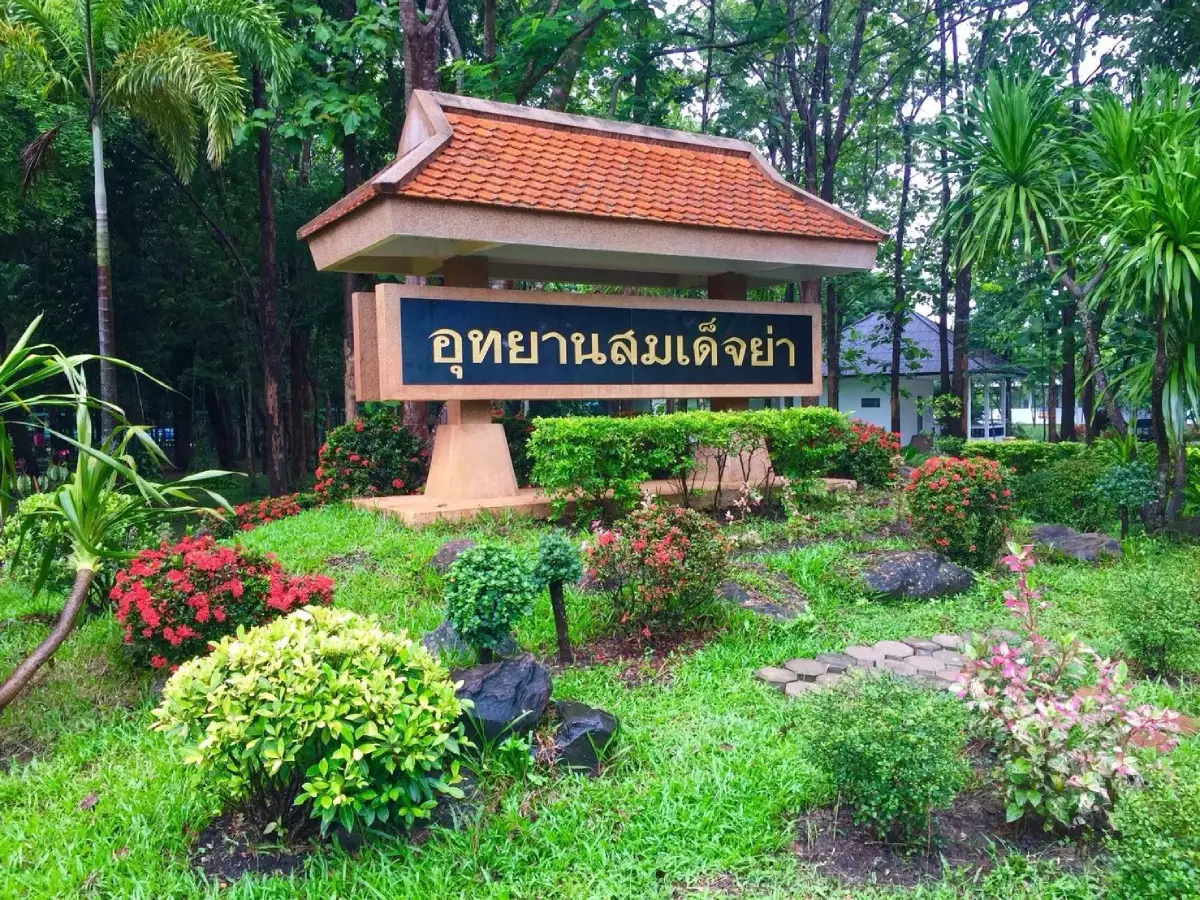
Open Days: Daily
Opening Hours: 08:00–17:00. Access to indoor historical buildings and use of the seminar facilities should be arranged with the caretaker in advance.
Princess Mother Srinagarindra Park, also known as Somdet Ya Park or the former Woraphat Operational Base, is a historical attraction and public recreation area in Mukdahan Province. It is considerably more significant than an ordinary landscaped park because the site originally served as a military operating base during a period of insecurity along Thailand’s northeastern frontier. Its most important historical event occurred when Her Royal Highness Princess Srinagarindra, widely and affectionately known in Thailand as Somdet Ya or the Princess Mother, traveled to the base and stayed overnight while visiting soldiers, officials, and local residents. The former military compound has since been transformed into a peaceful memorial park containing the royal pavilion, historical buildings, a pavilion housing an image of the Princess Mother, military shelters, landscaped gardens, and facilities for meetings, training programs, and educational visits.
The park is located at Ban Na Muang, Moo 6, Don Tan Subdistrict, Don Tan District, Mukdahan Province. It lies approximately 5 km from the Don Tan District Office on the Don Tan–Loeng Nok Tha road. The surrounding area retains the quiet atmosphere of a rural community, with mature trees, lawns, shaded paths, and historical structures distributed throughout the grounds. The site is easy to reach by private car and does not require a long hike or a journey into mountainous terrain. Its principal appeal, however, is not entertainment or adventure. Visitors come to understand the history of the former base, reflect on the Princess Mother’s connection with the local community, and see physical evidence of an important period in Mukdahan’s frontier history.
The compound was originally known as Woraphat Operational Base. It accommodated military personnel responsible for security duties in Don Tan and surrounding border areas. During the mid-1970s, large parts of northeastern Thailand consisted of forested terrain connected by limited roads and communication systems. Military operating bases were therefore established close to rural communities to provide security, coordinate government operations, and support local development. The Woraphat base was not isolated from the surrounding population. It became a practical point of contact between government personnel and residents who often depended on state agencies for medical assistance, transportation, infrastructure, and other essential services.
The site’s military history became clearly established when Tactical Control Unit 06 was organized under the forward operations of the Second Army Region in late 1975. Ban Na Muang was selected as an operational location from which personnel could work throughout Don Tan and nearby districts. Conditions were demanding. Roads were limited, communication was slow, and much of the landscape was difficult to access. Locating the base near a village made it possible to respond more quickly while developing a closer working relationship with local residents.
The name “Woraphat” commemorates Lieutenant Woraphat Amphonphong, an officer who died while performing his duty in September 1976. Naming the base after him reflected the military tradition of honoring courage, service, and sacrifice. Woraphat therefore became more than a geographical name. It served as a permanent reminder of the personnel who faced danger and hardship while carrying out their responsibilities in a sensitive frontier region.
The defining event in the site’s history occurred from June 5 to June 7, 1977, when Princess Srinagarindra traveled to the base accompanied by Her Royal Highness Princess Galyani Vadhana, Princess of Naradhiwas Rajanagarindra. Their visit was intended to encourage and support officials, soldiers, police officers, and residents working or living in the border area. The Princess Mother stayed inside the base for 3 days and 2 nights, an event that brought profound pride and inspiration to local personnel and communities.
The royal visit was particularly meaningful because Ban Na Muang was far from Thailand’s major urban centers and lacked the convenient transportation and communication available today. The Princess Mother did not simply inspect official operations. Her presence expressed concern for the health, welfare, and morale of both the personnel on duty and the people living in remote communities. Her decision to stay at a working military base illustrated her modest personal manner, her willingness to travel into difficult areas, and her determination to remain close to the people she sought to assist.
Woraphat is remembered as an important northeastern military base where the Princess Mother stayed overnight. The royal pavilion and related structures were consequently preserved as physical evidence of the visit. Their value is not based on architectural grandeur. They are important because they connect the Princess Mother’s public service directly with the people of Mukdahan and with officers who were working under difficult frontier conditions.
Princess Srinagarindra is deeply respected in Thailand for her work in medicine, public health, education, and assistance to disadvantaged people in remote regions. She repeatedly traveled to places that were difficult to reach, meeting medical personnel, border officers, teachers, and residents who had limited access to public services. Her visit to Woraphat Operational Base was fully consistent with her lifelong commitment to health, opportunity, and encouragement for people living far from the country’s main administrative centers.
The compound continued to function as a military base until approximately 1983. As the security situation changed, its operational role gradually ended. Government agencies, military units, the provincial administration, Don Tan District, and local organizations subsequently developed the area as a historical memorial and public park. Existing buildings were repaired, the landscape was improved, and important evidence of the former base was retained so that future generations could learn from the site without erasing its original character.
The grounds later received royal permission to use the name Princess Mother Srinagarindra Park, or Somdet Ya Park in Thai. The new name recognizes the strong connection between the location and the Princess Mother’s stay. The former name, Woraphat Base, continues to be used alongside it so that the history of the military compound and the officer after whom it was named will not be forgotten. Travelers may therefore encounter the names Somdet Ya Park, Princess Mother Park, Woraphat Base, and Woraphat Operational Base. All refer to the same historical site at Ban Na Muang.
Today the park is maintained as a shaded and peaceful public space. Mature trees, lawns, and paths connect the historical buildings, allowing visitors to walk through the grounds at a relaxed pace. Some areas retain the atmosphere of a former operating base, while the gardens soften the appearance of the military structures. This combination makes the site suitable for both historical learning and quiet recreation.
One of the principal landmarks is the octagonal pavilion containing an image of the Princess Mother. It functions as a focus of public respect and is used for official commemorative ceremonies. Visitors should dress appropriately, speak quietly, and avoid eating, playing music, or engaging in unsuitable behavior inside the pavilion.
The octagonal pavilion has particular importance for the people of Don Tan because it is used for annual ceremonies commemorating the Princess Mother’s birthday on October 21. Government agencies, district officials, local leaders, and residents gather to present floral tributes and remember her contributions. These continuing ceremonies demonstrate that the park is not simply a place where the past has been stored. Public memory is actively renewed through activities held at the site.
The royal pavilion is another historically significant area because it is directly associated with the Princess Mother’s stay in June 1977. The structure is modest and functional rather than ceremonial or lavish. Its simplicity reflects the practical requirements of a frontier military base and the Princess Mother’s unpretentious personal manner. The building helps visitors understand how a royal visit was accommodated in a remote operational setting.
Historical buildings within the grounds present the story of Woraphat Base, its personnel, and the royal visit. Indoor access may depend on staff availability or a scheduled activity. Schools, universities, government groups, and visitors seeking detailed access should contact Don Tan Phasuk Subdistrict Municipality before traveling. Advance coordination allows the caretaker to arrange building access and educational support when available.
Military shelters and bunker-like structures provide further insight into the conditions under which personnel worked. They were designed to protect troops and support security operations. Visitors must not climb on the structures, enter closed sections, or remove objects. The buildings are several decades old and are preserved as historical evidence rather than as playground equipment. Children should remain closely supervised in these areas.
Walking through the actual base offers an experience that cannot be reproduced fully by an exhibition or photograph. Visitors can observe the distance between buildings, the organization of the compound, the relationship between defensive areas and living quarters, and the site’s position beside the surrounding community. These spatial details make the history more tangible and easier to understand.
The gardens and green spaces make the park suitable for rest as well as study. Trees provide shade along the paths and create a calm atmosphere. The conversion of a military compound into a memorial garden represents a meaningful transformation: a landscape formerly associated with insecurity is now used for remembrance, public learning, community activity, and peace.
A tree-covered walkway is another attractive part of the park. Branches and foliage form a shaded corridor that is particularly pleasant in the morning and late afternoon, when sunlight filters through the leaves. Visitors should remain on the paths, avoid damaging plants, and dispose of all waste properly so that the green environment continues to benefit the community.
The site also contains reception rooms and spaces used for training and seminars. These facilities support the park’s role as a learning center. Government agencies, schools, community groups, and other organizations may coordinate appropriate activities such as meetings, youth programs, historical education, community training, and commemorative events. The rooms are not guaranteed to be available to walk-in visitors and must be reserved through the caretaker.
Holding a seminar at the park offers the advantage of a quiet environment with direct historical relevance. Participants can combine indoor sessions with guided observation of the buildings and grounds. Organizers must control noise, participant numbers, waste, parking, and the use of equipment. Activities should not interfere with ordinary visitors, government ceremonies, or the respectful atmosphere of the memorial.
The park has also supported public-health and community-service activities inspired by the Princess Mother’s medical work. Mobile medical teams and health agencies have provided services during commemorative occasions. Bringing health services to a place associated with her public-health commitment gives the historical site an active contemporary purpose and continues the principle of assisting people in rural areas.
Princess Mother Park therefore serves several functions at the same time. It is a memorial, historical park, public garden, community facility, educational destination, and ceremonial venue. Balancing these uses requires both responsible management and considerate behavior from visitors. Historical structures must be protected, while residents and organizations must still be able to use the grounds and meeting facilities appropriately.
The principal caretaker is Don Tan Phasuk Subdistrict Municipality, working with Don Tan District, Mukdahan provincial agencies, community leaders, and relevant organizations. Its responsibilities include landscaping, cleanliness, historical structures, ceremonial arrangements, group visits, and coordination of the seminar facilities. Visitors requiring detailed access information should contact the municipality before departure.
There is no general admission fee for the outdoor park. Visitors can walk through the gardens and view publicly accessible landmarks without purchasing a ticket. The use of reception rooms, meeting spaces, equipment, or facilities for an organized group requires permission. Any arrangement or service charge should be confirmed directly with the municipality when making a reservation.
The most comfortable visiting periods are approximately 08:00–10:00 and 15:00–17:00, when temperatures are lower and the light is suitable for photography. Midday visits are possible, but a hat, drinking water, and sun protection are useful between March and May. The cooler season from approximately November to February is particularly pleasant for spending more time walking through the grounds.
During the rainy season, the gardens become greener and more shaded, but paths may be wet and slippery. Leaves and branches can fall during storms. Visitors should wear footwear with a reliable grip and should not remain beneath large trees during strong winds. When thunder is present, shelter should be taken only in an approved building rather than in an open field or beside an electrical pole.
A normal visit takes approximately 1–2 hours. Travelers who want to read information, photograph the structures, and explore the gardens carefully should allow 2–3 hours. Educational groups or organizations using the training facilities may spend half a day or a full day. Visitors with limited time can begin at the Princess Mother pavilion, continue to the royal accommodation and historical buildings, view the military shelters, and finish with a walk through the gardens.
The site is suitable for families, students, history groups, public agencies, and travelers interested in the Princess Mother’s work. Young visitors benefit from seeing how local history relates to national developments. Parents and teachers should explain that the shelters, buildings, and military remains are historical evidence and must not be climbed on or treated as play equipment.
Older travelers can visit comfortably by choosing a cooler part of the day and taking regular breaks. Much of the park consists of gardens and paths between buildings, although some structures may have steps or changes in floor level. Wheelchair users and visitors with limited mobility should contact the caretaker to ask about parking and the most accessible route. Traveling with an assistant will make the visit safer and more convenient.
Respectful clothing is appropriate because the park contains a pavilion dedicated to the Princess Mother and is used for royal commemorative ceremonies. Visitors should avoid loud music, shouting, and unsuitable photography poses near the royal image or pavilion. Respectful behavior preserves the calm atmosphere and honors the importance of the events associated with the site.
Personal photography in outdoor areas is normally appropriate when it does not disturb others. Commercial photography, drone operation, large equipment, and organized filming should be approved by the municipality. Photographers must not enter restricted areas, move historical objects, or obstruct paths with tripods. During official ceremonies, all instructions from staff must be followed.
Food and drinks should be consumed only in suitable areas and should not be carried into the memorial pavilion or historical buildings. All rubbish must be placed in the designated bins or removed from the site. Flowers, branches, and historical materials must not be taken as souvenirs, while writing on walls or moving objects is strictly inappropriate.
The park’s vegetation can attract ants, mosquitoes, and other insects, particularly after rain. Visitors with serious insect allergies should carry their medication and wear suitable clothing. Animals and bird nests should not be disturbed. Broken branches, damaged paths, or other hazards should be reported to the caretaker rather than handled by visitors.
Princess Mother Park is not a national park. It does not offer long nature trails, camping grounds, or wilderness activities. The Thai word “utthayan” in this name refers to a landscaped memorial and public park. Travelers should distinguish it from Phu Sa Dok Bua National Park and Phu Pha Thoep National Park, which are natural protected areas with separate regulations, opening hours, and admission systems.
Travelers interested in military history will find a locally focused narrative that is rarely available at mainstream attractions. The compact base allows its different elements to be seen at close range, including former operational areas, protective structures, buildings used by personnel, and the royal accommodation. These features illustrate how frontier military units combined security work with assistance to nearby communities.
Travelers interested in the Princess Mother’s life can encounter a direct example of her fieldwork. Her stay at Woraphat Base demonstrates that she valued the welfare of officials and residents regardless of how remote their location was. A meaningful visit therefore involves reading and understanding the story rather than stopping only to photograph the entrance sign.
For schools, the site can function as an outdoor history classroom. Teachers can connect the visit with the Cold War period, frontier development, the military’s relationship with rural communities, public-health initiatives, and heritage conservation. Before bringing a large group, organizers should confirm the number of participants, timing, parking, toilets, building access, and educational arrangements with the municipality.
Organizations wishing to use the seminar rooms should clearly provide the purpose of the activity, number of participants, requested date and time, equipment requirements, and transportation details. Programs related to history, community service, youth development, public administration, or commemoration are particularly compatible with the setting. Advance coordination avoids conflicts with official ceremonies or local activities.
A half-day route from Mukdahan city can include Princess Mother Park in the morning followed by Hat Hin at Wat Woen Chai Mongkhon beside the Mekong River. This combination offers historical learning, green space, and riverside scenery without requiring a long journey. It is suitable for families and travelers who prefer an unhurried itinerary.
Travelers with a full day can visit the park in the morning and continue to Phu Sa Dok Bua National Park. In the late afternoon, they may return toward Mukdahan city and visit the Phaya Si Mukda Maha Muni Nilapala Naga landmark or Mukdahan Tower. The route presents several dimensions of the province, including frontier history, nature, religious belief, and views of the Mekong region.
Hat Hin at Wat Woen Chai Mongkhon is one of the closest recreational attractions. Its rocky Mekong riverbank changes according to the water level and provides a contrasting landscape after a historical visit. Travelers should observe river conditions and avoid approaching slippery or flooded areas.
Phu Sa Dok Bua National Park is approximately 16 km away and contains forest, rocky terrain, and natural features connected with the history of the frontier region. A nature visit should be planned separately, with sufficient time and information obtained from the national park because its fees, opening arrangements, and access conditions are different from those of Princess Mother Park.
Phu Pha Thoep National Park is approximately 22 km away and is known for unusual rock formations and natural scenery. A private vehicle makes it possible to connect the two destinations, but travelers should consider weather conditions and national-park closing times. Walking at Phu Pha Thoep is more physically demanding than exploring Princess Mother Park, so suitable shoes, drinking water, and rest time are necessary.
Restaurants near the park are concentrated around Don Tan town and along the Mekong. Small local establishments may follow community operating hours rather than fixed tourist schedules. Groups should call ahead or choose a restaurant capable of accommodating the required number of guests. Typical choices include Isan food, made-to-order Thai dishes, Mekong fish, and local home-style cooking.
Accommodation in the immediate area consists mainly of small resorts and riverside properties in Don Tan. Larger hotels with a broader range of facilities are located in Mukdahan city, approximately 30–35 km away. Travelers with a vehicle can stay in the city and visit the park in the morning. Those preferring a quiet rural setting can stay in Don Tan, but should confirm availability, current operating status, and food services before arrival.
Getting There from Mukdahan city requires traveling toward Don Tan District. From the district center, continue along the Don Tan–Loeng Nok Tha road toward Ban Na Muang for approximately 5 km. A private or rental car is the most convenient option because regular public transport does not run continuously to the park entrance. Bus travelers should continue from Don Tan by local hired transport and arrange the return journey in advance.
Navigation applications can be searched using “Princess Mother Park Woraphat Base,” “Somdet Ya Park Mukdahan,” or the Plus Code 7WFC+9QW, Don Tan District, Mukdahan. Saving the map before departure is advisable because mobile reception can vary along rural roads. Near Ban Na Muang, drivers should follow local signs and reduce speed for residents, motorcycles, animals, and agricultural vehicles.
Vehicles should be parked only in designated areas and must not obstruct historical buildings, walking routes, or emergency access. Groups arriving by bus or several vans should inform the municipality in advance so that parking and passenger drop-off can be arranged safely.
Princess Mother Srinagarindra Park is a destination for meaningful travel. Visitors do more than rest beneath the trees. They learn about public service, military sacrifice, frontier communities, the Princess Mother’s work, and the transformation of a security base into a public memorial. The history remains connected with present community life because the park continues to host ceremonies, public services, training programs, and educational activities.
Preserving the site is a shared responsibility. Visitors contribute by following the rules, protecting the buildings, avoiding restricted areas, keeping the grounds clean, and presenting the history accurately. With respectful care, Princess Mother Park and the former Woraphat Operational Base can remain a living memorial, an educational resource for younger generations, and a valuable public space in Mukdahan Province.
| Name | Princess Mother Srinagarindra Park (Former Woraphat Operational Base) |
| Location | Ban Na Muang, Moo 6, Don Tan Subdistrict, Don Tan District, Mukdahan Province |
| Navigation Address | Princess Mother Park, Ban Na Muang, Don Tan Subdistrict, Don Tan District, Mukdahan 49120, Thailand |
| Plus Code | 7WFC+9QW, Don Tan District, Mukdahan |
| Attraction Type | Historical memorial park, former military base, public recreation area, and learning center associated with Princess Srinagarindra |
| Distance from Don Tan District Office | Approximately 5 km along the Don Tan–Loeng Nok Tha road |
| Historical Importance | The site formerly served as Woraphat Operational Base. Princess Srinagarindra stayed here from June 5–7, 1977, accompanied by Princess Galyani Vadhana, Princess of Naradhiwas Rajanagarindra. |
| Origin of the Woraphat Name | The base was named in memory of Lieutenant Woraphat Amphonphong, who died while performing his duty in September 1976. |
| Origin of the Park Name | The former base was developed into a historical and recreational park and received royal permission to use a name commemorating the Princess Mother’s stay. |
| Highlights | Royal accommodation pavilion, octagonal memorial pavilion, historical buildings, military shelters, gardens, tree-covered walkway, and seminar facilities |
| Main Areas / Zones | 1. Entrance and park sign 2. Octagonal pavilion housing the Princess Mother’s image 3. Royal accommodation pavilion 4. Historical buildings and exhibition areas 5. Military shelters or bunkers 6. Gardens and tree-covered walkway 7. Reception and seminar facilities 8. Ceremonial and community activity grounds |
| Recommended Activities | Historical learning, viewing the former military compound, commemorating the Princess Mother, garden walks, photography, recreation, seminars, and educational visits arranged in advance |
| Caretaker | Don Tan Phasuk Subdistrict Municipality in cooperation with Don Tan District, Mukdahan Province, and relevant agencies |
| Current Status | Open as a historical attraction, recreation area, educational destination, ceremonial site, and venue for community-service activities |
| Open Days | Daily |
| Opening Hours | 08:00–17:00. Indoor buildings and seminar rooms are accessible according to staff arrangements or advance coordination. |
| Fees | General outdoor admission is free. Organized use of meeting rooms or facilities must be arranged with the caretaker. |
| Facilities | Parking, walking paths, gardens, pavilions, reception rooms, seminar facilities, activity areas, and toilets at service points |
| Visitor Guidelines | Dress respectfully, keep noise low, do not climb military structures, remain outside restricted areas, do not move historical objects, and avoid eating inside memorial or historical buildings. |
| Travel Information | Travel from Mukdahan city to Don Tan District, then follow the Don Tan–Loeng Nok Tha road toward Ban Na Muang for approximately 5 km. A private or rental car is the most convenient option. |
| Main Contact Number | Don Tan Phasuk Subdistrict Municipality: +66 (0)42-689-328 |
| Nearby Tourist Attractions | 1. Hat Hin at Wat Woen Chai Mongkhon, about 7 km 2. Phu Sa Dok Bua National Park, about 16 km 3. Phu Pha Thoep National Park, about 22 km 4. Phaya Si Mukda Maha Muni Nilapala Naga, about 32 km 5. Mukdahan Tower, about 35 km |
| Nearby Restaurants | 1. Krua Ton Kla Don Tan, about 5 km 2. Baan Khong Kin Don Tan, about 5 km 3. Hat Hin Rim Khong Restaurant, about 7 km, Tel. 062-107-1255, 097-049-3423 4. Nat Phop Rim Khong Restaurant, about 33 km, Tel. 042-614499, 089-7116063 5. Krua Vietnam Mukdahan, about 34 km, Tel. 042-614120, 086-5802849 |
| Nearby Accommodations | 1. Sakon Resort Don Tan, about 5 km 2. Baan Rim Khong Resort Don Tan, about 6 km 3. Hat Hin Rim Khong Restaurant and Resort, about 7 km, Tel. 062-107-1255, 097-049-3423 4. Ploy Palace Hotel Mukdahan, about 34 km, Tel. 042-631111–20 5. River Inn Hotel Mukdahan, about 34 km, Tel. 042-615444–50 |
Frequently Asked Questions (FAQ)
Q: On which days and at what times is Princess Mother Park open?
A: The outdoor park is open daily from 08:00 to 17:00. Access to indoor historical buildings or use of seminar rooms should be arranged with Don Tan Phasuk Subdistrict Municipality in advance.
Q: Is there an admission fee for Princess Mother Park?
A: General outdoor admission is free. Organized use of meeting rooms, equipment, or facilities must be discussed with the caretaker.
Q: Why is Woraphat Operational Base historically important?
A: It was a frontier military base where Princess Srinagarindra stayed from June 5–7, 1977, while visiting soldiers, officials, and residents in the area.
Q: What can visitors see inside the park?
A: The park contains an octagonal pavilion dedicated to the Princess Mother, the royal accommodation pavilion, historical buildings, military shelters, gardens, a tree-covered walkway, and seminar facilities.
Q: Can organizations use the seminar facilities?
A: Appropriate educational, government, community, or training activities can be arranged by providing the purpose, number of participants, date, time, and facility requirements to the municipality in advance.
Q: How can travelers reach Princess Mother Park from Mukdahan city?
A: Travel to Don Tan District and continue along the Don Tan–Loeng Nok Tha road toward Ban Na Muang. The park is approximately 5 km from the Don Tan District Office, and a private or rental car is the most convenient transport option.
Q: How much time should visitors spend at the park?
A: A general visit takes approximately 1–2 hours. Travelers wishing to explore the buildings, read the historical information, and walk through the gardens should allow 2–3 hours.
Q: What is the best time of day to visit?
A: The most comfortable periods are 08:00–10:00 and 15:00–17:00. The cooler months from November to February are particularly suitable for walking through the grounds.
 Category: ●Entertainment and Agricultural
 Group: ●Farms, Parks and Ecotourism
Last Update : 1 WeekAgo
 Last Update : 1 WeekAgo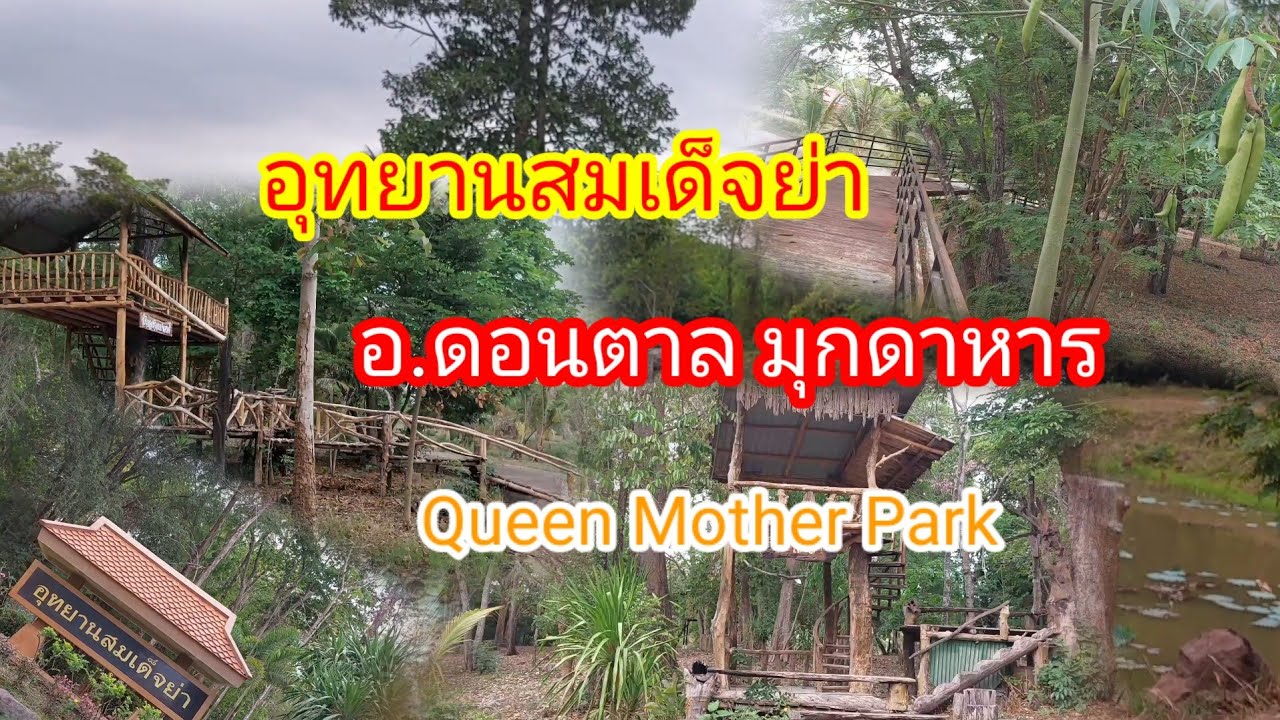
 Click to Access the Navigation Map GPS
Princess Mother Srinagarindra Park Map
Recommend

 Art, Culture and Heritage
 Historical Sites and Monuments(2)
 Landmarks and Memorials(3)
 Art, Craft Centres, Tradition(2)
 Museums(1)
 Places of Worship
 Temple(17)
 Other Sacred Sites(3)
 Suburban Living
 Village, Community(4)
 Local Market(2)
 Nature and Wildlife
 National Parks and Marine Reserves(4)
 Mountain (Doi)(5)
 Dam, Reservoir, Lake(3)
 Waterfalls(5)
 Caves(2)
 River, Canal(2)
 Bays and Beaches(1)
 Other natural attractions(1)
Farms, Parks and Ecotourism(1)
Other natural attractions(1)
Farms, Parks and Ecotourism(1)


