
lovethailand home >Northeastern Travel Attractions >Mukdahan Travel Attractions >Don Tan >Don Tan > Mahorathuek Drum
TL;DR: Mahorathuek Drum is located at Wat Matchimawat (Wat Klang), Don Tan Subdistrict, Don Tan District, Mukdahan Province, open Daily, hours 08.00 – 17.00.
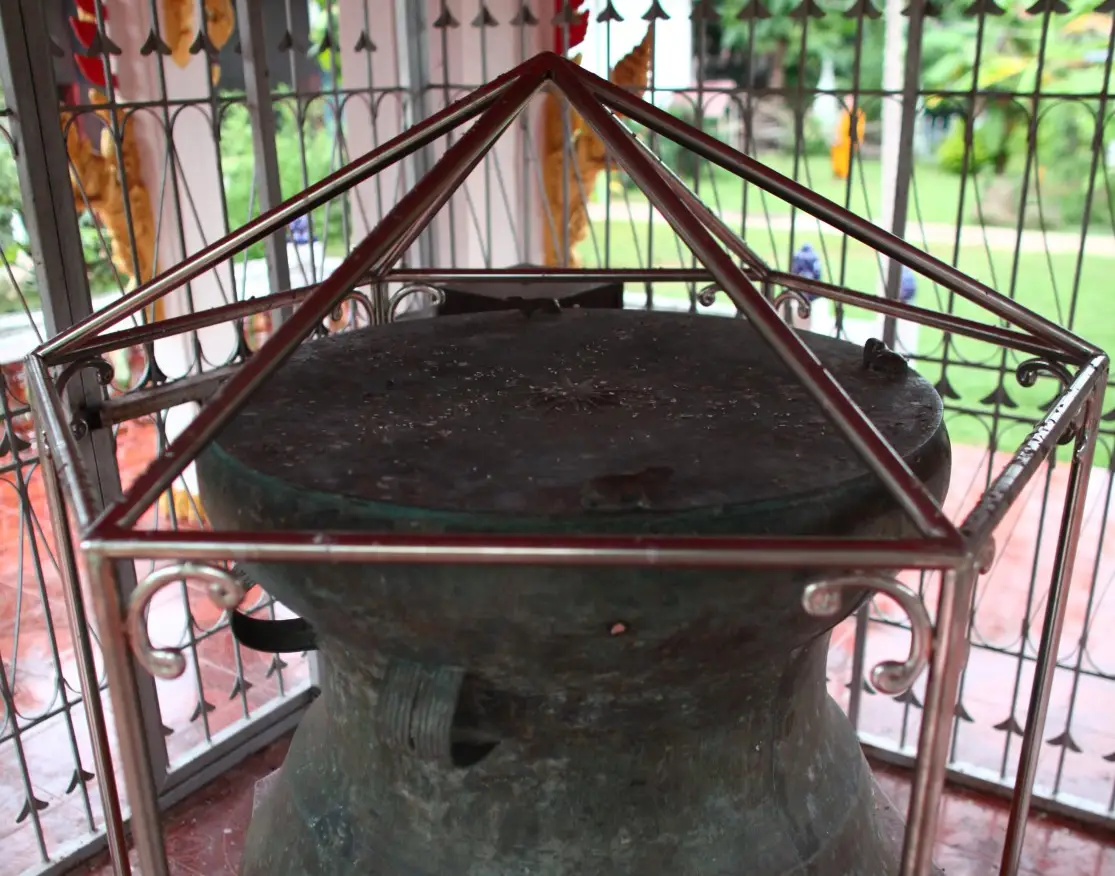
Mahorathuek Drum
Open Days: Daily
Opening Hours: 08.00 – 17.00
The Mahorathuek Drum of Mukdahan is one of the most important ancient bronze objects preserved in Mukdahan Province, northeastern Thailand. It is currently kept at Wat Matchimawat, also known locally as Wat Klang, in Don Tan District. This large single-faced bronze drum measures 86 centimeters across the drumhead, about 90 centimeters in body length, and approximately 66 centimeters in height. Its drumhead is decorated with a raised sun motif with 14 rays, while 4 frog figures are placed around the rim. These visual details make the drum an exceptional object for understanding ancient belief, bronze-casting technology, ritual sound, fertility symbolism, and the cultural world of the Mekong Basin.
The drum is not simply an old musical instrument. It is a rare cultural artifact that connects art, archaeology, metallurgy, local belief, and community memory. Bronze drums of this type were produced from an alloy of copper, tin, and lead, requiring advanced technical skill and organized labor. Casting a large bronze object demanded knowledge of temperature control, mold-making, metal composition, form, proportion, and sound. The Mahorathuek Drum of Mukdahan therefore represents the intellectual and artistic achievement of ancient communities in mainland Southeast Asia.
Today, the drum is preserved within Wat Matchimawat, a historic temple in Don Tan District. The temple’s original name was Wat Klang, meaning “the central temple,” and it has long served as an important religious and community center for local residents. Wat Matchimawat was established in 1557, according to local historical records, under the leadership of Kamnan Uan. It later received its official consecrated boundary in 1857. The temple belongs to the Mahanikaya order of Thai Buddhism and is closely tied to the history of Ban Don Tan, Ram Bamrung Road, Don Tan Subdistrict, Don Tan District, Mukdahan Province.
The Mahorathuek Drum was discovered in 1938 along the eroded bank of the Mekong River at Ban Na Tham on the Lao side of the river. After the riverbank collapsed, the bronze object was found and later brought across the cultural landscape of the Mekong communities. At first, it was kept at Wat Woen Chai Mongkhon in Don Tan. Later, it was moved to Wat Matchimawat, where it has remained preserved until today. This journey from the Mekong riverbank to a community temple gives the drum a special place in local memory. It is both an archaeological object and a shared heritage of the Mekong cultural zone.
The form of the Mukdahan drum follows the visual language of ancient bronze drums found across Southeast Asia. The drumhead is broad and circular, with a raised sun motif at the center. The 14 rays radiating from the middle draw attention to celestial symbolism, seasonal cycles, and the importance of the sun in ancient agricultural societies. Around the rim, 4 frog figures appear as sculptural details. In many traditional societies, frogs are associated with rain, water, fertility, and seasonal abundance. Their presence on the drum is therefore highly meaningful, especially in farming communities that depended on rainfall and natural cycles.
The frog figures are not decorative details alone. They are part of a symbolic system connected with water, rain, and fertility. In agricultural societies, the sound of frogs often signals the coming of rain. Rain means crops, food, livestock, and survival. By placing frogs on the edge of a sacred bronze drum, the ancient makers transformed the drum into a ritual object associated with natural power and community prosperity. The drum’s sound, shape, and imagery likely worked together to create a powerful ceremonial presence.
The raised sun motif with 14 rays is another key feature that visitors should observe carefully. It sits at the center of the drumhead and gives the entire surface a cosmological structure. In ancient life, the sun was more than a source of light. It guided farming, travel, timekeeping, seasonal awareness, and ritual practice. The sun motif on bronze drums is often interpreted as a symbol of celestial order and sacred power. On the Mukdahan drum, this motif helps visitors understand how ancient communities connected nature, belief, and artistic expression.
The Mahorathuek Drum of Mukdahan is widely described as being at least 3,000 years old. Local tradition also connects such drums with ancient groups in the Mekong region, including the Kha and ancient Khmer cultural worlds. This does not make the drum an isolated object. Instead, it places the drum within a broader network of communities, beliefs, ritual practices, and exchange routes. A single bronze drum can therefore open a wide conversation about ancient Southeast Asia, the Mekong River, metallurgy, ritual life, and the movement of ideas.
In archaeological terms, Mahorathuek drums belong to the wider bronze drum tradition of Southeast Asia and southern China. Many examples are associated with the Dong Son cultural sphere of northern Vietnam. These drums were usually cast in bronze and decorated with sunbursts, birds, boats, geometric patterns, animals, and frogs. The Mukdahan drum is part of this larger regional phenomenon. Its presence in Don Tan District demonstrates that the Mekong Basin was not culturally isolated. It was part of a connected world of technology, ritual, river routes, trade, and shared symbols.
The importance of this drum lies not only in its age, but also in its size and preserved symbolic details. With an 86-centimeter drumhead and a 90-centimeter body, the object is unusually impressive. Producing a bronze drum of this scale required a large amount of metal and specialized skill. It also implies that the drum was valuable to its owners and community. In ancient societies, such drums could serve as symbols of rank, wealth, ritual authority, or collective identity. The larger the drum, the stronger its visual and ceremonial presence.
Wat Matchimawat is a fitting place for the drum’s preservation because the temple functions as a living community space. It is not a detached museum environment, but a sacred and social place where local people continue to make merit, attend ceremonies, and maintain their heritage. By keeping the drum in the temple, the community allows visitors, students, monks, and local residents to access this important heritage while keeping it within a respected cultural context. The drum remains connected to local life rather than being separated from its community.
When visiting the Mahorathuek Drum, travelers should look at it as evidence, not merely as a rare object. The sun motif, the frog figures, the bronze surface, the scale of the body, and the place where it is kept all provide clues. Together they tell a story about ancient technology, ritual sound, social organization, and the worldview of people who lived long before the modern province of Mukdahan existed. Observing the drum slowly allows visitors to understand why it has become one of Mukdahan’s most meaningful cultural treasures.
Wat Matchimawat itself deserves attention beyond the drum. The temple was founded in 1557 and has long been known as Wat Klang. Its religious compound includes an ordination hall, a sermon hall, monks’ residences, and an old sim, or northeastern-style Buddhist sanctuary. The ordination hall measures 6 meters wide and 12 meters long and was built in 1928. The sermon hall measures 17 meters by 17 meters and was built in 1942. These architectural elements make the temple an important local historical site in its own right.
The old sim at Wat Matchimawat is especially interesting because it reflects Vietnamese-influenced craftsmanship. It has a surrounding gallery, arched forms, and architectural details that are not commonly seen in ordinary village temples. The structure is rectangular, with a veranda-like space around the inner hall and distinctive stairways at the front and sides. For travelers interested in temple architecture, the sim provides another layer of cultural value. The site is therefore both an archaeological stop and a local architectural attraction.
A visit to the Mahorathuek Drum should be understood in two layers. The first layer is the ancient bronze drum itself, an object connected with prehistoric belief and regional bronze culture. The second layer is Wat Matchimawat, the living temple that preserves the drum and anchors it within the Don Tan community. When these two layers are seen together, the experience becomes more complete. Visitors can understand the object, the temple, the community, and the Mekong cultural landscape as parts of one connected story.
Bronze drums like this one were closely associated with ceremony. They were used or interpreted in connection with fertility, rain, communal celebration, death rituals, warfare, and social status. The frog motif on the Mukdahan drum makes the association with rain and fertility especially strong. In farming societies, water was life. A drum connected with frogs, the sun, and powerful sound could function as a ritual object that symbolized the hope for abundance and protection.
Sound was central to the meaning of such drums. In the ancient world, the sound of a large bronze drum would have been powerful, resonant, and communal. It could gather people, mark ceremonies, signal events, create sacred atmosphere, or accompany rituals. Although the drum at Wat Matchimawat is now preserved as a heritage object rather than used in daily ritual performance, its form still carries the memory of sound. Standing before it, visitors can imagine the sonic power it once had in an ancient community.
The discovery location along the Mekong River is also important. The Mekong was not simply a natural boundary. It was a route of settlement, travel, communication, trade, and cultural exchange. The drum’s discovery at Ban Na Tham on the Lao side and its preservation in Don Tan on the Thai side show how deeply connected the two riverbanks have been. Modern national borders came much later than the cultural life of the river. The drum is therefore part of the shared heritage of the Mekong world.
Mukdahan Province is often associated with the Mekong River, the Indochina Market, the Second Thai-Lao Friendship Bridge, Ho Kaeo Mukdahan, and Wat Roi Phra Phutthabat Phu Manorom. The Mahorathuek Drum adds another dimension to the province. It reveals the deep archaeological and cultural roots of the area. For travelers who want to understand Mukdahan beyond scenic views and shopping, this drum is one of the most rewarding cultural objects to see.
For history-minded visitors, the drum raises important questions. Who made it? How was such a large bronze object cast? What rituals did it accompany? How did it travel through the Mekong cultural landscape? Why did ancient communities value bronze drums so highly? These questions turn a simple temple visit into a meaningful journey through the early history of Southeast Asia. The drum is a real object that encourages deeper thinking about ancient societies.
For students and teachers, the site is highly suitable for field learning. It connects multiple subjects: archaeology, history, art, metallurgy, music, geography, religion, and anthropology. Students can observe the sun motif, frog figures, bronze material, drum size, and preservation context. They can then connect these observations with wider topics such as ancient technology, farming rituals, river trade routes, and the cultural diversity of the Mekong Basin.
For general travelers, the drum can be viewed in a short time, but it should not be rushed. A good visit begins with respecting the temple space, paying homage to the Buddha images, walking around the temple compound, observing the old sim, and then viewing the drum carefully. This sequence allows visitors to understand Wat Matchimawat as both a Buddhist temple and a cultural heritage site. It also gives the drum a stronger sense of place.
Visitors should dress politely because the drum is kept within a temple. They should not touch, move, knock, or attempt to strike the drum without permission. Photography should be done respectfully, without disturbing monks, temple visitors, or religious activities. These simple practices help preserve both the artifact and the dignity of the temple. Responsible behavior is especially important because bronze heritage objects can be damaged by repeated handling and careless contact.
The most suitable time to visit is during daylight hours, especially from 08.00 to 17.00. Natural light makes it easier to observe the drum’s form and the temple’s architectural details. During the hot season, visitors should bring drinking water, a hat, or an umbrella. During the rainy season, travelers should prepare for wet roads and changing weather conditions. Don Tan is a riverside district, and its atmosphere is closely connected with the Mekong environment.
Getting There from Mukdahan city is convenient by private car, rental car, or local transport. Take the route from Mukdahan toward Don Tan District, a distance of about 30 kilometers. Once in Don Tan, continue to Ram Bamrung Road in Ban Don Tan to reach Wat Matchimawat. The temple is located within the local community and can be combined easily with other Mukdahan attractions such as Wat Roi Phra Phutthabat Phu Manorom, Ho Kaeo Mukdahan, the Indochina Market, and riverside viewpoints.
A good one-day itinerary can begin in Mukdahan city in the morning, continue to Wat Roi Phra Phutthabat Phu Manorom, then proceed to Don Tan District to view the Mahorathuek Drum at Wat Matchimawat. After that, visitors can enjoy local food in Don Tan or along the Mekong River. If time allows, they can continue to riverside attractions, Kaeng Kabao, or return to Mukdahan city for the evening market and riverfront atmosphere.
The atmosphere of Wat Matchimawat is calm and local. It is not a large commercial attraction, and this is part of its appeal. Travelers can see how a valuable ancient object remains within a living temple environment. The drum is not separated from community life. It remains surrounded by Buddhist practice, local memory, and the rhythm of Don Tan District. This gives the visit a more authentic cultural feeling than viewing an object in a large urban museum.
For international travelers, the Mahorathuek Drum is especially meaningful because it connects Thailand with the wider story of Southeast Asia. Bronze drums are found across the region, and many are connected with the Dong Son cultural world. The Mukdahan drum shows how shared symbols such as the sun, frogs, bronze casting, ritual sound, and river networks crossed present-day borders. This makes the object easy to explain to foreign visitors interested in ancient cultures and regional connections.
Artistically, the drum combines music, sculpture, ritual meaning, and power symbolism. The raised sun at the center suggests cosmic order. The frog figures suggest rain and fertility. The bronze body suggests technical mastery. The scale suggests social importance. Together, these elements show that ancient objects were not made only for practical use. They were made from a worldview in which nature, community, ritual, and authority were deeply connected.
Conservation is essential. The drum should be appreciated without physical interference. Visitors should not touch the surface unnecessarily, strike the drum, or lean objects against it. Bronze surfaces preserve traces of age, oxidation, and history. Careless handling can damage the artifact over time. By photographing respectfully and observing carefully, visitors can enjoy the site while helping preserve it for future generations.
The drum also connects with local beliefs about rain and lunar eclipses. In older Isan belief, a lunar eclipse was sometimes described through the image of a frog swallowing the moon. During such events, people made loud sounds by beating wood, firing crackers, or creating noise to frighten the frog and restore the moon. In drought rituals, frogs, toads, water, and sound could be part of ceremonies requesting rain. This belief background helps explain why frog figures on the drum are culturally significant.
Visiting the drum allows travelers to experience several periods of history in one place. The ancient bronze drum represents deep prehistoric culture. Wat Matchimawat represents centuries of Buddhist community life. Don Tan represents the Mekong riverside settlement world. The modern visit represents contemporary heritage tourism. These layers make the site more meaningful than a simple display. It is a place where time, belief, art, and community overlap.
Within a Mukdahan travel route, the Mahorathuek Drum is best suited for travelers who enjoy temples, local history, archaeology, art, and quieter cultural destinations. It does not require a full day, but it rewards careful attention. A short stop can become highly memorable when visitors understand what they are seeing. The drum offers a strong cultural counterpoint to Mukdahan’s more familiar riverside and market attractions.
For overnight stays, travelers can choose between small accommodations in Don Tan District and larger hotels in Mukdahan city. Staying in Don Tan gives a quieter riverside atmosphere and easier access to local community life. Staying in Mukdahan city offers more restaurants, markets, and transportation options. The best choice depends on whether the trip focuses on Don Tan, the Mekong countryside, or the city’s main attractions.
Food around Don Tan includes local Isan restaurants, riverside dining, simple Thai food, drinks, and coffee shops. Eating locally before or after visiting the drum helps support the community and makes the trip more complete. Cultural travel should not be separated from everyday life. Food, temples, local roads, river scenery, and community hospitality all contribute to the experience of visiting Wat Matchimawat and the Mahorathuek Drum.
Although the drum is ancient, its meaning remains contemporary. In a time when tourism often focuses on fast photo stops, this site invites visitors to slow down. It asks them to read symbols, respect heritage, and listen to the quiet voice of the past. The drum may no longer be beaten in daily ritual, but it still “speaks” through its bronze surface, sun motif, frog figures, history of discovery, and continued preservation within the temple.
The Mahorathuek Drum of Mukdahan is therefore one of the most valuable cultural stops for travelers who want to understand the province beyond its famous Mekong views. It reveals ancient technology, ritual belief, artistic skill, and the long cultural memory of the region. For anyone interested in archaeology, Southeast Asian heritage, bronze drums, temple culture, or the history of the Mekong Basin, a visit to Wat Matchimawat in Don Tan District is a meaningful and highly recommended experience.
| Name | Mahorathuek Drum of Mukdahan |
| Location | Wat Matchimawat (Wat Klang), Don Tan Subdistrict, Don Tan District, Mukdahan Province |
| Address | Ban Don Tan, Ram Bamrung Road, Village No. 1, Don Tan Subdistrict, Don Tan District, Mukdahan 49120, Thailand |
| Reference Coordinates | 8W8G+4PX, Don Tan Subdistrict, Don Tan District, Mukdahan 49120, Thailand |
| Highlights | Large single-faced bronze drum with a raised 14-rayed sun motif and 4 frog figures on the rim |
| History | Discovered in 1938 along the eroded Mekong River bank at Ban Na Tham on the Lao side, later preserved at Wat Matchimawat in Don Tan District. The drum is widely described as being at least 3,000 years old |
| Important Evidence | Bronze drum with an 86 cm drumhead, 90 cm body length, approximately 66 cm height, a raised 14-rayed sun motif, and 4 frog figures |
| Name Origin | The Thai term “Mahorathuek” refers to an ancient bronze drum. Local people in Mukdahan also call it “Klong Thong,” meaning the Golden Drum |
| Distinctive Features | A bronze ritual object reflecting sun symbolism, frog imagery, rain and fertility beliefs, ceremonial sound, and ancient metal-casting skill |
| Travel Information | From Mukdahan city, take the Mukdahan – Don Tan route for about 30 km, then continue to Ram Bamrung Road in Ban Don Tan to reach Wat Matchimawat |
| Current Status | Preserved inside Wat Matchimawat and open to visitors as a cultural and archaeological learning site of Mukdahan Province |
| Open Days | Daily |
| Opening Hours | 08.00 – 17.00 |
| Fees | No Admission Fee |
| Facilities | Parking, temple area for worship, drum viewing point, and old sim area within the temple compound |
| Main Areas / Zones | Mahorathuek Drum preservation area, old sim of Wat Matchimawat, ordination hall, sermon hall, monks’ residences, and local temple compound |
| Abbot / Caretaker | Phra Khru Paphakon Paphakaro, Abbot of Wat Matchimawat |
| Local Authority Contact | Don Tan Subdistrict Municipality, Tel. 0-4268-9055 |
| Nearby Tourist Attractions | 1. Mekong River Embankment, Don Tan District, about 1 km 2. Somdet Ya Park (Than Woraphat), about 2 km 3. Wat Woen Chai Mongkhon, about 3 km 4. Wat Roi Phra Phutthabat Phu Manorom, about 29 km 5. Ho Kaeo Mukdahan, about 32 km 6. Mukdahan City Pillar Shrine, about 33 km 7. Indochina Market Mukdahan, about 33 km |
| Nearby Restaurants | 1. Kiko Cha Don Tan, about 1 km, Tel. 096-127-3235 2. Yai Sang Lab Ped, about 2 km, Tel. 083-540-6490 3. Krua Ton Kla Don Tan, about 4 km, Tel. 088-478-1764 4. Krua Sam Sahai, about 5 km 5. Suan Ahan Had Hin Rim Khong, about 9 km, Tel. 062-107-1255 6. Khao Piak Sen Je Sun-Chai Ton, about 30 km, Tel. 064-086-4200 |
| Nearby Accommodations | 1. Mekong View Guesthouse, about 1 km, Tel. 088-572-3851 2. Rim Khong View Don Tan, about 2 km, Tel. 091-050-2107 3. Banphak Thanawadee, about 3 km, Tel. 089-620-5870 4. HOP INN Mukdahan, about 31 km, Tel. 02-080-2222 5. Hotel de Ladda Mukdahan, about 33 km, Tel. 042-611-499, 042-611-497 6. Riverfront Hotel Mukdahan, about 32 km, Tel. 042-612-948-9, 081-703-1705 |
Frequently Asked Questions (FAQ)
Q: Where is the Mahorathuek Drum of Mukdahan located?
A: The drum is preserved at Wat Matchimawat, also known as Wat Klang, in Ban Don Tan, Don Tan Subdistrict, Don Tan District, Mukdahan Province, Thailand.
Q: What makes the Mahorathuek Drum of Mukdahan special?
A: It is a large single-faced bronze drum with an 86 cm drumhead, a 90 cm body, a raised 14-rayed sun motif, and 4 frog figures on the rim.
Q: When was the drum discovered?
A: The drum was discovered in 1938 along the eroded Mekong River bank at Ban Na Tham on the Lao side before being preserved at Wat Matchimawat.
Q: How old is the Mahorathuek Drum of Mukdahan?
A: The drum is widely described as being at least 3,000 years old and is an important bronze cultural artifact of the Mekong region.
Q: Is there an admission fee?
A: No. Visitors can see the drum at Wat Matchimawat without an admission fee during the visiting hours of 08.00 – 17.00.
Q: Who takes care of the drum today?
A: The drum is preserved inside Wat Matchimawat under the care of the temple, with Phra Khru Paphakon Paphakaro serving as the abbot.
Q: What should visitors do when viewing the drum?
A: Visitors should dress respectfully, avoid touching or striking the drum, take photographs carefully, and respect the temple’s religious space.
Q: What nearby places can be combined with a visit?
A: Nearby attractions include the Mekong River Embankment in Don Tan, Somdet Ya Park, Wat Woen Chai Mongkhon, Wat Roi Phra Phutthabat Phu Manorom, Ho Kaeo Mukdahan, Mukdahan City Pillar Shrine, and the Indochina Market.
 Category: ●Art, Culture and Heritage
 Group: ●Historical Sites and Monuments
Last Update : 2 MonthAgo
 Last Update : 2 MonthAgo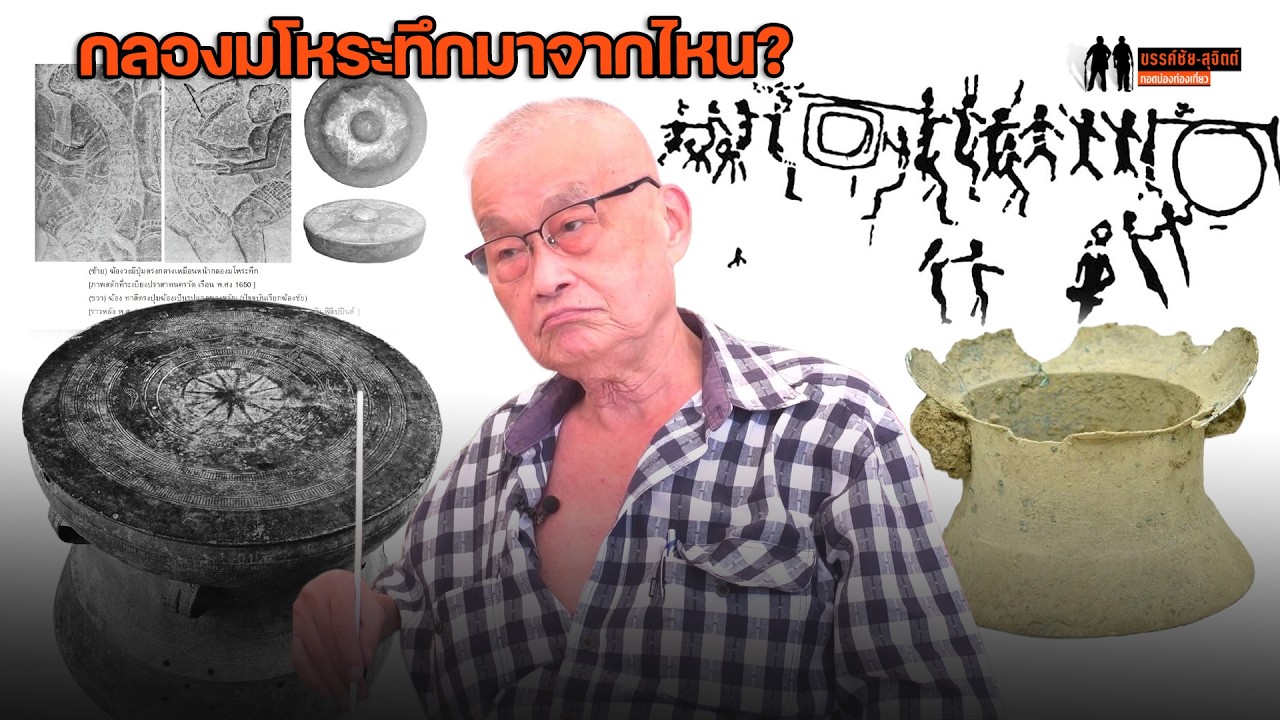
 Click to Access the Navigation Map GPS
Mahorathuek Drum Map
Recommend
 Historical Sites and Monuments(2)
 Landmarks and Memorials(3)
 Art, Craft Centres, Tradition(2)
 Museums(1)
 Places of Worship
 Temple(17)
 Other Sacred Sites(3)
 Suburban Living
 Village, Community(4)
 Local Market(2)
 Nature and Wildlife
 National Parks and Marine Reserves(4)
 Mountain (Doi)(5)
 Dam, Reservoir, Lake(3)
 Waterfalls(5)
 Caves(2)
 River, Canal(2)
 Bays and Beaches(1)
 Other natural attractions(1)
 Entertainment and Agricultural
 Farms, Parks and Ecotourism(1)


