
lovethailand home >Northeastern Travel Attractions >Khon Kaen Travel Attractions >Chum Phae >Na Nong Thum > Phu Kao-Phu Phan Kham National Park
TL;DR: Phu Kao-Phu Phan Kham National Park is located at Ban Kho Subdistrict, Non Sang District, Nong Bua Lamphu Province, with connected landscape around Ubolratana Reservoir in Khon Kaen Province, open Daily, hours 08.30 – 16.30.
Phu Kao-Phu Phan Kham National Park
Open Days: Daily
Opening Hours: 08.30 – 16.30
Phu Kao-Phu Phan Kham National Park is one of the most scenic and culturally rich national parks in northeastern Thailand. Located around the Ubolratana Reservoir area and covering parts of Nong Bua Lamphu and Khon Kaen provinces, the park combines sandstone mountains, dry forests, lakeside scenery, panoramic viewpoints, a glass skywalk, archaeological sites, and prehistoric rock paintings. For international travelers exploring Isan, this park offers a rare combination of nature, history, local beliefs, and reservoir-side landscapes in one destination.
The park covers approximately 318 square kilometers and consists of two major landscape zones: Phu Kao and Phu Phan Kham. Phu Kao is known for sandstone mountains, caves, rock shelters, and traces of prehistoric human activity, while Phu Phan Kham is famous for its dramatic views over Ubolratana Reservoir. The park headquarters is located in Ban Kho Subdistrict, Non Sang District, Nong Bua Lamphu Province, near the large reservoir created by Ubolratana Dam. Although the headquarters is in Nong Bua Lamphu, the park is very accessible from Khon Kaen, making it a practical nature trip for travelers staying in Khon Kaen city or around Ubolratana District.
Phu Kao-Phu Phan Kham National Park was established in 1985 as Thailand’s 50th national park. Its importance goes far beyond tourism. The area protects forests, watershed landscapes, wildlife habitats, sandstone geology, and archaeological evidence that helps explain human activity in this part of northeastern Thailand. On the Phu Kao side, caves and rock shelters contain prehistoric paintings and traces of ancient settlement, making the park valuable for both natural conservation and cultural study.
The name “Phu Kao-Phu Phan Kham” comes from the two main mountain ranges within the park. Phu Kao refers to the sandstone mountain area associated with caves, rock shelters, ancient paintings, and local legends. Phu Phan Kham refers to the mountain zone overlooking Ubolratana Reservoir. Together, the two names reflect the character of the park: one side is a historical and archaeological mountain landscape, while the other is a scenic reservoir viewpoint landscape.
The Phu Phan Kham side is the most accessible area for many visitors, especially those traveling from Khon Kaen, Ubolratana Dam, or Non Sang. The landscape here opens toward Ubolratana Reservoir, giving visitors wide views of water, forested slopes, distant hills, and lakeside communities. The scenery is especially beautiful in the late afternoon when the sunlight turns golden over the reservoir. For travelers who want to experience nature without a difficult trek, this side of the park is the best starting point.
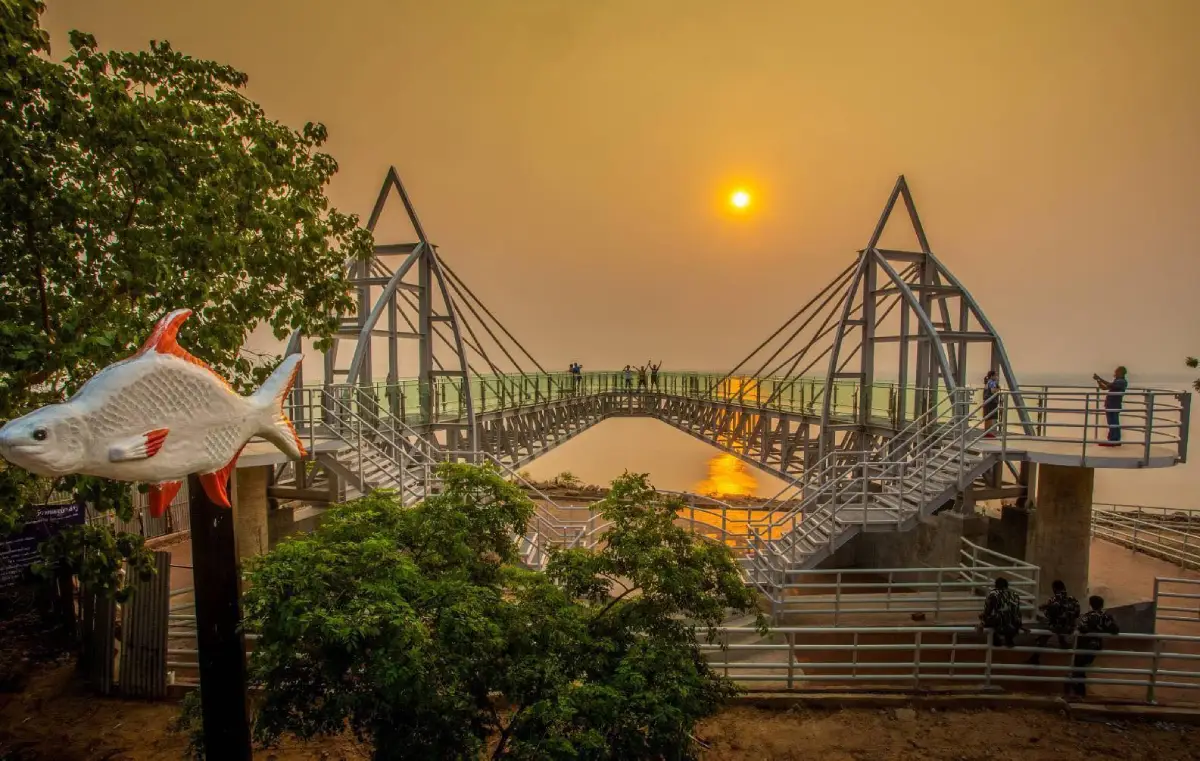
One of the most popular attractions in recent years is Phu Aen Skywalk, a glass-floored viewpoint built on a cliff edge overlooking Ubolratana Reservoir. The site was once a roadside stopping point along the route between Non Sang District in Nong Bua Lamphu and Ubolratana District in Khon Kaen. After being developed as a skywalk, it became a major check-in point for the park. Visitors can walk on the transparent glass platform and enjoy a panoramic view of the reservoir, mountains, and surrounding communities.
Phu Aen Skywalk is ideal for travelers who want a dramatic viewpoint without a long hike. The view opens across the reservoir at around 180 degrees, and on clear days visitors can see Hat Non Yao, the water surface, fishing areas, and the rolling landscape around the lake. Sunset is one of the best times to visit. The water slowly reflects warm light, and the surrounding mountains create a peaceful silhouette. Visitors should follow all safety instructions, wear the provided footwear when required, avoid jumping on the glass, and follow staff guidance at all times.
The park headquarters area beside the reservoir is another pleasant place to rest before or after visiting the skywalk. It provides access to basic facilities such as parking, restrooms, visitor services, small shops or cafe areas, and camping or accommodation zones depending on availability. Travelers planning to stay overnight should contact the park directly in advance, as national park accommodation and camping conditions can change by season and availability.
The Phu Kao side of the park is more closely connected with archaeology and local history. It contains caves, rock shelters, sandstone formations, and prehistoric rock paintings. Sites often mentioned in relation to this area include Tham Fa Mue Daeng, Tham Muem, Tham Rakha Khanit, and other rock shelters where traces of ancient human activity have been found. These places show that the mountains were not only natural shelters but also part of a cultural landscape used by people for thousands of years.
The sandstone geology of Phu Kao helps explain why this area contains so many caves and shelters. Over time, wind, water, and natural erosion shaped the rock into overhangs, hollows, cliffs, and protected spaces. In the past, these natural shelters provided shade, protection from rain, and suitable places for human activity. Today, the remaining paintings and archaeological traces help visitors understand the deeper historical value of the national park.
Another culturally important site in the wider Phu Kao area is Wat Phra Phutthabat Phu Kao, known for rock footprints associated with Buddhist belief and local legends. Travelers with enough time can combine natural sightseeing with a cultural visit, creating a route that includes reservoir viewpoints, archaeological landscapes, and religious heritage. This makes Phu Kao-Phu Phan Kham National Park more than a viewpoint destination; it is a place where nature, history, and faith overlap.
The park’s forest ecosystem includes dry dipterocarp forest, mixed deciduous forest, and smaller areas of dry evergreen forest. Dry dipterocarp forest is common on drier slopes and shallow soils, with tree species adapted to hot and seasonal conditions. Mixed deciduous forest offers more variety and often appears in areas with better moisture. These forests support birds, insects, reptiles, small mammals, and native plants. Visitors should observe nature respectfully and avoid collecting plants, stones, or any natural materials from the park.
The best time to visit is during the cool season and the transition from the rainy season to winter. During this period, the air is more comfortable, the reservoir scenery is fresh, and the sky is often clear enough for photography. The rainy season brings green forest scenery but can make rock surfaces and trails slippery. The hot season is still suitable for reservoir viewpoints and open landscapes, but travelers should bring drinking water, hats, sunglasses, and comfortable walking shoes.
Popular activities in Phu Kao-Phu Phan Kham National Park include viewpoint photography, walking on Phu Aen Skywalk, watching sunset over Ubolratana Reservoir, camping, learning about prehistoric rock paintings, exploring rock shelters, and visiting nearby attractions such as Chong Khao Khat Viewpoint, Ubolratana Dam, Hat Non Yao, Wat Phra Bat Phu Phan Kham, and Bang Saen 2 Khon Kaen. Because the park and nearby attractions are spread across a wide area, travelers should plan the route carefully.
The park is also a good place to understand the relationship between protected landscapes and local communities around Ubolratana Reservoir. Around the reservoir, visitors can see fishing communities, lakeside restaurants, small resorts, homestays, and rural life connected to the water. From the viewpoints, the scenery is not only natural but also cultural, showing how people live around a large reservoir in northeastern Thailand.
Overnight options include national park accommodation and camping areas, as well as private resorts, guesthouses, and lakeside stays around Non Sang and Ubolratana. Travelers who want to stay inside the park should contact the national park office before traveling because accommodation is limited. Those who prefer convenience may choose a resort near the reservoir and visit the park in the morning or late afternoon.
Entrance fees follow national park rates. Thai adults pay 20 THB and Thai children pay 10 THB. Foreign adults pay 100 THB and foreign children pay 50 THB. Vehicle fees apply separately. Phu Aen Skywalk has an additional service fee, which includes shuttle service and footwear for walking on the glass platform. Visitors should carry some cash because digital payment options may not be available at every service point.
A half-day trip is possible for travelers starting from Khon Kaen, especially if the main goal is to visit the park headquarters, the reservoir view, and Phu Aen Skywalk. For a more complete trip that includes the Phu Kao archaeological side, travelers should plan a full day or stay overnight. The park’s size and divided landscape mean that different attractions can be separated by meaningful travel time, even though they belong to the same national park.
Getting There from Khon Kaen is straightforward by private car. Take the Khon Kaen-Ubolratana Dam route, then continue along the Ubolratana-Non Sang road for about 7 km to reach the park headquarters. Travelers coming from Nong Bua Lamphu can use Highway 2146 toward Non Sang for about 40 km to the Ban Sok Chan junction, then turn onto the Ban Sok Chan-Ubolratana Dam route for about 14 km to reach the park office. A private car or rental car is the most convenient option because it allows visitors to combine the national park with nearby viewpoints, temples, restaurants, and accommodations.
Public transport is possible but requires careful timing. Local transport between Ubolratana and Non Sang may not run as frequently as city routes. Travelers without a car should consider hiring a local vehicle from Ubolratana or Non Sang if they want to visit several points in one day. Families, photographers, and visitors traveling with elderly people will usually find a private vehicle more comfortable.
Visitors should follow national park rules at all times. Do not leave trash, do not make loud noise, do not remove plants or rocks, do not write on cave walls or rock surfaces, and stay within marked areas. Extra caution is needed around cliffs, glass platforms, rock surfaces, and trails during or after rain. Responsible travel helps keep Phu Kao-Phu Phan Kham National Park beautiful, safe, and meaningful for future visitors.
In summary, Phu Kao-Phu Phan Kham National Park is one of the best places to experience the natural and cultural landscape of Khon Kaen and Nong Bua Lamphu. It brings together reservoir scenery, sandstone mountains, a glass skywalk, sunset viewpoints, protected forests, camping areas, and prehistoric evidence. For travelers who want to see more than the city side of Khon Kaen, this park is a strong and memorable destination in northeastern Thailand.
| Name | Phu Kao-Phu Phan Kham National Park |
| Location | Ban Kho Subdistrict, Non Sang District, Nong Bua Lamphu Province, with connected landscape around Ubolratana Reservoir in Khon Kaen Province |
| Address | RJ66+JH6, Highway 2146, Ban Kho Subdistrict, Non Sang District, Nong Bua Lamphu 39140, Thailand |
| Coordinates | Approximately 16.8115, 102.6114 |
| Area | Approximately 318 sq km |
| Highlights | Phu Aen Skywalk, Ubolratana Reservoir views, Chong Khao Khat Viewpoint, sandstone mountains, prehistoric rock paintings, caves, rock shelters, and lakeside camping areas |
| History | Established in 1985 as Thailand’s 50th national park, with prehistoric archaeological evidence found on the Phu Kao side |
| Name Origin | Named after the two main mountain areas: Phu Kao and Phu Phan Kham |
| Distinctive Features | Sandstone mountains, dry forests, mixed deciduous forest, caves, rock shelters, viewpoints, reservoir scenery, and archaeological landscapes |
| Travel Information | From Khon Kaen, take the route to Ubolratana Dam, then continue along the Ubolratana-Non Sang road for about 7 km. From Nong Bua Lamphu, use Highway 2146 to Ban Sok Chan junction, then continue about 14 km toward Ubolratana Dam. |
| Current Status | Open for visitors |
| Open Days | Daily |
| Opening Hours | 08.30 – 16.30 |
| Fees | Thai adults 20 THB, Thai children 10 THB / foreign adults 100 THB, foreign children 50 THB / car 30 THB / Phu Aen Skywalk 60 THB per person |
| Facilities | Visitor center, parking, restrooms, small shops or cafe areas, camping area, national park accommodation, and shuttle service to Phu Aen Skywalk during designated periods |
| Main Areas / Zones | 1. Park Headquarters by Ubolratana Reservoir 2. Phu Aen Skywalk 3. Chong Khao Khat Viewpoint 4. Phu Phan Kham Area 5. Phu Kao Area 6. Prehistoric Rock Painting and Cave Areas on Phu Kao 7. Camping and National Park Accommodation Areas |
| Caretaker | Phu Kao-Phu Phan Kham National Park, Department of National Parks, Wildlife and Plant Conservation |
| Main Contact Number | 063-648-4821 |
| Official Website / Official Page | Phu Kao Phu Phan Kham National Park Official Facebook Page |
| Nearby Tourist Attractions | 1. Chong Khao Khat Viewpoint, about 1 km 2. Phu Aen Skywalk, about 1 km 3. Hat Non Yao, about 4 km 4. Ubolratana Dam, about 4 km 5. Wat Phra Bat Phu Phan Kham, about 6 km 6. Bang Saen 2 Khon Kaen, about 9 km |
| Nearby Restaurants | 1. U Khao U Nam Farmstay Ubolratana Dam, about 4 km 2. Phu Phan Kham Coffee, about 1 km, Tel. 065-490-5985 3. Ban Pai Mai, about 7 km 4. Little Box, about 9 km 5. Varee Valley Resort & Restaurant, about 12 km 6. Chao Khuean Restaurant, about 8 km |
| Nearby Accommodations | 1. Phu Kao-Phu Phan Kham National Park Accommodation, inside the park, Tel. 063-648-4821 2. Nut Apple Guest House, about 16 km 3. Varee Valley Resort & Restaurant, about 12 km 4. Little Box Hotel, about 9 km 5. Rungroj Grand Hotel, about 20 km 6. Fahluang Resort, about 20 km |
Frequently Asked Questions (FAQ)
Q: Where is Phu Kao-Phu Phan Kham National Park located?
A: The park covers areas of Nong Bua Lamphu and Khon Kaen provinces. The park headquarters is in Ban Kho Subdistrict, Non Sang District, Nong Bua Lamphu, near Ubolratana Reservoir.
Q: What are the main attractions in Phu Kao-Phu Phan Kham National Park?
A: The main highlights include Phu Aen Skywalk, Chong Khao Khat Viewpoint, Ubolratana Reservoir views, Phu Kao archaeological areas, prehistoric rock paintings, caves, rock shelters, and camping areas.
Q: Is Phu Aen Skywalk inside Phu Kao-Phu Phan Kham National Park?
A: Yes. Phu Aen Skywalk is located within the national park area and offers a wide panoramic view over Ubolratana Reservoir.
Q: How much is the entrance fee?
A: Thai adults pay 20 THB and Thai children pay 10 THB. Foreign adults pay 100 THB and foreign children pay 50 THB. Car parking is 30 THB, and Phu Aen Skywalk has an additional fee of 60 THB per person.
Q: What are the opening hours?
A: The park is open daily from 08.30 to 16.30. Visitors who want to enjoy sunset views should check the latest service time and follow staff guidance.
Q: How do I get there from Khon Kaen?
A: Travel from Khon Kaen toward Ubolratana Dam, then continue along the Ubolratana-Non Sang route for about 7 km to reach the park headquarters. A private car or rental car is the most convenient option.
Q: Can visitors camp in the park?
A: Yes. Camping is available in designated areas, and limited national park accommodation may be available. Visitors should contact the park in advance at 063-648-4821.
Q: When is the best time to visit Phu Kao-Phu Phan Kham National Park?
A: The cool season and the transition from the rainy season to winter are the best periods because the weather is pleasant, the reservoir views are beautiful, and the conditions are suitable for photography, viewpoints, and camping.
 Category: ●Nature and Wildlife
 Group: ●National Parks and Marine Reserves
Last Update : 3 MonthAgo
 Last Update : 3 MonthAgo
 Click to Access the Navigation Map GPS
Phu Kao-Phu Phan Kham National Park Map
Recommend

 Art, Culture and Heritage
 Historical Sites and Monuments(7)
 Landmarks and Memorials(3)
 Art, Craft Centres, Tradition(2)
 Museums(4)
 Educational Places
 Museum for Study(2)
 Places of Worship
 Temple(27)
 Other Sacred Sites(5)
 Suburban Living
 Village, Community(3)
 Local Market(1)
National Parks and Marine Reserves(5)
Local Market(1)
National Parks and Marine Reserves(5)
 Mountain (Doi)(1)
 Dam, Reservoir, Lake(4)
 Waterfalls(8)
 Caves(9)
 River, Canal(10)
 Bays and Beaches(3)
 Islands(1)
 Other natural attractions(5)
 Entertainment and Agricultural
 Zoos and Aquariums(2)
 Animal camps and shows(2)
 Farms, Parks and Ecotourism(7)
 Waterpark(3)
 Travel Articles, Recipes
 Travel Review, Food Review(1)


