
lovethailand home >North Travel Attractions >Lamphun Travel Attractions >Pa Sang >Ma Kok > Wat San Kamphaeng
TL;DR: Wat San Kamphaeng is located at Makok Sub-district, Pa Sang District, Lamphun Province, hours 08:00 AM – 05:00 PM., also known as Wat Kamphaeng Ngam, is an ancient temple located in Makok Sub-district, Pa Sang District, Lamphun Province. It is renowned.

Wat San Kamphaeng
Opening Days: Daily
Opening Hours: 08:00 AM – 05:00 PM
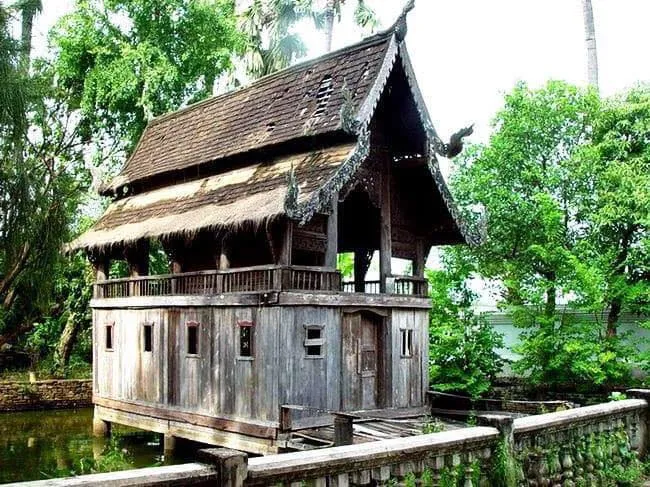
Wat San Kamphaeng, also known as Wat Kamphaeng Ngam, is an ancient temple located in Makok Sub-district, Pa Sang District, Lamphun Province. It is renowned for its magnificent Lanna-style Ho Trai (scripture library). Built entirely of wood and situated in the middle of a pond, the structure features a multi-tiered roof characteristic of Lanna architecture. The gables are adorned with Naga figures and intricate glass-inlaid wood carvings. This temple is ideal for those interested in ancient temples, Lanna arts, traditional scripture libraries, wood carving, and cultural tourism routes in Pa Sang District, Lamphun.
Located in Makok Sub-district, Wat San Kamphaeng has maintained a long-standing relationship with the local community. Pa Sang District is a significant cultural hub of Lamphun, featuring ancient temples, weaving communities, local handicrafts, and Lanna architecture scattered throughout various villages. Wat San Kamphaeng clearly reflects these cultural roots, particularly through its traditional wood craftsmanship and the construction of the Ho Trai according to Lanna beliefs.
The highlight of Wat San Kamphaeng is the Ho Trai Klang Nam (scripture library in the middle of the water). This Lanna architectural masterpiece is a rectangular wooden building set in a pond. Placing the Ho Trai in water serves both practical and symbolic purposes. Practically, the water protects the palm-leaf scriptures from termites, ants, and other pests. Symbolically, as a repository for sacred teachings, the Ho Trai is set apart to ensure peace, beauty, and a sense of sanctity.
The Ho Trai features beautifully tiered roofs that showcase the rhythmic lines and balanced proportions typical of Lanna architecture. The gables are designed as Nagas, auspicious creatures in Lanna and Buddhist beliefs associated with water and protection. The use of Naga figures emphasizes the role of the Ho Trai as a space for guarding the Dhamma (Buddhist teachings).
Beyond the building's form, the detailed wood carvings are a must-see. The glass-inlaid patterns reflect the expertise of local artisans in woodworking and decorative arts. When sunlight hits the glass pieces, it creates a sparkle that adds dimension and life to the building, enhancing its sacred atmosphere.
In Lanna temples, the Ho Trai is vital for storing palm-leaf scriptures, the Tripitaka, and other Buddhist documents. Historically, these scriptures were the community's primary source of knowledge. The temple served not just as a ritual site, but as a center for education, reading, and transcribing scriptures. Wat San Kamphaeng’s Ho Trai is thus more than just a beautiful building; it is a symbol of the preservation of the Dhamma and local wisdom.
The history of the site is particularly interesting. Local records state that in 1847, villagers clearing the land discovered the remains of an abandoned temple surrounded by several layers of walls. This led to the names "Wat San Kamphaeng" or "Wat Kamphaeng Ngam" (The Beautiful Wall Temple), reflecting the physical memory of the original ruins and the revival of the sacred site.
The discovery of these ruins adds a historical dimension to the temple, suggesting that the site was a religious center long before its modern restoration. In Northern Thailand, abandoned temples are often found along old settlement routes. The presence of walls and structural remains indicates the continuity of Buddhism in the Makok and Pa Sang areas.
In addition to the Ho Trai, the temple features other interesting elements such as the Vihara, Chedi, and an Ubosot (ordination hall) designed as an "Uthok Sima" (an ordination hall surrounded by water). These features highlight the unique Lanna use of water to separate sacred spaces from the secular world, showcasing the architectural ingenuity of northern craftsmen.
A visit to Wat San Kamphaeng should begin with paying respects at the main hall, followed by a quiet walk around the Ho Trai. Key details to observe include the building's placement in the pond, the tiered roof, the Naga gables, and the intricate glass-inlaid carvings. These elements were designed with deep religious meaning and functional wisdom regarding the preservation of sacred texts.
For students of Lanna art, this Ho Trai is an excellent case study. It combines essential northern craftsmanship: wooden structures, Naga motifs, carving, glass inlay, and tiered roofing. These elements demonstrate that Lanna beauty lies not just in grandeur, but in delicacy, spiritual connection, and functional design.
The atmosphere at Wat San Kamphaeng is peaceful and simple, perfect for "slow travel." Visitors can take their time appreciating the details and photographing the scenery respectfully. This temple is perfect for travelers who seek a deeper understanding of Lanna heritage rather than just a quick photo opportunity.
Wat San Kamphaeng fits perfectly into a Pa Sang travel itinerary. Located in Makok, it is near Wat Phra Phuttabat Tak Pha, Wat Pa Sang Ngam, Wat Pa Hiang, and the Ban Nong Ngueak weaving village. Travelers can easily plan a half-day or full-day trip to explore the diverse scripture libraries, ancient temples, and cultural communities of the area.
Getting There: To reach Wat San Kamphaeng, take Highway 106 (Lamphun–Pa Sang) toward Makok Sub-district. The route is suitable for private cars and motorcycles. From Lamphun city, head toward Pa Sang and continue to Makok. As the temple is in a residential area, please drive carefully through the local village.
For a cultural trip, start at Wat San Kamphaeng to see the Ho Trai, then visit Wat Phra Phuttabat Tak Pha for the Naga staircase, Wat Pa Sang Ngam for its art, or Wat Pa Hiang to see another notable scripture library. This route provides a comprehensive look at Lanna religious art in Pa Sang.
Visitors are requested to dress politely, keep noise levels down, and respect the sacred grounds. When taking photos of the Ho Trai, please do so from a respectful distance without touching the delicate carvings or climbing on the old wooden structure to ensure its preservation for future generations.
Wat San Kamphaeng is a site of immense religious, historical, and artistic value. Its scripture library is a masterpiece of Lanna architecture in Lamphun. Through its intricate craftsmanship and spiritual significance, the temple offers visitors a profound glimpse into the faith and memory of the Pa Sang community.
| Name | Wat San Kamphaeng (Wat Kamphaeng Ngam) |
| Location | Makok Sub-district, Pa Sang District, Lamphun Province |
| Address | Makok Sub-district, Pa Sang District, Lamphun 51120 |
| Coordinates | 18.475572, 98.913730 |
| Highlight | Lanna-style Ho Trai (scripture library) built of wood in the middle of a pond, featuring tiered roofs, Naga gables, and glass-inlaid wood carvings. |
| History / Era | Ruins found in 1847; the current Ho Trai features 19th-century Lanna art. |
| Name Origin | Relates to the original temple wall ("Kamphaeng") found at the site. |
| Key Features | An ancient temple in Pa Sang with one of the most complete wooden scripture libraries in Lamphun. |
| Temple Zones | Ho Trai, Pond, Vihara, Chedi, Water-surrounded Ubosot, Temple grounds. |
| Abbot / Caretaker | Phra Maha Sompong Yasotharo |
| Transportation | Via Highway 106 (Lamphun–Pa Sang) to Makok Sub-district. |
| Current Status | Active temple open for public visits and cultural learning. |
| Opening Days | Daily |
| Opening Hours | 08:00 AM – 05:00 PM |
| Nearby Attractions | 1. Wat Phra Phuttabat Tak Pha (~4 km) 2. Ban Mon Makok (~4 km) 3. Wat Pa Sang Ngam (~5 km) 4. Wat Pa Hiang (~7 km) 5. Ban Nong Ngueak (~8 km) 6. Wat Nong Ngueak (~8 km) 7. Wat Phra That Hariphunchai (~21 km) |
| Nearby Restaurants | 1. Krua San Kamphaeng (~2 km) Tel: 095-448-5683 2. Lung Thong Cafe & Restaurant (~5 km) Tel: 062-925-2594 3. SUKSUD (~5 km) Tel: 085-363-9563 4. Fusion Sea Food Lamphun (~6 km) 5. Forest Café & Pizzeria (~8 km) 6. Heia Jua Porridge (~10 km) Tel: 086-416-3736 |
| Nearby Accommodations | 1. Ban Mon Makok Resort (~4 km) Tel: 090-953-2532 2. Ayamanee Resort Lamphun (~4 km) 3. Manee Nakasen Resort (~10 km) Tel: 053-521-856 4. Suan Suay Resort (~12 km) Tel: 053-572-652 5. The Lamp Lamphun (~18 km) Tel: 083-160-4994 |
Frequently Asked Questions (FAQ)
Q: Where is Wat San Kamphaeng located?
A: It is located in Makok Sub-district, Pa Sang District, Lamphun Province.
Q: What is the main highlight of the temple?
A: The highlight is the wooden Lanna-style scripture library (Ho Trai) located in the middle of a pond, featuring tiered roofs and glass-inlaid carvings.
Q: Why is the Ho Trai significant?
A: It serves as a repository for sacred Buddhist scriptures and is a prime example of Lanna architectural heritage in Lamphun.
Q: Does the temple have another name?
A: It is also called Wat Kamphaeng Ngam, named after the ancient wall ruins discovered at the site.
Q: How can I get there?
A: Use Highway 106 (Lamphun–Pa Sang) and turn into Makok Sub-district.
Q: Who is this temple suitable for?
A: It is ideal for those interested in ancient history, Lanna art, wood carving, and cultural tourism.
Q: Are there other attractions nearby?
A: Yes, including Wat Phra Phuttabat Tak Pha, Ban Nong Ngueak, and several other historic temples in the Pa Sang area.
 Category: ●Places of Worship
 Group: ●Temple
Last Update : 4 MonthAgo
 Last Update : 4 MonthAgo
 Click to Access the Navigation Map GPS
Wat San Kamphaeng Map
Recommend

 Art, Culture and Heritage
 Historical Sites and Monuments(2)
 Landmarks and Memorials(8)
 Art, Craft Centres, Tradition(9)
 Museums(3)
 Historic Homes and Cities(1)
Temple(91)
Historic Homes and Cities(1)
Temple(91)
 Mosque(1)
 Other Sacred Sites(7)
 Research and Development
 Royal Project(1)
 Suburban Living
 Village, Community(13)
 Local Market(3)
 Nature and Wildlife
 National Parks and Marine Reserves(2)
 Mountain (Doi)(1)
 Dam, Reservoir, Lake(13)
 Waterfalls(3)
 Caves(4)
 River, Canal(1)
 Other natural attractions(1)
 Entertainment and Agricultural
 Farms, Parks and Ecotourism(2)


