
lovethailand home >North Travel Attractions >Lamphun Travel Attractions >Muang Lamphun >Nai Muang > Wat Phra That Hariphunchai Woramahawihan
TL;DR: Wat Phra That Hariphunchai Woramahawihan is located at Central Lamphun, Nai Mueang Subdistrict, Mueang Lamphun District, Lamphun Province, open Daily, hours 06:30–17:00.
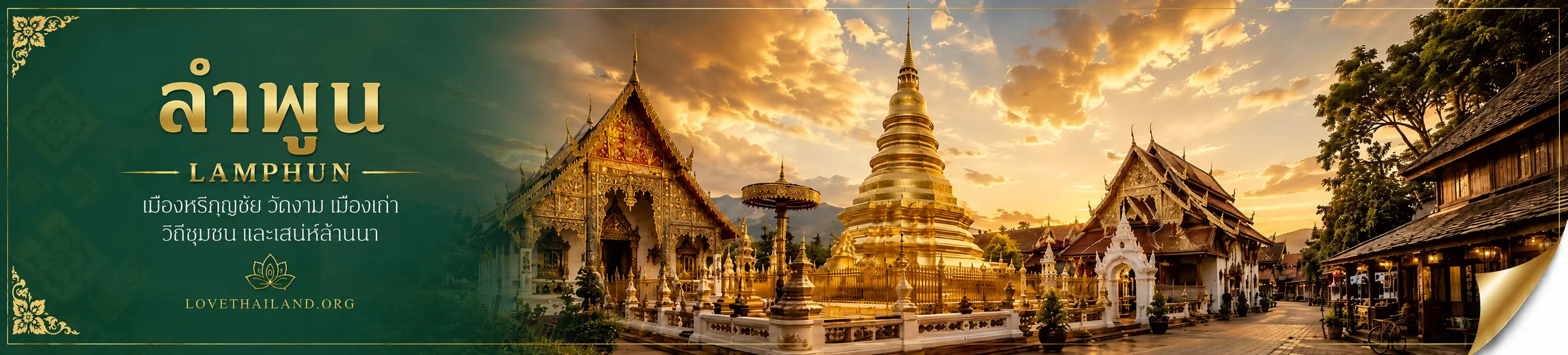
Wat Phra That Hariphunchai Woramahawihan
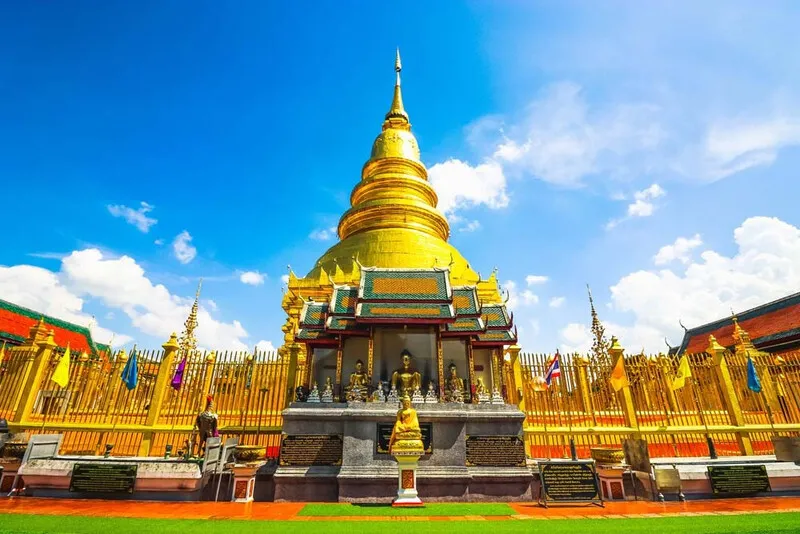
Open Days: Daily
Opening Hours: 06:30–17:00
Wat Phra That Hariphunchai Woramahawihan is one of the most important royal temples and sacred landmarks in Lamphun Province. Located in the heart of Lamphun old town, Nai Mueang Subdistrict, Mueang Lamphun District, the temple is only about 150 meters from Lamphun Provincial Hall. Its compound is surrounded by 4 roads: Attharot Road to the north, Chai Mongkhon Road to the south, Rop Mueang Road to the east, and Inthayongyot Road to the west. This central location makes the temple the spiritual, historical, and urban heart of Lamphun.
Wat Phra That Hariphunchai Woramahawihan should be one of the first places to visit in Lamphun. It is the city’s principal sacred temple, the spiritual center of local people, and the site of Phra Borommathat Hariphunchai, the revered golden stupa that has been closely connected with the ancient city of Hariphunchai for centuries. Within the temple compound, visitors can see the golden main stupa, the grand viharn, the arched gateway, scripture hall, bell tower, subsidiary chedis, and active worship areas that continue to serve the Buddhist community today.
For travelers with limited time, this temple offers the clearest introduction to Lamphun in a single place. It brings together the city pillar of faith, the legend of King Athitayarat, Hariphunchai and Lanna artistic heritage, the atmosphere of the old town, and the province’s major religious traditions. Visitors can spend around 1–2 hours here to pay respect, walk around the main sacred areas, and then continue easily to Hariphunchai National Museum, Wat Mahawan, Queen Chamthewi Monument, and Wat Chamthewi.
The history of Wat Phra That Hariphunchai Woramahawihan dates back to 1108 CE, or 1651 BE, during the reign of King Athitayarat. It was founded as a major Buddhist sanctuary of Hariphunchai, an ancient city that flourished before the rise of the Lanna Kingdom. The temple is therefore not only an important site for modern Lamphun but also a living historical landmark that reflects the continuity of Buddhism in northern Thailand from the Hariphunchai period through the Lanna era and into the present day.
Phra Borommathat Hariphunchai is the heart of the temple and the most sacred object that Buddhist devotees come to worship. The golden stupa is elegant, commanding, and clearly visible upon entering the temple grounds. It enshrines sacred relics of the Buddha, giving the temple its status as one of the most revered Buddhist pilgrimage sites in northern Thailand.
The importance of Phra That Hariphunchai lies not only in its architectural beauty but also in its religious and civic meaning. The golden stupa acts as the spiritual axis of Lamphun. Local people and visitors come to pay respect, make offerings, pray for blessings, and join important annual ceremonies, especially the bathing ceremony of Phra Borommathat Hariphunchai, one of Lamphun’s major religious traditions.
Wat Phra That Hariphunchai Woramahawihan is also known as the zodiac-year temple for people born in the Year of the Rooster. This belief brings pilgrims from many places, not only from Lamphun but also from nearby provinces and across Thailand. For many visitors, paying respect to the zodiac-year stupa is both a religious act and a personal journey of faith.
The grand viharn is another major area inside the temple. It serves as a place for Buddhist ceremonies and is one of the key spaces visitors should enter respectfully. The atmosphere inside is calm, dignified, and reflective of a well-maintained royal temple. Visitors should behave quietly because the viharn is a sacred space where local people and Buddhist devotees regularly pray, chant, and make merit.
In addition to the main stupa and the grand viharn, the temple contains several architectural elements worth observing, including the arched gateway, scripture hall, bell tower, subsidiary chedis, and decorative details that reflect Lanna art. The layout of the temple allows visitors to feel its role as the center of the old city, as it stands at a significant location connected to major roads and nearby historic sites.
The temple gates and boundary walls are more than physical dividers. They guide visitors from the surrounding urban streets into a sacred zone centered on the golden stupa. As one passes into the temple compound, the atmosphere shifts from the activity of the town to a quieter and more solemn religious space. This transition is one of the subtle experiences that makes a visit to Wat Phra That Hariphunchai meaningful.
The relationship between the temple and Lamphun is visible through its location in the old town. Surrounded by 4 roads, the temple functions as both a religious center and a geographical anchor. From here, travelers can easily continue to nearby cultural sites, including Hariphunchai National Museum, Wat Mahawan, local markets, and walking routes through the old town.
The annual bathing ceremony of Phra Borommathat Hariphunchai is one of the most important traditions associated with the temple. During this event, Buddhist devotees and visitors gather to honor the sacred relic stupa and take part in merit-making activities. The ceremony shows that the temple is not merely an ancient monument but a living center of faith that remains active in the religious life of Lamphun people.
During the festival period, the streets and areas surrounding the temple become especially lively. There are processions, Buddhist ceremonies, worship activities, and a strong sense of community participation. Travelers who want to experience Lamphun’s religious culture at its most vivid may find this period especially meaningful, although advance planning for transport and parking is recommended because the central town area becomes busier than usual.
On ordinary days, Wat Phra That Hariphunchai Woramahawihan offers a calmer atmosphere suitable for slower exploration. Morning is a good time for worship and photography of the golden stupa in natural light. Late afternoon is pleasant for walking around the temple and appreciating the old-town setting. Visitors who prefer a peaceful experience should arrive early, while those who enjoy observing the rhythm of the surrounding city may prefer a later visit.
A meaningful visit should begin with paying respect to Phra Borommathat Hariphunchai, followed by worship inside the grand viharn and a walk around the temple compound. Observing the architecture, sacred areas, and local worship practices helps visitors gain both spiritual and historical understanding. The temple is best experienced slowly rather than as a brief photo stop.
Artistically, Wat Phra That Hariphunchai Woramahawihan displays a refined blend of Lanna beauty and Hariphunchai heritage. The golden stupa forms the visual center of the compound, while the surrounding buildings create a complete architectural setting. Its beauty does not come only from scale but also from proportion, detail, sacred symbolism, and the relationship between the temple and the old city.
What distinguishes this temple from other important temples in Lamphun is the depth of its role as the city’s principal sacred site. Wat Mahawan is known for Phra Rod Lamphun, and Wat Chamthewi is known for Suwan Chang Kot Chedi and the legend of Queen Chamthewi. Wat Phra That Hariphunchai, however, is the central point where Lamphun’s identity and Buddhist faith are most clearly joined.
For history-focused travelers, the temple provides insight into Lamphun as an ancient city with deep roots before the Lanna period. Hariphunchai was a major Buddhist and cultural center, and the founding of this temple during the reign of King Athitayarat reflects the importance of religion in city-building, royal authority, and community identity.
King Athitayarat is strongly associated with the history and legend of Phra That Hariphunchai. His connection with the temple shows that the sacred stupa was not created in isolation but was linked to kingship, devotion, and the strengthening of the city’s spiritual foundation. The temple therefore carries religious, cultural, and historical-political significance.
Travelers interested in photography should focus on the main stupa, the grand viharn, the arched gateway, and the atmosphere of worshippers around the temple. Photography should always be done respectfully. Visitors should avoid disturbing people who are praying and should follow any signs or restrictions inside sacred areas.
For families and elderly visitors, the temple is convenient because it is located in the town center and close to local services. Restaurants, cafes, and other attractions are nearby, making it possible to organize an unhurried itinerary. Those traveling with elderly people should consider visiting in the morning or late afternoon to avoid heat and should plan convenient drop-off or parking points near the entrance.
First-time visitors to Lamphun should begin at Wat Phra That Hariphunchai Woramahawihan because it best represents the identity of the city. After worshipping the stupa, travelers can continue to Hariphunchai National Museum for historical context, Wat Mahawan to learn about Phra Rod Lamphun, and Wat Chamthewi to see the Ku Kut chedi. Together, these places present Lamphun through history, religion, and art.
Getting There is very convenient from anywhere in central Lamphun. Travelers with a private car can search for Wat Phra That Hariphunchai Woramahawihan directly on a map application. The temple stands in the old town and is surrounded by Attharot Road, Chai Mongkhon Road, Rop Mueang Road, and Inthayongyot Road. Travelers coming from Chiang Mai can drive into Lamphun city and continue into the old-town area where the temple is located.
Those using public transportation can first arrive in Lamphun town and then continue by local vehicle or ride-hailing service. Distances within the town are short, and the temple is close to several key attractions. Some routes, especially between the temple, Hariphunchai National Museum, and Wat Mahawan, can be arranged as short connected visits within the old town.
The area around the temple has many restaurants and cafes, making it easy to rest after worship or continue exploring. Nearby places such as Chao Kuai Mukda, Khao Man Kai Thailand Lamphun, Black to Basic Lamphun, and Yann Slow Bar Cafe are close to the temple. This allows visitors to combine a temple visit with local food and cafe stops in the old-town area.
Accommodation in central Lamphun ranges from small hotels and hostels to city resorts. Travelers who want easy access to the temple should stay near the old town or along roads that connect directly to the temple area. Staying in central Lamphun also makes it easier to visit nearby temples and historical sites early in the morning or late in the day.
Visitors should dress modestly, remove shoes where required, keep their voices low, and respect people who come to worship. International visitors should remember that this is one of Lamphun’s most important sacred places and a deeply respected temple for local people. Proper etiquette helps maintain the dignity and peacefulness of the site.
Wat Phra That Hariphunchai Woramahawihan is suitable for many types of visitors: Buddhist devotees, history enthusiasts, lovers of Lanna art, families introducing children to culture, and international travelers who want to understand Lamphun in depth. The temple is rich enough for meaningful learning but also easy to visit because of its central location.
To appreciate the temple more deeply, visitors should see Phra That Hariphunchai as a shared memory center of the city. The golden stupa is not only a beautiful monument but also a symbol of religious and cultural continuity. A visit here brings travelers closer to the essence of Lamphun than a standard sightseeing stop.
After leaving the temple, visitors can still feel the living character of the surrounding old town. People trade, travel, worship, and continue everyday life around the temple. This is part of Lamphun’s charm. Wat Phra That Hariphunchai does not stand apart from the city; it remains the heart that gives the old town its calm rhythm, beauty, and cultural depth.
In summary, Wat Phra That Hariphunchai Woramahawihan deserves a place on every Lamphun itinerary. It is the city’s principal sacred stupa, a royal temple, the zodiac-year temple for people born in the Year of the Rooster, and a spiritual center with a long history dating back to the reign of King Athitayarat. Its highlights include Phra Borommathat Hariphunchai, the grand viharn, Lanna architecture, the annual bathing ceremony of the stupa, and its central location near other important Lamphun attractions.
| Name | Wat Phra That Hariphunchai Woramahawihan |
| Location | Central Lamphun, Nai Mueang Subdistrict, Mueang Lamphun District, Lamphun Province |
| Address | Inthayongyot Road, Nai Mueang Subdistrict, Mueang Lamphun District, Lamphun Province 51000 |
| Highlights | Phra Borommathat Hariphunchai, the zodiac-year stupa for the Year of the Rooster, grand viharn, arched gateway, scripture hall, bell tower, and the annual bathing ceremony of Phra Borommathat Hariphunchai |
| History | Founded in 1108 CE / 1651 BE during the reign of King Athitayarat as a major sacred site of ancient Hariphunchai and Lamphun |
| Distinctive Features | A magnificent golden stupa in the heart of Lamphun old town, surrounded by 4 roads and regarded as the spiritual center of the province |
| Travel Information | Enter Lamphun old town and head to the temple area near Lamphun Provincial Hall. The temple is surrounded by Attharot Road, Chai Mongkhon Road, Rop Mueang Road, and Inthayongyot Road. |
| Current Status | Active royal temple and major religious, historical, and cultural attraction of Lamphun Province |
| Open Days | Daily |
| Opening Hours | 06:30–17:00 |
| Fees | Foreign visitors: 20 baht |
| Main Areas / Zones | Phra Borommathat Hariphunchai, grand viharn, arched gateway, scripture hall, bell tower, subsidiary chedis, circumambulation and worship areas around the stupa |
| Abbot / Caretaker | Phra Thep Rattan Nayok (Chamrat Tattasiri, Pali Grade 7), Abbot of Wat Phra That Hariphunchai Woramahawihan |
| Main Contact Number | 089-955-2174 |
| Official Website / Official Page | Wat Phra That Hariphunchai Woramahawihan Lamphun Facebook Page |
| Nearby Tourist Attractions | 1. Hariphunchai National Museum – 1 km 2. Wat Mahawan – 1 km 3. Queen Chamthewi Monument – 1 km 4. Wat Chamthewi / Wat Ku Kut – 2 km 5. Ku Chang Ku Ma Ancient Site – 3 km |
| Nearby Restaurants | 1. Chao Kuai Mukda – 100 m. Tel. 082-923-9662 2. Khao Man Kai Thailand Lamphun – 100 m. Tel. 081-180-8002 3. Black To Basic Lamphun – 200 m. Tel. 065-542-9692 4. Yann Slow Bar Cafe – 200 m. Tel. 085-329-0167 5. Suk Wisai – 100 m. Tel. 099-112-2014 |
| Nearby Accommodations | 1. PickBaan Hostel – 1 km 2. Easy Hotel Lamphun – 2 km. Tel. 053-511-558, 089-954-6708 3. Phaya Inn – 2 km 4. The Grand Jamjuree Resort Lamphun – 3 km. Tel. 088-263-3305, 052-039-558 5. Easy Hotel 2 Lamphun – 4 km. Tel. 085-615-1551 |
Frequently Asked Questions (FAQ)
Q: Where is Wat Phra That Hariphunchai Woramahawihan located?
A: Wat Phra That Hariphunchai Woramahawihan is located in central Lamphun, Nai Mueang Subdistrict, Mueang Lamphun District, Lamphun Province, about 150 meters from Lamphun Provincial Hall.
Q: Why is Wat Phra That Hariphunchai Woramahawihan important?
A: It is a royal temple, the principal sacred temple of Lamphun, and the site of Phra Borommathat Hariphunchai, one of the most revered Buddhist relic stupas in northern Thailand.
Q: When was Wat Phra That Hariphunchai founded?
A: The temple was founded in 1108 CE / 1651 BE during the reign of King Athitayarat.
Q: Which zodiac year is Phra That Hariphunchai associated with?
A: Phra That Hariphunchai is the zodiac-year stupa for people born in the Year of the Rooster.
Q: What are the opening hours of Wat Phra That Hariphunchai?
A: The temple is open daily from 06:30 to 17:00.
Q: Is there an entrance fee for foreign visitors?
A: Yes. The entrance fee for foreign visitors is 20 baht.
Q: How long should visitors spend at Wat Phra That Hariphunchai?
A: Visitors should allow around 1–2 hours to worship at the main stupa, visit the grand viharn, and explore the key areas of the temple compound.
Q: What nearby attractions can be visited with Wat Phra That Hariphunchai?
A: Nearby attractions include Hariphunchai National Museum, Wat Mahawan, Queen Chamthewi Monument, Wat Chamthewi, and Ku Chang Ku Ma Ancient Site.
 Category: ●Places of Worship
 Group: ●Temple
Last Update : 5 MonthAgo
 Last Update : 5 MonthAgo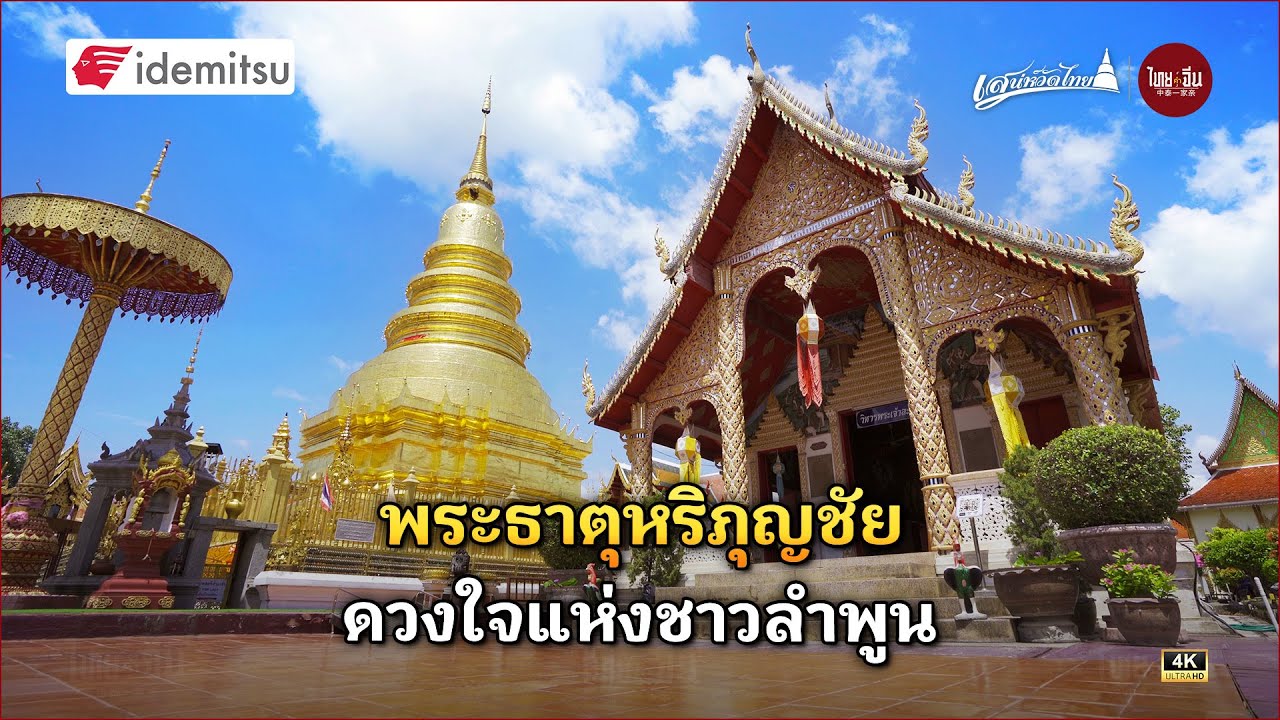
 Click to Access the Navigation Map GPS
Wat Phra That Hariphunchai Woramahawihan Map
Gellery
Recommend

 Art, Culture and Heritage
 Historical Sites and Monuments(2)
 Landmarks and Memorials(8)
 Art, Craft Centres, Tradition(9)
 Museums(3)
 Historic Homes and Cities(1)
Temple(91)
Historic Homes and Cities(1)
Temple(91)
 Mosque(1)
 Other Sacred Sites(7)
 Research and Development
 Royal Project(1)
 Suburban Living
 Village, Community(13)
 Local Market(3)
 Nature and Wildlife
 National Parks and Marine Reserves(2)
 Mountain (Doi)(1)
 Dam, Reservoir, Lake(13)
 Waterfalls(3)
 Caves(4)
 River, Canal(1)
 Other natural attractions(1)
 Entertainment and Agricultural
 Farms, Parks and Ecotourism(2)


