
lovethailand home >North Travel Attractions >Lamphun Travel Attractions >Muang Lamphun >Nai Muang > Wat Mahawan
TL;DR: Wat Mahawan is located at Chamthewi Road, Nai Mueang Subdistrict, Mueang Lamphun District, Lamphun Province, open Daily, hours 06:00–18:00.
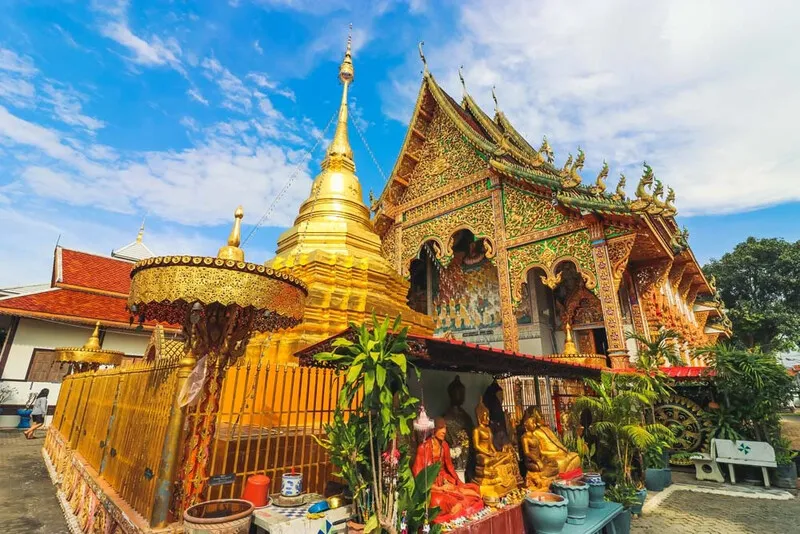
Wat Mahawan
Open Days: Daily
Opening Hours: 06:00–18:00
Wat Mahawan, also known as Wat Mahawan Wanaram, is one of the most historically meaningful temples in the old town of Lamphun. Located at 52 Chamthewi Road, Nai Mueang Subdistrict, Mueang Lamphun District, Lamphun Province, the temple stands along the old city moat and only about 500 meters from Lamphun Provincial Hall. Wat Mahawan is closely connected with the early history of Hariphunchai, the legacy of Queen Chamthewi, the sacred Black Stone Buddha, and the legendary Phra Rod Mahawan amulet, one of the most renowned sacred amulets in Thailand.
For travelers who want to understand Lamphun beyond a simple sightseeing route, Wat Mahawan is an essential stop. The temple is not only a place for worship but also a cultural landmark where history, faith, Buddhist art, and local memory meet. Visitors come here to pay respect to Phra Phuttha Sikkhi, also known as the Black Stone Buddha, Phra Rod Luang, or Phra Rod Lamphun. This sacred image is strongly associated with the origin story of Phra Rod Mahawan, which later became one of the most famous Buddhist amulets in Thai culture.
According to local tradition, Wat Mahawan was founded during the reign of Queen Chamthewi, when she ruled Hariphunchai around 1200 BE. This period marks one of the most important early chapters in Lamphun’s history. Queen Chamthewi is remembered as a key figure who helped establish the religious, cultural, and political foundations of Hariphunchai. The story of Wat Mahawan therefore belongs not only to the temple itself but also to the broader history of Lamphun as one of northern Thailand’s oldest urban and Buddhist centers.
The most important sacred object inside the temple is Phra Phuttha Sikkhi, or the Black Stone Buddha. Local tradition says that Queen Chamthewi brought this image from Lavo, an ancient kingdom in central Thailand. The people of Lamphun call this image Phra Rod Luang or Phra Rod Lamphun. Its significance is deeply tied to the belief that it served as an important spiritual model for the creation of Phra Rod Mahawan, the famous amulet associated with Wat Mahawan.
Phra Rod Mahawan is one of the reasons Wat Mahawan is widely known throughout Thailand. The amulet is celebrated for its deep historical roots, refined Buddhist art, and strong association with protection and safety. The word “Rod” carries the sense of being saved or protected, and this meaning has strengthened the faith surrounding Phra Rod Mahawan for generations. When visitors come to Wat Mahawan, they are not simply seeing the place where a famous amulet is remembered; they are entering the historical and spiritual setting that gave the tradition its meaning.
Wat Mahawan helps visitors understand the role of Lamphun during the Hariphunchai period. Lamphun is not merely a small northern city but an ancient cultural center that flourished long before the rise of the Lanna Kingdom. A visit to Wat Mahawan reveals how Buddhism, city-building, sacred images, and royal legends shaped the identity of the region. The temple therefore offers a meaningful perspective on northern Thai history through a compact and accessible site in the heart of the old town.
The temple compound includes several important areas, including the viharn, ubosot, sermon hall, monks’ residences, bell tower, scripture hall, the temple chedi, and the worship area for Phra Rod Luang. These elements show that Wat Mahawan is still a living Buddhist temple, not merely an archaeological site. Local people continue to visit for merit-making, worship, and religious activities, while travelers come to learn about its history and sacred heritage.
The atmosphere of Wat Mahawan is calm and approachable. Visitors can walk through the temple slowly, taking time to observe the viharn, sacred images, chedi, and worship areas. The most meaningful part of the visit is the area connected with Phra Rod Luang and the story of Phra Rod Mahawan. Spending around 45–90 minutes here allows enough time to pay respect, explore the compound, read available information, and connect the temple’s story with other historical sites in Lamphun.
Architecturally, Wat Mahawan reflects the character of an old temple in central Lamphun that has been used continuously over many generations. The temple buildings serve both daily religious life and the preservation of historical memory. Visitors should observe not only the main structures but also the layout, sacred images, decorative details, and the way the temple integrates with the old city setting. These elements help explain why Wat Mahawan remains one of the most important temples in Lamphun’s historic core.
Wat Mahawan is also an excellent starting point for understanding the heritage route of Lamphun old town. It is close to Wat Phra That Hariphunchai, Hariphunchai National Museum, Queen Chamthewi Monument, Wat Chamthewi, and Ku Chang Ku Ma Ancient Site. Travelers can easily arrange a half-day or full-day route through the old town, beginning with Wat Phra That Hariphunchai, continuing to the museum, visiting Wat Mahawan, and then moving on to Wat Chamthewi and other sites linked to Queen Chamthewi and Hariphunchai history.
For visitors interested in Thai sacred amulets and Buddhist art, Wat Mahawan has particular importance. Phra Rod Mahawan is not only an object of devotion or collection; it is also a cultural artifact that reflects Buddhist belief, artistic form, and the transmission of sacred imagery through time. Seeing the temple where the Phra Rod tradition is rooted allows visitors to understand the amulet in its proper historical and religious context.
The connection between Wat Mahawan and Queen Chamthewi gives the temple additional historical depth. Queen Chamthewi represents the founding memory of Lamphun and the cultural bridge between Lavo and Hariphunchai. The story of Phra Phuttha Sikkhi being brought from Lavo reflects the movement of faith, artistic influence, and royal authority between regions. This makes Wat Mahawan a key site for understanding how Lamphun became a major Buddhist center in northern Thailand.
Phra Phuttha Sikkhi, or the Black Stone Buddha, carries meaning on both religious and historical levels. The name “Black Stone Buddha” refers to the image’s material and appearance, while the names Phra Rod Luang and Phra Rod Lamphun reflect the way local people understand its protective and sacred qualities. Paying respect to this image is one of the most important experiences for visitors to Wat Mahawan.
Visitors who come for worship should begin by paying respect to the principal Buddha image and Phra Rod Luang, then continue to the chedi and other significant areas of the temple. As Wat Mahawan remains an active Buddhist temple, visitors should dress modestly, speak quietly, and avoid disturbing monks or local worshippers. The temple is a shared religious space, and respectful behavior helps preserve its peaceful atmosphere.
Wat Mahawan is best experienced as a cultural and historical temple rather than as a quick photo stop. At first glance, it may appear to be a quiet old temple in Lamphun, but its deeper meaning becomes clear when visitors understand its relationship with Queen Chamthewi, the Black Stone Buddha, Phra Rod Lamphun, and Phra Rod Mahawan. These stories give the temple a rich historical identity that rewards careful attention.
For a one-day itinerary in Lamphun old town, Wat Mahawan can be visited either in the morning or afternoon. A recommended route is to begin at Wat Phra That Hariphunchai, continue to Wat Mahawan, visit Hariphunchai National Museum for historical context, and then proceed to Wat Chamthewi or Ku Chang Ku Ma Ancient Site. This route gives travelers a clearer understanding of Hariphunchai through its temples, sacred images, museum collections, and ancient monuments.
Travelers coming from Chiang Mai can visit Wat Mahawan as part of an easy day trip. The drive from Chiang Mai to Lamphun is convenient, and the temple’s location on Chamthewi Road makes it simple to include in a heritage route around the old city. Combining Wat Mahawan with Wat Phra That Hariphunchai, Wat Chamthewi, and Hariphunchai National Museum creates a well-rounded introduction to Lamphun’s religious and historical identity.
Getting There is straightforward by private car, local transport, or ride-hailing service within Lamphun town. From the city center, follow Chamthewi Road along the old moat to reach the temple. Wat Mahawan is about 500 meters from Lamphun Provincial Hall and close to several major landmarks, making it easy to visit together with other attractions in the old town. Travelers using online maps can search for Wat Mahawan or Wat Mahawan Wanaram.
For travelers using public transportation, the easiest approach is to first arrive in central Lamphun and then continue by local vehicle or ride-hailing service to Chamthewi Road. Because the temple is located within the town area, travel from major city points such as Wat Phra That Hariphunchai, the market area, or local transport hubs is simple and does not require much extra time.
The best time to visit Wat Mahawan is in the morning or late afternoon. These periods are more comfortable for walking and worship, especially during the warmer months. Morning is suitable for merit-making and beginning a heritage route, while late afternoon offers a quieter atmosphere and softer natural light. Visitors should avoid interrupting religious ceremonies or temple activities when they are taking place.
Wat Mahawan is meaningful for local residents, Thai travelers, and international visitors who are interested in Buddhist history. It can be appreciated on several levels: as a temple for worship, as an ancient site connected with Hariphunchai, and as the origin place of the Phra Rod Mahawan tradition. This layered identity makes the temple especially valuable for travelers who want more than a surface-level experience of Lamphun.
Photography is possible, but visitors should take photos respectfully. Avoid climbing on structures, touching sacred objects without permission, or disturbing people who are praying. Good photographic subjects include the temple atmosphere, viharn details, sacred worship areas, and architectural elements that express the character of a northern Thai temple. Respectful photography helps preserve the dignity of the place.
Compared with other major temples in Lamphun, Wat Mahawan has a distinct identity. Wat Phra That Hariphunchai is known as the city’s principal sacred stupa, while Wat Chamthewi is known for Suwan Chang Kot Chedi and its strong connection with Queen Chamthewi. Wat Mahawan adds another important dimension through Phra Rod Mahawan, Phra Rod Luang, and the sacred image tradition of Lamphun. Visiting these temples together gives travelers a broader understanding of the old city.
What makes Wat Mahawan enduringly significant is its balance between legend, history, and living faith. The legend of Queen Chamthewi gives the temple ancient roots. The story of the Black Stone Buddha and Phra Rod Mahawan gives it cultural and spiritual weight. Its continuing role as an active temple keeps it connected to the daily life of the local community.
A visit to Wat Mahawan should therefore be seen as more than a brief act of worship. The temple tells the story of Lamphun through Buddhism, Queen Chamthewi, Phra Rod Lamphun, and the old town community that continues to preserve this sacred place. Visitors leave not only with a sense of merit and calm, but also with a deeper understanding of Lamphun as a city of layered history and cultural continuity.
For first-time visitors to Lamphun, Wat Mahawan deserves a place on the main itinerary. It is easy to reach, close to other important attractions, and rich in stories that cannot be separated from the identity of the province. The temple helps explain why Phra Rod Lamphun remains so widely respected and why Lamphun continues to be one of Thailand’s most important historic Buddhist cities.
In summary, Wat Mahawan is an important temple in Lamphun for worship, history, and Buddhist art. Its main highlights are Phra Phuttha Sikkhi or the Black Stone Buddha, Phra Rod Luang, Phra Rod Lamphun, and the story of Phra Rod Mahawan. Located conveniently in the old town, the temple is easy to combine with Wat Phra That Hariphunchai, Hariphunchai National Museum, Wat Chamthewi, and other key historical sites in Lamphun.
| Name | Wat Mahawan / Wat Mahawan Wanaram |
| Location | Chamthewi Road, Nai Mueang Subdistrict, Mueang Lamphun District, Lamphun Province |
| Address | 52 Chamthewi Road, Nai Mueang Subdistrict, Mueang Lamphun District, Lamphun Province 51000 |
| Highlights | Phra Phuttha Sikkhi or the Black Stone Buddha, Phra Rod Luang, Phra Rod Lamphun, Phra Rod Mahawan, Wat Mahawan Chedi, and the atmosphere of an ancient temple in Lamphun old town |
| History | Traditionally believed to have been founded during the reign of Queen Chamthewi of Hariphunchai around 1200 BE |
| Distinctive Features | An ancient temple in Lamphun old town closely connected with Phra Rod Mahawan and Phra Rod Lamphun |
| Travel Information | Located on Chamthewi Road along the old city moat, about 500 meters from Lamphun Provincial Hall and close to Wat Phra That Hariphunchai and Hariphunchai National Museum |
| Current Status | Active Buddhist temple and historical attraction in central Lamphun |
| Open Days | Daily |
| Opening Hours | 06:00–18:00 |
| Fees | Free admission |
| Main Areas / Zones | Viharn, ubosot, sermon hall, monks’ residences, bell tower, scripture hall, Wat Mahawan Chedi, and Phra Rod Luang worship area |
| Abbot / Caretaker | Phra Khru Palat Khananuwat (Prakobbun Siriñāṇo), Abbot of Wat Mahawan |
| Main Contact Number | 052-030-539, 080-215-4805 |
| Official Website / Official Page | Wat Mahawan website and Wat Mahawan Lamphun Facebook page |
| Nearby Tourist Attractions | 1. Wat Phra That Hariphunchai – 1 km 2. Hariphunchai National Museum – 1 km 3. Queen Chamthewi Monument – 1 km 4. Wat Chamthewi / Wat Ku Kut – 2 km 5. Ku Chang Ku Ma Ancient Site – 3 km |
| Nearby Restaurants | 1. Khao Soi Lamphun Khao Soi Nom Sod Sai Nam Phueng – 1 km. Tel. 083-477-7881 2. Kuai Tiao Moo Toon Lam Yai – 1 km. Tel. 053-511-240, 089-561-1120 3. Kuai Tiao Khun Daeng Lamphun – 1 km. Tel. 095-673-3695, 081-993-0176 4. Tiao Toon Ban Suan Original Lamphun – 3 km. Tel. 093-392-0829 5. Krua Wandee Local Lamphun Food – 3 km. Tel. 081-883-6215 |
| Nearby Accommodations | 1. Pantip Boutique Hotel – 2 km. Tel. 099-192-8881 2. DNK Baan Suan – 2 km. Tel. 091-859-3048 3. Siri Hotel Lamphun – 3 km. Tel. 052-039-391, 064-362-7101 4. Lamphun Place – 3 km. Tel. 094-759-7555 5. The Grand Jamjuree Resort Lamphun – 5 km. Tel. 053-000-889, 088-263-3305 |
Frequently Asked Questions (FAQ)
Q: Where is Wat Mahawan located?
A: Wat Mahawan is located at 52 Chamthewi Road, Nai Mueang Subdistrict, Mueang Lamphun District, Lamphun Province, about 500 meters from Lamphun Provincial Hall.
Q: Why is Wat Mahawan important?
A: Wat Mahawan is an ancient temple linked to Queen Chamthewi, Phra Phuttha Sikkhi, Phra Rod Luang, Phra Rod Lamphun, and the famous Phra Rod Mahawan amulet.
Q: What is Phra Phuttha Sikkhi or the Black Stone Buddha?
A: Phra Phuttha Sikkhi, also known as the Black Stone Buddha, is an important sacred image traditionally believed to have been brought from Lavo by Queen Chamthewi. Local people also call it Phra Rod Luang or Phra Rod Lamphun.
Q: How is Phra Rod Mahawan connected to Wat Mahawan?
A: Wat Mahawan is strongly associated with the origin story of Phra Rod Mahawan. Phra Rod Luang inside the temple is regarded as an important spiritual model for the famous Lamphun amulet tradition.
Q: Is there an entrance fee for Wat Mahawan?
A: No. Admission is free, and visitors can enter for worship and sightseeing during opening hours.
Q: How long should visitors spend at Wat Mahawan?
A: Visitors should allow around 45–90 minutes to worship, view Phra Rod Luang, walk around the chedi, and explore the main temple areas.
Q: What nearby attractions can be visited with Wat Mahawan?
A: Nearby attractions include Wat Phra That Hariphunchai, Hariphunchai National Museum, Queen Chamthewi Monument, Wat Chamthewi, and Ku Chang Ku Ma Ancient Site.
Q: Who should visit Wat Mahawan?
A: Wat Mahawan is suitable for visitors interested in Lamphun history, Queen Chamthewi, Phra Rod Mahawan, Lanna Buddhist art, sacred amulets, and cultural travel in Lamphun old town.
 Category: ●Places of Worship
 Group: ●Temple
Last Update : 6 MonthAgo
 Last Update : 6 MonthAgo
 Click to Access the Navigation Map GPS
Wat Mahawan Map
Recommend

 Art, Culture and Heritage
 Historical Sites and Monuments(2)
 Landmarks and Memorials(8)
 Art, Craft Centres, Tradition(9)
 Museums(3)
 Historic Homes and Cities(1)
Temple(91)
Historic Homes and Cities(1)
Temple(91)
 Mosque(1)
 Other Sacred Sites(7)
 Research and Development
 Royal Project(1)
 Suburban Living
 Village, Community(13)
 Local Market(3)
 Nature and Wildlife
 National Parks and Marine Reserves(2)
 Mountain (Doi)(1)
 Dam, Reservoir, Lake(13)
 Waterfalls(3)
 Caves(4)
 River, Canal(1)
 Other natural attractions(1)
 Entertainment and Agricultural
 Farms, Parks and Ecotourism(2)
 Waterpark(1)
 Travel Articles, Recipes
 Travel Review, Food Review(1)


