
lovethailand home >North Travel Attractions >Lamphun Travel Attractions >Pa Sang >Tha Tum > Wat Tha Tum
TL;DR: Wat Tha Tum is located at Ban Tha Tum, Tha Tum Subdistrict, Pa Sang District, Lamphun Province, open Daily, hours 06:00–18:00. Highlights include Historic temple over 200 years old, origin from abandoned temple site, connection to Tum tree.
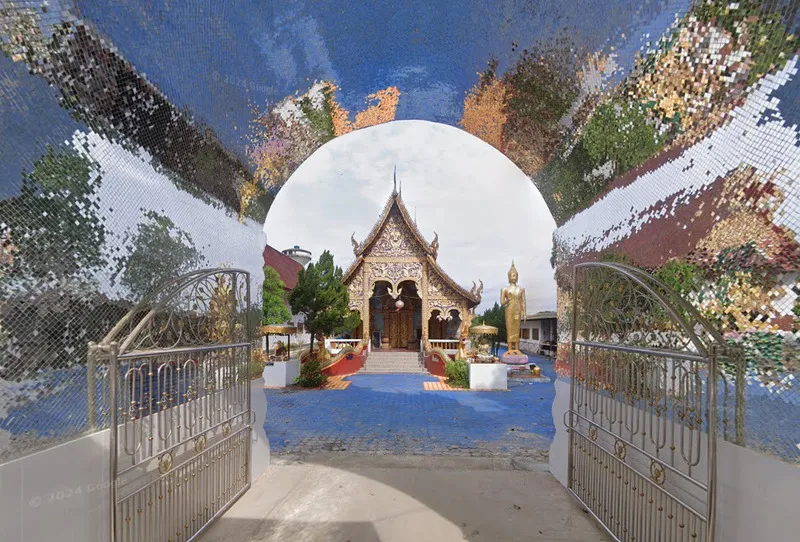
Wat Tha Tum
Open Days: Daily
Opening Hours: 06:00–18:00
Wat Tha Tum is a historically significant Buddhist temple located in Ban Tha Tum, Tha Tum Subdistrict, Pa Sang District, Lamphun Province. With a history spanning more than two centuries, the temple reflects both the cultural continuity of Lanna society and the strong connection between religion and local community life. It is especially notable for its origin story, which is closely tied to an abandoned temple site, migration patterns during periods of conflict, and the re-establishment of community settlements.
For travelers searching for “Wat Tha Tum Lamphun” or “temples in Pa Sang District,” this temple represents a classic example of a traditional northern Thai community temple. It does not rely on large-scale tourism development but instead offers an authentic atmosphere where visitors can observe real daily religious practices, local beliefs, and the simple lifestyle of villagers.
The temple is located at 286 Ban Tha Tum, Tha Tum Subdistrict, Pa Sang District, Lamphun Province, and belongs to the Maha Nikaya sect of Thai Buddhism. The temple grounds cover approximately 4 rai, 1 ngan, and 15 square wah. Within the compound, visitors will find essential religious structures including the ubosot (ordination hall), viharn (assembly hall), sermon hall, and monks’ residences, all of which continue to serve their original functions in supporting Buddhist activities.
Wat Tha Tum was established in 1760 (B.E. 2303), making it one of the older temples in the Pa Sang area. Historical accounts indicate that an abandoned temple site once existed nearby, known locally as “Den Phra Chao Hu Yan.” This earlier temple is believed to have been constructed by the Lua people, an indigenous ethnic group in northern Thailand, reflecting early settlement patterns in the region.
During a period of warfare, the local population was forced to evacuate, leaving the temple deserted and allowing the surrounding area to become overgrown with large trees and dense vegetation. Over time, the site remained abandoned until new settlers arrived and recognized its potential as a suitable location for a new temple.
When villagers returned to settle in the area, they observed that the location was both spiritually meaningful and environmentally suitable. A large “Tum tree” stood prominently within the area, spreading wide branches that provided shade and a sense of calm. Inspired by this natural feature, the villagers worked together to clear the land and rebuild the temple, eventually naming it “Wat Tha Tum” after the tree.
This origin story highlights a key characteristic of northern Thai temples: they are often deeply rooted in both natural landscapes and community collaboration. The establishment of Wat Tha Tum was not initiated by royal authority or large institutions, but rather by local villagers who shared a common belief in the importance of having a nearby religious center.
Inside the temple, the principal Buddha image serves as the spiritual focal point for worshippers. Devotees regularly visit to make merit, pray, and participate in religious ceremonies. The presence of a chedi further reinforces the temple’s role as a sacred space, symbolizing the preservation of Buddhist teachings and relics.
From a cultural perspective, Wat Tha Tum functions as more than just a place of worship. It acts as a community hub where religious events, traditional ceremonies, and social gatherings take place. Festivals, merit-making activities, and important Buddhist holy days are observed here, strengthening social bonds among villagers.
The atmosphere of the temple remains peaceful and largely unchanged from its traditional roots. Unlike major tourist destinations, Wat Tha Tum offers a quiet and contemplative environment. Visitors who seek a deeper understanding of rural Thai Buddhism will find this temple particularly meaningful.
Another aspect that makes Wat Tha Tum interesting for cultural tourism is its connection to nearby attractions in Pa Sang District. The area is known for its traditional cotton weaving villages, historic temples, and community-based tourism experiences. As a result, Wat Tha Tum can be included as part of a broader cultural itinerary.
Getting There is straightforward from Lamphun city. Travelers can take Highway 106 (Lamphun–Pa Sang Road) heading toward Pa Sang District. After reaching Tha Tum Subdistrict, continue toward Ban Tha Tum village, where the temple is located. The road conditions are accessible, making it suitable for travel by private car or motorcycle.
For those planning a full-day trip in Pa Sang, Wat Tha Tum can be combined with several nearby temples and cultural attractions. This includes Wat Inthakhil, Wat Ko Kha, Wat Pa Sang Ngam, Wat Don Luang, and the Ban Don Luang Cotton Weaving Group, which is well-known for traditional textile production.
| Name | Wat Tha Tum |
| Location | Ban Tha Tum, Tha Tum Subdistrict, Pa Sang District, Lamphun Province |
| Address | 286 Ban Tha Tum, Tha Tum, Pa Sang, Lamphun, Thailand |
| Highlights | Historic temple over 200 years old, origin from abandoned temple site, connection to Tum tree |
| History | Established in 1760 after rebuilding an abandoned temple site believed to have been created by the Lua people |
| Name Origin | Named after a large Tum tree located in the temple area |
| Distinctive Features | Ubosot, viharn, principal Buddha image, chedi, and traditional community setting |
| Travel Information | Accessible via Highway 106, then enter Tha Tum village area |
| Current Status | Open |
| Open Days | Daily |
| Opening Hours | 06:00–18:00 |
| Fees | Free admission |
| Nearby Tourist Attractions | 1. Wat Inthakhil 2 km 2. Wat Ko Kha 3 km 3. Wat Pa Sang Ngam 4 km 4. Wat Don Luang 6 km 5. Ban Don Luang Cotton Weaving Group 6 km |
| Nearby Restaurants | 1. Khrua Pa Sang 6 km, Tel. 081-783-2294 2. Lung Tong Cafe & Restaurant 7 km, Tel. 062-925-2594 3. Route 116 Coffee Bar 8 km 4. Khiang Duean 116 9 km |
| Nearby Accommodations | 1. Grand Opening Resort Pa Sang 8 km, Tel. 091-874-1168 2. Baan Nai Suan Homestay 6 km 3. Huan Hom Hak Homestay 7 km 4. OYO 421 DNK Baan Suan 9 km 5. Papa’s Home & Rabbit Cafe 10 km |
Frequently Asked Questions (FAQ)
Q: How old is Wat Tha Tum?
A: It is over 200 years old, established in 1760.
Q: Why is it called Wat Tha Tum?
A: The name comes from a large Tum tree that once stood in the temple area.
Q: Where is Wat Tha Tum located?
A: It is located in Tha Tum Subdistrict, Pa Sang District, Lamphun Province.
Q: Is there an entrance fee?
A: No, admission is free.
Q: How can visitors reach the temple?
A: Visitors can travel via Highway 106 and enter Tha Tum village.
 Category: ●Places of Worship
 Group: ●Temple
Last Update : 4 MonthAgo
 Last Update : 4 MonthAgo
 Click to Access the Navigation Map GPS
 Art, Culture and Heritage
 Historical Sites and Monuments(2)
 Landmarks and Memorials(8)
 Art, Craft Centres, Tradition(9)
 Museums(3)
 Historic Homes and Cities(1)
Temple(91)
Historic Homes and Cities(1)
Temple(91)
 Mosque(1)
 Other Sacred Sites(7)
 Research and Development
 Royal Project(1)
 Suburban Living
 Village, Community(13)
 Local Market(3)
 Nature and Wildlife
 National Parks and Marine Reserves(2)
 Mountain (Doi)(1)
 Dam, Reservoir, Lake(13)
 Waterfalls(3)
 Caves(4)
 River, Canal(1)
 Other natural attractions(1)
 Entertainment and Agricultural
 Farms, Parks and Ecotourism(2)


