lovethailand home >North Travel Attractions >Lamphun Travel Attractions >Ban Hong >Lao Yao > Wat Lao Yao
TL;DR: Wat Lao Yao is located at Ban Lao Yao, Lao Yao Subdistrict, Ban Hong District, Lamphun Province, open Daily, hours 08:00 – 17:00.

Lamphun

Wat Lao Yao

Wat Lao Yao

Open Days: Daily
Opening Hours: 08:00 – 17:00
 
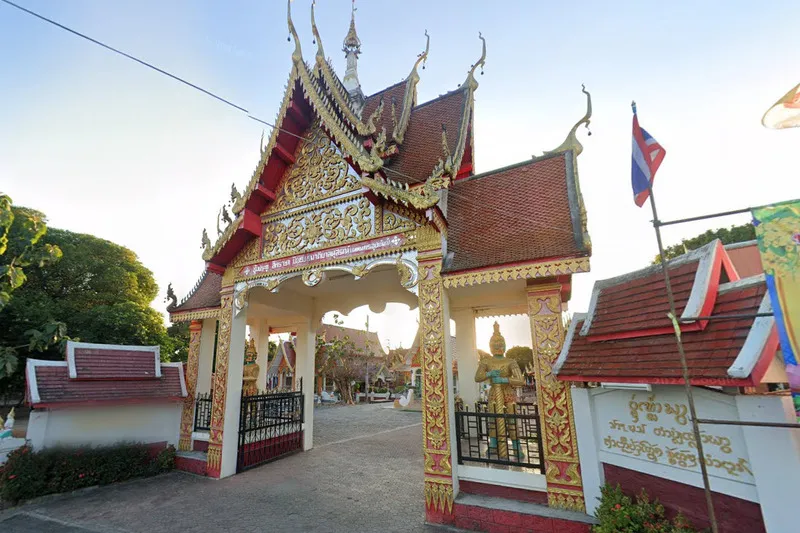
Wat Lao Yao is an old community temple in Lao Yao Subdistrict, Ban Hong District, Lamphun Province. It is a private Buddhist temple under the Maha Nikaya order. The temple was officially established in 1857 and received its Wisungkhamsima, the royal boundary permission for Buddhist monastic rites, in 1970. The temple is known for its deep connection with Ban Lao Yao community, its former name “Wat San Pa Tueng Ngam,” Phra Borommathat Wat Lao Yao, the scripture hall, ordination hall, viharn, chedi, sermon hall, monks’ residences, and its calm northern Thai temple atmosphere. It is suitable for visitors who want to make merit, pay respect to sacred Buddhist sites, and understand the local roots of Ban Hong in a peaceful, unhurried way.
 
Wat Lao Yao is located at 317 Ban Lao Yao, Piyathammaphiban Road, Moo 3, Lao Yao Subdistrict, Ban Hong District, Lamphun Province. The temple covers an area of 17 rai, 2 ngan, and 36 square wah. It has long served as a spiritual center for the local community and remains an important place for Buddhist ceremonies, merit-making activities, local traditions, and religious gatherings that have continued through generations.
 
The history of Wat Lao Yao dates back to 1857, during a period when Ban Hong was still a rural area shaped by agricultural land, forested surroundings, and traditional northern Thai settlements. The temple was originally known as “Wat San Pa Tueng Ngam.” This name came from the natural landscape around the original temple site, where many trees known locally as “mai tueng” once grew in long stretches. The name therefore reflected the old geography, local vegetation, and community memory of the area before it became a more settled village.
 
As more villagers migrated into the area and the settlement expanded, people from different family groups and local clusters gradually formed a stronger community. The area became known as “Ban Lao Yao,” and the temple name later changed accordingly to “Wat Lao Yao.” The name is therefore more than a temple name. It records the development of the village and the formation of the local community in Lao Yao Subdistrict.
 
The founding of Wat Lao Yao grew from the faith of local villagers who wanted a temple for Buddhist ceremonies, merit-making, listening to sermons, and gathering during important community occasions. The villagers invited Phra Khruba Ta to preside over the temple’s construction. His role was important in the early period of the temple, as he provided spiritual leadership and helped guide the community’s effort to establish a proper Buddhist center.
 
In Lanna society, a temple is not merely a residence for monks. It is also a cultural institution closely tied to community life from birth to death. Wat Lao Yao has therefore functioned as more than a place of worship. It has served as a center for rituals, Buddhist learning, merit-making, community gatherings, and relationships among families, relatives, and different generations.
 
The temple grounds include several important religious buildings and monastic structures, including the ordination hall, viharn, chedi, sermon hall, monks’ residences, and a merit-making pavilion. These elements reflect the structure of a northern Thai community temple that supports both monastic duties and local community activities. The ordination hall is used for formal monastic rites, the viharn is a place for Buddha images and religious ceremonies, the sermon hall brings laypeople together for merit-making occasions, and the monks’ residences provide living quarters for monks and novices.
 
Important sacred objects and structures within the temple include Buddha images, the chedi, the scripture hall, and Phra Borommathat Wat Lao Yao. Phra Borommathat Wat Lao Yao is especially significant as a spiritual landmark of the temple. It is a small sacred chedi, approximately 5 meters high with a base about 5 meters wide, enclosed by a surrounding fence. Although it is not a large provincial-scale relic monument, it holds great value for the local community as a symbol of faith, continuity of Buddhism, and spiritual unity in Ban Lao Yao.
 
The presence of Phra Borommathat within the temple allows visitors to experience the quiet character of a rural Lanna temple. Its importance does not come from grandeur, but from simplicity, devotion, and the relationship between the sacred site and the people who care for it. Walking around the relic area, paying respect, and spending a short moment in the temple courtyard reveal how the temple continues to serve its community in everyday life.
 
The scripture hall is another meaningful element of Wat Lao Yao. It reflects the temple’s role as a place for preserving Buddhist teachings. The Tripitaka represents the core teachings of Buddhism, and the presence of a scripture hall shows that Wat Lao Yao is not only a place for ceremonies but also a place that values the transmission of Buddhist knowledge, ethics, and religious learning.
 
Wat Lao Yao received its Wisungkhamsima on March 26, 1970. This was an important milestone in the temple’s religious status. Wisungkhamsima is the consecrated boundary granted for formal monastic acts, including ordination. Receiving Wisungkhamsima indicates that the temple had reached an important level of readiness and recognition within the Thai Sangha system.
 
Regarding temple administration, the historical record identifies Phra Khruba Ta Kham Khum Ngoen as the first abbot of Wat Lao Yao, followed by several successive abbots. Local government information identifies Phra Khrusangkharak Sombat Aphirammaniyo as a former abbot of Wat Lao Yao Tai, with his funeral ceremony held at Wat Lao Yao Tai. For the updated article, this information is used as a historical reference to a former abbot and is not presented as the current abbot.
 
Wat Lao Yao is suitable for readers interested in old temples in Lamphun, temples in Ban Hong District, and cultural travel routes that are not crowded or commercialized. The temple’s value lies in its role as a living community temple rather than as a mass-tourism destination. Visitors should explore it with calmness and respect, dress modestly, and be mindful when passing monastic areas or places where religious activities are taking place.
 
The atmosphere of Wat Lao Yao differs from the major temples in Lamphun town. It has a stronger local character, surrounded by village houses, community roads, and the rural landscape of Ban Hong District. The quiet setting allows visitors to spend time without rushing. It is suitable for morning merit-making, a short stop during a Lamphun–Ban Hong–Li route, or a small cultural trip to explore temples and communities in Lao Yao Subdistrict.
 
Another interesting aspect of Wat Lao Yao is the relationship between its name and the original landscape. The story of “San Pa Tueng Ngam” helps visitors imagine the area before it became a denser settlement. The long stretch of mai tueng forest became part of the community’s memory, and when people from different groups settled together, the name Ban Lao Yao emerged alongside the temple that became the spiritual center of the village. The temple name therefore carries both natural and social meanings.
 
Ban Hong District has strong appeal for travelers interested in culture, nature, and Lanna ways of life. A visit to Wat Lao Yao can be combined with several nearby places, such as Wat Muang Ton, Wat Phra Chao Ton Luang, Tham Luang Pha Wiang, Wat Phra Phutthabat Sam Yot, Wat Doi Kom, and the scripture hall of Wat Pa Puai. Each place has a different character. Some are known for religious significance, some for natural caves and limestone landscapes, and others for local architecture, craftsmanship, and history. This makes Ban Hong a rewarding district for slow, detail-oriented travel.
 
Wat Phra Chao Ton Luang is one of the important religious sites in Ban Hong District and is suitable for visitors interested in significant Buddha images and local faith. Tham Luang Pha Wiang is more suitable for those interested in nature and limestone cave landscapes. Wat Phra Phutthabat Sam Yot combines religious belief with scenic surroundings. Wat Doi Kom offers a peaceful temple atmosphere in Ban Hong, while the scripture hall of Wat Pa Puai reflects local craftsmanship and traditional knowledge.
 
For visitors planning a one-day trip around Wat Lao Yao, a practical route can begin from Lamphun town or Ban Hong town. Wat Lao Yao can be the first stop for paying respect to Buddha images and visiting Phra Borommathat. After that, visitors can continue to Wat Phra Chao Ton Luang or Tham Luang Pha Wiang, then end the trip with a local restaurant in Ban Hong. This route is most convenient for travelers with a private car, as it allows flexible timing and easy stops along the way.
 
Getting There to Wat Lao Yao is convenient by traveling from Lamphun town toward Ban Hong District, then continuing into Lao Yao Subdistrict via local roads. From there, follow Piyathammaphiban Road into Ban Lao Yao. The temple is located within the community and is accessible by private car or motorcycle. From Ban Hong town, the distance is not far and the journey is suitable as part of a Ban Hong sightseeing route or as a stop before continuing toward Li District.
 
Visitors traveling from Lamphun town should allow around 40–60 minutes depending on traffic and the chosen route. Those already in Ban Hong District can travel directly through local district roads toward Lao Yao Subdistrict. Because the route passes community areas, village houses, schools, and agricultural zones, careful driving is recommended.
 
Upon arrival, visitors can pay respect inside the viharn, worship Phra Borommathat, walk quietly around the temple grounds, and observe the elements of a rural Lanna temple, such as the courtyard, sermon hall, monks’ residences, and religious buildings. Visitors should dress modestly, avoid loud noise, refrain from entering monastic areas unnecessarily, and show respect if a ceremony or merit-making activity is taking place.
 
On important Buddhist holy days, Wat Lao Yao remains a place where local villagers gather for merit-making, listening to sermons, and participating in Buddhist ceremonies. Temples of this kind show that Buddhism in Lanna communities is not confined to monuments or architecture. It lives through community practice, religious rhythm, and the daily participation of local people. Visiting Wat Lao Yao is therefore an encounter with a place, a history, and a living community at the same time.
 
Although Wat Lao Yao is not a large tourist attraction, it is valuable for travelers who want to understand Lamphun more deeply, especially Ban Hong District, where old temples, old communities, natural sites, and rural northern routes still preserve a strong local atmosphere. A visit to Wat Lao Yao adds meaning to a journey beyond photography or check-ins, allowing visitors to experience a continuity of faith that has remained with the community for more than 160 years.
 
Wat Lao Yao is suitable for cultural travelers, visitors interested in old temples in Lamphun, people looking for Buddhist sites in Ban Hong District, and anyone seeking a quiet place to pause during a journey. Its charm does not come from fame, but from the authenticity of a Lanna community temple with a clear history, a sacred relic monument, and a name that tells the story of the land from the old mai tueng forest to the present-day village of Ban Lao Yao.
 
NameWat Lao Yao
LocationBan Lao Yao, Lao Yao Subdistrict, Ban Hong District, Lamphun Province
Address317 Ban Lao Yao, Piyathammaphiban Road, Moo 3, Lao Yao Subdistrict, Ban Hong District, Lamphun Province 51130, Thailand
HighlightsAn old community temple in Ban Lao Yao with Phra Borommathat Wat Lao Yao, a scripture hall, chedi, viharn, ordination hall, and a peaceful rural Lanna temple atmosphere.
History / PeriodEstablished in 1857 and granted Wisungkhamsima on March 26, 1970.
Name OriginThe temple was originally called Wat San Pa Tueng Ngam because the area once had long stretches of mai tueng forest. As the settlement expanded and became known as Ban Lao Yao, the temple name changed to Wat Lao Yao.
Distinctive FeaturesAn old temple in Lao Yao Subdistrict under the Maha Nikaya order, covering 17 rai, 2 ngan, and 36 square wah, with complete religious structures typical of a Lanna community temple.
Main Areas / ZonesOrdination Hall, Viharn, Chedi, Sermon Hall, Monks’ Residences, Merit-Making Pavilion, Scripture Hall, Phra Borommathat Wat Lao Yao
Phra Borommathat Wat Lao YaoA small sacred chedi within the temple, approximately 5 meters high with a base about 5 meters wide, enclosed by a fence and regarded as an important worship point.
Travel InformationTravel from Lamphun town toward Ban Hong District, continue to Lao Yao Subdistrict, then follow Piyathammaphiban Road into Ban Lao Yao. The temple is suitable for private car and motorcycle travel.
Current StatusAn active Buddhist temple serving the Lao Yao community.
Open DaysDaily
Opening Hours08:00 – 17:00
Main Contact Number053-578-178
Former Abbot With Updated Public RecordPhra Khrusangkharak Sombat Aphirammaniyo, former abbot of Wat Lao Yao Tai
Nearby Tourist Attractions1. Wat Muang Ton, about 4 km
2. Wat Phra Chao Ton Luang, about 7 km
3. Scripture Hall of Wat Pa Puai, about 10 km
4. Wat Phra Phutthabat Sam Yot, about 18 km
5. Tham Luang Pha Wiang, about 22 km
6. Wat Doi Kom, about 23 km
7. Ban Hong Non-Hunting Area, about 26 km
Nearby Restaurants1. Lap Kai Ban Hong, about 7 km, Tel. 053-510-915
2. Thanapha Cafe and Restaurant, about 10 km, Tel. 062-558-7718
3. Ban Nat Thip, about 12 km, Tel. 053-591-045
4. bug.coffee, about 10 km, Tel. 063-313-7739
5. Niyom Yang, about 9 km, Tel. 097-264-9896
6. SPACE BOX, about 8 km
Nearby Accommodations1. Ban Hong Resort, about 7 km, Tel. 098-745-9312, 088-227-8095
2. Doi Chang Luang Hotel, about 18 km, Tel. 081-961-4344
3. Phuean, about 4 km, Tel. 053-578-637, 053-591-289
4. Suan Suai Resort, about 17 km, Tel. 053-572-652, 086-988-9656
5. Heuan Dala Resort, about 45 km, Tel. 053-597-187
 
Frequently Asked Questions (FAQ)
Q: Where is Wat Lao Yao located?
A: Wat Lao Yao is located at 317 Ban Lao Yao, Piyathammaphiban Road, Moo 3, Lao Yao Subdistrict, Ban Hong District, Lamphun Province.
 
Q: When was Wat Lao Yao established?
A: Wat Lao Yao was established in 1857 and received its Wisungkhamsima on March 26, 1970.
 
Q: What was the original name of Wat Lao Yao?
A: The temple was originally called Wat San Pa Tueng Ngam because the original area once had long stretches of mai tueng forest. As the local settlement became known as Ban Lao Yao, the temple name changed to Wat Lao Yao.
 
Q: What are the highlights of Wat Lao Yao?
A: The highlights include its status as an old community temple, Phra Borommathat Wat Lao Yao, the scripture hall, ordination hall, viharn, chedi, and its peaceful rural Lanna atmosphere.
 
Q: What is Phra Borommathat Wat Lao Yao like?
A: Phra Borommathat Wat Lao Yao is a small sacred chedi inside the temple, approximately 5 meters high with a base about 5 meters wide. It is enclosed by a fence and serves as an important place of worship.
 
Q: What type of trip is Wat Lao Yao suitable for?
A: Wat Lao Yao is suitable for merit-making, cultural travel, visiting old temples in Lamphun, and learning about the Lanna community life of Ban Hong District.
 
Q: How can visitors get to Wat Lao Yao?
A: Visitors can travel from Lamphun town toward Ban Hong District, continue to Lao Yao Subdistrict, and follow Piyathammaphiban Road into Ban Lao Yao. The route is most convenient by private car or motorcycle.
 
Q: Are there any attractions near Wat Lao Yao?
A: Yes. Nearby attractions include Wat Muang Ton, Wat Phra Chao Ton Luang, the scripture hall of Wat Pa Puai, Wat Phra Phutthabat Sam Yot, Tham Luang Pha Wiang, Wat Doi Kom, and Ban Hong Non-Hunting Area.

mobile iconMobile : 0870725536

Places of WorshipCategory: ●Places of Worship

TempleGroup: ●Temple

update iconLast Update : 2 WeekAgo

Art, Culture and Heritage

Historical Sites and Monuments(2)

Landmarks and Memorials(8)

Art, Craft Centres, Tradition(9)

Museums(3)

Historical Houses and The Ancient City(1)

Places of Worship

Temple(91)

Mosque(1)

Other religious and spiritural sites(7)

Research and Development

Royal Project(1)

Suburban Living

Village, Community(13)

Local Market(3)

Nature and Wildlife

National Parks and Marine Reserves(2)

Mountain (Doi)(1)

Dam, Reservoir, Lake(13)

Waterfalls(3)

Caves(4)

River, Canal(1)

Other natural attractions(1)

Entertainment and Agricultural

Farm, Parks, Gardens and Ecotourism(2)