
lovethailand home >Northeastern Travel Attractions >Buri Ram Travel Attractions >Lam Plai Mat >Nong Bua Khok > Nong Bua Khok Folk Museum
TL;DR: Nong Bua Khok Folk Museum is located at Ban Nong Talat Khwai, Nong Bua Khok Subdistrict, Lam Plai Mat District, Buriram Province, open Monday, Tuesday, Thursday – Sunday / Closed On Wednesday, hours 08.00 – 18.00.

Nong Bua Khok Folk Museum
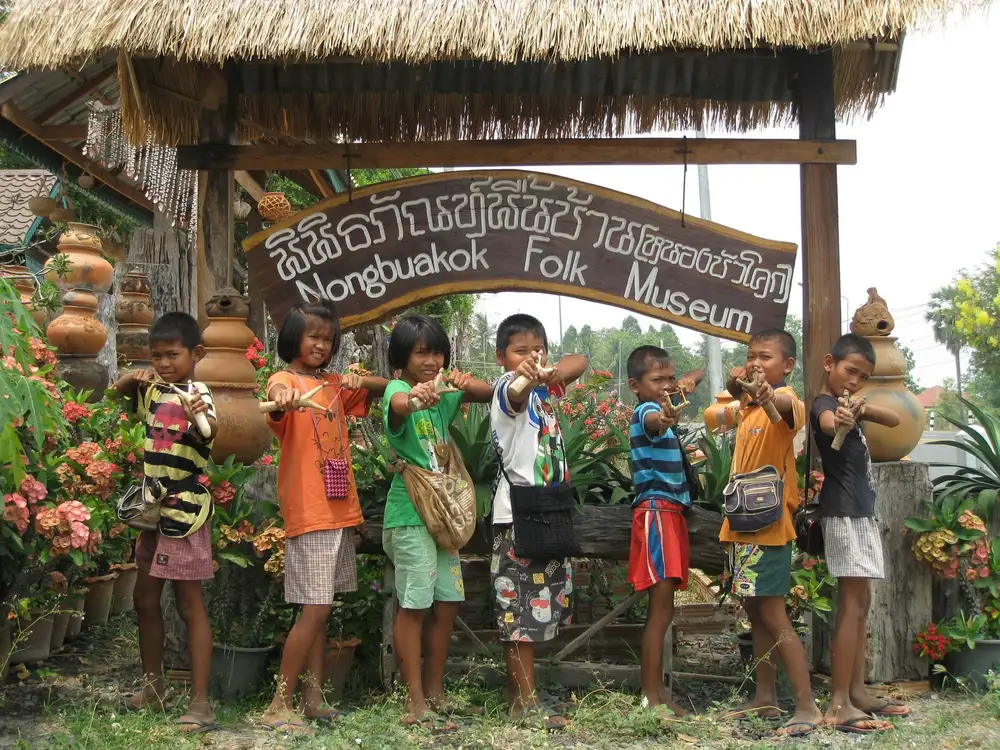
Open Days: Monday, Tuesday, Thursday – Sunday / Closed On Wednesday
Opening Hours: 08.00 – 18.00
Nong Bua Khok Folk Museum is located at 172 Moo 6 on the Buriram – Lam Plai Mat Road, Ban Nong Talat Khwai, Nong Bua Khok Subdistrict, Lam Plai Mat District, Buriram Province. It is a small but highly meaningful folk museum dedicated to the everyday tools, local wisdom, and traditional crafts of rural Isan communities. The museum is especially known for its collection of hunting, trapping, and animal-catching tools once used by villagers in Northeastern Thailand. Many objects are accompanied by line drawings and practical explanations, helping visitors understand how each tool worked and why it was important in daily life.
The museum is valuable because it was not created as a large government project. It grew from the personal commitment of Professor Thamnu Worathongchai, a folk art instructor at Buriram Rajabhat University. His deep interest in Isan village life, customs, and local craftsmanship began during his graduate studies in Thai Studies at Srinakharinwirot University, Mahasarakham. He chose to study animal-trapping tools used by rural villagers in Lam Plai Mat District, Buriram Province. Through fieldwork, sketches, interviews, and direct observation, he discovered a wide range of tools that reflected the intelligence, creativity, and environmental knowledge of local communities.
What makes Nong Bua Khok Folk Museum remarkable is its ability to present rural knowledge through real objects. The tools displayed here are not decorative antiques. They are evidence of how people once lived with forests, rice fields, ponds, streams, domestic animals, and seasonal cycles. A fish trap, a frog trap, a bird trap, a rice-field tool, or a clay cooking pot may appear simple at first, but each object contains practical knowledge gained through long experience. The museum allows visitors to see how villagers read animal behavior, water movement, weather patterns, and agricultural seasons in order to survive and manage daily life.
The displays are easy to understand because many items include hand-drawn illustrations and explanations of their use. This feature reflects the founder’s background as a teacher and artist. The drawings show how a trap is set, how a trigger mechanism works, how water animals move into a trap, how birds are lured, or how kitchen and farming tools were used. For foreign travelers unfamiliar with Isan tools, these drawings are especially helpful because they turn unfamiliar objects into clear and accessible cultural knowledge.
The museum began as a gradual private collection of traditional tools. Professor Thamnu collected objects through donations, purchases, and exchanges with villagers in Lam Plai Mat District and nearby areas. The collection included food-gathering tools, kitchen utensils, household objects, farming implements, basketry, carpentry tools, clay vessels, and miscellaneous items once used in rural homes. As the collection grew, it became possible to classify the objects into learning categories and open the collection to students, local people, and interested visitors. The museum was officially opened in 2005 as a cultural learning center for Isan folk wisdom.
Nong Bua Khok Folk Museum is therefore more than a place to keep old things. It explains how Isan villagers cooked, farmed, hunted, trapped fish, stored household objects, made tools, used natural materials, and lived before modern conveniences became common. Many tools reveal the relationship between people and their environment. Fish traps show knowledge of water flow. Frog traps are linked with the rainy season. Farming implements show rice cultivation systems. Clay pots, steaming baskets, and traditional hearth tools reflect the culture of sticky rice and wood-fired cooking.
The first major display category focuses on kitchen and hearth equipment. These include traditional Isan cooking spaces, fire platforms, clay stove supports, rice-soaking containers, clay pots, steamers, bamboo steaming baskets, and other utensils used in rural kitchens. This category helps visitors imagine an Isan household before electric appliances became common. Cooking was done with firewood, charcoal, clay vessels, woven bamboo, and tools made from local materials. The kitchen was not just a place for food preparation; it was a center of family life and inherited knowledge.
The second category, and the most distinctive part of the museum, is the collection of food-gathering, hunting, trapping, and animal-catching tools. These include crossbows, muzzle-loading guns, slingshots, fish traps, eel traps, frog traps, bird traps, rat traps, and other mechanisms designed for specific animals and conditions. Tools such as tum pla, son, sab, ee-ju, lan, ngaep frog traps, duang yae, jan rat traps, bird traps, and trigger traps show how villagers carefully observed the behavior of animals. These objects reveal a practical science of the countryside, built from observation, experiment, and repeated use over generations.
The third category includes household objects used inside rural homes, such as wooden Buddha images, small containers, lantern covers, chests, lamps, and storage objects. These items show the spiritual and domestic dimensions of Isan life. A wooden Buddha image reflects the connection between the home and Buddhism. A chest reflects how families stored valuable objects. Lamps and lanterns show how people managed light before electricity was widely available. These household items help visitors understand the rhythm of daily life inside traditional homes.
The fourth category focuses on agricultural tools. Ploughs, harrows, sickles, rice-beating sticks, rice supports, and other implements represent the rice-based economy of rural Isan. Farming in the past relied on human labor, animal power, seasonal knowledge, and handmade tools. Each object in this category is connected to a specific stage of rice production, from preparing the soil and transplanting rice to harvesting, threshing, and storing grain. These tools help visitors understand how demanding and skillful traditional farming was.
The fifth category includes miscellaneous objects such as woven fish baskets, pig-feeding troughs, tobacco-cutting tools, carpentry tools, woven containers, betel boxes, coconut graters, ladles, scoops, and clay vessels. These objects may look ordinary, but they are important records of everyday life. They show how villagers made, repaired, stored, cooked, fed animals, processed plants, and organized household work. For cultural travelers, this category is important because it reveals the full texture of rural life rather than focusing only on spectacular artifacts.
Another important feature of Nong Bua Khok Folk Museum is its connection with pottery and clay craft. The area in front of and around the museum includes clay products such as pots, jars, plant containers, and decorative objects. This makes the site not only a museum but also a place where visitors can see the continuity of handcraft traditions. Clay is closely connected with Isan life: it appears in kitchens, storage containers, garden objects, and local craft production. Seeing pottery together with old household tools helps visitors understand the material culture of the region more clearly.
The museum is located directly along Highway 226, the Buriram – Lam Plai Mat road, making it easy to visit by car. From Lam Plai Mat District, drive toward Buriram city for about 10 km. The museum is on the right-hand side, with Dindib Cafe and rows of clay products serving as useful landmarks. From Buriram city, drive toward Lam Plai Mat on the same road; the museum is on the left-hand side in Nong Bua Khok Subdistrict. Its roadside location makes it a convenient stop for travelers moving between Buriram city and Lam Plai Mat.
The atmosphere is informal, friendly, and strongly local. Unlike large national museums with modern exhibition systems, Nong Bua Khok Folk Museum feels like the home of someone who deeply loved folk objects and opened the space for public learning. Some items are displayed inside a one-storey building, while others are placed outside or around the museum grounds. The surrounding clay works, trees, and handmade objects give the place the character of a living folk environment rather than a formal gallery.
For students and young visitors, the museum is an excellent learning space. Many objects on display are no longer familiar to younger generations. Tools such as frog traps, eel traps, bird traps, rat traps, and traditional farming implements have special names, shapes, and functions. Seeing the real objects together with drawings and explanations makes them much easier to understand than reading about them in a textbook. The museum turns abstract cultural knowledge into a direct experience.
The museum also helps visitors understand Isan food culture. In the past, food did not simply come from markets. It came from rice fields, ponds, streams, forests, gardens, and the land around the village. Villagers needed to know where to find food, when animals appeared, how water levels changed, and which tools were suitable for each season. The museum therefore allows visitors to read food culture through tools. Before food reached the kitchen, it passed through a system of environmental knowledge, trapping techniques, cooking tools, and shared household labor.
The animal-trapping tools also show how rural life has changed. Some tools that once belonged to everyday subsistence are no longer suitable in the same way today because social conditions, conservation laws, and ecological awareness have changed. As museum objects, however, they remain important because they record how communities once depended on natural resources. They help visitors understand the transformation from nature-based subsistence to modern food systems and market economies.
The role of the Worathongchai family remains central to the museum. After Professor Thamnu passed away, the museum continued under the care of his family, including Rampueng Worathongchai and Thongthawatch Worathongchai. Since the museum is privately managed, its survival depends greatly on the dedication of the family and the respect of visitors. Those who visit should treat the place carefully, avoid touching objects without permission, and contact the museum in advance if they need detailed guidance or are visiting as a group.
Although the museum is not large, it contains many objects with specific functions. Visitors should take time to look closely rather than walking through quickly. Every object has a reason for its shape. A fish trap relates to water flow. A bird trap depends on balance, weight, and timing. A rat trap follows animal paths. A kitchen tool responds to boiling, steaming, roasting, or pounding. A farming tool reflects the character of soil, water, and seasonal work. Careful observation turns a small museum into a deep cultural experience.
For photography, the museum offers several interesting scenes, including the entrance sign, clay products, display buildings, hanging tools, woven baskets, pottery, and Dindib Cafe. Visitors should take photos respectfully and avoid moving objects for photography. Many items are original collected objects with cultural value. Their placement is part of the museum’s story, and careless handling can cause damage.
Nong Bua Khok Folk Museum can be included in a cultural route in Buriram Province. Travelers starting from Buriram city can stop at the museum before continuing to Lam Plai Mat, or they can combine it with places along the Buriram – Lam Plai Mat route. Nearby points of interest include Nong Ta Kai silk tourism village, Wat Jindaram, organic mushroom learning sites, the Southern Isan Cultural Center, Khao Kradong Forest Park, and Chang Arena. With careful planning, the museum can become part of a half-day or full-day cultural itinerary.
The museum also expands the common image of Buriram. Many visitors know the province for Phanom Rung Historical Park, Khmer temples, football, motorsport, and spicy Isan food. Nong Bua Khok Folk Museum presents another side of Buriram: the world of folk tools, clay craft, rural households, rice fields, trapping knowledge, and handmade objects. It reminds visitors that the history of a province is not only found in grand monuments, but also in everyday tools used by ordinary people.
In cultural terms, the objects displayed here are comparable to historical documents. Even without written text, their shapes, materials, names, and marks of use reveal a great deal. Trapping tools tell stories about nature. Kitchen tools tell stories about food. Farming implements tell stories about production. Household objects tell stories about belief and domestic life. Basketry and pottery tell stories about craftsmanship. Together, they form a detailed record of rural Isan culture.
A visit to Nong Bua Khok Folk Museum is best enjoyed slowly. This is not a place for a quick photo stop only. It is a place where visitors can read tools with their eyes, connect objects with ways of life, and imagine the time when these items were used in kitchens, fields, ponds, forests, and village homes. The museum turns ordinary objects into a complete story of society, environment, food, work, and belief.
For international travelers interested in Thai culture, the museum provides a practical introduction to Isan life. Visitors may already know Isan food such as som tam, sticky rice, larb, or grilled chicken, but the tools in this museum show what existed before the finished dishes: food-gathering knowledge, cooking technology, clay pots, steaming baskets, traps, baskets, and shared household labor. This makes the museum useful for understanding Thai culture beyond temples and tourist landmarks.
Families can also use the museum as a space for intergenerational learning. Older visitors may remember some tools and explain how they were used, while younger visitors may ask why the tools have unusual shapes or why villagers used bamboo, rattan, clay, wood, and metal. This kind of conversation makes the museum more than a collection of objects. It becomes a place where memory, learning, and cultural identity meet.
To gain the most from a visit, start by observing the overall display area. Then explore the categories one by one: kitchen and hearth equipment, food-gathering and trapping tools, household objects, farming implements, and miscellaneous tools. After seeing the whole structure, return to the objects that interest you most. This method helps visitors understand how the different categories connect with one another in the complete system of rural life.
Travelers should check the opening schedule before visiting. The museum is open on Monday, Tuesday, Thursday, Friday, Saturday, and Sunday from 08.00 to 18.00, and it is closed on Wednesday. There is no admission fee. Contacting the museum in advance is useful, especially for group visits or visitors who want more detailed explanations. Since this is a privately managed folk museum, respectful communication and careful behavior are important.
Getting There is straightforward by private car. From Buriram city, take Highway 226 toward Lam Plai Mat. The museum is located along the road in Nong Bua Khok Subdistrict, at Ban Nong Talat Khwai. From Lam Plai Mat District, drive toward Buriram city for about 10 km; the museum will be on the right-hand side. Dindib Cafe and pottery displayed near the roadside are useful landmarks. Visitors using public transport can travel along the Buriram – Lam Plai Mat route and get off near Nong Bua Khok, then continue locally to the museum.
Overall, Nong Bua Khok Folk Museum is one of Buriram’s most meaningful small cultural attractions. It preserves local tools, hunting and trapping devices, kitchen utensils, farming implements, basketry, pottery, and illustrated explanations that help future generations understand rural Isan wisdom. A visit here is not only about seeing old objects. It is about understanding the roots of everyday life, the intelligence of villagers, and the cultural knowledge that should continue to be remembered.
| Name | Nong Bua Khok Folk Museum |
| Thai Name | พิพิธภัณฑ์พื้นบ้านหนองบัวโคก |
| Location | Ban Nong Talat Khwai, Nong Bua Khok Subdistrict, Lam Plai Mat District, Buriram Province |
| Address | 172 Moo 6, Buriram – Lam Plai Mat Road, Ban Nong Talat Khwai, Nong Bua Khok Subdistrict, Lam Plai Mat District, Buriram Province 31130, Thailand |
| Highlights | A folk museum displaying traditional Isan tools, especially hunting, trapping, and animal-catching tools, with line drawings and clear explanations of how they were used |
| History / Period | The collection began around 1989 and was developed into a folk museum. The museum officially opened in 2005 as a learning center for Isan local wisdom and rural life |
| Founder | Professor Thamnu Worathongchai, folk art instructor at Buriram Rajabhat University |
| Caretaker | Worathongchai family, with contact information listed for Thongthawatch Worathongchai |
| Distinctive Features | Displays real folk objects, many with line drawings and explanatory labels. The collection covers food-gathering tools, household tools, farming tools, kitchen utensils, pottery, and basketry |
| Key Objects | Crossbows, muzzle-loading guns, slingshots, fish traps, eel traps, frog traps, bird traps, rat traps, Isan kitchen tools, clay pots, bamboo steamers, ploughs, harrows, sickles, storm lanterns, betel boxes, and old irons |
| Name Origin | The museum is named after Nong Bua Khok Subdistrict, the area where the museum is located and where the local folk collection was developed |
| Main Areas / Zones | Kitchen And Hearth Tools Zone Food-Gathering, Hunting, Trapping, And Animal-Catching Tools Zone Household Objects Zone Farming Tools Zone Miscellaneous Objects And Basketry Zone Pottery Display Area And Dindib Cafe Area |
| Travel Information | Use Highway 226, the Buriram – Lam Plai Mat Road. From Lam Plai Mat, drive toward Buriram for about 10 km. The museum is on the right-hand side. From Buriram city, drive toward Lam Plai Mat; the museum is along the road in Nong Bua Khok Subdistrict |
| Current Status | Open And Operating |
| Open Days | Monday, Tuesday, Thursday – Sunday / Closed On Wednesday |
| Opening Hours | 08.00 – 18.00 |
| Fees | No Admission Fee |
| Facilities | Parking, display building, pottery sales area, and cafe area within the same compound |
| Main Contact Number | 085-774-8773, Thongthawatch Worathongchai |
| dindib_@hotmail.com | |
| Local Authority In The Area | Nong Bua Khok Subdistrict Administrative Organization Tel. 0-4411-0621 |
| Nearby Tourist Attractions | 1. Nong Ta Kai Silk Tourism Village, about 7 km 2. Wat Jindaram, Lam Plai Mat District, about 10 km 3. Organic Mushroom Learning Site, Lam Plai Mat District, about 11 km 4. Southern Isan Cultural Center, Buriram, about 19 km 5. Khao Kradong Forest Park, about 25 km 6. Chang Arena, about 25 km |
| Nearby Restaurants | 1. Dindib Cafe, about 0 km, Tel. 085-774-8773 2. Tiao Rong Tiam Buriram, about 7 km, Tel. 085-980-8060 3. Na Cafe Lam Plai Mat, about 10 km, Tel. 097-273-2223 4. Krua Ban Mae, Buriram – Lam Plai Mat Road, about 12 km 5. Kai Yang Sida Branch 2, Mueang Buriram, about 21 km, Tel. 087-249-9662 6. Suki Desu Bakery Buriram, about 19 km, Tel. 090-995-6765 |
| Nearby Accommodations | 1. Thanaphat Place Lam Plai Mat, about 10 km, Tel. 095-194-7955 2. Buriram B-Stay, about 18 km, Tel. 063-131-3888, 087-910-2122 3. B2 Buriram Boutique & Budget Hotel, about 20 km, Tel. 052-009-161, 088-263-2897 4. Best Western Royal Buriram Hotel, about 21 km, Tel. 044-666-600 5. Cresco Hotel Buriram, about 25 km, Tel. 044-634-901 6. Modena by Fraser Buriram, about 25 km, Tel. 044-118-188 |
Frequently Asked Questions (FAQ)
Q: Where is Nong Bua Khok Folk Museum located?
A: The museum is located at 172 Moo 6 on the Buriram – Lam Plai Mat Road, Ban Nong Talat Khwai, Nong Bua Khok Subdistrict, Lam Plai Mat District, Buriram Province 31130, Thailand.
Q: What does Nong Bua Khok Folk Museum display?
A: The museum displays traditional Isan tools, including hunting and trapping tools, fish traps, kitchen utensils, farming tools, household objects, basketry, pottery, and old everyday items, many with line drawings and explanations.
Q: Who founded Nong Bua Khok Folk Museum?
A: The museum was founded by Professor Thamnu Worathongchai, a folk art instructor at Buriram Rajabhat University who collected local tools to preserve and explain Isan rural wisdom.
Q: What are the opening days and hours?
A: The museum is open on Monday, Tuesday, and Thursday to Sunday from 08.00 to 18.00. It is closed on Wednesday.
Q: Is there an admission fee?
A: No. The museum does not charge an admission fee.
Q: How can visitors get to Nong Bua Khok Folk Museum?
A: Visitors can take Highway 226, the Buriram – Lam Plai Mat Road. From Lam Plai Mat, drive toward Buriram for about 10 km. The museum is on the right-hand side, with Dindib Cafe and pottery displays as landmarks.
Q: Who should visit this museum?
A: It is ideal for students, teachers, cultural travelers, researchers, families, and visitors interested in Isan folk wisdom, rural tools, traditional craft, pottery, and everyday life in Northeastern Thailand.
Q: What nearby places can be visited together with the museum?
A: Nearby places include Nong Ta Kai Silk Tourism Village, Wat Jindaram, the Southern Isan Cultural Center, Khao Kradong Forest Park, and Chang Arena, depending on travel time and route.
 Category: ●Art, Culture and Heritage
 Group: ●Museums
Last Update : 3 MonthAgo
 Last Update : 3 MonthAgo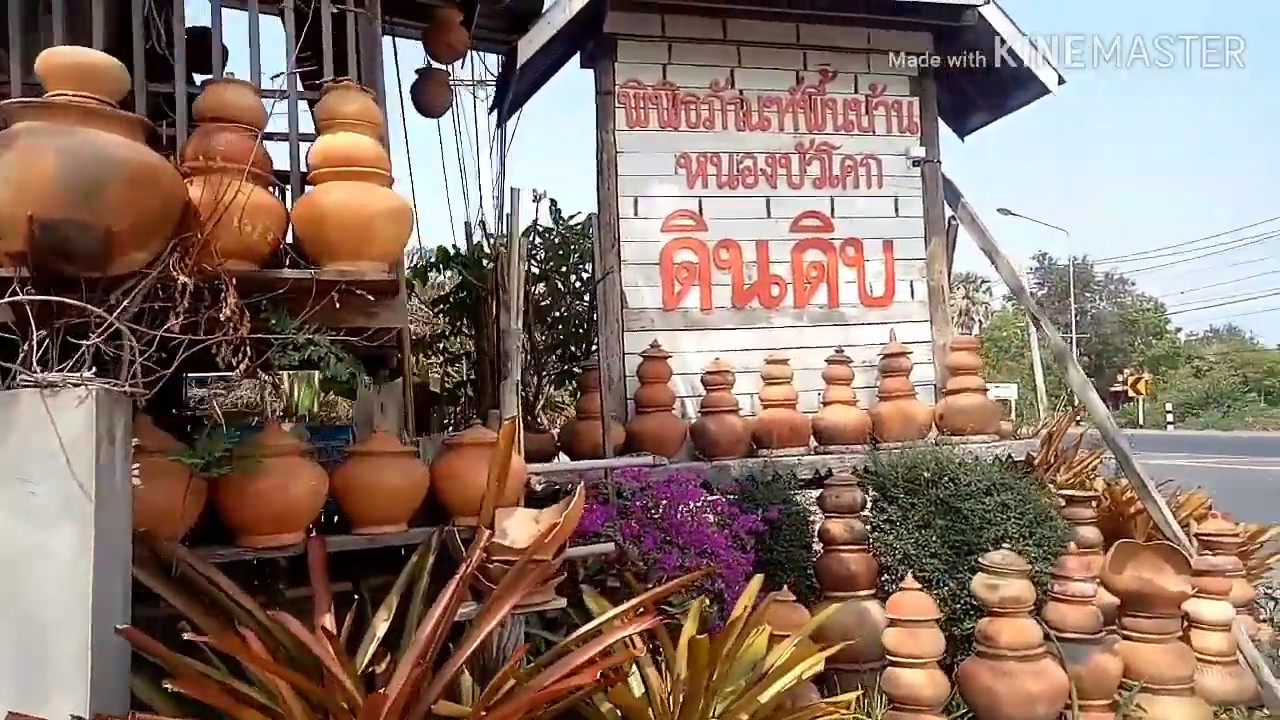
 Click to Access the Navigation Map GPS
Nong Bua Khok Folk Museum Map
Recommend

 Historical Sites and Monuments(14)
 Landmarks and Memorials(2)
 Art, Craft Centres, Tradition(6)
Museums(3)
Art, Craft Centres, Tradition(6)
Museums(3)
 Educational Places
 Museum for Study(1)
 Places of Worship
 Temple(74)
 Other Sacred Sites(5)
 Suburban Living
 Village, Community(3)
 Nature and Wildlife
 National Parks and Marine Reserves(2)
 Mountain (Doi)(1)
 Dam, Reservoir, Lake(14)
 River, Canal(1)
 Bays and Beaches(1)
 Other natural attractions(2)
 Entertainment and Agricultural
 Animal camps and shows(1)
 Stadium(2)
 Farms, Parks and Ecotourism(2)
 Waterpark(1)


