
lovethailand home >Northeastern Travel Attractions >Buri Ram Travel Attractions >Nang Rong >Nang Rong > Wat Khun Kong
TL;DR: Wat Khun Kong is located at Ban Nang Rong, Nang Rong Subdistrict, Nang Rong District, Buriram Province, Thailand, open Daily, hours 08.00 – 17.00.
Wat Khun Kong
Open Days: Daily
Opening Hours: 08.00 – 17.00
Wat Khun Kong in Buriram Province is one of the oldest and most historically significant Buddhist temples in Nang Rong District. Located at No. 224, Ban Nang Rong, Nang Rong Subdistrict, Nang Rong District, the temple is very close to the town center and only about 1 km from Nang Rong Bus Station. For travelers who want to understand the historical depth of Nang Rong beyond Phanom Rung Historical Park, Wat Khun Kong is an important cultural stop. It combines Ayutthaya-period history, local Buddhist devotion, an old ordination hall, traces of the ancient town moat, and the living role of a Thai community temple.
The temple is strongly associated with the period of King Naresuan the Great and King Ekathotsarot of Ayutthaya. Local history records that during a military campaign toward Cambodia, an officer named Khun Kong, who was responsible for military supplies, accompanied the royal army and stayed in the Nang Rong area. Because this area functioned as a strategic resting point and supply location, Khun Kong initiated the construction of a Buddhist temple near the ancient town moat. The temple was first known as Wat Khun Kong, and over time the pronunciation and spelling became the present name, Wat Khun Kong.
This background gives Wat Khun Kong a character different from many ordinary community temples. It is not only a place founded by local villagers for daily worship, but also a temple connected with the movement of an army, the management of provisions, and the strategic importance of Nang Rong in southern Isan. The temple’s location near the ancient moat of Nang Rong helps visitors see how geography, warfare, settlement, and Buddhism were connected in the past. A visit here therefore offers more than a religious experience; it opens a small but meaningful window into the historical landscape of Buriram.
Wat Khun Kong was built around 1607 CE, or 2150 BE, during the Ayutthaya period. It received its first royal grant of consecrated boundary, or wisungkhammasima, in 1717 CE, or 2260 BE, and received a second grant in 1993 CE, or 2536 BE. In Thai Buddhist practice, a consecrated boundary is important because it defines the sacred area for formal monastic ceremonies, especially ordination rites in the ordination hall. These historical milestones show that Wat Khun Kong has remained part of formal Buddhist life across many generations.
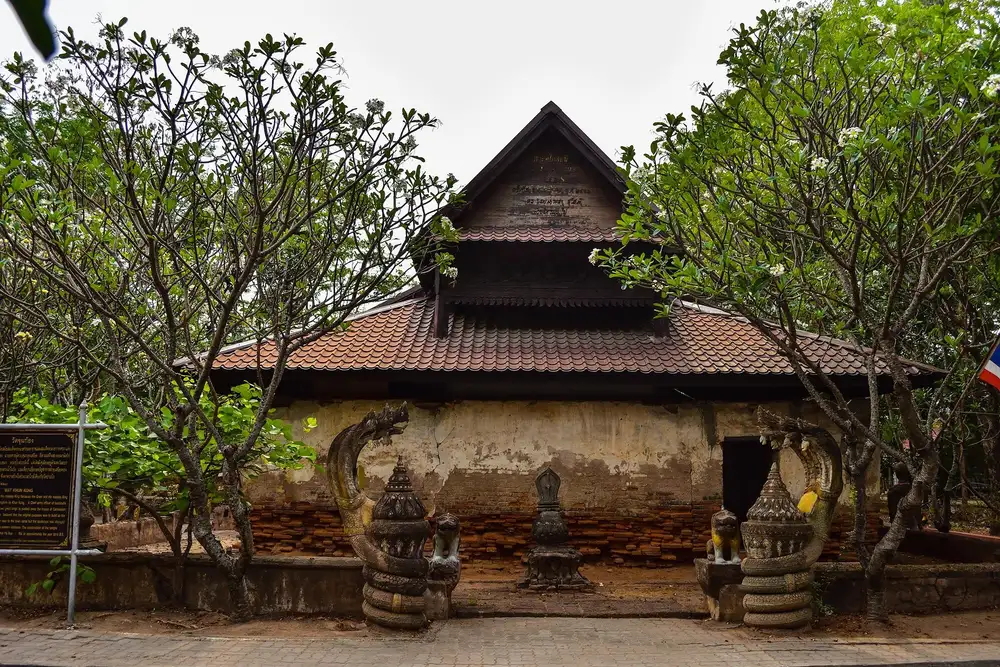
The most important architectural feature of Wat Khun Kong is its old ordination hall. The building is a local-style Buddhist structure made of brick and mortar, with walls approximately 1.8 meters high. The wall line does not meet the roof structure directly, creating openings on all 4 sides. There are entrances on both the east and west sides, and the roof is a 2-tier wooden structure. These features make the ordination hall especially valuable for travelers interested in vernacular temple architecture in southern Isan. It is modest in scale, but rich in historical meaning and construction detail.
The old ordination hall is not impressive because of luxury or decoration. Its value lies in age, function, and local craftsmanship. The brickwork, wall form, roof structure, entrances, and surrounding atmosphere allow visitors to imagine how Buddhist architecture served a community long before modern concrete temple buildings became common. Walking slowly around the hall helps reveal the quiet beauty of an old temple that has been used, repaired, respected, and preserved by local people for many generations.
In front of the ordination hall, the eastern side was once connected with the ancient moat of Nang Rong. Today, this area appears as a pond within the temple grounds. The pond is important because it preserves part of the historical landscape associated with old Nang Rong. In local memory, the area is also connected with the supply headquarters of the army during the period of warfare. For visitors, the pond helps make the temple’s history visible. It is not only water inside a temple; it represents the transformation of an old defensive and strategic landscape into a peaceful Buddhist setting.
The pond also creates a calm atmosphere within the temple. Wat Khun Kong has a fish-feeding area, and offerings from this activity are used to support future fish feed. This simple activity reflects the character of a living Thai community temple. Visitors, children, elderly people, and local worshippers can participate in a small act of merit-making after paying respect to the Buddha images and walking around the old ordination hall. It is a gentle activity that helps visitors slow down and spend time in the temple rather than rushing through it.
The name Wat Khun Kong itself carries a story. The original name referred to Khun Kong, the officer in charge of supplies. Over time, local pronunciation changed the name into Wat Khun Kong as it is known today. This kind of name evolution is common in Thai local history, where place names live not only in documents but also in speech, memory, and community use. The temple name therefore preserves the memory of an individual, a military role, and the long cultural continuity of Nang Rong town.
Wat Khun Kong is an important historical site in Buriram because it links the Ayutthaya period with the local history of Nang Rong. Many travelers know Buriram for ancient Khmer stone sanctuaries such as Phanom Rung and Prasat Muang Tam. Wat Khun Kong represents another layer of history: the Thai Buddhist community and military movement during the Ayutthaya period. When visited together with other old temples in Nang Rong, the temple helps create a broader picture of southern Isan as a region shaped by Khmer heritage, Ayutthaya-era expansion, Buddhist communities, and local memory.
The temple is also active in Buddhist education and community activities. Local schools have brought students to Wat Khun Kong for Dhamma training and moral education. Some programs are day activities, while others may include overnight stays of several days. This role shows that the temple is not only a historical place, but also a learning space for young people. Students come to learn discipline, mindfulness, Buddhist values, and community life within the temple environment.
Behind the temple, there is a dedicated walking meditation path in a quieter wooded area. This space is especially useful for Dhamma training and for visitors who want to experience the contemplative side of the temple. Walking meditation is an important Buddhist practice that helps cultivate mindfulness through slow and conscious movement. The presence of this path shows that Wat Khun Kong supports not only rituals and merit-making, but also personal spiritual practice.
The current abbot of Wat Khun Kong is Phra Khru Prasit Thammawat, also known as Phra Prakop Chakkawaro, family name Koet Kalong. He was born on February 6, 1951, in Nong Plong Subdistrict, Chamni District, Buriram Province, and was ordained on May 17, 1974. He currently serves as the first deputy ecclesiastical district chief of Nang Rong and as the abbot of Wat Khun Kong. His role gives the temple importance not only as an old historical site, but also as an active religious institution within the Sangha network of Nang Rong.
Because the abbot holds an ecclesiastical administrative role, Wat Khun Kong continues to be involved in wider Buddhist activities in the district. The temple has hosted Dhamma-related events, community training, and religious gatherings. This active role makes the temple a living place. It is not simply an old building preserved for visitors; it continues to serve monks, students, laypeople, and the wider community of Nang Rong.
From a cultural perspective, Wat Khun Kong shows the relationship between temple, town, and local memory very clearly. Nang Rong is not just a convenient stop on the way to Phanom Rung. It is an old town with its own moat, temples, legends, and historical routes. Wat Khun Kong is one of the places where these layers can still be seen. The temple’s old ordination hall, pond, name origin, and community role all help visitors understand Nang Rong as a town with deep cultural roots.
A visit to Wat Khun Kong is suitable for travelers who enjoy old temples, Ayutthaya-period history, local architecture, and quiet cultural experiences. Those with limited time can pay respect and walk around the ordination hall in about 30 minutes to 1 hour. Visitors who want to study the temple more deeply should allow additional time to see the pond, fish-feeding area, walking meditation path, and wider temple grounds. The temple rewards slow observation rather than a quick photo stop.
Wat Khun Kong can be combined easily with other temples and attractions in Nang Rong. Nearby places include Wat Rong Man Thet, Wat Klang Nang Rong, Wat Hua Saphan, Wat Pa Rerai, Wat Mai Rerai Thong, local markets, and the Nang Rong Walking Street area. This makes it suitable for a half-day temple route in Nang Rong before continuing to Phanom Rung Historical Park or other attractions in southern Buriram. Visiting Wat Khun Kong first helps travelers understand the historical town before moving on to larger and more famous sites.
The temple is also family-friendly because it is close to town and easy to reach. Elderly visitors can come to pray and rest, while children can learn about old temple architecture, the ancient moat, and the story of military supplies during the Ayutthaya period. The fish-feeding area is a simple activity that makes the visit more accessible for families. However, visitors should remain respectful because the temple is an active religious site.
The best time to visit is in the morning or late afternoon. Morning visits are peaceful and suitable for worship, while late afternoon offers softer light around the ordination hall and pond. If visiting during Buddhist holy days or local merit-making events, travelers may see more community activity. These moments can add meaning to the visit, as long as visitors behave respectfully and avoid disturbing worshippers or monks.
Visitors should dress modestly when entering Wat Khun Kong. Shoulders and knees should be covered when possible, and behavior should remain calm near the ordination hall, Buddha images, and areas used for Buddhist practice. Photography should be done respectfully. Visitors should not climb on old structures, touch fragile architectural elements, or interfere with ceremonies. The old ordination hall and temple landscape are cultural assets that deserve careful treatment.
Getting There is very convenient from central Nang Rong. From Nang Rong Bus Station, the temple is about 1 km away. Visitors can travel by private car, motorcycle, local taxi, hired vehicle, or local transport within the town. The temple is near the main town area, making it easy to include in a short cultural stop before continuing to restaurants, markets, hotels, or other temples in Nang Rong. Travelers coming from Buriram city should first take the main route to Nang Rong District and then continue into the town area.
Travelers staying in Nang Rong can begin the day at Wat Khun Kong, continue to Wat Rong Man Thet and Wat Klang Nang Rong, explore the morning market or local cafés, and then continue toward Phanom Rung Historical Park in the afternoon. This route is suitable for visitors who want a balanced day that includes Buddhist culture, local food, town history, and major historical attractions. Nang Rong has enough restaurants and accommodation options to support an easy overnight stay.
For travelers interested in history, Wat Khun Kong is an excellent starting point for understanding the historical layers of Nang Rong. It connects the ancient moat, Ayutthaya military routes, the campaign toward Cambodia, the role of military supplies, local temple architecture, and the change of the name from Wat Khun Kong to its present local form. When combined with Wat Klang Nang Rong, Wat Hua Saphan, and Wat Pa Rerai, visitors can see that these temples form a network of cultural memory within the town.
For foreign travelers, Wat Khun Kong is a useful example of how a Thai community temple can preserve history while still serving daily life. It is a place of worship, education, meditation, community support, and local memory. With a Thai companion or local guide, visitors can better understand the story of Khun Kong, the ancient moat, the ordination hall, and the temple’s connection with Nang Rong’s historical identity.
The charm of Wat Khun Kong lies in authenticity rather than grandeur. It is not a large monumental temple built for mass tourism. Its beauty comes from an old ordination hall, a pond connected with the ancient moat, a simple fish-feeding area, a meditation path, and the continuing presence of monks and local people. This quiet character makes the temple especially meaningful for travelers who prefer slow cultural travel and places with real local depth.
In summary, Wat Khun Kong is one of the most important old temples in Nang Rong District, Buriram Province. Built around 1607 CE during the Ayutthaya period, it is associated with Khun Kong, the officer responsible for military supplies during the royal campaign toward Cambodia. Its key highlights include the old brick-and-mortar ordination hall, wooden roof structure, ancient moat landscape now seen as a pond, fish-feeding area, walking meditation path, and ongoing role in Buddhist education. Located only about 1 km from Nang Rong Bus Station, the temple is an easy and meaningful stop for worship, cultural travel, local history, and a deeper understanding of southern Buriram.
| Name | Wat Khun Kong |
| Location | Ban Nang Rong, Nang Rong Subdistrict, Nang Rong District, Buriram Province, Thailand |
| Address | No. 224, Ban Nang Rong, Nang Rong Subdistrict, Nang Rong District, Buriram Province, Thailand |
| Highlights | Old brick-and-mortar ordination hall, wooden roof structure, ancient moat landscape now seen as a pond, fish-feeding area, walking meditation path, and Ayutthaya-period history related to military supplies |
| History | Built around 1607 CE during the Ayutthaya period by Khun Kong, an officer responsible for military supplies during a campaign toward Cambodia. The temple received its first consecrated boundary in 1717 CE and a second one in 1993 CE |
| Name Origin | The temple was originally called Wat Khun Kong after Khun Kong, the military supply officer. Over time, local pronunciation developed into the present name, Wat Khun Kong |
| Distinctive Features | An old Buddhist community temple in Nang Rong with a local-style ordination hall, brick-and-mortar walls about 1.8 meters high, a 2-tier wooden roof, and a location close to the ancient moat of Nang Rong |
| Travel Information | About 1 km from Nang Rong Bus Station. Accessible by private car, motorcycle, local taxi, hired vehicle, or local transport within Nang Rong town |
| Current Status | Open as an active Buddhist temple and local historical site in Buriram Province, with merit-making, Dhamma training, and religious activities continuing throughout the year |
| Open Days | Daily |
| Opening Hours | 08.00 – 17.00 |
| Facilities | Worship area, old ordination hall, fish-feeding area, temple pond, walking meditation path, Dhamma training area, pavilion, and community activity space |
| Main Areas / Zones | 1. Old Ordination Hall 2. Principal Buddha Image And Worship Area 3. Temple Pond Connected With The Ancient Moat Landscape 4. Fish-Feeding Area 5. Walking Meditation Path Behind The Temple 6. Dhamma Training Area 7. Pavilion And Merit-Making Area 8. Temple And Community Activity Area |
| Abbot / Caretaker | Phra Khru Prasit Thammawat (Phra Prakop Chakkawaro, family name Koet Kalong), First Deputy Ecclesiastical District Chief of Nang Rong and Abbot of Wat Khun Kong |
| Main Contact Number | 089-8642324 |
| Official Website / Official Page | Wat Khun Kong information page by the Nang Rong Sangha and Wat Khun Kong Nang Rong, Buriram Facebook Page |
| Nearby Tourist Attractions | 1. Wat Rong Man Thet, about 1 km 2. Wat Klang Nang Rong, about 1 km 3. Nang Rong Morning Market, about 1 km 4. Thetsaban Nang Rong Health Park, about 2 km 5. Nang Rong Walking Street, about 2 km 6. Wat Hua Saphan, about 2 km 7. Wat Pa Rerai, about 3 km 8. Wat Mai Rerai Thong, about 5 km 9. Wat Phu Man Fah, about 12 km 10. Phanom Rung Historical Park, about 30 km |
| Nearby Restaurants | 1. Jing Nam Kha Mu, about 1 km, Tel. 044-631473, 081-7904808 2. Kiniku Japanese Curry Rice, Nang Rong Branch, about 2 km, Tel. 099-0055456 3. CHANN Terrace, about 2 km, Tel. 065-5619353 4. Tri Cafe & Restaurant, about 2 km, Tel. 044-631168 5. Laksana Kha Mu Branch 2, about 2 km, Tel. 044-631319 6. SOFIT Cafe' Nang Rong, about 3 km |
| Nearby Accommodations | 1. The Room@Nangrong, about 1 km, Tel. 044-633366 2. Laksana Boutique Hotel, about 1 km 3. Socool Grand Hotel, about 2 km, Tel. 044-632333, 080-4881888 4. Bumnsaya Place, about 3 km, Tel. 044-666939, 085-4956929 5. Phanom Rung Puri Boutique Hotel & Resort, about 3 km, Tel. 044-632222, 086-3366618 6. Akelada Hotel, about 4 km, Tel. 084-8259214, 044-622199 |
Frequently Asked Questions (FAQ)
Q: Where is Wat Khun Kong located?
A: Wat Khun Kong is located at No. 224, Ban Nang Rong, Nang Rong Subdistrict, Nang Rong District, Buriram Province, about 1 km from Nang Rong Bus Station.
Q: Why is Wat Khun Kong historically important?
A: Wat Khun Kong is an old temple built around 1607 CE and is associated with Khun Kong, the military supply officer connected with the Ayutthaya campaign toward Cambodia during the period of King Naresuan the Great.
Q: What are the main highlights of Wat Khun Kong?
A: The main highlights are the old brick-and-mortar ordination hall, wooden roof structure, temple pond connected with the ancient moat landscape, fish-feeding area, and walking meditation path behind the temple.
Q: Who is the abbot of Wat Khun Kong?
A: The abbot is Phra Khru Prasit Thammawat, also known as Phra Prakop Chakkawaro, who also serves as the first deputy ecclesiastical district chief of Nang Rong.
Q: What are the opening hours of Wat Khun Kong?
A: Wat Khun Kong is open daily from 08.00 to 17.00. Morning and late afternoon are suitable times for worship and walking around the old ordination hall.
Q: How far is Wat Khun Kong from Nang Rong Bus Station?
A: The temple is about 1 km from Nang Rong Bus Station and can be reached easily by private car, motorcycle, local taxi, hired vehicle, or local transport.
Q: How long should visitors spend at Wat Khun Kong?
A: A basic visit takes about 30 minutes to 1 hour. Visitors interested in history, the pond, fish-feeding area, and walking meditation path should allow more time.
Q: What nearby places can be visited with Wat Khun Kong?
A: Nearby places include Wat Rong Man Thet, Wat Klang Nang Rong, Nang Rong Morning Market, Thetsaban Nang Rong Health Park, Nang Rong Walking Street, Wat Phu Man Fah, and Phanom Rung Historical Park.
 Category: ●Places of Worship
 Group: ●Temple
Last Update : 2 MonthAgo
 Last Update : 2 MonthAgo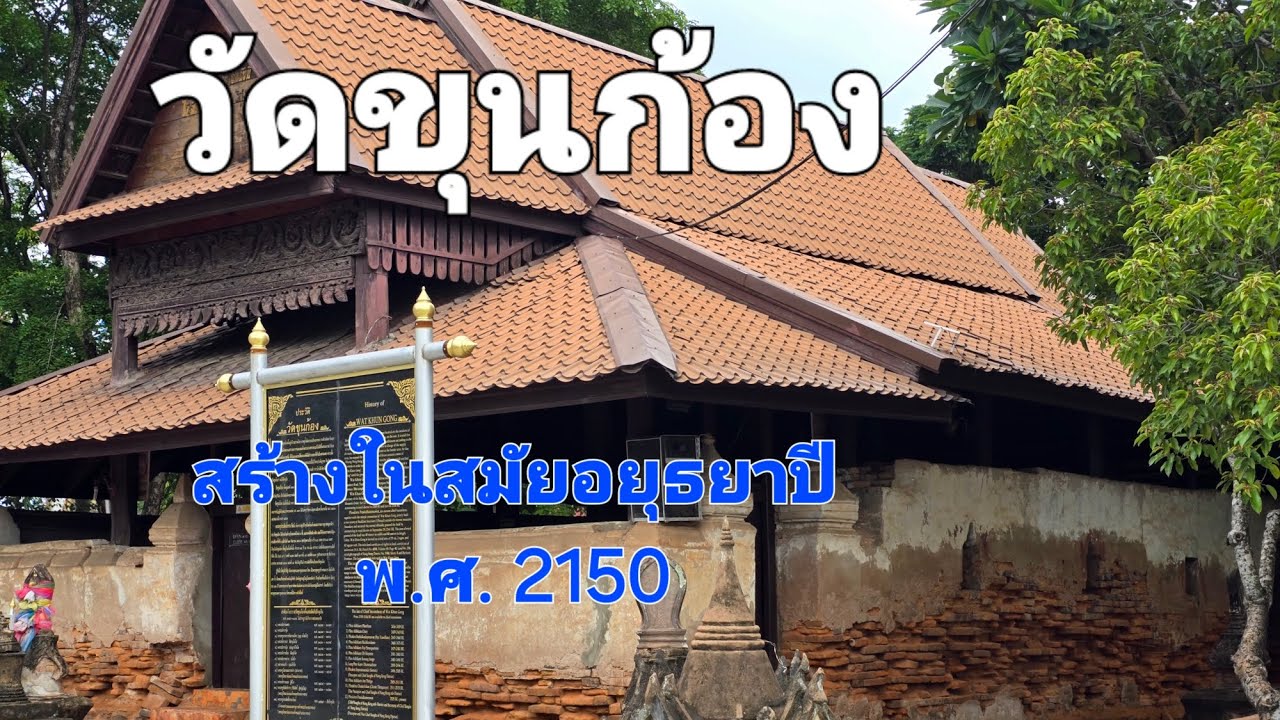
 Click to Access the Navigation Map GPS
Wat Khun Kong Map
Recommend

 Art, Culture and Heritage
 Historical Sites and Monuments(14)
 Landmarks and Memorials(2)
 Art, Craft Centres, Tradition(6)
 Museums(3)
 Educational Places
 Museum for Study(1)
Temple(74)
Museum for Study(1)
Temple(74)
 Other Sacred Sites(5)
 Suburban Living
 Village, Community(3)
 Nature and Wildlife
 National Parks and Marine Reserves(2)
 Mountain (Doi)(1)
 Dam, Reservoir, Lake(14)
 River, Canal(1)
 Bays and Beaches(1)
 Other natural attractions(2)
 Entertainment and Agricultural
 Animal camps and shows(1)
 Stadium(2)
 Farms, Parks and Ecotourism(2)
 Waterpark(1)


