
lovethailand home >Northeastern Travel Attractions >Buri Ram Travel Attractions >Khaen Dong >Sa Bua > Wat Sawang Khaen Thale
TL;DR: Wat Sawang Khaen Thale is located at Moo 6, Sa Bua Subdistrict, Khaen Dong District, Buri Ram Province, open Daily, hours 08.00 – 17.00.

Wat Sawang Khaen Thale
Open Days: Daily
Opening Hours: 08.00 – 17.00
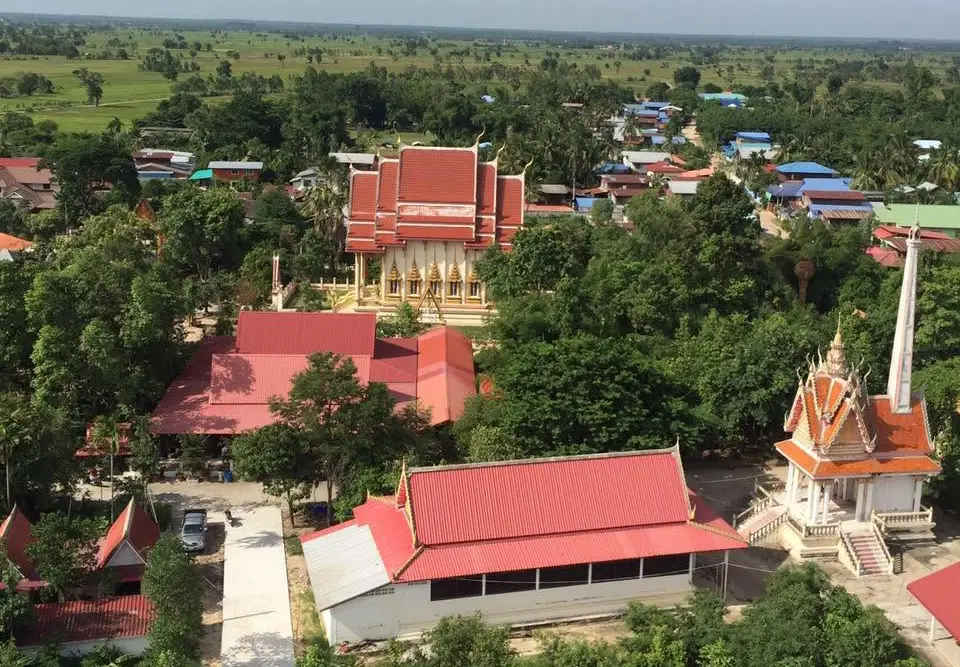
Wat Sawang Khaen Thale is a community Buddhist temple in Moo 6, Sa Bua Subdistrict, Khaen Dong District, Buri Ram Province. Founded in 1940 by local laypeople together with Phra Am Subhatto, the temple serves as a spiritual center for Ban Khaen Thale and the surrounding villages. Today, it is known for its peaceful atmosphere, Dharma practice activities, youth-oriented religious programs, and the ongoing Phra That Mueang Khaen project, which has become an important symbol of local faith.
Wat Sawang Khaen Thale is a meaningful local temple in Sa Bua Subdistrict, Khaen Dong District, Buri Ram Province. Located in Moo 6, Ban Khaen Thale, the temple stands within a rural Isan community where Buddhism, agriculture, local waterways, and village traditions remain closely connected. For local residents, the temple is not merely a place for religious ceremonies; it is a shared space for merit-making, Dharma listening, meditation practice, funeral rites, community gatherings, and youth activities that help transmit Buddhist values from one generation to the next.
The temple was established in 1940 through the collective faith of local lay supporters. Nai Kham Yunram, together with male and female Buddhist patrons and villagers, worked with Phra Am Subhatto to create a proper religious center for the community. At that time, many rural villages in northeastern Thailand relied on temples as the heart of local life. A temple provided a place for Buddhist worship, basic moral education, village meetings, seasonal festivals, ordination ceremonies, merit-making for ancestors, and funerary rites. The founding of Wat Sawang Khaen Thale therefore marked an important step in building both the spiritual and social foundation of Ban Khaen Thale.
The name “Wat Sawang Khaen Thale” is closely linked to the identity of the village. The word “Sawang” suggests brightness, clarity, and the illuminating power of the Dharma, while “Khaen Thale” reflects the local name and cultural landscape of the area. Together, the name gives the temple a strong local identity: a place of spiritual light rooted in the life of Ban Khaen Thale. For travelers, this name is a useful entry point into understanding the temple not as an isolated monument, but as a living institution created by and for the community.
Originally, the temple covered 8 rai and 43 square wah. Later, an additional 8 rai of land was acquired for the construction of Phra That Mueang Khaen, bringing the temple’s related area to 16 rai and 43 square wah. This expansion has allowed the temple to support larger religious gatherings, Buddhist ceremonies, Kathin and Pha Pa events, meditation activities, and long-term development projects. The Phra That Mueang Khaen project is especially significant because it represents the shared devotion of monks, villagers, and lay supporters who wish to create a sacred landmark for Khaen Dong District.
In the Buddhist and Isan cultural context, a phra that or sacred stupa is more than a structure. It functions as a focus of faith, a reminder of the virtues of the Buddha, and a place where people can gather for prayer, chanting, meditation, and merit-making. Phra That Mueang Khaen therefore gives Wat Sawang Khaen Thale a stronger role as a religious and cultural landmark. It also connects the temple’s long history with the continuing spiritual aspirations of local people today.
The temple contains a range of monastic and community facilities that support both daily religious life and major ceremonies. These include a sermon hall, a multi-purpose pavilion, the abbot’s residence, monks’ quarters, a funeral pavilion, a crematorium, a kitchen, bathrooms, toilets, an ordination hall area, and the Phra That Mueang Khaen zone. Each area has a distinct function. The sermon hall is used for Dharma talks and religious gatherings. The multi-purpose hall supports community events. The monks’ quarters provide a place of residence for the Sangha. The funeral pavilion and crematorium serve families during times of loss with dignity and order.
The development of Wat Sawang Khaen Thale has continued across many decades. Various buildings and facilities have been constructed and improved over time, including monks’ residences, pavilions, bathrooms, the sermon hall, the dining hall, the kitchen, the crematorium, the gateway, the funeral pavilion, the bell tower, additional monks’ quarters, the ordination hall, large bathroom facilities, Phra That Mueang Khaen, a pond, and boundary walls. This long process of development shows that the temple remains active and closely supported by the community. It is not a forgotten temple, but a living religious center that continues to grow with local needs.
Wat Sawang Khaen Thale is a private-sector community temple under the Maha Nikaya order. It received its Wisungkhamsima, the officially designated boundary for monastic acts, on 20 June 2012. This status is important because it confirms the temple’s formal religious standing and its role within the ecclesiastical structure of Thai Buddhism. For visitors interested in temple history, this detail helps show that Wat Sawang Khaen Thale has both local significance and recognized religious status.
The temple’s line of abbots reflects its continuous spiritual leadership. The first known abbot was Phra Am Subhatto, who served from 1940 to 1947. He was followed by Phra Somboon from 1947 to 1962, Phra Thongkham Sasanapirato from 1962 to 1969, Phra Khru Arun Panyaphon from 1969 to 1994, and Phra Athikan Sithat Dhammiko from 1994 onward. The temple is currently associated with Phra Khru Sophon Thammaprasit, who plays an important role as abbot and religious leader in the Khaen Dong area.
Phra Khru Sophon Thammaprasit has been central to the temple’s modern development. His role includes monastic administration, care of temple facilities, support for Dharma practice, and improvement of the temple landscape so that it remains shaded, orderly, and suitable for meditation. In a rural temple, the abbot’s responsibility extends beyond ritual leadership. He often serves as a moral guide, community coordinator, caretaker of religious buildings, and supporter of local families during important moments in life. Through this role, Wat Sawang Khaen Thale continues to function as a spiritual anchor for the surrounding community.
One of the temple’s most important social roles is its connection with youth and Dharma education. It has been used for the Lan Bun Lan Panya project and Sunday Dharma practice activities, drawing many students and young people into religious learning. These activities introduce youth to chanting, meditation, Buddhist ethics, discipline, and community-minded living. In this sense, the temple acts as an informal classroom of the heart, complementing the education children receive at school and at home.
Wat Sawang Khaen Thale is also recognized as a provincial Dharma practice venue in Buri Ram. This role gives the temple added importance for Buddhists who wish to spend time in reflection, chanting, meditation, and moral training. Visitors who come here are not limited to making merit or taking photographs. They can also experience the quieter aspect of Thai temple life: sitting peacefully, listening to the atmosphere of the place, and observing how Buddhism remains woven into the daily rhythm of a rural Isan community.
The atmosphere of the temple is calm, shaded, and unpretentious. It offers a different experience from large and highly commercialized tourist temples. Here, the appeal lies in the sincerity of a community temple. Visitors can see how buildings, open areas, religious projects, and community activities work together. The temple grounds are suitable for merit-making, paying respect to sacred Buddhist objects, learning about local history, and spending time quietly in a rural religious environment.
The surrounding area of Sa Bua Subdistrict adds further depth to the visit. This area is associated with agriculture, village livelihoods, local waterways, Isan language, and local traditions such as community spirit-related annual observances. Sa Bua Subdistrict also has several temples and monastic places, showing how strongly Buddhism remains embedded in the local social structure. A visit to Wat Sawang Khaen Thale therefore offers more than a temple stop; it provides a window into the cultural landscape of Khaen Dong District.
For travelers interested in cultural tourism, Wat Sawang Khaen Thale can be combined with nearby local attractions in Sa Bua Subdistrict. Kud Thale Suan in Ban Muang Thale offers community-based nature and village-life experiences. The sacred pond at Ban Hua Nong Khaen reflects local beliefs and stories. Nayagarden presents the Khok Nong Na agricultural model inspired by the King’s philosophy. Ban Ngio Reservoir shows the role of water management in local life. When these places are visited together with Wat Sawang Khaen Thale, travelers gain a more complete understanding of religion, community, agriculture, and local wisdom in this part of Buri Ram.
Getting There is easiest by private car. Travelers can enter Khaen Dong District and continue toward Sa Bua Subdistrict and Ban Khaen Thale. The local road network connects with Highway 2226, the Satuek – Khu Mueang route, as well as local roads linking Khaen Dong, Khaen Thale, Ban Ngio, Non Phayom, and Pakhiap. Visitors coming from Buri Ram city can plan a route through Khu Mueang or another main road toward Khaen Dong. Using the temple coordinates, 15.37703, 103.114, is the most convenient way to navigate. Daytime travel is recommended because village roads, local signs, and junctions are easier to see.
Visitors should dress modestly, speak quietly, and respect the temple environment. Rural temples are usually welcoming and open, but they remain sacred spaces and living residences for monks. Travelers should avoid entering monks’ quarters without permission, park only in suitable areas, and follow local guidance when visiting active construction zones or religious areas. If a ceremony or Dharma activity is taking place, it is best to observe respectfully and avoid disrupting participants.
What makes Wat Sawang Khaen Thale special is not grandeur, but continuity. The temple carries the memory of its founding in 1940, the devotion of villagers who helped build it, the ongoing development of Phra That Mueang Khaen, and its present role as a place for Dharma practice and community activities. For foreign travelers, it offers a meaningful look at how Buddhism functions in everyday rural Thailand: not only as ritual, but as social care, moral education, community identity, and shared memory.
In the broader context of Buri Ram tourism, Wat Sawang Khaen Thale reveals a quieter side of the province. Buri Ram is widely known for Khmer ruins, sports venues, and major tourist landmarks, but smaller districts and subdistricts preserve stories that are more intimate and community-based. Visiting this temple allows travelers to see how local faith, village cooperation, and Buddhist practice continue to shape daily life in northeastern Thailand. It is an appropriate destination for those who prefer slow travel, cultural depth, and sincere local experiences.
Overall, Wat Sawang Khaen Thale is valuable in three main ways. Religiously, it is a Buddhist temple serving the spiritual needs of Ban Khaen Thale and nearby communities. Socially, it functions as a gathering place for villagers, youth, and families. Culturally, it reflects the identity of Sa Bua Subdistrict and Khaen Dong District through its history, name, religious projects, and community activities. A visit here is therefore not just a temple visit; it is a chance to understand the living relationship between Buddhism and rural Isan society.
| Name | Wat Sawang Khaen Thale |
| Location | Moo 6, Sa Bua Subdistrict, Khaen Dong District, Buri Ram Province |
| Address | Sa Bua Subdistrict, Khaen Dong District, Buri Ram Province 31150, Thailand |
| Coordinates | 15.37703, 103.114 |
| Highlights | A historic community temple founded in 1940, known for Phra That Mueang Khaen, Dharma practice activities, and its role as a spiritual center of Ban Khaen Thale |
| History | Established in 1940 by Nai Kham Yunram, local Buddhist patrons, villagers, and Phra Am Subhatto as a religious center for the community. The temple received its Wisungkhamsima on 20 June 2012. |
| Name Origin | The name is connected to Ban Khaen Thale and suggests a place of spiritual brightness rooted in the local community |
| Distinctive Features | A peaceful rural community temple suitable for merit-making, Dharma listening, meditation practice, and learning about local Buddhist life in Khaen Dong |
| Main Areas / Zones | 1. Phra That Mueang Khaen Zone 2. Sermon Hall And Multi-Purpose Pavilion Zone 3. Monks’ Residence And Abbot’s Residence Zone 4. Funeral Pavilion And Crematorium Zone 5. Kitchen, Bathroom, And Community Service Area |
| Facilities | Sermon hall, multi-purpose pavilion, abbot’s residence, monks’ quarters, funeral pavilion, crematorium, kitchen, bathrooms, toilets, activity area, and parking area |
| Abbot / Caretaker | Phra Khru Sophon Thammaprasit |
| Important Abbots | 1. Phra Am Subhatto, 1940 – 1947 2. Phra Somboon, 1947 – 1962 3. Phra Thongkham Sasanapirato, 1962 – 1969 4. Phra Khru Arun Panyaphon, 1969 – 1994 5. Phra Athikan Sithat Dhammiko, from 1994 onward |
| Important Activities | Lan Bun Lan Panya project, Sunday Dharma practice, Kathin ceremony, Pha Pa ceremony, community merit-making, and Buddhist meditation activities |
| Current Status | Active community temple and Dharma practice venue with ongoing landscape improvement and Phra That Mueang Khaen development |
| Open Days | Daily |
| Opening Hours | 08.00 – 17.00 |
| Main Contact Number | 081-879-3280 |
| Official Website / Official Page | Facebook: Phra That Mueang Khaen, Wat Sawang Khaen Thale, Buri Ram |
| Travel Information | Best reached by private car. Travel to Khaen Dong District, continue to Sa Bua Subdistrict and Ban Khaen Thale. The area connects with Highway 2226 and local roads linking Khaen Dong, Khaen Thale, Ban Ngio, Non Phayom, and Pakhiap. |
| Nearby Tourist Attractions | 1. Kud Thale Suan, Ban Muang Thale, about 4 km 2. Sacred Pond, Ban Hua Nong Khaen, about 6 km 3. Nayagarden Khok Nong Na Model Learning Area, about 7 km 4. Ban Ngio Reservoir, about 5 km 5. Wat Pho Thong Ban Sad, about 8 km |
| Nearby Restaurants | 1. S.N. Khaen Dong Sathanī Khwam Aroi, about 8 km, Tel. 091-455-3541 2. PunThai Coffee Khaen Dong, about 8 km, Tel. 093-132-0841 3. Khao Man Kai Kin Nee Khaen Dong, about 8 km, Tel. 095-604-6999 4. Khlong Khuek Rit Cafe’ & Bistro, about 9 km, Tel. 086-103-2045 5. Pa Kin Tiao, about 9 km, Tel. 081-510-9257 |
| Nearby Accommodations | 1. Kingkaew Resort, Khaen Dong District, about 8 km, Tel. 087-876-1888 2. Ravikant Resort, Khaen Dong District, about 10 km, Tel. 064-195-1628 3. Puifai Resort, Khaen Dong District, about 9 km, Tel. 093-319-0676 4. Play La Ploen Boutique Resort, Khu Mueang District, about 32 km, Tel. 087-798-1039 5. Rapeepat Residential And Resort, Khu Mueang District, about 28 km |
Frequently Asked Questions (FAQ)
Q: Where is Wat Sawang Khaen Thale located?
A: Wat Sawang Khaen Thale is located in Moo 6, Sa Bua Subdistrict, Khaen Dong District, Buri Ram Province 31150, Thailand.
Q: When was Wat Sawang Khaen Thale founded?
A: The temple was founded in 1940 by Nai Kham Yunram, local Buddhist patrons, villagers, and Phra Am Subhatto as a religious center for the community.
Q: What makes Wat Sawang Khaen Thale important?
A: It is an old community temple of Ban Khaen Thale, known for Phra That Mueang Khaen, Dharma practice activities, youth programs, and its role as a local spiritual center.
Q: Who is the current abbot of Wat Sawang Khaen Thale?
A: The temple is under the care of Phra Khru Sophon Thammaprasit.
Q: What are the opening hours of Wat Sawang Khaen Thale?
A: The temple is open daily from 08.00 to 17.00.
Q: What are the main areas inside the temple?
A: Key areas include the Phra That Mueang Khaen zone, sermon hall, multi-purpose pavilion, abbot’s residence, monks’ quarters, funeral pavilion, crematorium, kitchen, bathrooms, and community activity areas.
Q: How can travelers get to Wat Sawang Khaen Thale?
A: Private car is the most convenient option. Travelers can drive to Khaen Dong District, continue to Sa Bua Subdistrict, and use the coordinates 15.37703, 103.114 for navigation.
Q: What nearby places can be visited after Wat Sawang Khaen Thale?
A: Nearby places include Kud Thale Suan, the Sacred Pond at Ban Hua Nong Khaen, Nayagarden, Ban Ngio Reservoir, and Wat Pho Thong Ban Sad.
 Category: ●Places of Worship
 Group: ●Temple
Last Update : 3 MonthAgo
 Last Update : 3 MonthAgo
 Click to Access the Navigation Map GPS
Wat Sawang Khaen Thale Map
Recommend

 Art, Culture and Heritage
 Historical Sites and Monuments(14)
 Landmarks and Memorials(2)
 Art, Craft Centres, Tradition(6)
 Museums(3)
 Educational Places
 Museum for Study(1)
Temple(74)
Museum for Study(1)
Temple(74)
 Other Sacred Sites(5)
 Suburban Living
 Village, Community(3)
 Nature and Wildlife
 National Parks and Marine Reserves(2)
 Mountain (Doi)(1)
 Dam, Reservoir, Lake(14)
 River, Canal(1)
 Bays and Beaches(1)
 Other natural attractions(2)
 Entertainment and Agricultural
 Animal camps and shows(1)
 Stadium(2)
 Farms, Parks and Ecotourism(2)
 Waterpark(1)


