
lovethailand home >Central Travel Attractions >Saraburi Travel Attractions >Kaeng Khoi >Song Khon > Phra Bowon Ratchawang Sitha
TL;DR: Phra Bowon Ratchawang Sitha is located at Song Khon Subdistrict, Kaeng Khoi District, Saraburi, open Daily, hours 08.30 - 16.30.

Phra Bowon Ratchawang Sitha
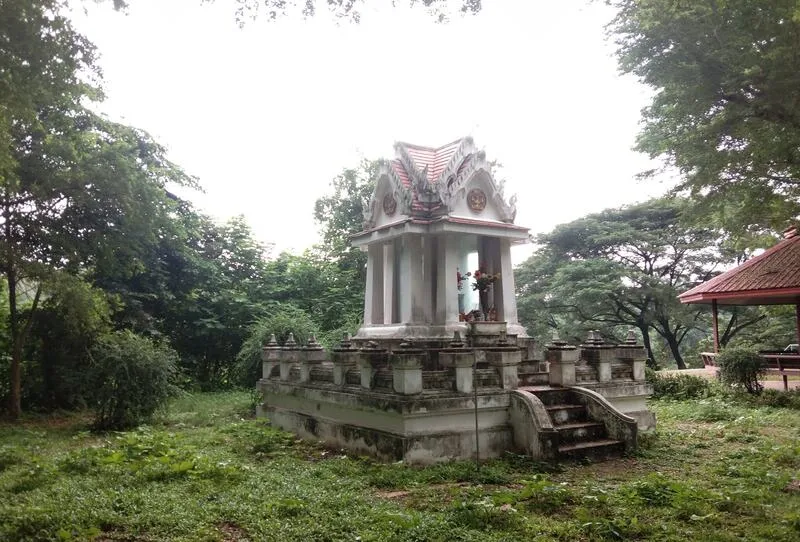
Open Days: Daily
Opening Hours: 08.30 - 16.30
Phra Bowon Ratchawang Sitha is an important historical site in Song Khon Subdistrict, Kaeng Khoi District, Saraburi. It is closely connected to King Pinklao, whose role in the reign of King Mongkut was far more significant than many casual visitors realize. The site stands out as a former riverside palace built as both a royal retreat and a strategic base linked to Khao Khok, an area once valued for its natural defensive terrain. Although only traces of brick foundations and the surrounding historical landscape remain today, the place still offers exceptional value for travelers interested in early Rattanakosin history, local memory, and overlooked heritage in Saraburi.
Phra Bowon Ratchawang Sitha was built on the western bank of the Pa Sak River in the area of Ban Sitha, now Ban Sitha Nuea in Song Khon Subdistrict. The palace was created during the same period when King Mongkut established Phra Narai Ratchaniwet in Lopburi. This parallel is important because it shows how the Lopburi–Pa Sak corridor held strategic importance in the mid-19th century, not only for travel and governance but also for security planning. Sitha Palace was therefore never just a temporary pleasure residence. It formed part of a wider geographical and political vision.
The background of the palace begins with the search for a suitable fallback capital or defensible location in times of war. King Pinklao traveled to inspect Nakhon Ratchasima but did not find it ideal for that purpose. He later favored Khao Khok in Saraburi because the terrain resembled a natural fortress. Since Ban Sitha offered convenient access to Khao Khok, a royal residence was established here. From this palace, he could travel onward more easily and use the area as a practical base during his stays.
That dual function explains why Phra Bowon Ratchawang Sitha deserves more attention than it usually receives. On one level, it was a place of royal residence and seasonal retreat. On another, it was connected to strategic military thinking and the management of space beyond the main capital. Its riverside location along the Pa Sak River also reflects the importance of water routes in the period. River travel was central to administration, movement, trade, and communication, and this site sat within that wider historical network.
Architecturally, the palace is believed to have consisted mainly of wooden structures built on brick-and-plaster foundations. Surviving traces indicate that the palace complex once covered a very large area, around 150 rai, with at least 2 major structures. The remaining foundations suggest substantial buildings, roughly 10 wa wide and 20 wa long. Historical descriptions also note the remarkable strength and size of the bricks used at the time. Even though the palace buildings themselves no longer survive, these details help modern visitors understand the scale and seriousness of the original construction.
After King Pinklao passed away, parts of the palace were dismantled by royal order, and some timber structures were reused elsewhere. What remained gradually disappeared over time. Unlike some restored royal sites in Thailand, Sitha Palace never survived in complete architectural form. What visitors encounter today is a quieter, more interpretive landscape of ruins, old foundations, and historical ground. That is precisely what gives it character. This is a site where imagination, landscape reading, and historical context matter more than monumental remains.
Over the years, much of the original palace area reverted to ordinary local land use. Farming activities, especially corn cultivation, affected the site and made many traces difficult to identify. Still, part of the area was preserved as public land, allowing some remains to survive. This preserved section, though small compared with the original palace grounds, is crucial because it keeps the memory of the site visible and prevents the historical landscape from vanishing completely. It also reflects the role local people have played in protecting heritage that is valuable but not always heavily developed for tourism.
One of the most intriguing parts of the site is Bung Talad Chai, a pond located south of the palace area. Local tradition holds that it was used as a royal bathing place and as a gathering space for members of the inner court when King Pinklao stayed here during the hot season. This association gives the pond special significance. It is not only a geographical feature near the ruins, but also part of the living memory surrounding the palace. For visitors, it adds a more human and intimate dimension to the history of the place.
Phra Bowon Ratchawang Sitha also carries a strong cultural link to Lao traditions in the Pa Sak basin. Oral accounts say that many ladies of the inner court were highly skilled in aeo lao, and that King Pinklao himself could play the khaen and perform Lao-style verse. He is said to have composed several works in this tradition, some of which survive in manuscript collections. This cultural layer makes the site especially interesting because it shows that the palace was not only about politics and geography, but also about music, courtly taste, and the cultural exchanges that shaped central Thailand in the 19th century.
For serious history lovers, the value of the site lies in how many stories intersect here. It reveals the relationship between the royal court and the provinces, the use of river systems in state movement, the strategic reading of landscapes such as Khao Khok, and the presence of Lao cultural influence in Saraburi. In that sense, Sitha Palace is much more than a ruined palace site. It is a key to reading a broader historical world that connected Saraburi, Lopburi, the Pa Sak River, and the early modern Thai state.
The atmosphere today is quiet and understated. Visitors should not expect a fully restored palace, exhibition halls, or extensive tourist facilities. Instead, the appeal lies in the brick remains, the historical setting, the open ground, and the surrounding local environment. This makes the site especially suitable for travelers who enjoy cultural routes, old stories, and places that reward close attention. Rather than offering spectacle, the site offers depth.
Another reason the site stands out is that it remains relatively uncommercialized. It is not one of Saraburi’s mass-tourism landmarks, which means a visit can feel more reflective and personal. You are not simply checking off a famous attraction. You are stepping into a landscape where royal history, local narrative, and archaeological traces overlap. For many travelers, that kind of experience is far more memorable than a polished museum-style destination.
In terms of preservation, the site remains recognized as a registered historical monument and continues to appear in official local tourism information as well as heritage databases. There have also been recent activities connected with site visits and landscape improvement, showing that the area is still acknowledged and cared for. That matters because it confirms the place is not merely a forgotten reference in historical texts. It remains part of the cultural and historical identity of Song Khon and Kaeng Khoi today.
Travelers planning a visit should approach the site as a historical field location rather than a fully serviced attraction. Bringing water, sun protection, and comfortable walking shoes is advisable. Since the palace ruins sit within a community setting, using online navigation together with local guidance is the best approach. The visit becomes even more rewarding when combined with nearby places such as Bung Talad Chai, Phra Phutthabat Noi, Wat Tham Phra That Charoen Tham, or other cultural landmarks in Song Khon.
Getting There is easiest by private car. From Saraburi town, take Adireksan Road toward Kaeng Khoi, then continue into Song Khon Subdistrict and follow local roads toward Ban Sitha Nuea. From Kaeng Khoi town, the journey is shorter and works well as part of a cultural day trip in the district. Because the site is a historical area within a local community rather than a large formal tourist complex, checking directions before departure is recommended.
A practical one-day route can combine Sitha Palace, Bung Talad Chai, Phra Phutthabat Noi, Wat Tham Phra That Charoen Tham, and Kaeng Khoi town for food or accommodation. This creates a well-balanced itinerary with history, religion, landscape, and community atmosphere in one trip. Visitors interested in hidden historical places in Saraburi will likely find this route especially rewarding.
Phra Bowon Ratchawang Sitha is therefore ideal for travelers who want more than a quick photo stop. It is one of those places where the visible remains are modest, yet the historical meaning is unusually rich. The ground itself still holds the memory of a royal residence, strategic planning, cultural exchange, and local storytelling. For anyone exploring lesser-known historical attractions in Saraburi, this is one of the province’s most compelling sites.
| Name | Phra Bowon Ratchawang Sitha |
| Location | Song Khon Subdistrict, Kaeng Khoi District, Saraburi |
| Address | Ban Sitha Nuea, Moo 8, Song Khon Subdistrict, Kaeng Khoi District, Saraburi |
| Coordinates | 14.59389, 100.98111 |
| Highlights | Historic palace site linked to King Pinklao, Khao Khok, the Pa Sak River, surviving brick foundations, and Bung Talad Chai |
| History | Built in the reign of King Mongkut around 1857 by King Pinklao as a royal residence and a strategic base connected to Khao Khok |
| Name Origin | The palace name comes from Ban Sitha, the riverside area where the royal residence was established |
| Distinctive Features | Brick-and-plaster foundation remains, an old landing-like platform area, and a quiet historical landscape within the local community |
| Travel Information | Best reached by private car from Saraburi or Kaeng Khoi via Adireksan Road and local roads into Song Khon and Ban Sitha Nuea |
| Current Status | A registered historical monument with surviving ruins and public historical ground still recognized in local tourism promotion |
| Open Days | No officially published visiting days were found |
| Opening Hours | No officially published visiting hours were found |
| Abbot / Caretaker | The area is within Song Khon local administration and is associated with local cultural and heritage oversight |
| Main Contact Number | Song Khon Subdistrict Administrative Organization: 0-3624-1608 |
| Official Website / Official Page | Song Khon Subdistrict Administrative Organization, Amazing Thailand |
| Nearby Tourist Attractions | 1) Bung Talad Chai – 0.1 km 2) Wat Song Khon Tai (Luang Pho Thong Suk) – 5 km 3) Phra Phutthabat Noi – 10 km 4) Wat Tham Phra That Charoen Tham – 10 km 5) Khao Phra Phutthabat Noi – 10 km |
| Nearby Restaurants | 1) Krua Nopparat – 15 km. Tel. 081-947-1935 2) Rongsi Coffee Kaeng Khoi – 16 km. Tel. 086-440-3285, 036-251-261 3) Ton Kaprao Kaeng Khoi – 16 km. Tel. 095-495-0971 4) Thattaphon Buffet Kaeng Khoi – 17 km 5) Aroi Dee Dee Kaeng Khoi – 17 km |
| Nearby Accommodations | 1) The Soul Resort – 10 km. Tel. 036-241-777, 099-782-1777 2) Sleep Box KaengKhoi – 16 km. Tel. 087-313-2588 3) Me and Tree Villa – 17 km. Tel. 081-414-4293 4) Panngern Panthong Inn Resort 2 – 19 km. Tel. 036-340788 5) Green Love Garden Resort – 24 km. Tel. 098-169-3502 |
Frequently Asked Questions (FAQ)
Q: Where is Phra Bowon Ratchawang Sitha located?
A: It is located at Ban Sitha Nuea, Moo 8, Song Khon Subdistrict, Kaeng Khoi District, Saraburi.
Q: Why is Phra Bowon Ratchawang Sitha important?
A: It was a royal palace built by King Pinklao and served both as a residence and as a strategic base connected to Khao Khok.
Q: Does the palace still survive in complete form?
A: No. The original palace buildings no longer survive, but brick foundations and parts of the historical landscape remain.
Q: What is Bung Talad Chai?
A: It is a pond south of the palace site that local tradition links to royal bathing and the inner court during seasonal stays.
Q: What is the best way to visit the site?
A: A private car is the most convenient option because the site is within a local community and not a large formal tourist complex.
Q: Who would enjoy visiting this place?
A: It is ideal for travelers interested in hidden historical sites, early Rattanakosin history, and cultural routes in Saraburi.
 Category: ●Art, Culture and Heritage
 Group: ●Royal Palace
Last Update : 7 MonthAgo
 Last Update : 7 MonthAgo
 Click to Access the Navigation Map GPS
Phra Bowon Ratchawang Sitha Map
Recommend

 Historical Sites and Monuments(2)
 Landmarks and Memorials(2)
Royal Palace(4)
Landmarks and Memorials(2)
Royal Palace(4)
 Art, Craft Centres, Tradition(4)
 Museums(1)
 Educational Places
 Museum for Study(1)
 Educational Gardens, Farm(2)
 Places of Worship
 Temple(8)
 Other Sacred Sites(6)
 Research and Development
 Royal Project(1)
 Suburban Living
 Village, Community(3)
 Nature and Wildlife
 National Parks and Marine Reserves(3)
 Mountain (Doi)(3)
 Waterfalls(5)
 Caves(6)
 Flower Field(1)
 River, Canal(1)
 Bays and Beaches(1)
 Other natural attractions(2)
 Entertainment and Agricultural
 Zoos and Aquariums(1)
 Animal camps and shows(1)
 Farms, Parks and Ecotourism(8)
 Outdoor and Adventure Activities(1)
 Travel Articles, Recipes
 Travel Review, Food Review(1)


