
lovethailand home >North Travel Attractions >Lampang Travel Attractions >Soem Ngam >Thung Ngam > Ban Na Bon Weaving Group
TL;DR: Ban Na Bon Weaving Group is located at Ban Na Bon Weaving Group Office, Village No. 2, Thung Ngam Subdistrict, Soem Ngam District, Lampang Province, open Please Contact In Advance, hours Please Contact In Advance.

Ban Na Bon Weaving Group
Open Days: Please Contact In Advance
Opening Hours: Please Contact In Advance
Ban Na Bon Weaving Group is located at the group office in Ban Na Bon, Village No. 2, Thung Ngam Subdistrict, Soem Ngam District, Lampang Province. It is a community-based handwoven textile group that reflects the local craft wisdom of rural Lampang. The group is associated with Mrs. Jankream Phongprasert, also recorded in some sources as Mrs. Jankream Pongprasert, who serves as the group leader and plays an important role in preserving and developing local weaving work. The group’s main products include handwoven fabric and ready-made textile items, created through the skills of yarn preparation, color arrangement, loom work, pattern control, and careful finishing.
Ban Na Bon is a village in Thung Ngam Subdistrict, Soem Ngam District, an area that still preserves the quiet character of rural northern Thailand. This is not a mainstream tourist destination like Lampang’s old town or major temples, but its value lies in real community life. The weaving group shows how local people use traditional skills to create income, preserve identity, and keep textile knowledge alive within the village.
The importance of Ban Na Bon Weaving Group is not limited to product sales. It also serves as a community space where skills, labor, memory, and local cooperation come together. Weaving requires patience, precision, and continuous practice. A weaver must understand how to prepare yarn, set up the loom, arrange warp and weft threads, control the rhythm of weaving, and check the quality of the finished cloth. Each piece of handwoven fabric therefore carries the value of time, skill, and human attention.
Handwoven cloth has long been part of local life in northern Thailand. In the past, villagers wove cloth for household use, clothing, ceremonial purposes, and everyday items. As ready-made clothing became more common, weaving declined in many areas. However, communities that successfully organized production groups, such as Ban Na Bon, have been able to transform weaving from a household skill into a community product. This allows the knowledge to remain active rather than becoming only a memory of the past.
The group’s main products include woven fabric and ready-made textile goods. Fabric by the piece allows customers to use the material for tailored clothing, local dress, home items, gifts, or ceremonial use. Ready-made products make the cloth easier to use for buyers who do not want to arrange tailoring themselves. This product range helps the group serve different customers, from local residents and Thai textile lovers to visitors looking for meaningful souvenirs from Lampang.
The recognition of the group as an OTOP product gives Ban Na Bon textiles a stronger place within the local economy. OTOP is not only a label; it represents community effort, product development, identity-building, and the ability to bring local wisdom into a wider market. Ban Na Bon handwoven cloth is therefore part of the broader idea that each community can create value from its own knowledge and resources.
Weaving is especially important for women in many northern Thai communities. Women have often preserved textile knowledge through daily life, clothing preparation, family teaching, and community craft work. Ban Na Bon Weaving Group gives this skill a visible economic role. It shows that weaving is not merely domestic work or a hobby, but a valuable cultural and economic skill that can support households and strengthen community identity.
Buying textiles from Ban Na Bon Weaving Group is therefore more meaningful than buying a general souvenir. It supports local artisans, household income, and the continuation of handwoven textile knowledge. Buyers receive products with a real origin and a community story. Knowing that the fabric comes from Ban Na Bon in Thung Ngam Subdistrict adds cultural value to each piece.
For visitors interested in community-based learning, the weaving group should be contacted before arrival. It is a working community production group, not a commercial tourist attraction with fixed visitor service throughout the day. Contacting in advance helps visitors know whether members are available, whether weaving can be observed, and whether products are ready for purchase. This approach respects the time and working rhythm of the community.
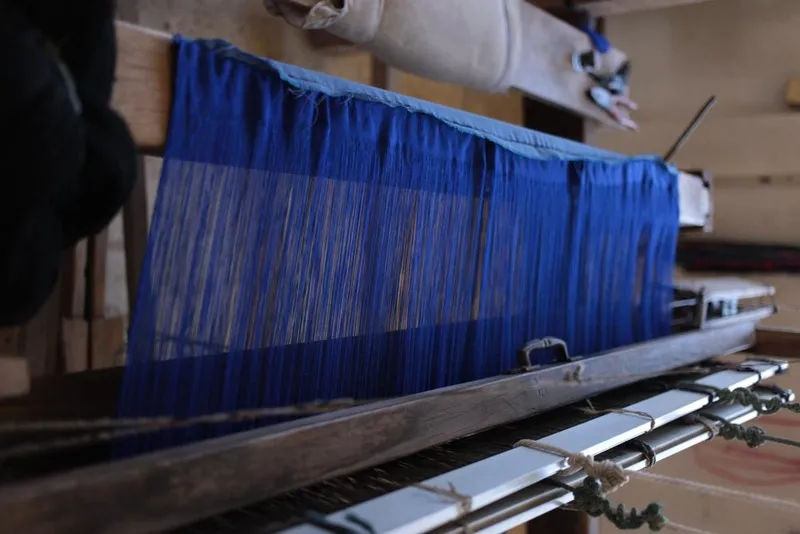
When visiting a weaving group, travelers should observe the process carefully. The loom, yarn, colors, patterns, tools, and working space all reveal the knowledge system behind the cloth. A loom is not only equipment; it is where memory, skill, rhythm, and hand movement become fabric. Seeing the process helps visitors understand why handwoven textiles carry greater value than mass-produced cloth.
Ban Na Bon textiles are also important because they represent Lampang’s wider craft identity. Lampang is often known for ceramics, horse carriages, temples, and old-town heritage, but the province also has many community-based handicrafts in its rural districts. Handwoven textiles from Soem Ngam add another dimension to the cultural image of Lampang, showing that craft knowledge is not limited to the city center.
Thung Ngam Subdistrict and Soem Ngam District are suitable for quiet community-based travel. Visitors can combine Ban Na Bon Weaving Group with temples, local museums, reservoirs, small restaurants, and rural scenery. This kind of travel distributes benefits beyond the city and helps visitors understand the everyday life of communities outside Lampang’s main tourist routes.
One nearby cultural destination is Wat Nang Oi Museum in Soem Sai Subdistrict, Soem Ngam District. It preserves religious, belief-based, and ritual heritage of the community. Combining Ban Na Bon Weaving Group with Wat Nang Oi Museum allows visitors to see both textile wisdom and local religious heritage in the same district. This route is suitable for students, cultural travelers, and visitors who prefer learning-based travel.
Nature-based stops in Soem Ngam District can also be added to the route, including Mae Chong Reservoir, Mae Ang Reservoir, Mae Tiang Reservoir, and Mae Soem Reservoir. These places make the trip more balanced by combining handicrafts with outdoor scenery. A practical day trip can begin with the weaving group in the morning, lunch in the district, and a quiet reservoir visit in the afternoon.
Wat Phra That Lampang Luang can also be combined with the route when traveling from Lampang city or Ko Kha District. Although it is farther from Ban Na Bon than attractions within Soem Ngam, it is one of Lampang’s most important temples and works well as part of a broader cultural itinerary. Pairing the temple with Ban Na Bon Weaving Group gives visitors both sacred heritage and living craft heritage.
Food options near Ban Na Bon include local food shops in the village, restaurants in Thung Ngam Subdistrict, Muan Oak Muan Jai cafe in Ban Mua, and restaurants around Soem Ngam town. Choosing local food near the weaving group helps support more parts of the local economy, not only the textile producers but also food vendors and small service businesses in the district.
For accommodation, Huen View Dee Soem Ngam Resort is located in Ban Na Bon, making it a convenient option for visitors who want to stay close to the weaving group and experience the local atmosphere. Noppakao Resort in Soem Klang Subdistrict is another nearby option. Travelers who prefer more facilities can stay in Ko Kha District or Lampang city and make a day trip to Ban Na Bon.
Getting There is most convenient by private car. From Lampang city, travel toward Soem Ngam District, then continue to Thung Ngam Subdistrict and Ban Na Bon, Village No. 2. The route is suitable for a half-day or full-day trip. Visitors can use navigation maps and confirm the exact location by calling the group or local authority before traveling. Since this is a community production site, advance contact is recommended.
Travelers coming from Ko Kha District or Wat Phra That Lampang Luang can also continue toward Soem Ngam District. This route works well for a cultural and craft-based itinerary. A suggested plan is to visit a major temple in the morning, have lunch nearby, and continue to Ban Na Bon Weaving Group in the afternoon. Groups should call ahead so that members can prepare for visitors and explain what can be viewed or purchased.
Visitors should respect the working area of the group. Do not touch looms, yarn, or products without permission. Do not interrupt weavers while they are working, and ask before photographing people or the production process. If purchasing textiles, it is useful to ask about fabric type, size, care instructions, and suitable uses directly from the makers. This helps ensure that the cloth is used properly and lasts longer.
Handwoven textiles should be cared for gently. It is best to wash similar colors separately at first, use mild detergent, avoid strong rubbing, avoid long soaking, and dry in shade or soft sunlight. Proper care helps preserve color, pattern, and fabric texture, allowing community textiles to remain beautiful and usable for a long time.
Ban Na Bon Weaving Group is worth knowing for anyone interested in Thai textiles, OTOP products, handwoven cloth, local craft communities, and cultural travel in Soem Ngam District. It may not be a large tourist attraction, but it has strong value as a living craft group where weaving remains part of community life. Visiting or purchasing from the group supports local artisans, craft continuity, and the cultural economy of Lampang.
Overall, Ban Na Bon Weaving Group is a good example of how traditional knowledge can adapt to the present. Its woven fabric and ready-made textile items are not just products; they are the result of community organization, skill development, craft preservation, and household income creation. For travelers who want to understand Lampang through rural craftsmanship and community life, Ban Na Bon is a meaningful place to include in the journey.
| Name | Ban Na Bon Weaving Group |
| Producer Group | Ban Na Bon Weaving Group |
| Location | Ban Na Bon Weaving Group Office, Village No. 2, Thung Ngam Subdistrict, Soem Ngam District, Lampang Province |
| Address | 100 Village No. 2, Ban Na Bon, Thung Ngam Subdistrict, Soem Ngam District, Lampang 52210 |
| Highlights | Community handwoven textile group producing woven fabric and ready-made textile products, recognized as an OTOP product of Soem Ngam District |
| History | A community product group that preserves and develops Ban Na Bon weaving wisdom, with long experience in textile production and OTOP recognition |
| Name Origin | The name comes from Ban Na Bon, Village No. 2, Thung Ngam Subdistrict, where the weaving group is based. |
| Distinctive Features | Handwoven fabric made by local weavers, including fabric by the piece and ready-made textile goods suitable for clothing, gifts, and cultural products |
| Travel Information | Travel from Lampang city toward Soem Ngam District, then continue to Thung Ngam Subdistrict and Ban Na Bon, Village No. 2. Private car travel is recommended, and visitors should contact the group before arrival. |
| Current Status | Community product group and local learning site for handwoven textiles in Thung Ngam Subdistrict, Soem Ngam District |
| Open Days | Please Contact In Advance |
| Opening Hours | Please Contact In Advance |
| Products | Woven fabric, handwoven textiles, ready-made textile products, and local cloth-based community goods |
| Facilities | Community production and sales area, weaving learning area subject to group availability, nearby restaurants and accommodation in Thung Ngam and Soem Ngam District |
| Main Areas / Zones | Ban Na Bon weaving group office, weaving area, product storage area, and community product sales area subject to group availability |
| Caretaker / Group Leader | Mrs. Jankream Phongprasert / Pongprasert, leader of Ban Na Bon Weaving Group |
| Main Contact Number | 085-711-9087, 054-286-054 / Thung Ngam Subdistrict Municipality, Tel. 054-286-159 Ext. 101 |
| Visitor Guidelines | Contact in advance, do not touch looms, yarn, or products without permission, and ask before photographing people or the production process. |
| Nearby Tourist Attractions | 1. Ban Na Bon Community, Thung Ngam Subdistrict, about 0 km 2. Wat Nang Oi Museum, about 14 km 3. Wat Luang Nang Oi, about 14 km 4. Mae Chong Reservoir, about 16 km 5. Mae Ang Reservoir, about 18 km 6. Soem Ngam Town Center, about 8 – 10 km 7. Wat Phra That Lampang Luang, about 35 km |
| Nearby Restaurants | 1. Local Food Shops In Ban Na Bon, about 0 – 2 km 2. Local Restaurants In Thung Ngam Subdistrict, about 2 – 5 km 3. Muan Oak Muan Jai, Ban Mua, Thung Ngam Subdistrict, about 5 km, Tel. 092-542-4469 4. Chef Restaurant, Saphan Na Bon Intersection, about 1 – 2 km 5. Ban Thung Ngam Noodle Shop, about 5 – 6 km 6. Kin Fae Bo Chao, Thung Ngam Subdistrict, about 7 km, Tel. 082-979-8058 |
| Nearby Accommodations | 1. Huen View Dee Soem Ngam Resort, Ban Na Bon, about 0.5 km, Tel. 081-952-9618, 082-363-9422 2. Noppakao Resort Soem Ngam, about 10 km, Tel. 089-264-7968, 080-129-5125 3. Homestays And Local Accommodation In Soem Ngam District, about 8 – 15 km 4. Accommodations In Ko Kha District, about 32 – 38 km 5. Ko Kha Resort, about 36 km, Tel. 097-920-8748, 087-260-5367 6. Hotels And Accommodation In Lampang City, about 55 – 65 km |
Frequently Asked Questions (FAQ)
Q: Where is Ban Na Bon Weaving Group located?
A: It is located at 100 Village No. 2, Ban Na Bon, Thung Ngam Subdistrict, Soem Ngam District, Lampang Province.
Q: Who is the leader of Ban Na Bon Weaving Group?
A: The group leader is Mrs. Jankream Phongprasert, also recorded in some sources as Mrs. Jankream Pongprasert.
Q: What does Ban Na Bon Weaving Group produce?
A: The group produces woven fabric, handwoven textiles, and ready-made textile products as community OTOP goods from Soem Ngam District.
Q: Should visitors contact the group before visiting?
A: Yes. Visitors should contact the group in advance because it is a working community production site, and availability may vary.
Q: What is the contact number for Ban Na Bon Weaving Group?
A: The group can be contacted at 085-711-9087 or 054-286-054. Local area information can also be requested from Thung Ngam Subdistrict Municipality at 054-286-159 Ext. 101.
Q: What should visitors buy from Ban Na Bon Weaving Group?
A: Good choices include woven fabric, handwoven cloth, and ready-made textile products that reflect the weaving wisdom of Ban Na Bon community.
Q: How can travelers get to Ban Na Bon Weaving Group?
A: Travel from Lampang city toward Soem Ngam District, then continue to Thung Ngam Subdistrict and Ban Na Bon, Village No. 2. Private car travel is recommended.
Q: What nearby attractions can be visited after Ban Na Bon Weaving Group?
A: Nearby places include Wat Nang Oi Museum, Wat Luang Nang Oi, Mae Chong Reservoir, Mae Ang Reservoir, Soem Ngam town center, and Wat Phra That Lampang Luang.
Tel : 054286054
 Tel : 054286054
Mobile : 0871903019, 0861797163
 Mobile : 0871903019, 0861797163
 Category: ●Suburban Living
 Group: ●Village, Community
Last Update : 3 MonthAgo
 Last Update : 3 MonthAgo
 Click to Access the Navigation Map GPS
Ban Na Bon Weaving Group Map
Recommend

 Art, Culture and Heritage
 Historical Sites and Monuments(2)
 Landmarks and Memorials(5)
 Art, Craft Centres, Tradition(10)
 Museums(4)
 Historic Homes and Cities(1)
 Places of Worship
 Temple(86)
 Other Sacred Sites(9)
 Research and Development
 Royal Project(2)
Village, Community(3)
Royal Project(2)
Village, Community(3)
 Local Market(2)
 Nature and Wildlife
 National Parks and Marine Reserves(5)
 Mountain (Doi)(4)
 Dam, Reservoir, Lake(11)
 Waterfalls(15)
 Hot Springs(1)
 Caves(12)
 Flower Field(1)
 River, Canal(1)
 Bays and Beaches(1)
 Other natural attractions(4)
 Entertainment and Agricultural
 Animal camps and shows(1)
 Farms, Parks and Ecotourism(2)
 Outdoor and Adventure Activities(2)
 Shopping
 Shopping and Night Market(2)
 Spas and Wellness
 Spas and Wellness(1)


