
lovethailand home >North Travel Attractions >Lampang Travel Attractions >Mueang Lampang >Phra Bat > Wat Mon Santhan
TL;DR: Wat Mon Santhan is located at Pa Kham Road, Phra Bat Subdistrict, Mueang Lampang District, Lampang Province, open Daily, hours 06.00 – 18.00.
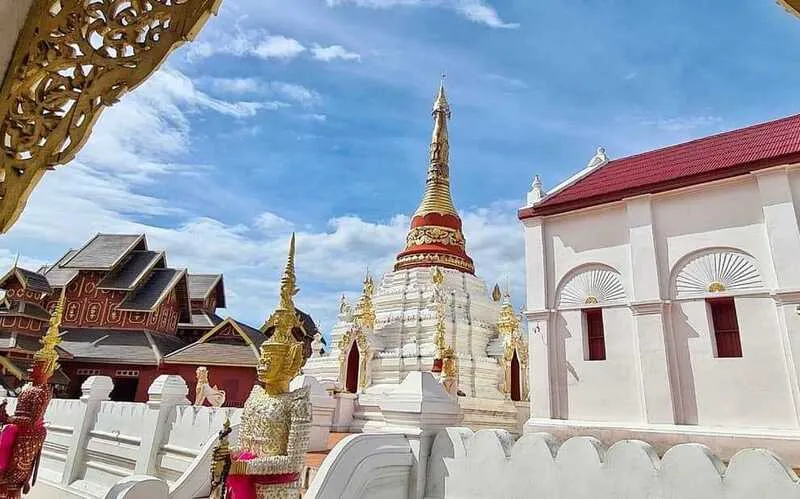
Wat Mon Santhan
Open Days: Daily
Opening Hours: 06.00 – 18.00
Wat Mon Santhan, also known locally as Wat Mon Pu Yak, is an old Buddhist temple in Phra Bat Subdistrict, Mueang Lampang District, Lampang Province. The temple stands on a small hill on the eastern side of the Wang River, in the Ban Pa Kham 2 community. Although the hill is not very high, its elevated location gives the temple a distinctive character as a small hill temple within Lampang city. It combines local Buddhist belief, Burmese-style art, Western-influenced architecture, Mon-style pagoda design, and a well-known local legend about a giant who became devoted to the Buddha’s teaching.
The name Wat Mon Pu Yak is connected with a local legend. According to the story, during the lifetime of the Buddha, the Lord Buddha traveled eastward with arahant disciples to teach the Dharma. A giant attempted to obstruct the spread of Buddhism and chased the Buddha through the forest area near Ban Phra Bat until reaching Mon Cham Sin. The Buddha saw that the giant should stop obstructing the Dharma, so he allowed the giant to listen to his teaching. The giant became deeply moved, bowed at the Buddha’s feet, and asked to practice morality and meditation at Mon Cham Sin. Later, the giant died at the nearby hill known as Mon Pu Yak.
This legend gives the temple a meaning that goes beyond its physical buildings. It represents transformation from hostility to faith, from obstruction to devotion, and from fear to spiritual awakening. The word “Pu Yak” should therefore not be understood simply as something frightening. In local belief, it reflects a moral story about the power of the Buddha’s teaching to transform even a fierce being into one who seeks discipline and inner peace.
Wat Mon Santhan is part of a wider sacred landscape in the Ban Pa Kham area, where several temples stand close to one another, including Wat Mon Cham Sin, Wat Chong Kham, Wat Rom Pho Ngam, and Wat Phra Bat. In the past, this area was a spiritually active community, supported by local devotees, merchants, and wealthy patrons. The large number of temples in the neighborhood reflects Lampang’s historical prosperity, especially during the period when the city became an important center of trade, teak, and cross-cultural settlement.
Historical records state that Wat Mon Pu Yak was founded on Saturday, September 5, 1899, by Pho Thao Nanta Noi, Pho Thao Nanta Kai, and 3 relatives. Another source from a Tai Yai inscription dated 1901 mentions that the temple was built by Nai Chong Nanta Kaeng, who came from Shan State in Myanmar. These records place the temple in the late 19th to early 20th century, a period when Lampang was closely connected with Burmese, Shan, and teak-trade communities.
The surrounding area was once known for many tamarind trees. During the rainy season, small seasonal plants grew throughout the area, while in the dry season the land became very dry. Tamarind trees, however, survived well because they tolerate heat. Because of the abundance of tamarind trees, local people called the area Pa Kham, meaning tamarind forest. The name remains in the present community of Ban Pa Kham.
The area was also associated with elephant keeping in the past. Merchants and elephant handlers used the tamarind forest as a place where elephants could feed naturally. Tamarind was useful for elephants both as food and as a traditional remedy. This background connects the temple not only with religion but also with the historical economy and daily life of Lampang during the teak-trade era.
The main artistic value of Wat Mon Santhan lies in its mixture of Burmese, Shan, Mon, and Western-influenced styles. Like many Burmese temples in Lampang, the temple reflects the cultural presence of wealthy Burmese and Shan patrons who settled in the city during the late 19th and early 20th centuries. Its important structures include a Burmese-style wooden monks’ residence, a viharn, an ordination hall, and a chedi.
The old wooden residence was once one of the temple’s most important structures. It stood west of the viharn and faced south. The building was a Burmese-style wooden structure raised on a low platform. Its main roof featured layered gables, while the entrance canopy was designed like a square mandapa with a castle-like spire. The staircase was made of masonry, while carved wooden decoration reflected Burmese craftsmanship. Inside, the central hall led to a Buddha image area, while the side spaces were used by monks. This wooden residence was considered one of the earliest structures of the temple.
Today, the old wooden residence must be understood in the context of conservation and recovery after a fire in 2026. It remains an important part of the temple’s history and artistic identity, but visitors should not assume that the building survives in its original complete condition. Anyone visiting the temple should follow the instructions of caretakers, avoid entering restricted areas, and respect the restoration context of the site.
The ordination hall stands south of the viharn. It is a masonry building with Western influence, sometimes referred to locally as a Portuguese-style viharn. The building is relatively small but decorated with carved wood, stucco reliefs, glass inlay, and gilded ornament. This combination reflects the architectural taste of Lampang during a period when Western forms began appearing together with Burmese and Lanna Buddhist art.
The viharn faces east and is also a masonry building with Western influence. Its most notable feature is the use of arched openings, a Western architectural element. These arches appear together with local and Burmese decorative details, creating a distinctive appearance different from traditional Lanna viharns. This makes the temple important for those studying Burmese Buddhist art and architectural exchange in northern Thailand.
The chedi is a large Mon-style pagoda built on a circumambulatory base and known as the Chulamanee Santhan Chedi. It is surrounded by a masonry boundary wall. The chedi reflects the religious and artistic influence of Mon and Burmese Buddhist communities, which played a significant role in Lampang during the teak-trade period.
The principal Buddha image and attendant disciples are enshrined on a decorated stucco base. The image is a gilded and glass-decorated stucco Buddha in the posture of subduing Mara. It belongs to the Burmese Mandalay school of art, known for smooth form, calm expression, and refined ornamentation. The presence of a Mandalay-style principal image confirms the temple’s strong Burmese artistic identity.
Wat Mon Santhan is also closely related to Wat Mon Cham Sin, located at 15 Phra Bat Subdistrict, Mueang Lampang District. Wat Mon Cham Sin covers 15 rai, 2 ngan, and 8 square wah and is also a Mahanikaya temple. It preserves Burmese-style religious architecture, including a wooden residence, viharn, and old masonry ordination hall. Together, Wat Mon Santhan and Wat Mon Cham Sin form an important cluster of Burmese-influenced temples in Lampang’s urban landscape.
The legend of the giant connects these 2 temples. The giant is said to have listened to the Buddha’s teaching and practiced discipline at Mon Cham Sin before dying at Mon Pu Yak. This makes the temples part of a shared sacred geography rather than separate monuments. Visitors who want to understand the story more fully should consider visiting both temples as part of the same cultural route.
The wider historical importance of Wat Mon Santhan lies in its connection with Lampang’s teak-trade era. During the late 19th and early 20th centuries, Burmese, Shan, and other regional merchants came to Lampang for the teak industry. Many of them became wealthy and built temples as acts of merit. These temples introduced Burmese and Shan styles into the Lanna landscape. Wat Mon Pu Yak is one of the visible reminders of that multicultural period.
Although Wat Mon Santhan is not a large temple, its value is highly concentrated. The small hilltop compound contains a local legend, Burmese wooden architecture, Western-influenced masonry buildings, Mon-style chedi design, Mandalay-style Buddha imagery, and the memory of Lampang’s historic trading communities. This makes it an excellent destination for travelers interested in art history, local belief, and the Burmese presence in northern Thailand.
Visitors should take time to observe the details slowly. The beauty of the temple is found not only in large structures but also in carved wood, stucco patterns, glass ornament, the form of the chedi, the arrangement of buildings on the hill, and the atmosphere of an old community temple. Photography should be done respectfully and without disturbing religious activities or restoration areas.
The Ban Pa Kham area around the temple is also culturally important because several old temples stand close together. A visit to Wat Mon Santhan can be combined with Wat Mon Cham Sin, Wat Phra Bat, Wat Chong Kham, and Wat Rom Pho Ngam to understand the broader religious and artistic landscape of the neighborhood.
Visitors should dress respectfully, keep quiet, and follow the temple’s guidance. Because the temple has historic structures and areas connected with recent restoration, no one should touch old woodwork, stucco fragments, religious objects, or restricted areas. Respectful visiting helps preserve the temple’s remaining heritage for the local community and future travelers.
Getting There is easy from Lampang city. Travel toward Pa Kham Road in Phra Bat Subdistrict, on the eastern side of the Wang River. The temple is located in the Ban Pa Kham 2 community and can be reached by private car, motorcycle, or local transport. It can be combined in one day with Wat Phra Bat, Kad Kong Ta Walking Street, Ratsadaphisek Bridge, Wat Si Rong Mueang, and Wat Phra Kaew Don Tao Suchadaram.
| Name | Wat Mon Santhan / Wat Mon Pu Yak |
| Location | Pa Kham Road, Phra Bat Subdistrict, Mueang Lampang District, Lampang Province |
| Address | 213 Moo 1, Pa Kham Road, Phra Bat Subdistrict, Mueang Lampang District, Lampang 52000 |
| Temple Type | Local Buddhist temple of the Mahanikaya order |
| Alternative Names | Wat Mon Pu Yak, Wat Mon Santhan, or Wat Mon Santhan |
| Highlights | Old hill temple in Lampang city, Burmese art, Western-influenced architecture, Mon-style chedi, Mandalay-style principal Buddha image, and the legend of Pu Yak |
| History | Founded in 1899 during the late reign of King Rama V, associated with Burmese and Shan patrons and the teak-trade era of Lampang |
| Distinctive Features | Burmese and Western-influenced buildings, old wooden residence, viharn, ordination hall, and Chulamanee Santhan Chedi |
| Important Legend | Legend of a giant who obstructed Buddhism before listening to the Buddha’s teaching, practicing morality at Mon Cham Sin, and dying at Mon Pu Yak |
| Important Historic Structures | Viharn, ordination hall, Chulamanee Santhan Chedi, Mandalay-style principal Buddha image, and the Burmese-style wooden residence as part of the temple’s historical identity |
| Current Wooden Building Status | The old wooden residence is an important part of the temple’s art history and is now understood in the context of conservation and recovery after the 2026 fire |
| Travel Information | From Lampang city, travel to Pa Kham Road in Phra Bat Subdistrict. The temple is located in Ban Pa Kham 2 on the eastern side of the Wang River and is accessible by private car or motorcycle |
| Current Status | Open for merit-making, worship, and cultural visits; visitors should follow temple guidance in historic or restoration areas |
| Open Days | Daily |
| Opening Hours | 06.00 – 18.00 |
| Fees | No admission fee |
| Facilities | Worship areas, historic temple grounds, and parking spaces within or near the temple |
| Abbot / Caretaker | Maintained by the temple and Ban Pa Kham community devotees |
| Main Contact Number | 054-314744, 054-010418 |
| Nearby Tourist Attractions | 1. Wat Phra Bat, about 1 km 2. Wat Si Rong Mueang, about 2 km 3. Kad Kong Ta Walking Street, about 3 km 4. Ratsadaphisek Bridge, about 3 km 5. Wat Phra Kaew Don Tao Suchadaram, about 4 km |
| Nearby Restaurants | 1. Long Jim New York Pizza, about 3 km, Tel. 082-8925009 2. Baan Phraya Suren by Madame Musur, about 3 km 3. Khao Soi Islam, about 3 km 4. Papacraft Cafe Kad Kong Ta, about 3 km 5. Krua Nua Hom Lampang, about 4 km, Tel. 054-323999 |
| Nearby Accommodations | 1. B2 Lampang Boutique & Budget Hotel, about 2 km 2. Hop Inn Lampang, about 3 km, Tel. 02-0802222 3. The Riverside Guest House, about 3 km 4. The Coconut Hotel Lampang, about 4 km, Tel. 054-821789 5. Tree Tara Hotel Lampang, about 6 km, Tel. 099-1322256 |
Frequently Asked Questions (FAQ)
Q: Is Wat Mon Santhan the same temple as Wat Mon Pu Yak?
A: Yes. Wat Mon Santhan is also widely known as Wat Mon Pu Yak or Wat Mon Santhan.
Q: Where is Wat Mon Santhan located?
A: The temple is located on Pa Kham Road, Phra Bat Subdistrict, Mueang Lampang District, Lampang Province, on the eastern side of the Wang River.
Q: What is Wat Mon Santhan known for?
A: It is known for Burmese art, Western-influenced architecture, a Mon-style chedi, a Mandalay-style Buddha image, and the local legend of Pu Yak.
Q: When was Wat Mon Santhan built?
A: The temple was founded in 1899 during the late reign of King Rama V.
Q: What is the legend of Pu Yak?
A: The legend tells of a giant who once obstructed Buddhism but later listened to the Buddha’s teaching, became devoted, practiced morality at Mon Cham Sin, and died at Mon Pu Yak.
Q: What are the temple’s opening hours?
A: The temple is open daily from 06.00 to 18.00.
Q: Is there an admission fee?
A: No. Visitors can make merit, worship, and visit the temple free of charge.
 Category: ●Places of Worship
 Group: ●Temple
Last Update : 6 MonthAgo
 Last Update : 6 MonthAgo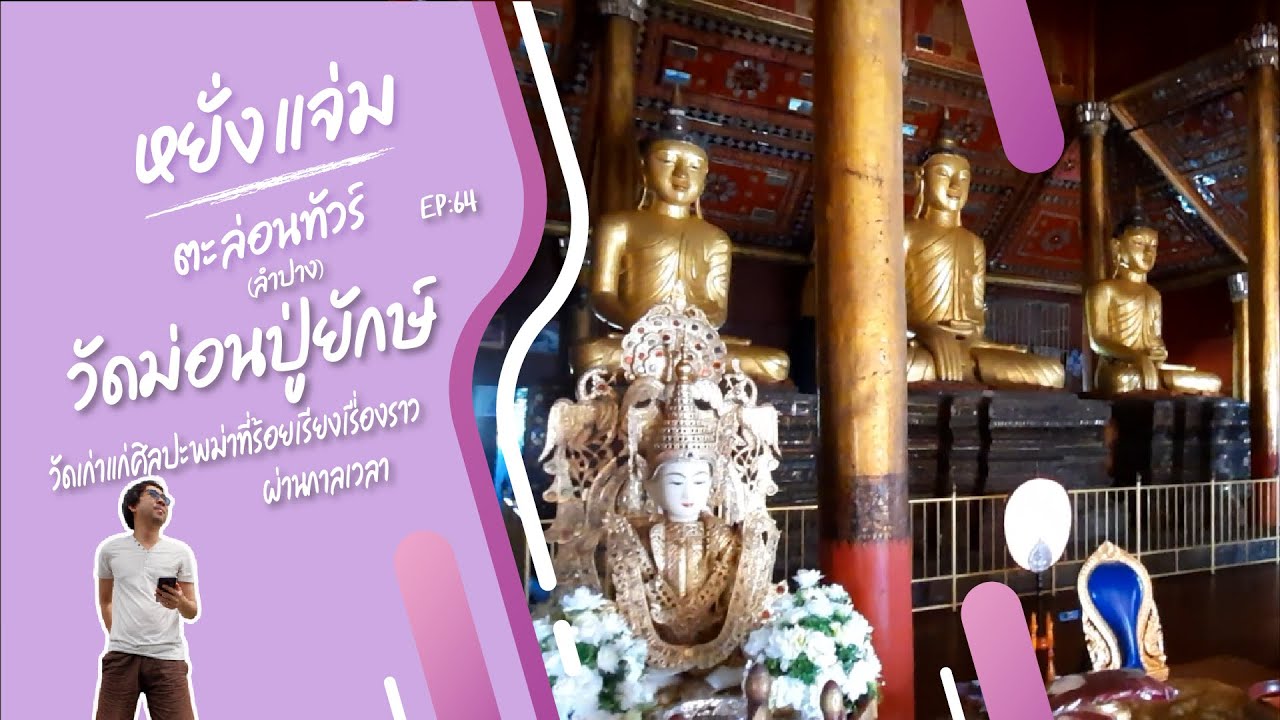
 Click to Access the Navigation Map GPS
Wat Mon Santhan Map
Recommend

 Art, Culture and Heritage
 Historical Sites and Monuments(2)
 Landmarks and Memorials(5)
 Art, Craft Centres, Tradition(10)
 Museums(4)
 Historic Homes and Cities(1)
Temple(86)
Historic Homes and Cities(1)
Temple(86)
 Other Sacred Sites(9)
 Research and Development
 Royal Project(2)
 Suburban Living
 Village, Community(3)
 Local Market(2)
 Nature and Wildlife
 National Parks and Marine Reserves(6)
 Mountain (Doi)(4)
 Dam, Reservoir, Lake(11)
 Waterfalls(15)
 Hot Springs(1)
 Caves(12)
 Flower Field(1)
 River, Canal(1)
 Bays and Beaches(1)
 Other natural attractions(4)
 Entertainment and Agricultural
 Animal camps and shows(1)
 Farms, Parks and Ecotourism(2)
 Outdoor and Adventure Activities(2)
 Shopping
 Shopping and Night Market(2)
 Spas and Wellness
 Spas and Wellness(1)
 Travel Articles, Recipes
 Travel Review, Food Review(1)


