
lovethailand home >North Travel Attractions >Lampang Travel Attractions >Mueang Lampang >Hua Wiang > Wat Boonyawat Viharn
TL;DR: Wat Boonyawat Viharn is located at Boonyawat Road, Hua Wiang Subdistrict, Mueang Lampang District, Lampang Province, open Daily, hours 08.00 – 17.00.

Wat Boonyawat Viharn
Open Days: Daily
Opening Hours: 08.00 – 17.00
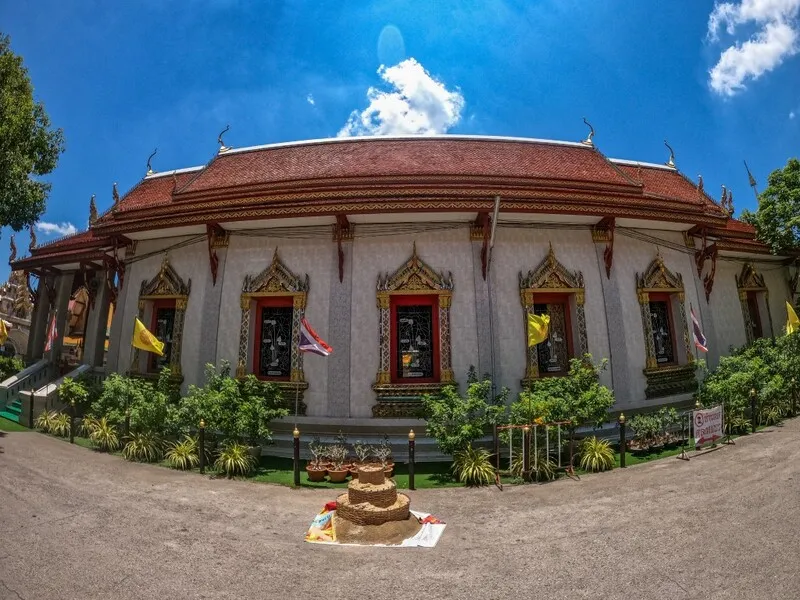
Wat Boonyawat Viharn in Lampang Province is one of the most historically important royal temples in northern Thailand. Located on Boonyawat Road in Hua Wiang Subdistrict, Mueang Lampang District, the temple is believed to be more than 400 years old and is recognized as the first royal temple of Lampang Province. In the past, it was known as Wat Klang Mueang, or the temple in the middle of the city, reflecting its central role in the old urban landscape of Lampang.
The temple was historically used for the royal oath of allegiance ceremony, known in Thai as the ritual of drinking the water of loyalty. This makes Wat Boonyawat Viharn more than a Buddhist monastery. It was also connected with political authority, local governance, and the relationship between rulers and the city. Its importance therefore extends across religion, history, administration, and cultural identity.
Although Wat Boonyawat Viharn occupies a relatively compact area, its historical value is substantial. The temple preserves important stories related to Lampang’s ruling families, the transformation of local temple architecture, and the establishment of royal Buddhist institutions in the province. Its main sacred image is Phra Chao Ton Luang, the principal Buddha image enshrined inside the ordination hall.
According to the temple’s history, a major renovation took place in 1804 during the time of Chao Luang Kham Som, the ruler of Lampang. The old viharn was dismantled, and a new royal viharn, principal Buddha image, chedi, monk residence, and scripture hall were constructed. After the work was completed, the temple was renamed Wat Luang Chai Santhan, marking its elevated role as an important temple of the city.
Another major transformation took place in 1912, when Chao Boonyawat Wongmanit, the ruler of Lampang, saw that the temple had become seriously deteriorated. He ordered the old royal viharn, scripture hall, monk residence, and temple walls to be dismantled. He then assigned Luang Prasan Maitri Rat, a master craftsman, to study the design of royal temples in Bangkok and apply those ideas to the reconstruction of the temple in Lampang.
This reconstruction created a distinctive architectural identity for Wat Boonyawat Viharn. The new royal viharn was designed as a solid enclosed building with a gabled roof and a raised base higher than typical Lanna viharns. The interior was decorated with central Thai ornamental patterns, while some Lanna elements remained, such as rigid ceremonial banners and supporting brackets believed to have been retained from the former structure.
This blending of Bangkok royal temple style with surviving Lanna elements makes Wat Boonyawat Viharn especially valuable for the study of northern Thai architectural transition. The temple shows how local religious architecture adapted to new cultural and political influences during the early 20th century, while still preserving traces of older regional craftsmanship.
During the same renovation, Chao Boonyawat Wongmanit commissioned the casting of the principal Buddha image named Phra Chao Ton Luang. The image measures 1 wa and 2 sok across the lap and 2 wa and 14 inches in height. Completed in 1914, Phra Chao Ton Luang remains the spiritual heart of the temple and one of the most respected Buddha images in Lampang city.
After the renovation, the temple name was changed to Wat Luang Boonyawat Bamrung in honor of Chao Boonyawat Wongmanit. In 1915, Chao Boonyawat Wongmanit, together with Phra Tham Chinda Nayok and Phra Khru Phurisophon, the abbot and provincial ecclesiastical leader of Lampang, organized a major celebration. A total of 120 monks gathered to perform religious ceremonies, and the royal viharn was formally used as the ordination hall.
After the consecration and boundary-marking ceremony were completed, the abbot and Chao Boonyawat Wongmanit submitted a request to offer the temple as a royal monastery. King Vajiravudh, Rama VI, graciously elevated the temple to royal temple status and granted it the new name Wat Boonyawat Viharn. This royal naming marked an important moment in the temple’s history and confirmed its official status as a royal Buddhist monastery.
The royal temple status gives Wat Boonyawat Viharn a distinctive role among temples in Lampang. It reflects both the city’s religious importance and its relationship with the Thai monarchy. As a third-class royal temple of the ordinary type, it represents a formal link between local Buddhist tradition and the national ecclesiastical structure.
The ordination hall is the most important architectural structure within the temple. Its form is orderly, dignified, and formal, reflecting the character of a royal temple. Inside, the decorative patterns show strong central Thai influence, while selected Lanna details preserve the memory of the older local structure. For visitors interested in art history, the building is valuable not only as a place of worship but also as evidence of cultural transition in Lampang.
Phra Chao Ton Luang is the main object of devotion inside the ordination hall. Local residents regularly visit the temple to pay respect, make merit, and pray for blessings. Despite being located in the city center, the temple atmosphere remains calm and respectful, offering visitors a quiet place for worship and reflection.
Wat Boonyawat Viharn is also recognized as a provincial meditation practice center in Lampang. This role gives the temple continued relevance beyond tourism and historical interest. Visitors come not only to admire architecture but also to experience a place dedicated to Buddhist practice, mindfulness, and spiritual cultivation.
The temple is especially interesting because of the density of its historical layers. It began as Wat Klang Mueang, became Wat Luang Chai Santhan, was later renamed Wat Luang Boonyawat Bamrung, and finally received the royal name Wat Boonyawat Viharn. Each name reflects a different stage in Lampang’s religious, political, and cultural history.
For travelers who enjoy historical interpretation, Wat Boonyawat Viharn offers many connections to important figures, including Chao Luang Kham Som, Chao Boonyawat Wongmanit, Phra Tham Chinda Nayok, Phra Khru Phurisophon, and King Rama VI. These connections make the temple feel like a living historical document in the middle of Lampang city.
The temple’s location also makes it convenient for urban cultural sightseeing. From Wat Boonyawat Viharn, visitors can continue to nearby attractions such as Wat Si Chum, Wat Si Rong Mueang, Kad Kong Ta Walking Street, Ratsadaphisek Bridge, and Wat Phra Kaew Don Tao Suchadaram. This makes the temple a suitable starting point for exploring the old city of Lampang.
Visitors should dress respectfully and maintain a quiet manner because Wat Boonyawat Viharn remains an active royal temple and meditation center. Photography should be done with care, especially inside the ordination hall and near the principal Buddha image. Respectful behavior helps preserve the sacred atmosphere of the temple.
Although the temple is not large in physical size, it is one of the most meaningful cultural sites in Lampang. It reveals the city’s historical connection with royal authority, Buddhist devotion, Lanna heritage, and central Thai artistic influence. For travelers seeking more than a quick sightseeing stop, Wat Boonyawat Viharn offers a deep and rewarding encounter with Lampang’s past.
Getting There is easy from central Lampang. The temple is located on Boonyawat Road in Hua Wiang Subdistrict, close to the old city area and several major attractions. Visitors can reach the temple by private car, local transport, motorcycle taxi, or on foot from nearby accommodations in the city center.
| Name | Wat Boonyawat Viharn |
| Location | Boonyawat Road, Hua Wiang Subdistrict, Mueang Lampang District, Lampang Province |
| Address | Boonyawat Road, Hua Wiang Subdistrict, Mueang Lampang District, Lampang 52000 |
| Highlights | First royal temple of Lampang Province, Phra Chao Ton Luang, royal-style ordination hall, and historical oath ceremony site |
| History | Ancient temple over 400 years old, formerly known as Wat Klang Mueang, later Wat Luang Chai Santhan, Wat Luang Boonyawat Bamrung, and finally Wat Boonyawat Viharn |
| Distinctive Features | Enclosed royal viharn with gabled roof, raised base, central Thai interior decoration, and remaining Lanna elements |
| Important Buddha Image | Phra Chao Ton Luang, the principal Buddha image in the ordination hall |
| Religious Status | Third-class royal temple of the ordinary type and provincial meditation practice center of Lampang |
| Travel Information | Located in central Lampang on Boonyawat Road; accessible by private car, local transport, motorcycle taxi, or walking from nearby city accommodations |
| Current Status | Open for worship, merit-making, and cultural visits |
| Open Days | Daily |
| Opening Hours | 08.00 – 17.00 |
| Fees | No admission fee |
| Facilities | Ordination hall worship area, temple courtyard, and nearby parking spaces |
| Abbot / Caretaker | Phra Khru Anusak Woratham (Methee Panyatharo) |
| Main Contact Number | 054-322276 |
| Nearby Tourist Attractions | 1. Wat Si Chum, about 1 km 2. Wat Si Rong Mueang, about 2 km 3. Kad Kong Ta Walking Street, about 2 km 4. Ratsadaphisek Bridge, about 2 km 5. Wat Phra Kaew Don Tao Suchadaram, about 3 km |
| Nearby Restaurants | 1. Long Jim New York Pizza, about 700 m, Tel. 054-010555 2. Baan Phraya Suren by Madame Musur, about 1 km, Tel. 054-222317 3. Khao Soi Islam, about 2 km 4. Papacraft Cafe Kad Kong Ta, about 2 km 5. Krua Nua Hom Lampang, about 3 km, Tel. 054-323999 |
| Nearby Accommodations | 1. Khelang Nakorn Hotel, about 1 km 2. Pin Hotel Lampang, about 1 km 3. Le Neuf Nakorn Lampang, about 1 km 4. Wienglakor Hotel Lampang, about 2 km, Tel. 054-225501 5. The Coconut Hotel Lampang, about 3 km, Tel. 054-821999 |
Frequently Asked Questions (FAQ)
Q: Where is Wat Boonyawat Viharn located?
A: Wat Boonyawat Viharn is located on Boonyawat Road, Hua Wiang Subdistrict, Mueang Lampang District, Lampang Province.
Q: Why is Wat Boonyawat Viharn important?
A: It is an ancient temple over 400 years old, the first royal temple of Lampang Province, and a third-class royal temple of the ordinary type.
Q: What was the temple’s original name?
A: It was originally known as Wat Klang Mueang, later renamed Wat Luang Chai Santhan, Wat Luang Boonyawat Bamrung, and finally Wat Boonyawat Viharn.
Q: What is the main Buddha image at the temple?
A: The main Buddha image is Phra Chao Ton Luang, enshrined inside the ordination hall.
Q: What are the opening hours?
A: The temple is open daily from 08.00 to 17.00.
Q: Is there an entrance fee?
A: No. Visitors can enter the temple free of charge.
Q: What nearby attractions can travelers visit together with Wat Boonyawat Viharn?
A: Nearby attractions include Wat Si Chum, Wat Si Rong Mueang, Kad Kong Ta Walking Street, Ratsadaphisek Bridge, and Wat Phra Kaew Don Tao Suchadaram.
 Category: ●Places of Worship
 Group: ●Temple
Last Update : 4 MonthAgo
 Last Update : 4 MonthAgo
 Click to Access the Navigation Map GPS
Wat Boonyawat Viharn Map
Recommend

 Art, Culture and Heritage
 Historical Sites and Monuments(2)
 Landmarks and Memorials(5)
 Art, Craft Centres, Tradition(10)
 Museums(4)
 Historic Homes and Cities(1)
Temple(86)
Historic Homes and Cities(1)
Temple(86)
 Other Sacred Sites(9)
 Research and Development
 Royal Project(2)
 Suburban Living
 Village, Community(3)
 Local Market(2)
 Nature and Wildlife
 National Parks and Marine Reserves(5)
 Mountain (Doi)(4)
 Dam, Reservoir, Lake(11)
 Waterfalls(15)
 Hot Springs(1)
 Caves(12)
 Flower Field(1)
 River, Canal(1)
 Bays and Beaches(1)
 Other natural attractions(4)
 Entertainment and Agricultural
 Animal camps and shows(1)
 Farms, Parks and Ecotourism(2)
 Outdoor and Adventure Activities(2)
 Shopping
 Shopping and Night Market(2)
 Spas and Wellness
 Spas and Wellness(1)


