

 Home
Home Chiang Mai(





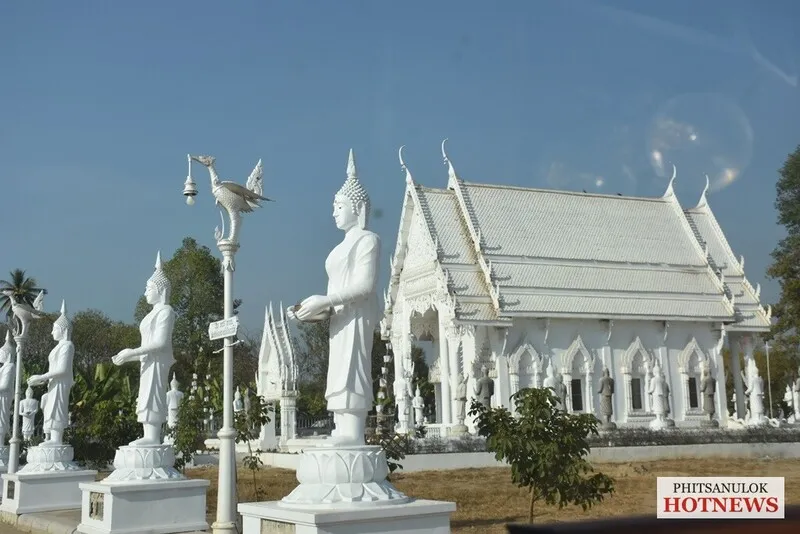
Wat Sao Hin
Rating: 4/5 (6 votes)
 Search By
  Map
Map 
 Have Map
  No Map
Phitsanulok attractions
Attractions in Thailand
Opening days: Daily
Opening hours: 08.00 - 17.00
Wat Sao Hin is located in Ban Sao Hin, between Village No. 7 and Village No. 8, Wat Phrik Subdistrict, Mueang Phitsanulok District, Phitsanulok Province. It is a monastery affiliated with the Maha Nikaya order. Wat Sao Hin is believed to have been established before 1931 B.E. (1888 CE), as records from the Department of Religious Affairs in 1931 show its land registered under the religious property registry. According to these records, the monastery's land, located in Wat Phrik Subdistrict, Mueang Phitsanulok District, measured 200 meters wide and 200 meters long. Currently, the monastery’s land is titled under land deed number 45831, covering an area of 18 rai 3 ngan 56.7 square wah. These records indicate that Wat Sao Hin was founded before February 16, 1941, in accordance with the Sangha Act of 1941. The monastery received official consecration on January 29, 1947, with a sanctified area measuring 40 by 80 meters.
The monastery is situated on flat land adjacent to the Nan River, with residential houses, gardens, and rice fields surrounding it. The monastery’s land includes a primary school occupying 8 rai 3 ngan. The structures within the monastery consist of five monk’s quarters with concrete pillars, wooden floors, and tiled roofs, each measuring 6 by 8 meters. The sermon hall is built with reinforced concrete and measures 15 by 28 meters. The old ordination hall, also reinforced concrete, was built in 1946 and officially consecrated on January 2, 1947, with a sanctified area of 40 by 80 meters. The crematorium measures 6 by 12 meters and is constructed from reinforced concrete. A new ordination hall was later constructed and completed in 2004, supporting both religious and community activities.
Wat Sao Hin has historically played an important role in education. Each year, there have been at least seven resident monks, and the monastery provides instruction in Buddhist scriptures, Pali studies, and general Dharma education at Wat Chan Wittaya School.
The monastery has been led by a succession of devoted abbots, including Luang Pho Chan, Phra Ajarn On, Phra Ajarn Chum, Phra Ajarn Lon, Phra Ajarn Pae, Phra Ajarn Wan, Phra Ajarn Mai, Phra Ajarn Was, Phra Ajarn Fun, Phra Ajarn Khao, Phra Ajarn Boontham Thammakamo, Phra Athikan Chalo, Phra Athikan Parinya Silasaro, and Phra Athikan Ekachai Pemiyo. Their leadership has ensured the preservation and development of Wat Sao Hin in religious, educational, and community aspects.
In addition to its religious and educational significance, Wat Sao Hin serves as a cultural tourism site in Phitsanulok. Visitors can explore its historic structures, learn about local arts and crafts, and experience the daily life and traditions of the surrounding community. The monastery’s charm lies in its combination of natural surroundings, religious practice, and local culture, making it both a spiritual center and a place of cultural learning.
The monastery’s location by the Nan River provides a tranquil environment suitable for religious and educational activities, while the surrounding gardens and farmland reflect the lifestyle of the local people. Continuous maintenance and development by the abbots and the Maha Nikaya monks have helped Wat Sao Hin remain a focal point for both residents and visitors.
Overall, Wat Sao Hin holds significant historical, religious, educational, and cultural value. It is a center for learning and spiritual practice, reflecting the preservation of local traditions and community development from the past to the present.
 Wat Sao Hin Map
 Category:
  Group:
  Tag: ●Wat Sao Hin●wat sao hin ●phitsanulok temple ●maha nikaya temple ●ubosot wat sao hin ●monk quarters ●sermon hall ●crematorium ●temple education ●wat school ●wat sao hin history ●abbots of wat sao hin ●wisungkhamsima ceremony ●temple tourism ●local culture ●local traditions Last Update: 6 MonthAgo
Comment
 Nearby Attractions
| Keyword (Advance) |
 Region
|
 Muang Phitsanulok(
 Copyright 2012,