
lovethailand home >North Travel Attractions >Phitsanulok Travel Attractions >Muang Phitsanulok >Wat Phrik > Wat Sao Hin
TL;DR: Wat Sao Hin is located at Moo 7, Ban Sao Hin, Wat Phrik Subdistrict, Mueang Phitsanulok District, Phitsanulok Province, open Daily, hours 08.00 – 17.00.
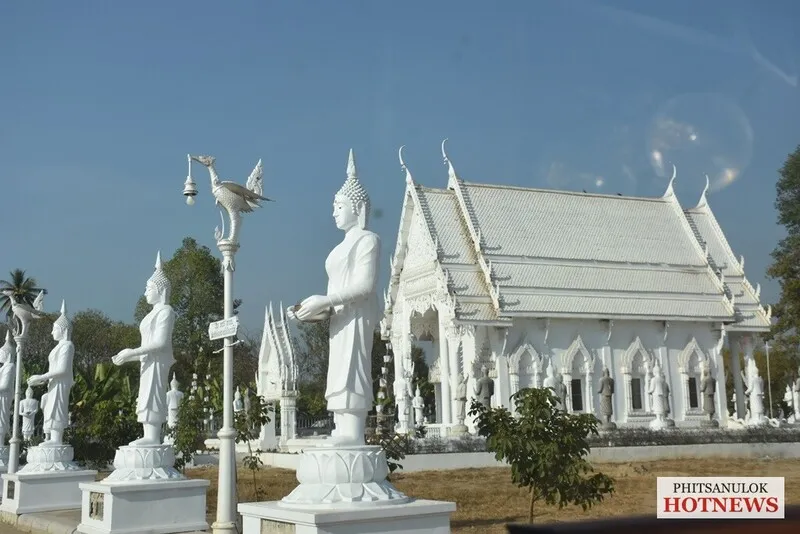
Wat Sao Hin
Open Days: Daily
Opening Hours: 08.00 – 17.00
Wat Sao Hin in Phitsanulok Province is an important local Buddhist temple in Wat Phrik Subdistrict, Mueang Phitsanulok District. Located in Ban Sao Hin, Moo 7, the temple is associated with the Nan River landscape, local Buddhist education, community faith, and a distinctive modern white Buddhist park. Although it is not a large royal temple in the city center, Wat Sao Hin has strong value as a community temple with a long history, an active monastic presence, and a visual identity that has made it increasingly known among visitors who enjoy peaceful temples and faith-based travel.
Wat Sao Hin belongs to the Mahanikaya order of Thai Buddhism. The temple is believed to have existed before B.E. 2474, based on the religious land records surveyed by the Department of Religious Affairs in that year. The original temple land was recorded as approximately 200 meters wide and 200 meters long. Today, the temple has land title deed number 45831 and covers 18 rai, 3 ngan, and 56.7 square wah. It is classified as a temple established before 16 February B.E. 2484 under the Sangha Act of B.E. 2484. The temple received its official consecrated boundary on 29 January B.E. 2490, with a boundary measuring 40 meters wide and 80 meters long.
The temple stands on lowland near the Nan River. The surrounding area includes local homes, agricultural land, gardens, and rice fields. This riverside environment gives the temple a peaceful atmosphere and connects it with the traditional settlement pattern of Phitsanulok. In the past, the Nan River supported transportation, farming, trade, and daily life. Temples located near the river therefore became more than places of worship; they were also social, educational, and cultural centers for their communities.
Wat Sao Hin has also played an important educational role. A primary school is located on temple land, occupying about 8 rai and 3 ngan. This relationship between temple and school reflects a long-standing pattern in Thai communities, where Buddhist temples supported education, moral training, and social development. For many generations, temples were places where children learned not only literacy and knowledge, but also discipline, respect, and Buddhist values.
The temple compound includes several important monastic structures. There are 5 monks’ residences with concrete pillars, wooden floors, and tile roofs, each measuring about 6 meters by 8 meters. The sermon hall is a reinforced-concrete building measuring 15 meters by 28 meters and supports merit-making, community gatherings, Buddhist teaching, and religious events. The old ordination hall, built in B.E. 2489, is a reinforced-concrete structure measuring 6.50 meters by 16 meters. The temple also has a crematorium measuring 6 meters by 12 meters, and a new ordination hall was later restored and completed in B.E. 2547.
These buildings show that Wat Sao Hin has the essential functions of a community temple. The ordination hall supports formal monastic ceremonies. The sermon hall brings people together for merit-making, teaching, and meetings. The monks’ residences support monastic life. The crematorium serves community funeral rites. Together, these structures make the temple part of many stages of local life, from education and merit-making to ordination and memorial ceremonies.
The temple has also been connected with Buddhist education. In earlier periods, the temple had at least 7 resident monks per year and supported the study of Nak Tham, Pali, and Buddhist scripture education. Buddhist education is central to preserving the teachings and discipline of the Sangha. For the local community, this role made the temple a place of learning as well as worship.
Many abbots have cared for Wat Sao Hin over the years, including Luang Pho Chan, Phra Achan On, Phra Achan Chum, Phra Achan Lon, Phra Achan Phae, Phra Achan Won, Phra Achan Mai, Phra Achan Wat, Phra Achan Fan, Phra Achan Khao, Phra Achan Boontham Dhammakamo, Phra Athikan Chalo, Phra Athikan Parinya Silasaro, Phra Athikan Ekachai Pemiyo, and the current abbot, Phra Khru Theeraphong Phisut. This long line of monastic leadership shows the continuity of Buddhist life in Wat Phrik Subdistrict and the dedication of monks and villagers who have maintained the temple across generations.
In recent years, Wat Sao Hin has become more widely known for its white Buddhist park. The temple features many white Buddha statues of Luang Pho Ngoen Lai Ma The Ma arranged around the temple and along walkways. There is also a large primary image of Luang Pho Ngoen Lai Ma The Ma and a white image of Phra Maha Sangkachai connected with auspiciousness and prosperity. The white color gives the temple a calm, clean, and luminous atmosphere, making it visually distinctive among local temples in Phitsanulok.
Luang Pho Ngoen Lai Ma The Ma is especially popular among devotees who pray for prosperity, business success, financial stability, and good fortune. The name itself suggests a wish for wealth and abundance to flow into life. For visitors, the temple offers a chance to make merit, pray, and reflect on personal goals. At the same time, the Buddhist meaning of worship should be understood together with ethical conduct, effort, mindfulness, and generosity.
Wat Sao Hin is interesting because it combines older community-temple history with contemporary religious art. On one level, the temple has land records, a consecrated boundary, monastic education, temple buildings, and a long relationship with the local community. On another level, it has developed a modern white Buddhist park that attracts visitors and gives the temple a memorable visual identity. This combination shows how Thai temples can preserve tradition while adapting to contemporary devotional culture.
The temple atmosphere is peaceful and local. Visitors can walk around the white Buddhist park, pay respect to the Buddha images, take respectful photographs, and experience the quiet setting of a temple outside central Phitsanulok. The surrounding Wat Phrik area, with its river, fields, and community life, gives the temple a slower and more relaxed feeling than the major city temples. This makes Wat Sao Hin suitable for visitors who want to see a different side of Phitsanulok.
Wat Sao Hin remains active in Buddhist ceremonies and community life. Local people come for Buddhist holy days, Magha Puja, Visakha Puja, Asalha Puja, Buddhist Lent, the end of Buddhist Lent, Kathin ceremonies, robe offerings, Songkran activities, annual merit-making, and community events. Such activities help preserve local customs and strengthen the relationship between temple, monks, families, and younger generations.
For cultural travelers, Wat Sao Hin is a useful place to understand a local riverside temple in Mueang Phitsanulok District. It presents several layers of history: the early land records before B.E. 2474, the consecrated boundary in B.E. 2490, the development of temple buildings, the educational role of the temple, and the more recent creation of a white Buddhist landmark. Each layer helps explain how the temple has remained relevant through changing times.
Getting There is convenient from Phitsanulok city. Travel toward Wat Phrik Subdistrict, Mueang Phitsanulok District, and continue to Ban Sao Hin, Moo 7. The temple is about 18 kilometers from the city center. Visitors can travel by private car, local taxi, songthaew, or ride-hailing service. The temple can be combined with Wat Tha Rong Tawan Tok, Wat Tha Rong Tawan Ok, Wat Phra Si Rattana Mahathat Woramahawihan, Wat Nang Phaya, and Wat Ratchaburana in a broader cultural route.
The best time to visit is in the morning or late afternoon, when the weather is more comfortable for walking and photography. Visitors should dress respectfully, speak quietly, and avoid climbing on or touching sacred statues. A visit of around 45 minutes to 1 hour is suitable for paying respect, walking through the white Buddhist park, taking photos, and enjoying the peaceful atmosphere.
Wat Sao Hin is suitable for Buddhist pilgrims, visitors interested in white temple architecture, people seeking merit-making and blessings, cultural travelers, photographers, families, students, and travelers who want to explore temples outside the main city area. Although it is farther from central Phitsanulok than the famous temples near the old city, its calm atmosphere and distinctive white Buddhist park make it a worthwhile stop.
Overall, Wat Sao Hin is a temple with multiple values: history, Buddhism, education, community identity, riverside landscape, and contemporary faith-based tourism. Its long background before B.E. 2474, its consecrated boundary in B.E. 2490, its school connection, temple buildings, monastic leadership, and white Buddhist park all make it an important local temple in Wat Phrik Subdistrict. For visitors who want to understand Phitsanulok beyond the best-known city temples, Wat Sao Hin offers a peaceful and meaningful experience.
| Name | Wat Sao Hin |
| Location | Moo 7, Ban Sao Hin, Wat Phrik Subdistrict, Mueang Phitsanulok District, Phitsanulok Province |
| Address | Moo 7, Wat Phrik Subdistrict, Mueang Phitsanulok District, Phitsanulok 65230 |
| Highlights | White Buddhist park, Luang Pho Ngoen Lai Ma The Ma, white Phra Maha Sangkachai image, white religious structures, and peaceful local temple atmosphere near the Nan River |
| History | Believed to have been established before B.E. 2474, based on religious land records surveyed in B.E. 2474. The temple received its official consecrated boundary on 29 January B.E. 2490. |
| Name Origin | The name is connected with Ban Sao Hin, an old community in Wat Phrik Subdistrict of Mueang Phitsanulok District. |
| Distinctive Features | Mahanikaya local temple covering 18 rai, 3 ngan, and 56.7 square wah, with an ordination hall, sermon hall, monks’ residences, school land, and a distinctive white Buddhist park |
| Key Evidence | Religious land survey in B.E. 2474, land title deed number 45831, consecrated boundary in B.E. 2490, old ordination hall from B.E. 2489, new ordination hall completed in B.E. 2547, and reinforced-concrete sermon hall |
| Travel Information | From Phitsanulok city, travel toward Wat Phrik Subdistrict and Ban Sao Hin, Moo 7. The temple is about 18 km from the city center and accessible by private car, local taxi, songthaew, or ride-hailing service. |
| Current Status | Active local Buddhist temple and faith-based attraction in Wat Phrik Subdistrict, open for merit-making, worship, and visiting the white Buddhist park |
| Open Days | Daily |
| Opening Hours | 08.00 – 17.00 |
| Facilities | Temple grounds, worship areas, white Buddhist park, sermon hall, ordination hall, monks’ residences, nearby or on-site parking, and community activity areas |
| Main Areas / Zones | White Buddhist park, Luang Pho Ngoen Lai Ma The Ma area, Phra Maha Sangkachai image, ordination hall, sermon hall, monks’ residences, crematorium, and Buddhist activity areas |
| Abbot / Caretaker | Phra Khru Theeraphong Phisut |
| Main Contact Number | 098-782-9490, 089-856-7581 |
| Official Website / Official Page | Wat Sao Hin Phitsanulok |
| Nearby Tourist Attractions | 1. Wat Tha Rong Tawan Tok, about 6 km 2. Wat Tha Rong Tawan Ok, about 7 km 3. Wat Phra Si Rattana Mahathat Woramahawihan, about 18 km 4. Wat Nang Phaya, about 18 km 5. Wat Ratchaburana, about 18 km |
| Nearby Restaurants | 1. Som Tam Pu Suea, Wat Phrik Subdistrict, about 6 km, Tel. 081-971-3948, 081-532-9627 2. KOI Cafe, Wat Phrik Subdistrict, about 7 km 3. Lung Cham Pa Fon Wild Food Restaurant near Wat Phrik, about 8 km 4. Dragon River Avenue Restaurant, about 18 km, Tel. 099-374-7447, 055-242-242 5. Amore Restaurant at Topland Hotel, about 18 km |
| Nearby Accommodations | 1. The State Resort, about 11 km, Tel. 093-138-5055, 055-000-456 2. Shinnabhura Historic Boutique Hotel, about 16 km, Tel. 055-219-888 3. Pattara Resort & Spa, about 17 km, Tel. 055-282-966 4. Topland Hotel, about 18 km, Tel. 055-247-800 5. Dragon River Avenue Hotel, about 18 km, Tel. 099-374-7447, 055-242-242 |
Frequently Asked Questions (FAQ)
Q: Where is Wat Sao Hin located?
A: Wat Sao Hin is located in Moo 7, Ban Sao Hin, Wat Phrik Subdistrict, Mueang Phitsanulok District, Phitsanulok Province, about 18 km from Phitsanulok city center.
Q: Why is Wat Sao Hin important?
A: Wat Sao Hin is an old local Buddhist temple believed to have existed before B.E. 2474. It received its consecrated boundary in B.E. 2490 and remains a spiritual center of the Wat Phrik community.
Q: What is the main highlight of Wat Sao Hin?
A: The main highlight is the white Buddhist park, with many white images of Luang Pho Ngoen Lai Ma The Ma, a large main image, and a white Phra Maha Sangkachai image.
Q: Who is the abbot of Wat Sao Hin?
A: The abbot of Wat Sao Hin is Phra Khru Theeraphong Phisut.
Q: What are the opening hours of Wat Sao Hin?
A: Wat Sao Hin is open daily from 08.00 to 17.00.
Q: How can visitors travel from Phitsanulok city to Wat Sao Hin?
A: Visitors can travel toward Wat Phrik Subdistrict and Ban Sao Hin, Moo 7. The temple is about 18 km from the city center and can be reached by private car, local taxi, songthaew, or ride-hailing service.
Q: Who should visit Wat Sao Hin?
A: Wat Sao Hin is suitable for Buddhist pilgrims, visitors interested in white temple architecture, merit-making travelers, photographers, families, students, and cultural travelers.
Q: What nearby attractions can be visited with Wat Sao Hin?
A: Nearby attractions include Wat Tha Rong Tawan Tok, Wat Tha Rong Tawan Ok, Wat Phra Si Rattana Mahathat Woramahawihan, Wat Nang Phaya, and Wat Ratchaburana.
 Category: ●Places of Worship
 Group: ●Temple
Last Update : 3 MonthAgo
 Last Update : 3 MonthAgo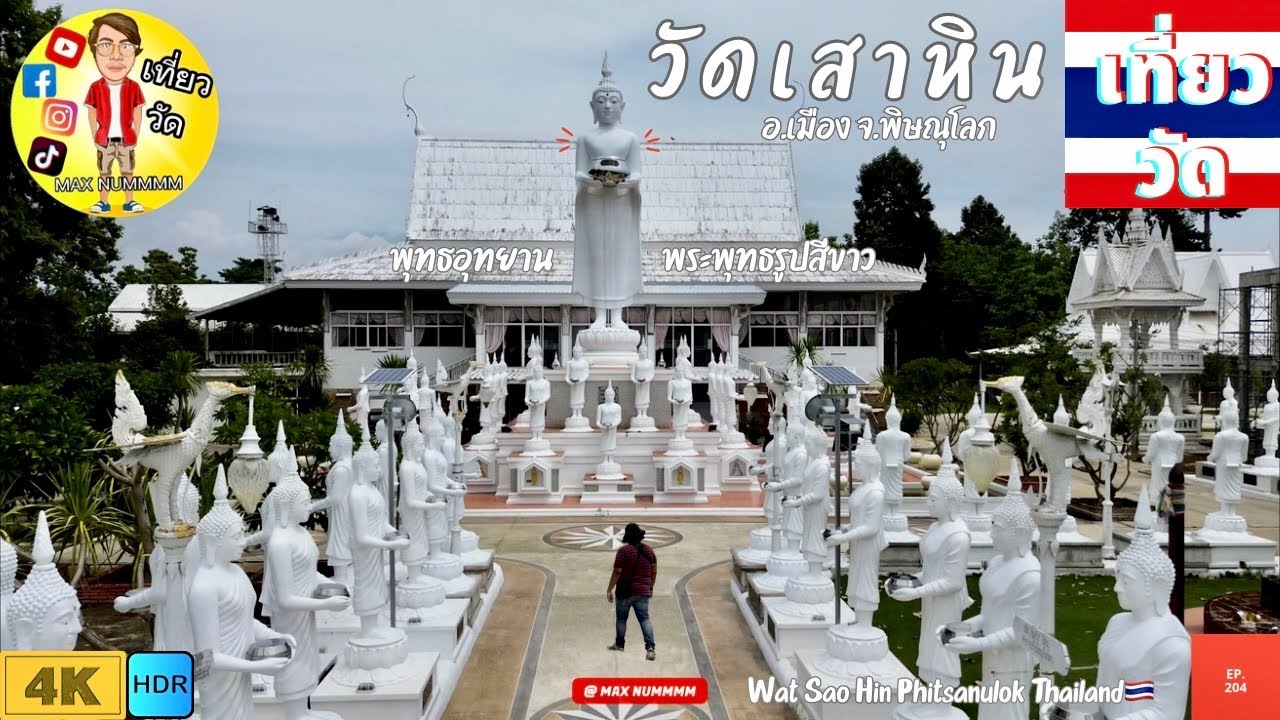
 Click to Access the Navigation Map GPS
Wat Sao Hin Map
Recommend

 Art, Culture and Heritage
 Historical Sites and Monuments(1)
 Landmarks and Memorials(2)
 Art, Craft Centres, Tradition(3)
 Museums(3)
 Educational Places
 Educational Gardens, Farm(1)
Temple(29)
Educational Gardens, Farm(1)
Temple(29)
 Mosque(1)
 Other Sacred Sites(3)
 Research and Development
 Royal Project(1)
 Suburban Living
 Village, Community(1)
 Nature and Wildlife
 National Parks and Marine Reserves(7)
 Mountain (Doi)(4)
 Dam, Reservoir, Lake(5)
 Waterfalls(19)
 Caves(3)
 River, Canal(9)
 Other natural attractions(1)
 Entertainment and Agricultural
 Farms, Parks and Ecotourism(2)
 Outdoor and Adventure Activities(1)


