
lovethailand home >North Travel Attractions >Phitsanulok Travel Attractions >Bang Krathum >Khok Salut > Wat Kamphaeng Mani Folk Museum
TL;DR: Wat Kamphaeng Mani Folk Museum is located at Wat Kamphaeng Mani, Khok Salut Subdistrict, Bang Krathum District, Phitsanulok Province, open Please Contact The Temple Before Visiting, hours Please Contact The Temple Before Visiting.

Wat Kamphaeng Mani Folk Museum
Open Days: Please Contact The Temple Before Visiting
Opening Hours: Please Contact The Temple Before Visiting
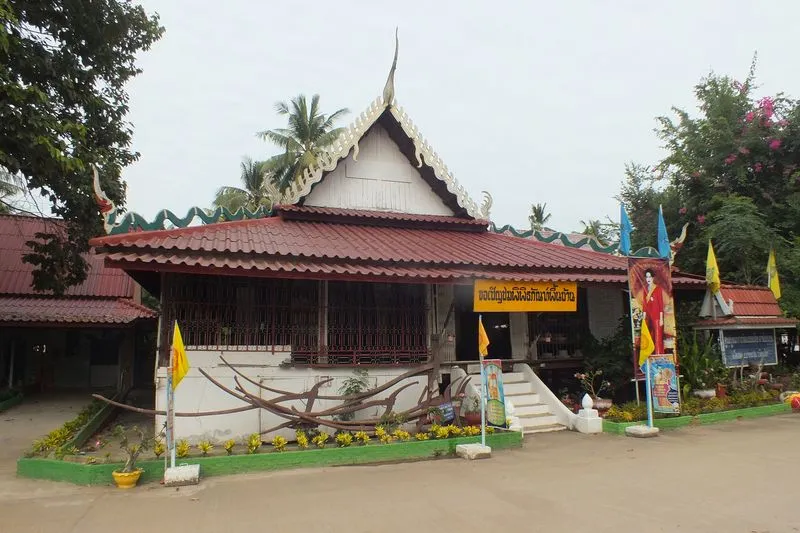
Wat Kamphaeng Mani Folk Museum in Phitsanulok Province is a community-based cultural learning site located inside Wat Kamphaeng Mani, 28 Moo 6, Khok Salut Subdistrict, Bang Krathum District, Phitsanulok Province. The museum preserves everyday objects, local tools, household items, basketry, pottery, kitchenware, farming tools, and other folk objects that reflect the traditional way of life of the Khok Salut community. It is not a large commercial museum, but a meaningful local museum where visitors can understand Thai rural life through real objects donated and preserved by the community.
In simple terms, Wat Kamphaeng Mani Folk Museum tells the story of local people through ordinary things. The objects displayed here are valuable not because they are rare antiques, but because they once belonged to real homes, kitchens, fields, farms, and working lives. Visitors can see how people in Khok Salut lived, cooked, farmed, worked, used natural materials, and created practical tools before modern equipment became common. The museum is therefore a quiet but important place for understanding Thai folk wisdom at the community level.
The museum originated from the initiative of Phra Khru Phasukitwichan, a former abbot of Wat Kamphaeng Mani, who recognized the cultural value of folk objects that were gradually disappearing from daily life. As society changed and modern tools replaced traditional ones, many old objects were at risk of being forgotten. Collecting them inside the temple was a way to preserve the memory of the community and turn simple household items into cultural evidence for future generations.
The museum was later supported through the Thai Culture Sai Yai Chumchon project, with cooperation among the temple, local people, and cultural authorities in Phitsanulok. This cooperation shows that cultural preservation cannot be done by one party alone. A temple can serve as a spiritual and social center, the community can provide memory and objects, and public cultural agencies can help support preservation and learning. Together, they created a local museum that belongs to the people of Khok Salut.
One of the most important features of Wat Kamphaeng Mani Folk Museum is community participation. Many objects in the museum were donated by local residents. This means that each object has a relationship with real family histories and everyday experience. Some were used for earning a living, some were used in kitchens, some were used in agriculture, some were connected with belief or ritual, and some represent the skills of people who lived in earlier generations.
Walking through the museum feels like walking through the old life of the Khok Salut community. Visitors can see kitchen tools that reflect traditional cooking, basketry made from bamboo or local natural materials, pottery used for storing water or preparing food, and livelihood tools connected with farming, fishing, and household work. Together, these objects form a material portrait of local life in the past.
Basketry is one of the clearest examples of Thai folk wisdom displayed in the museum. A woven object is not just a container. It is the result of knowledge about materials, strength, weight, flexibility, ventilation, and practical function. Baskets, trays, fish traps, winnowing tools, and other woven objects show how villagers transformed bamboo, rattan, and other natural materials into useful objects without relying on modern machines.
Livelihood tools in the museum help visitors understand the structure of a rural agricultural community. People in Khok Salut and Bang Krathum lived closely with farms, water sources, seasons, and local resources. Some tools were used for planting, harvesting, fishing, processing crops, repairing household items, or making other tools. These objects reveal that work and life were closely connected, from food production and family care to mutual support within the village.
Kitchenware and household items bring visitors closer to daily life. Traditional Thai kitchens did not rely on electric appliances as they do today. Cooking required firewood, clay pots, knives, mortars, trays, baskets, and many handmade tools. These objects show that cooking in the past involved time, labor, skill, and family participation. Food was not only a meal; it was part of the rhythm of home life and community culture.
Pottery in the museum reflects knowledge of clay, water, fire, and vessel function. Some clay vessels were used for storing water, some for cooking, and some for keeping food or household materials. Making pottery required knowledge of clay quality, thickness, shape, firing, and use. These objects are therefore both household tools and evidence of local craftsmanship.
The museum is also important because it connects the temple with the community. Wat Kamphaeng Mani is not only a place for Buddhist rituals; it also functions as a center of learning and shared memory. Locating the museum inside the temple gives local heritage a respected and familiar home. The temple becomes both a place of faith and a place of cultural preservation.
The role of monks and abbots in this museum is significant. In rural Thai communities, monks often serve as social leaders who are close to local people. When Phra Khru Phasukitwichan initiated the museum, he showed that preserving culture is part of community development and moral education. Today, Wat Kamphaeng Mani continues to be an important local temple, with Phra Athikan Mana Thanappalo serving as the current abbot and caretaker of the temple area.
Wat Kamphaeng Mani also serves as a spiritual center for the Khok Salut community and supports learning, Buddhist practice, and local activities. The folk museum is part of this broader role. It shows that a temple can support both spiritual life and cultural knowledge. In this sense, the museum is not separate from the temple; it extends the temple’s role into education and community memory.
For students, teachers, researchers, and cultural travelers, the museum is useful as a field learning site. The objects displayed here can support studies in local history, anthropology, agriculture, craft, material culture, and social change. A simple basket, cooking pot, or farming tool can explain relationships among economy, belief, environment, and village life more clearly than abstract description alone.
For general visitors, the museum offers a different experience from major temples or historical monuments in Phitsanulok city. It introduces culture at the village level. Visitors can experience a rural temple atmosphere and learn that cultural heritage is not found only in grand buildings or expensive artifacts. It is also found in household objects, farming tools, and the ordinary things people used to build their lives.
The value of the museum lies in helping younger generations see that old objects are not useless. When placed in the right context, a tool or household item can become a powerful learning resource. One object may tell the story of a family occupation, a farming season, a woman’s work in the kitchen, or the relationship between people, rivers, fields, and forests.
Because many objects came from local people, the museum is truly a community museum. Villagers are not only viewers; they are contributors to the museum’s content. Their donated objects become part of collective memory. This creates pride and strengthens the relationship among the community, the temple, and local heritage.
Visitors should approach the museum respectfully because it is located inside a temple and contains objects of local memory. Do not touch, move, or test the objects without permission. Dress modestly, keep the area calm, and follow guidance from the temple or caretakers. Groups should contact the temple before visiting so that the visit can be arranged properly.
Getting There is most convenient by private car. Travelers can drive from Phitsanulok city toward Bang Krathum District, then continue to Khok Salut Subdistrict. Wat Kamphaeng Mani is located at 28 Moo 6. Because the museum asks visitors to contact in advance, travelers should call before arrival to confirm the appropriate time and whether the display area is ready for visitors.
Nearby areas in Bang Krathum can be included in a cultural route. Visitors may combine the museum with local temples such as Wat Khok Salut, Wat Bang Krathum, and Wat Chulamani. Those who wish to continue into Phitsanulok city can visit Sgt. Maj. Thawee Folk Museum, Wat Phra Si Rattana Mahathat Woramahawihan, Wat Nang Phaya, Chan Palace, and the Nan River old town area.
This museum is best suited for travelers who enjoy meaningful and slow cultural experiences. Its strength lies not in spectacle but in stories. Visitors should take time to observe materials, shapes, signs of use, and the function of each object. Slow observation reveals the wisdom hidden in simple things.
For foreign visitors, Wat Kamphaeng Mani Folk Museum helps explain Thai culture through everyday life. Thai temples are not only places of worship; they can also be centers of community learning. The folk objects displayed here show how rural Thai people lived with nature, used local materials, worked for a living, and created tools with practical intelligence. Even without deep knowledge of Thai language, visitors can understand much through the form and function of the objects.
From a conservation perspective, this museum is a strong example of simple but meaningful cultural preservation. It began by recognizing the value of objects already present in the community. Folk heritage can disappear more easily than monuments or official records because it often exists in homes and daily life. Without local preservation, many ordinary objects could vanish without leaving evidence for future study.
Wat Kamphaeng Mani Folk Museum is therefore a learning center, a cultural attraction, and a symbol of cooperation among temple, community, and cultural agencies. It shows that preservation does not always require a large building or a major budget. It can begin with the belief that the everyday objects of ancestors are worth saving and with the willingness of local people to tell their own story.
In summary, Wat Kamphaeng Mani Folk Museum in Phitsanulok Province is a valuable destination for visitors interested in Thai folk life, local wisdom, community history, and cultural tourism. The museum displays livelihood tools, kitchenware, basketry, pottery, household items, and objects that reflect the old way of life of Khok Salut people. It originated from the initiative of Phra Khru Phasukitwichan and the participation of the community. Today, it remains an important cultural learning space inside Wat Kamphaeng Mani, quietly preserving local memory for future generations.
| Name | Wat Kamphaeng Mani Folk Museum |
| Location | Wat Kamphaeng Mani, Khok Salut Subdistrict, Bang Krathum District, Phitsanulok Province |
| Address | 28 Moo 6, Khok Salut Subdistrict, Bang Krathum District, Phitsanulok Province 65110 |
| Highlights | A community folk museum inside a temple, displaying livelihood tools, kitchenware, basketry, pottery, household objects, and items reflecting the former way of life of Khok Salut villagers |
| History / Importance | Initiated by Phra Khru Phasukitwichan, former abbot of Wat Kamphaeng Mani, and supported through the Thai Culture Sai Yai Chumchon project to preserve community wisdom and local heritage |
| Distinctive Features | A community-participation museum where many display objects were donated by local residents and connected with real village life |
| Open Days | Please Contact The Temple Before Visiting |
| Opening Hours | Please Contact The Temple Before Visiting |
| Admission Fee | Free Admission |
| Travel Information | Travel from Phitsanulok city to Bang Krathum District, then continue to Khok Salut Subdistrict. Private car is the most convenient option, and visitors should contact the temple before arrival. |
| Current Status | A temple-based folk museum and cultural learning site of Khok Salut community, Bang Krathum District, Phitsanulok Province |
| Facilities | Temple grounds, folk object display area, community learning area, Buddhist activity spaces, and basic services in the surrounding community |
| Main Areas / Zones | Livelihood Tools Display Area, Kitchenware Area, Basketry Area, Pottery Area, Folk Object Display Area, Wat Kamphaeng Mani Temple Grounds, And Community Culture Learning Area |
| Abbot / Caretaker | Phra Athikan Mana Thanappalo, Abbot of Wat Kamphaeng Mani |
| Main Contact Number | 063-403-8165 |
| Official Website / Official Page | Wat Kamphaeng Mani, Khok Salut Subdistrict, Bang Krathum District, Phitsanulok Province |
| Nearby Tourist Attractions | 1. Wat Khok Salut, about 3 km 2. Wat Bang Krathum, about 8 km 3. Wat Chulamani, about 25 km 4. Sgt. Maj. Thawee Folk Museum, about 32 km 5. Wat Phra Si Rattana Mahathat Woramahawihan, about 35 km |
| Nearby Restaurants | 1. Local Restaurants In Khok Salut Community, about 2 km 2. Krua Na Nin, Bang Krathum District, about 12 km, Tel. 081-675-5519, 081-575-5699 3. Ban Rai Phuwasin 159, Bang Krathum District, about 15 km, Tel. 080-608-7197 4. BAX BIRD CAFE’, Bang Krathum District, about 15 km, Tel. 098-839-6322 5. Restaurants In Bang Krathum Town, about 10 km |
| Nearby Accommodations | 1. Accommodations In Bang Krathum Town, about 10 km 2. Iron Resort & Hotel Phitsanulok, about 35 km, Tel. 099-369-2226, 081-888-1314 3. B2 Phitsanulok Premier Hotel, about 36 km, Tel. 055-000-566 4. The Harmony Ville Phitsanulok, about 38 km, Tel. 055-241-188 5. Topland Hotel & Convention Centre, about 38 km, Tel. 055-247-801 |
Frequently Asked Questions (FAQ)
Q: Where is Wat Kamphaeng Mani Folk Museum located?
A: It is located inside Wat Kamphaeng Mani, 28 Moo 6, Khok Salut Subdistrict, Bang Krathum District, Phitsanulok Province.
Q: What can visitors see inside the museum?
A: Visitors can see livelihood tools, kitchenware, basketry, pottery, household objects, and folk items that reflect the traditional way of life of Khok Salut villagers.
Q: Who initiated Wat Kamphaeng Mani Folk Museum?
A: The museum was initiated by Phra Khru Phasukitwichan, a former abbot of Wat Kamphaeng Mani, who recognized the value of folk objects and local wisdom.
Q: Who is the current caretaker of Wat Kamphaeng Mani?
A: The current abbot and caretaker of Wat Kamphaeng Mani is Phra Athikan Mana Thanappalo.
Q: Is there an admission fee?
A: No. Admission is free, but visitors should contact the temple in advance before visiting.
Q: Who should visit this museum?
A: It is suitable for students, teachers, researchers, cultural travelers, and anyone interested in Thai folk life, community history, local wisdom, and village-based museums.
Q: How can travelers get to Wat Kamphaeng Mani Folk Museum?
A: Travelers can drive from Phitsanulok city to Bang Krathum District, then continue to Khok Salut Subdistrict. Private car is the most convenient option.
Q: What nearby attractions can be visited on the same trip?
A: Visitors can combine the trip with Wat Khok Salut, Wat Bang Krathum, Wat Chulamani, Sgt. Maj. Thawee Folk Museum, and Wat Phra Si Rattana Mahathat Woramahawihan.
 Category: ●Art, Culture and Heritage
 Group: ●Museums
Last Update : 4 MonthAgo
 Last Update : 4 MonthAgo
 Click to Access the Navigation Map GPS
Wat Kamphaeng Mani Folk Museum Map
Recommend

 Historical Sites and Monuments(1)
 Landmarks and Memorials(2)
 Art, Craft Centres, Tradition(3)
Museums(3)
Art, Craft Centres, Tradition(3)
Museums(3)
 Educational Places
 Educational Gardens, Farm(1)
 Places of Worship
 Temple(29)
 Mosque(1)
 Other Sacred Sites(3)
 Research and Development
 Royal Project(1)
 Suburban Living
 Village, Community(1)
 Nature and Wildlife
 National Parks and Marine Reserves(7)
 Mountain (Doi)(4)
 Dam, Reservoir, Lake(5)
 Waterfalls(19)
 Caves(3)
 River, Canal(9)
 Other natural attractions(1)
 Entertainment and Agricultural
 Farms, Parks and Ecotourism(2)
 Outdoor and Adventure Activities(1)


