
lovethailand home >North Travel Attractions >Nakhon Sawan Travel Attractions >Muang Nakhon Sawan >Pak Nam Pho > Wat Khiriwong
TL;DR: Wat Khiriwong is located at Khao Kob, Pak Nam Pho Subdistrict, Mueang Nakhon Sawan, Thailand, open Open daily, hours 07:00–18:00. Highlights include Phra Chulamani Chedi, panoramic city view, sacred Buddha images.
Wat Khiriwong
Open Days: Open daily
Opening Hours: 07:00–18:00
Wat Kiriwong is one of the most prominent temples in Nakhon Sawan, located on Khao Kob (Dao Dueng Hill) in the heart of the city. The temple is widely recognized not only for its religious importance but also for its panoramic viewpoint and the iconic golden pagoda that has become a visual symbol of Nakhon Sawan. It combines history, architecture, spiritual practice, and scenic beauty in a single destination, making it one of the must-visit attractions in the province.
The origins of Wat Kiriwong date back to the late Sukhothai period, approximately 600 years ago. Originally, the area was an abandoned temple hidden within a forested hill, with only remnants such as old bricks, boundary stones, and ancient Buddha images left behind. In 1961, a wandering monk rediscovered the site during a pilgrimage. This marked the beginning of the temple’s restoration, gradually transforming it from a forgotten ruin into an active Buddhist temple and meditation center that continues to serve the local community today.
The temple’s revival reflects a broader pattern in Thai religious history, where abandoned sacred sites are rediscovered and restored through the efforts of monks and local communities. Wat Kiriwong stands as a clear example of how spiritual continuity is preserved across centuries. Visitors walking through the temple grounds are not simply exploring a tourist site but engaging with a place that embodies layers of historical memory and ongoing religious practice.
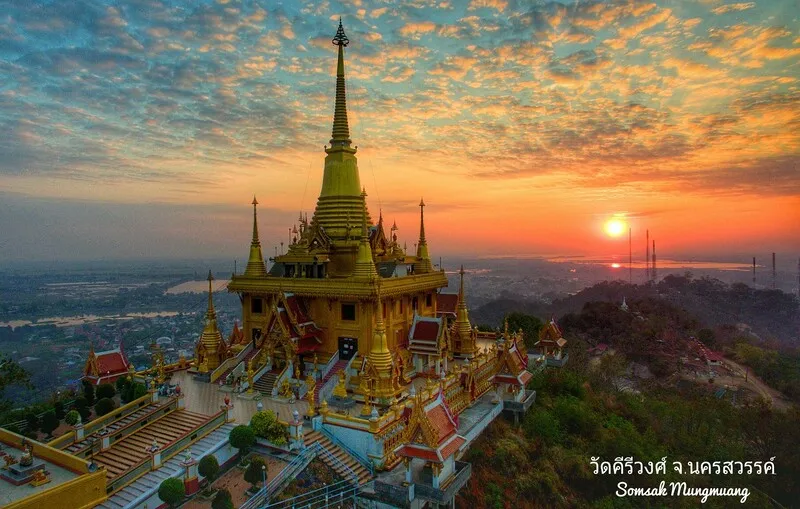
The most significant landmark of Wat Kiriwong is the Phra Chulamani Chedi, a large golden pagoda situated at the highest point of the hill. Visible from many parts of the city, the chedi acts as both a religious symbol and a geographical landmark. The name and concept of the chedi were given by Somdet Phra Phutthachan (Aj Asako) of Wat Mahathat in Bangkok, who advised that a sacred pagoda be constructed on the hilltop to serve as the spiritual focal point of the temple.
The architecture of the chedi reflects traditional Thai aesthetics combined with symbolic religious meaning. Its golden exterior represents purity and enlightenment, while its elevated position signifies the spiritual ascent toward higher states of consciousness. The structure is designed in multiple levels, allowing visitors to gradually ascend both physically and symbolically as they move upward through the interior.
One of the most important areas inside the chedi is the fourth floor, where four highly revered Buddha images are enshrined. These include replicas of Phra Phuttha Maha Mani Rattana Patimakon (the Emerald Buddha), Phra Phuttha Chinnarat, Luang Pho Sothon, and Luang Pho Wat Rai Khing. These representations allow visitors to pay respect to some of Thailand’s most sacred Buddha images in one location, making the site especially significant for devotional purposes.
In addition to the sacred statues, the interior dome of the chedi is decorated with detailed mural paintings depicting episodes from the life of the Buddha. These murals serve both artistic and educational functions, helping visitors understand key moments in Buddhist teachings through visual storytelling. The combination of sacred imagery and architectural design enhances the spiritual atmosphere inside the chedi.
The temple complex includes several other important structures, such as the ordination hall, Luang Pho To Viharn, Sala Phutthanuphap, and meditation areas. Each of these spaces plays a role in the religious life of the temple. The ordination hall is used for formal monastic ceremonies, while the viharns and salas provide areas for worship, chanting, and community gatherings. The meditation zones, in particular, emphasize the temple’s function as a center for mindfulness and spiritual practice.
Wat Kiriwong is officially recognized as a meditation center for Nakhon Sawan Province. Its elevated and relatively quiet location makes it ideal for practicing meditation and mindfulness. Visitors who come here often seek not only sightseeing experiences but also a sense of calm and reflection. The environment supports both short visits and longer periods of spiritual retreat.
Another key attraction of the temple is its panoramic viewpoint. From the hilltop, visitors can enjoy a wide-angle view of Nakhon Sawan city, including residential areas, roads, rivers, and surrounding landscapes. The viewpoint is particularly popular during sunrise and sunset, when natural lighting enhances the scenery. On clear days, visibility extends far beyond the city center, offering a comprehensive view of the region’s geography.
From a geographical perspective, Nakhon Sawan is known as the origin point of the Chao Phraya River, where major rivers from the north converge. Viewing the landscape from Wat Kiriwong helps visitors understand the strategic importance of the area in terms of transportation, settlement, and cultural exchange. The temple thus provides not only spiritual insight but also geographical context.
The temple is also an excellent location for photography. The golden chedi contrasts beautifully with the sky, especially during golden hour. Photographers often capture images of the pagoda against sunrise or sunset backdrops, as well as panoramic cityscapes. The variety of visual elements—architecture, landscape, and natural light—makes the site suitable for both amateur and professional photography.
Despite its accessibility and popularity, visitors are expected to maintain respectful behavior. As an active religious site, appropriate dress and conduct are required. Quietness should be observed in meditation areas, and visitors should avoid actions that may disturb religious activities. Maintaining cleanliness and respecting temple rules help preserve the integrity of the site.
Getting There is straightforward. From Nakhon Sawan city center, visitors can drive toward Khao Kob via Matulee Road and Dao Dueng Road. The road leading up the hill is well-maintained and accessible by standard vehicles. Parking areas are available near the temple. For those without private transportation, local taxis or shared transport options from the city can be used.
| Name | Wat Kiriwong |
| Location | Khao Kob, Pak Nam Pho Subdistrict, Mueang Nakhon Sawan, Thailand |
| Address | Pak Nam Pho, Mueang Nakhon Sawan, Nakhon Sawan 60000, Thailand |
| Highlights | Phra Chulamani Chedi, panoramic city view, sacred Buddha images |
| History | Late Sukhothai period temple, rediscovered and restored in 1961 |
| Distinctive Features | Hilltop temple with panoramic views and a golden pagoda |
| Abbot | Phra Thep Watcharachariyachan |
| Contact | +66 56 222009, +66 56 226199, +66 94 9219065 |
| Nearby Tourist Attractions | 1. Pasan Landmark – 5 km 2. Sawan Park – 4 km 3. Bueng Boraphet – 12 km 4. Chao Pho Thepharak Shrine – 3 km 5. Wat Nakhon Sawan – 3 km |
| Nearby Restaurants | 1. Kung Phao 2 Pee Nong – 5 km Tel. +66 56 222222 2. Lung Krai Kitchen – 4 km 3. River Raft Restaurant – 6 km 4. Cafe Amazon – 3 km 5. Boat Noodles – 4 km |
| Nearby Accommodations | 1. Bonito Chinos Hotel – 4 km Tel. +66 56 222277 2. 42C The Chic Hotel – 5 km 3. Grand Hill Resort – 6 km 4. P.A. Place – 4 km 5. Wangpla Villa – 7 km |
Frequently Asked Questions (FAQ)
Q: Where is Wat Kiriwong located?
A: It is located on Khao Kob hill in Mueang Nakhon Sawan.
Q: What is the main highlight?
A: The golden Phra Chulamani Chedi and panoramic city views.
Q: Can visitors drive up the hill?
A: Yes, the road is accessible by car up to the temple area.
Q: Is there an entrance fee?
A: No, admission is free.
Q: What is the best time to visit?
A: Early morning and evening for cooler weather and better views.
Tel : 056222009
 Tel : 056222009
 Category: ●Places of Worship
 Group: ●Temple
Last Update : 5 MonthAgo
 Last Update : 5 MonthAgo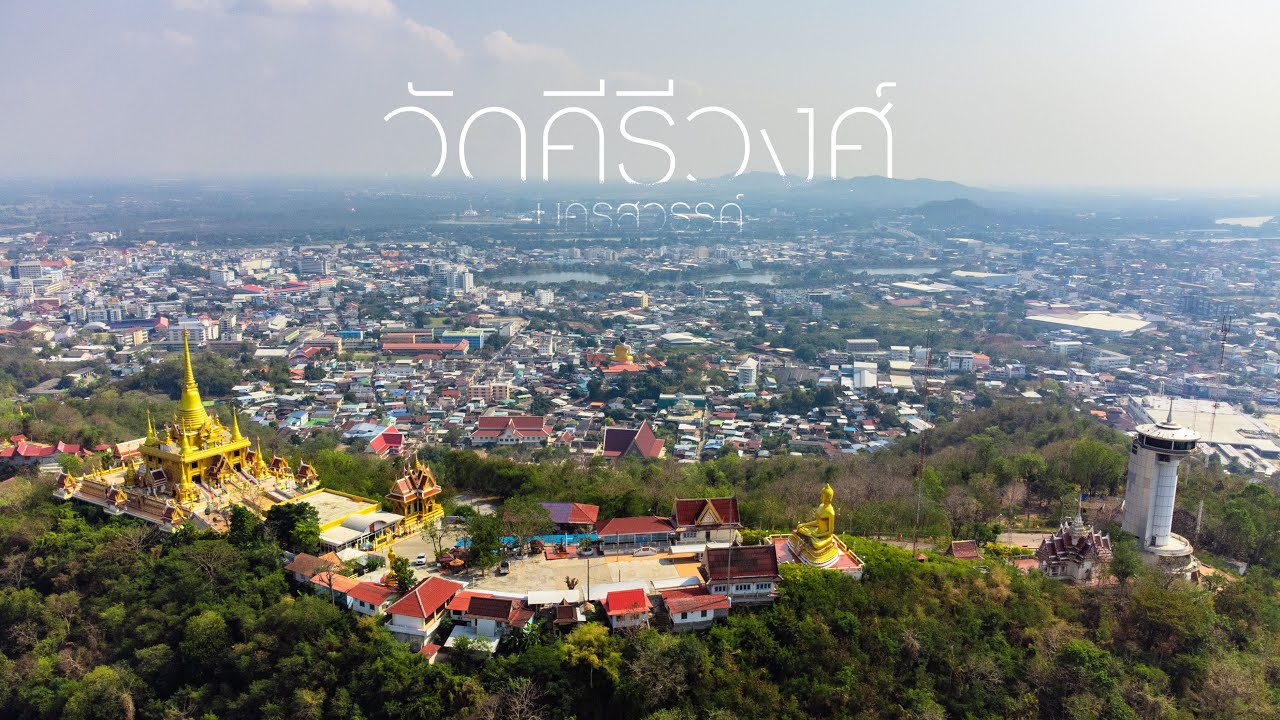
 Click to Access the Navigation Map GPS
Wat Khiriwong Map
Recommend

 Art, Culture and Heritage
 Historical Sites and Monuments(3)
 Landmarks and Memorials(4)
 Art, Craft Centres, Tradition(9)
 Museums(3)
 Educational Places
 Museum for Study(1)
Temple(34)
Museum for Study(1)
Temple(34)
 Other Sacred Sites(4)
 Research and Development
 Royal Project(1)
 Suburban Living
 Village, Community(4)
 Local Market(2)
 Floating Market(1)
 Nature and Wildlife
 National Parks and Marine Reserves(3)
 Mountain (Doi)(3)
 Dam, Reservoir, Lake(6)
 Waterfalls(3)
 Caves(8)
 River, Canal(6)
 Other natural attractions(3)
 Entertainment and Agricultural
 Zoos and Aquariums(2)
 Animal camps and shows(1)
 Farms, Parks and Ecotourism(6)
 Accommodation
 Hotel(1)
 Travel Articles, Recipes
 Travel Review, Food Review(3)


