
TL;DR: Wat Bueng Lat Sawai is located at Village 10, Bang Phasi, Bang Len, Nakhon Pathom 73130, open Daily, hours 07:00 – 18:00.
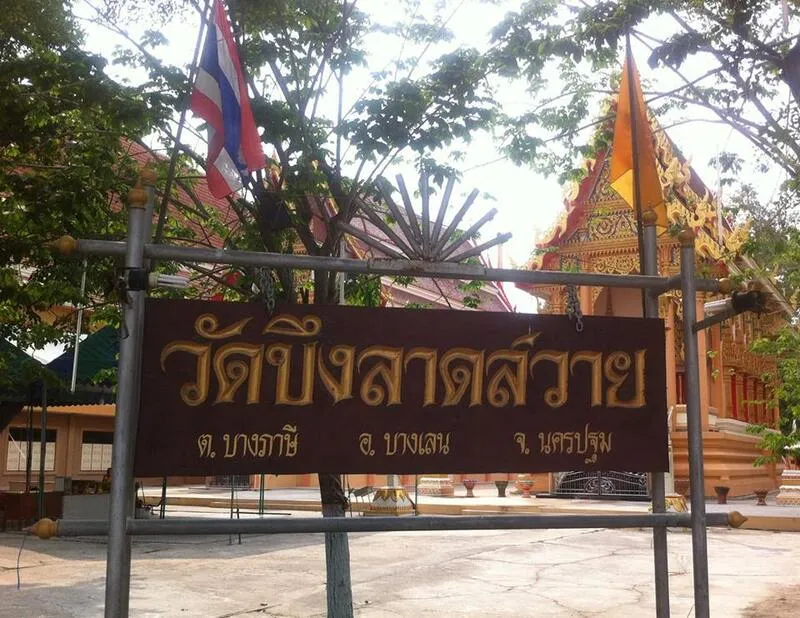
Wat Bueng Lat Sawai
Open Days: Daily
Opening Hours: 07:00 – 18:00
Wat Bueng Lat Sawai, located in Bang Phasi Subdistrict, Bang Len District, Nakhon Pathom Province, is an ancient temple of the Mon community that continues to thrive today. It is not only a place where monks reside and locals come to make merit, but also a living cultural space that preserves the roots, memories, and traditions of the community. The temple is one of several established by the Mon community of Krathum Muet and continues to clearly reflect Mon identity through rituals, language, beliefs, and traditions passed down through generations.
What makes Wat Bueng Lat Sawai particularly compelling is that it is more than just a stop for merit-making or a quick visit. It offers visitors a tangible understanding of the deep relationship between the temple and the surrounding community. The temple grounds are closely connected to local life, especially among Mon communities in villages 9 and 10, where cultural identity is still carefully preserved. As soon as you enter, you can sense that this is more than a typical temple; the atmosphere reflects an old community, simplicity, and a continuity of local memory in every corner.
Historically, the temple was officially established on April 5, 1914, and later received royal boundary consecration (Visungkhamsima) on November 20, 1924. This confirms its long-standing status and continuity in the Bang Phasi area for over a century. Its age makes the temple not only a religious site but also an important piece of evidence reflecting the settlement and development of the Mon community in Bang Len.
Looking deeper into the context of the Krathum Muet Mon community, Wat Bueng Lat Sawai holds significance beyond being just an old temple in Nakhon Pathom. It is one of seven temples built by this Mon community following their expansion along Khlong Mom Chaem. The area was once a vast lowland where Mon settlers migrated, cultivated land, and built homes. As the community grew, the temple naturally became its spiritual and cultural center.
One of the most distinctive features reflecting the Mon identity of Wat Bueng Lat Sawai is the Hong Pole (Sao Hong), a symbolic structure found in Mon temples. It immediately signals to visitors that this temple is rooted in a cultural tradition different from typical central Thai temples. The Hong Pole is not merely decorative; it represents identity, memory, and the enduring presence of Mon heritage within a sacred space.
Another remarkable aspect of the temple is its strong preservation of Mon traditions. Mon language is still used in chanting and daily monastic practices by monks and novices. This detail is significant because it shows that Mon culture here is not preserved only for ceremonial display, but remains embedded in everyday religious life. This is why Wat Bueng Lat Sawai serves not only as a religious site but also as a valuable cultural learning destination.
Among the temple’s most important traditions is the Mon-style Songkran Festival (Thai-Raman Songkran), which maintains its traditional form. Unlike modern water festivals focused on entertainment, this celebration emphasizes rituals, respect, and community participation. The central activity is the ceremonial bathing of Buddha images, reflecting a deep connection between Buddhism and the community.
The uniqueness of Songkran here goes beyond the bathing ritual. It includes various cultural elements such as Mon-style fish parades for release into rivers to bring good fortune, traditional Mon performances (Ta-yam), water-pouring ceremonies to seek blessings from elders, and traditional Saba games. These elements make Songkran at Wat Bueng Lat Sawai not just an annual festival, but a living platform where cultural identity is actively passed from one generation to the next.
Another rare and culturally significant tradition still practiced here is the Flower Alms Offering Ceremony. Wat Bueng Lat Sawai is recognized as one of the places in Nakhon Pathom where this tradition continues. The ritual involves offering flowers as a form of devotion to the Triple Gem, representing faith, purity, beauty, and intention. It differs from typical alms-giving, which usually involves food.
The charm of this ceremony lies in its simplicity and spiritual depth. It is not grand in scale but focuses on tranquility, faith, and community cooperation. Those who witness it often experience a subtle and refined beauty. This tradition elevates the temple beyond a local religious site, making it a rare cultural heritage location.
In addition, the temple is associated with the Honey Alms Offering Tradition, another uncommon practice today. During the Thai Sart Festival, Buddhists offer honey to monks in a simple yet meaningful ritual. The offering carries symbolic value and practical use in monastic life, further reinforcing the temple’s role in preserving traditional merit-making practices.
Today, Wat Bueng Lat Sawai maintains a calm, simple, and unhurried atmosphere. Its appeal does not lie in grandeur or modern architecture, but in the authentic feeling of an old temple deeply rooted in community life. Visitors will find peaceful surroundings, shaded greenery, and a close connection with the local community, offering a distinctly different experience from mainstream temple tourism.
For those interested in cultural tourism, this temple offers a deeper experience than a simple visit. It invites visitors to explore the “world of the Mon community” through small but meaningful details—rituals, language, living traditions, and historical narratives. It acts as a gateway to understanding the cultural diversity of Nakhon Pathom.
Currently, the temple continues to serve as an active community center. The abbot is Phra Sumet Muni (Lampuan Thammatharo, Pali Level 7). Ongoing leadership ensures that traditions such as Mon Songkran, flower alms, and honey alms continue to be practiced. This continuity makes the temple not just a relic of the past, but a living cultural space.
Getting There Wat Bueng Lat Sawai is best accessed by private car. It is located in Village 10, Bang Phasi Subdistrict, Bang Len District, Nakhon Pathom Province, and is easily reachable within the local community. Visitors from Bangkok can plan a one-day trip in the Bang Len area, which includes markets, community attractions, and agricultural tourism spots. The highlight of visiting this temple is not speed, but taking time to explore and absorb the local atmosphere.
Visitors are advised to dress respectfully and behave appropriately, as this temple remains an active spiritual and community center. Visiting during festival periods provides the richest cultural experience, but even on ordinary days, the temple offers value through its peaceful environment and enduring traditions.
Overall, Wat Bueng Lat Sawai is a culturally significant temple representing the history, identity, and traditions of the Mon community in Nakhon Pathom. Its importance lies not in fame, but in its ability to preserve authentic traditions such as Mon Songkran, flower alms, honey alms, and Mon-language chanting. It is an ideal destination for travelers seeking a deeper cultural understanding of Thailand beyond typical tourist attractions.
| Place Name | Wat Bueng Lat Sawai |
| Location Summary | An ancient Mon community temple in Bang Len District, Nakhon Pathom, preserving traditional Mon culture and rituals |
| Highlights | 1) Over 100-year-old Mon temple 2) Iconic Hong Pole 3) Mon-language chanting 4) Mon-style Songkran 5) Flower and honey alms traditions |
| Historical Period | Established in 1914, royal consecration in 1924 |
| Abbot | Phra Sumet Muni (Lampuan Thammatharo, Pali Level 7) |
| Address | Village 10, Bang Phasi, Bang Len, Nakhon Pathom 73130 |
| Coordinates | 14.053117, 100.2542953 |
| Getting There | Best accessed by private car from Bangkok, suitable for a one-day trip |
| Open Days | Daily |
| Opening Hours | 07:00 – 18:00 |
| Nearby Attractions | 1) Red Lotus Floating Market – approx. 10 km 2) Tha Na Market – approx. 12 km |
| Nearby Restaurants | 1) Krua Lung Nong Bang Len – approx. 8 km Tel. +66 84 387 0565 2) Krua Pu Chai Garden Restaurant & Café – approx. 9 km Tel. +66 61 638 9936 |
| Nearby Accommodations | 1) Mae Nam Resort – approx. 12 km Tel. +66 34 900 100 2) Raknatee Country Home – approx. 15 km Tel. +66 81 616 3646 |
Frequently Asked Questions (FAQ)
Q: Where is Wat Bueng Lat Sawai located?
A: It is located in Bang Phasi Subdistrict, Bang Len District, Nakhon Pathom Province.
Q: What makes this temple unique?
A: It is a Mon community temple with preserved traditions, including Mon-language rituals and cultural festivals.
Q: What festivals are held here?
A: Major traditions include Mon-style Songkran, flower alms offering, and honey alms offering.
Q: Is the temple open every day?
A: Yes, it is open daily from 07:00 to 18:00.
Q: What type of travel is this suitable for?
A: It is ideal for cultural tourism, merit-making, and exploring Mon community heritage near Bangkok.
 Category: ●Places of Worship
 Group: ●Temple
 Last Update : 1 WeekAgo
 Click to Access the Navigation Map GPS
 Art, Culture and Heritage
 Historical Sites and Monuments(
 Landmarks and Memorials(
 Royal Palace(
 Art, Craft Centres, Tradition(
 Museums(
 Art Gallery(
 Educational Places
 Educational Gardens, Farm(
 University
 Other religious and spiritural sites(
 Research and Development
 Royal Project(
 Suburban Living
 Village, Community(
 Local Market(
 Floating Market(
 Nature and Wildlife
 River, Canal(
 Other natural attractions(
 Entertainment and Agricultural
 Animal camps and shows(
 Stadium(
 Farm, Parks, Gardens and Ecotourism(
 Theater(
 Outdoor and Adventure Activities(
 Spas and Wellness
 Spas and Wellness(


