
lovethailand home >North Travel Attractions >Chiang Rai Travel Attractions >Muang Chiang Rai >Wiang > King Mengrai the Great Monument
TL;DR: King Mengrai the Great Monument is located at Pho Khun Mengrai Five-Way Intersection, Wiang Subdistrict, Mueang Chiang Rai District, Chiang Rai, open Daily, hours Open 24 Hours.
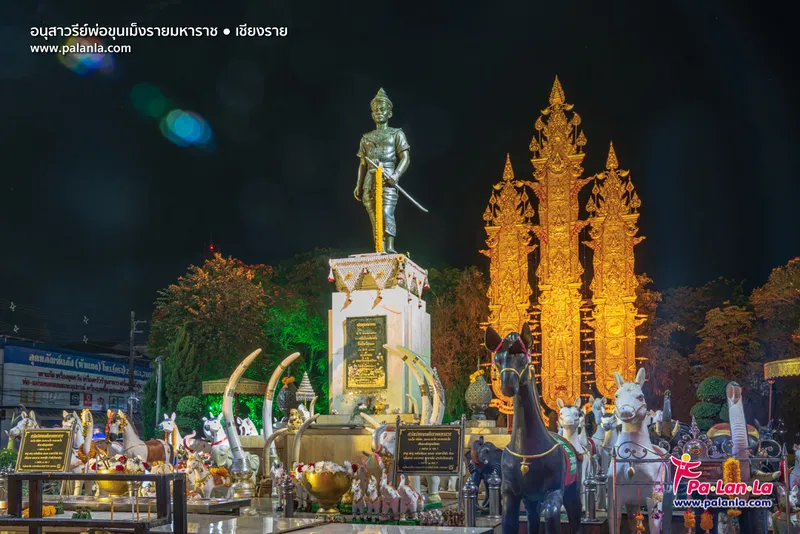
King Mengrai the Great Monument
Open Days: Daily
Opening Hours: Open 24 Hours
King Mengrai the Great Monument is one of the most important landmarks in Chiang Rai, located at the well-known Pho Khun Intersection in the heart of the city. Almost everyone entering or moving around central Chiang Rai will pass this area, but for local people the monument is far more than a city landmark or a traffic circle centerpiece. It is a place of respect, remembrance, and civic pride dedicated to the founder of Chiang Rai itself. For many travelers, stopping here is considered an appropriate and meaningful way to begin a visit to the city.
The monument honors King Mengrai, who is remembered as the founder of Chiang Rai and the first ruler of the Mangrai Dynasty. Historical accounts describe him as the 25th king of the Lavachakkaraj line, the son of Phaya Lao Meng and Queen Thep Kham Khai, also known as Ua Ming Chom Mueang. He was born in 1239 CE and later established Chiang Rai in 1262 CE on Doi Thong, building on the foundation of an earlier settlement. He then expanded his power by uniting smaller towns into what became the Lanna Kingdom, laying the groundwork for a northern polity that would continue to shape the region for centuries.
Because of that historical importance, the monument is not simply a statue in a public square. It functions as a symbolic gateway into the history of Chiang Rai. Travelers who want to understand the city beyond its cafés, temples, and modern attractions will find this site especially valuable. It provides an immediate connection to the figure most closely associated with the founding of the city and creates a strong starting point for a heritage-focused walking or driving route through Chiang Rai’s old urban core.
The monument itself presents King Mengrai in full standing form, dressed in royal Lanna attire and placed on a high pedestal with an area for offerings and floral garlands. Although the location is in the middle of a busy intersection, the space around the monument feels noticeably reverent. Residents and visitors regularly stop to pay respect, make offerings, and ask for blessings for safe travel, successful business, or personal good fortune. That constant ritual use gives the site a living spiritual atmosphere rather than the static feel of a purely commemorative monument.
For first-time visitors to Chiang Rai, this is one of the easiest and most meaningful stops in the city. It is open all day, free to visit, and quick to include in almost any itinerary. Some people come in the early morning for a quieter atmosphere, while others prefer to visit in the evening when the lighting adds a more dramatic mood. Either way, the monument is one of the clearest places to feel how strongly Chiang Rai still identifies with King Mengrai as its founding ruler.
Another reason the site matters is that it connects directly to other important historical places in Chiang Rai. One of the most significant is Ku Phaya Mengrai at Wat Doi Ngam Muang. According to official tourism information, this stupa on Doi Ngam Muang enshrines the ashes of King Mengrai. Tradition says that after assigning the throne of Chiang Mai to his son Saen Phu, King Chai Songkhram brought his father’s remains to Chiang Rai and had the reliquary built there. Visiting the monument together with this site adds far more depth to the story of the founder of Chiang Rai.
Another closely related site is Wat Phra Singh Chiang Rai on Thalong Road, near the provincial hall area. This temple once housed the revered Phra Buddha Sihing image before it was later returned to Wat Phra Singh in Chiang Mai. The temple’s history reflects the relationship between Chiang Rai and Chiang Mai during the Lanna period and adds another important layer to understanding the political and religious world shaped by the Mangrai Dynasty. When these places are visited together, the city’s past becomes much easier to visualize.
Seen in that wider context, King Mengrai the Great Monument is not an isolated attraction. It is the symbolic center of a much larger historical landscape. From here, visitors can move to the reliquary site on Doi Ngam Muang, then continue to major temples such as Wat Phra Singh and Wat Phra Kaew, gradually building a more complete picture of Chiang Rai’s foundation and development. This is what makes the monument especially valuable for travelers who want a city visit with real historical structure rather than a series of disconnected stops.
From a practical travel perspective, the monument is extremely convenient. It is easy to reach by private car, local taxi, songthaew, or city transport, and it also fits naturally into central Chiang Rai walking routes if you are staying near the Clock Tower or Night Bazaar area. Even if you only have a short time in the city, it is still worth stopping because the visit can be brief while remaining meaningful. In less than an hour, you can pay respect, take photographs, and continue onward to several major attractions nearby.
The monument is also appealing for photography. In daylight, the details of the royal attire and the formal arrangement of the statue are easy to appreciate. In the evening, the lighting and offerings give the monument a more solemn and atmospheric quality. Because it stands at the center of one of Chiang Rai’s best-known intersections, photographs from the site also capture the feeling of the city’s living urban center in a way that more secluded historical places cannot.
For travelers interested in cultural meaning rather than only visuals, this site offers something more lasting than a typical landmark. It makes local history tangible. Reading about King Mengrai in books is one thing, but standing before the monument while watching local residents continue to honor him in daily life makes it clear that he is still present in Chiang Rai’s collective identity. That gives the visit a civic and emotional weight that many modern attractions do not have.
Every year on January 26, Chiang Rai also commemorates King Mengrai the Great Day, reinforcing how central he remains to the province’s historical consciousness. Even outside that commemorative period, however, the monument remains active as a place of devotion and remembrance. Travelers who stop here are not simply viewing a statue. They are stepping into one of the most visible symbols of Chiang Rai’s origin story.
If you want to explore Chiang Rai in a way that combines history, religion, and the atmosphere of the old city, King Mengrai the Great Monument is one of the best starting points available. It connects to the city’s foundation, to the remains enshrined at Doi Ngam Muang, and to major temples associated with the wider Lanna world. In practical terms, it is easy to visit. In cultural terms, it is one of the most meaningful places in the city.
Getting There The monument stands at the Pho Khun Mengrai Five-Way Intersection in Wiang Subdistrict, Mueang Chiang Rai District. It is easy to reach by private car, local taxi, songthaew, and city transport routes. Travelers staying near the Clock Tower, Night Bazaar, or the old city temple zone can also connect to the monument conveniently. After paying respect here, you can continue on the same city route to Wat Phra Singh, Ku Phaya Mengrai at Wat Doi Ngam Muang, Wat Phra Kaew, and other historic landmarks in central Chiang Rai.
| Name | King Mengrai the Great Monument |
| Location | Pho Khun Mengrai Five-Way Intersection, Wiang Subdistrict, Mueang Chiang Rai District, Chiang Rai |
| Address | Phahonyothin Road – Singhakhlai Road area, Pho Khun Mengrai Five-Way Intersection, Wiang, Mueang Chiang Rai, Chiang Rai 57000 |
| Highlights | A major Chiang Rai landmark honoring the founder of the city and serving as a spiritual and symbolic center for local residents |
| History | Dedicated to King Mengrai, founder of Chiang Rai in 1262 CE and the first ruler of the Mangrai Dynasty, who helped establish the Lanna Kingdom |
| Name Origin | Named to honor King Mengrai the Great, the founder of Chiang Rai and a central historical figure in Lanna history |
| Distinctive Features | A revered city monument at Chiang Rai’s best-known intersection, suitable for worship, photography, and historical orientation |
| Travel Information | Easy to reach from central Chiang Rai by private car, local taxi, songthaew, and city routes; close to the old city temple zone |
| Current Status | Open to visitors and worshippers |
| Open Days | Daily |
| Opening Hours | Open 24 Hours |
| Fees | Free Admission |
| Facilities | Worship area, offering space, floral garland points, and nearby drop-off access |
| Main Areas / Zones | King Mengrai statue, monument base, surrounding worship zone, and route connections to Chiang Rai old city attractions |
| Nearby Tourist Attractions | 1) Wat Sri Bun Rueang 200 m 2) Wat Phra Singh Chiang Rai 1 km 3) Ku Phaya Mengrai at Wat Doi Ngam Muang 1 km 4) Wat Phra Kaew Chiang Rai 1 km 5) Chiang Rai Clock Tower 2 km |
| Nearby Restaurants | 1) Bang Rak Pork Knuckle Rice, Chiang Rai 100 m Tel. 053-744321 2) Sahachai Crab Wonton Egg Noodles & Red Pork, Pho Khun Intersection 200 m Tel. 053-744617 3) Alio Slow Bar Chiang Rai, Pho Khun Intersection Branch 200 m Tel. 096-7026576, 064-3387719 4) Pum Pui Coffee 300 m 5) Salung Kham 500 m Tel. 053-717192, 053-602155 |
| Nearby Accommodations | 1) Rasa Boutique Hotel 300 m Tel. 053-717454 2) Nak Nakara Hotel 1 km Tel. 053-717700 3) Le Patta Hotel 2 km Tel. 053-600680, 081-3574579 4) Palm Garden Hotel 2 km Tel. 053-719122, 093-3167286 5) Baan Warabordee 2 km Tel. 053-754488 |
Frequently Asked Questions (FAQ)
Q: Where is King Mengrai the Great Monument located?
A: It is located at the Pho Khun Mengrai Five-Way Intersection in central Chiang Rai, Wiang Subdistrict, Mueang Chiang Rai District.
Q: What are the opening hours of the monument?
A: The monument is open 24 hours a day, every day.
Q: Is there an entrance fee?
A: No. Admission is free.
Q: Why is King Mengrai important to Chiang Rai?
A: He is recognized as the founder of Chiang Rai and the first ruler of the Mangrai Dynasty, with a major role in the formation of the Lanna Kingdom.
Q: What is the connection between Ku Phaya Mengrai and King Mengrai?
A: Ku Phaya Mengrai at Wat Doi Ngam Muang is traditionally regarded as the reliquary site containing the ashes of King Mengrai.
Q: What nearby places should I visit after the monument?
A: Good nearby stops include Wat Phra Singh Chiang Rai, Ku Phaya Mengrai at Wat Doi Ngam Muang, Wat Phra Kaew, and the Chiang Rai Clock Tower.
 Category: ●Art, Culture and Heritage
 Group: ●Landmarks and Memorials
Last Update : 5 MonthAgo
 Last Update : 5 MonthAgo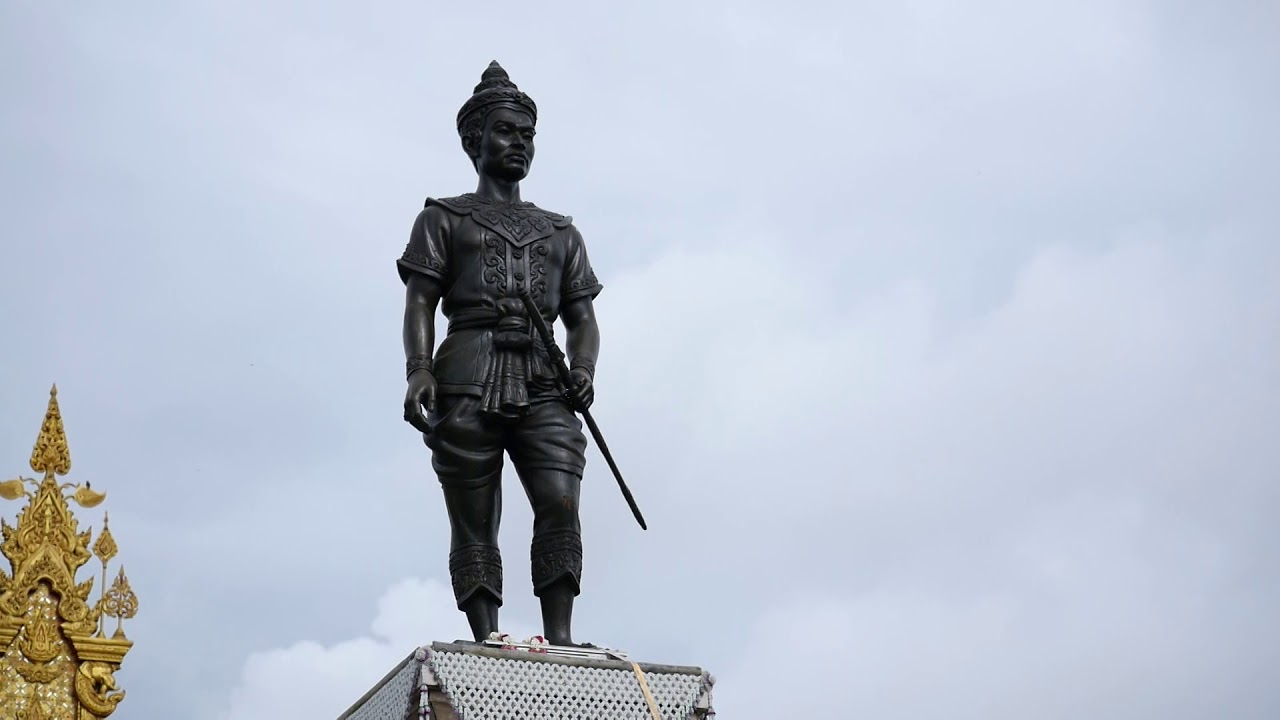
 Click to Access the Navigation Map GPS
King Mengrai the Great Monument Map
Recommend

 Historical Sites and Monuments(3)
Landmarks and Memorials(7)
Historical Sites and Monuments(3)
Landmarks and Memorials(7)
 Art, Craft Centres, Tradition(6)
 Museums(8)
 Historic Homes and Cities(1)
 Educational Places
 Museum for Study(1)
 Library(1)
 Educational Gardens, Farm(3)
 Places of Worship
 Temple(38)
 Other Sacred Sites(5)
 Research and Development
 Royal Project(9)
 Suburban Living
 Village, Community(16)
 Local Market(5)
 Nature and Wildlife
 National Parks and Marine Reserves(18)
 Mountain (Doi)(20)
 Dam, Reservoir, Lake(8)
 Waterfalls(16)
 Hot Springs(6)
 Caves(8)
 River, Canal(10)
 Sea, Beach(1)
 Other natural attractions(3)
 Entertainment and Agricultural
 Animal camps and shows(1)
 Farms, Parks and Ecotourism(9)
 Shopping
 Shopping and Night Market(2)
 Call Customer Service in Tourism
 Call Customer Service in Tourism(1)
 Travel Articles, Recipes
 Travel Review, Food Review(1)
 Food Menu, North Recipes(1)


