
lovethailand home >North Travel Attractions >Chiang Rai Travel Attractions >Muang Chiang Rai >Wiang > Wat Ngam Mueang
TL;DR: Wat Ngam Mueang is located at Arj-Amnuay Road, Ban Hom Doi, Moo 1, Wiang Subdistrict, Mueang Chiang Rai District, Chiang Rai, open Daily, hours 08:00 – 16:00.
Wat Ngam Mueang
Open Days: Daily
Opening Hours: 08:00 – 16:00
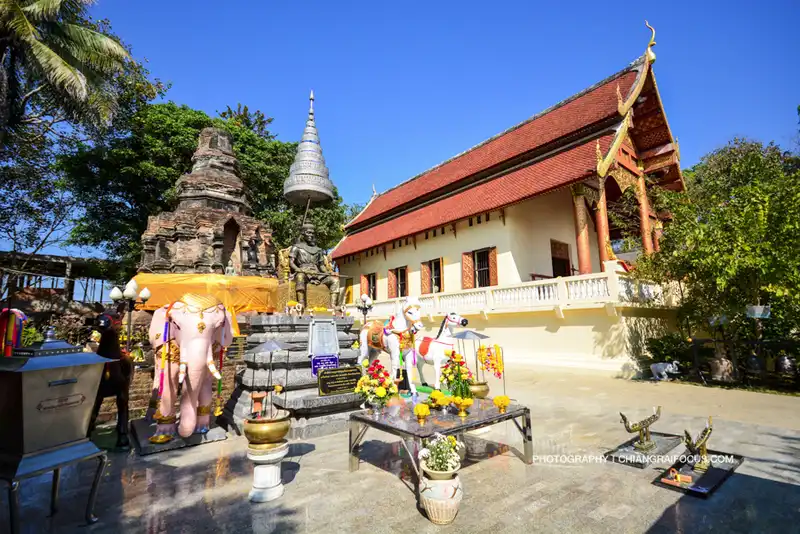
Wat Ngam Muang, also known as Wat Doi Ngam Muang, is one of the most historically significant temples in Chiang Rai. Set on a small hill in the city center on Arj-Amnuay Road, the temple offers more than a quiet place for worship. It is a site where local memory, architectural history, and the long cultural shadow of King Mangrai all come together. For many visitors, this makes the temple especially meaningful. It is not simply a place to admire a chedi or take photographs. It is a place where Chiang Rai’s story feels physically present.
In practical terms, Wat Ngam Muang is an old temple once known as Wat Ngam Mueang. Its original construction date is unknown, and it later became abandoned during the period when Chiang Rai itself went through decline and recovery. Even so, the temple did not disappear from collective memory. It was revived through later restorations and gradually became one of the most important historical temple sites in the city. Today, travelers interested in old Chiang Rai, Lanna religious art, and places associated with King Mangrai often include this temple in their itinerary.
The earliest clearly recorded event in the temple’s later history is the construction of its vihara in 1892. Historical notes describe the building as sharing stylistic similarities with the viharas of Wat Phra Kaew and Wat Phra Singh in Chiang Rai, which suggests that the same group of craftsmen may have been involved. This architectural connection matters because it places the temple within the artistic world of late Lanna restoration in Chiang Rai, rather than leaving it as an isolated ruin with no cultural context.
Another important milestone came in 1902, when the temple’s principal Buddha image, known as Phra Chao Luang, was created for the vihara. This shows that Wat Ngam Muang at that time functioned as a meaningful working temple and not just a historic mound on a hill. Later, in 1945, Phra Virayanamuni, then the provincial ecclesiastical head of Chiang Rai, assigned Phra Khru Thammawongwiwat to move Phra Chao Lan Thong from Wat Lan Thong, also called Wat Saen Thong, an abandoned temple site that is now the location of Anuban Chiang Rai School, to Wat Ngam Muang. That transfer reflected the temple’s continued importance within Chiang Rai’s religious landscape.
When Wat Ngam Muang later became deserted again, local devotees built protective roofing over both Phra Chao Luang and Phra Chao Lan Thong so that the sacred images would not be left exposed. In 1952, Phra Virayanamuni assigned Phra Phutthiwongwiwat, then abbot of Wat Phra Kaew, to restore and renovate the temple. This period of restoration was crucial because it brought Wat Ngam Muang back into active religious life and prevented it from remaining only an abandoned historic site on a city hill.
In 1961, Phra Phutthiwongwiwat later moved Phra Chao Lan Thong from Wat Ngam Muang to Wat Phra Kaew, where it remains today as the principal Buddha image in the ubosot. Although this meant Wat Ngam Muang lost one of the sacred images once housed there, it also demonstrates how closely linked Wat Ngam Muang and Wat Phra Kaew are in the religious and historical geography of Chiang Rai. The two temples should not be seen as unrelated stops, but rather as connected parts of the same urban sacred landscape.
The temple’s name also changed over time. It was originally known as Wat Ngam Mueang and in 1993 it was officially renamed Wat Ngam Muang or Wat Doi Ngam Muang, the names commonly used today. The modern name reinforces the temple’s image as a hilltop historic site in the middle of Chiang Rai and reflects the way people now understand it as part of the city’s symbolic heritage.
The feature that makes the temple widely known is its main chedi, often referred to by the public as Ku Phaya Mangrai, the stupa associated with the relics of King Mangrai. This is one of the most important points for visitors to understand carefully. In popular belief, the temple is strongly connected with King Mangrai, the founder of Chiang Rai. However, in academic and archaeological discussion, the identification of the present chedi as his actual funerary monument remains debated. This tension between public reverence and historical interpretation is precisely what makes the site so compelling.
The chedi itself is architecturally impressive. Its laterite base is a later restoration and not part of the earliest original structure. The monument takes the form of a prang-like or palace-spired chedi, beginning with square base tiers and transitioning upward into a multi-faceted structure with decorative niches containing Buddha images. The upper section includes octagonal forms and a bell-shaped body. Scholars generally date the monument to around the 21st Buddhist century or later, which places it significantly later than the lifetime of King Mangrai. This is one reason why the common identification of the present chedi as his true funerary monument is not accepted without question in academic circles.
The issue becomes even more interesting because the term Ku Phaya Mangrai appears in printed records from the 20th century, including the Royal Gazette in 1935 and later in a northern chronicle publication in 1954. Those references appear to describe a different ruined chedi on Doi Ngam Mueang that had already collapsed and later disappeared. As that earlier structure faded from public view, the surviving chedi at Wat Doi Ngam Muang gradually became the monument popularly associated with King Mangrai instead. Archaeological finds from the surviving chedi, including gold and silver reliquary containers now preserved at the Chiang Saen National Museum, are also dated to a later period, which adds further complexity to the story.
For visitors, this does not reduce the temple’s significance. On the contrary, it enriches it. Wat Ngam Muang is a place where living devotion, civic memory, and scholarly debate meet in one setting. Many people still come here to pay respect to the monument and to the image of King Mangrai with sincere faith, while historians and heritage scholars continue to examine the evidence more critically. Experiencing both layers together is one of the most valuable aspects of visiting the temple.
Another important feature is the bronze statue of King Mangrai created in 1992 in front of the chedi. It was built through the efforts of local religious leaders and lay supporters, including senior monks associated with Wat Phra Kaew and Wat Doi Ngam Muang. The statue strongly reinforces the temple’s modern symbolic role as a place of reverence connected with the founder of Chiang Rai. Even if the historical identification of the chedi itself remains debated, the site clearly functions in contemporary cultural life as one of the city’s important Mangrai remembrance spaces.
In 2008, the royal-style base and ceremonial umbrella elements around the monument were further improved with support from the Port Authority of Thailand. This later enhancement reflects the fact that the temple is not a forgotten ruin but a cared-for and meaningful historical site that continues to receive attention and reverence. The temple remains suitable for worship, quiet reflection, and heritage visits.
The atmosphere at Wat Ngam Muang is distinctive because of its setting on a small hill in the city. Although it is close to Chiang Rai’s core urban attractions, arriving at the temple gives a different feeling from standing on the busy streets below. The hilltop position, the old chedi, the statue of King Mangrai, and the restrained temple grounds together create a mood that is calm, reflective, and rooted in history. This makes it ideal for travelers who prefer meaningful cultural stops rather than only decorative temple visits.
Getting there is easy if you are already staying in Chiang Rai town. The temple is on Arj-Amnuay Road behind Wat Phra Kaew and can be reached quickly by car, local transport, or a short ride from the Clock Tower or night bazaar area. Because it is so close to Wat Phra Kaew, many travelers combine both temples in the same outing. It also works well as part of a city heritage route together with Wat Phra Singh, the King Mangrai Monument, and other old-town attractions.
The temple is open daily during posted visiting hours and there is no admission fee. This makes it accessible both for travelers who want to study Chiang Rai’s past and for visitors who simply wish to make merit and enjoy the atmosphere. Since there are several important points within the grounds, including the chedi and the Mangrai statue, it is worth allowing at least 30 minutes to 1 hour for the visit rather than treating it as a quick photo stop.
Today, Wat Ngam Muang continues to function as an active temple under the care of Phra Khru Wititsathukan according to current public sources. That ongoing religious role matters. It means the temple is still a living sacred place, not merely a historical shell. For travelers interested in Chiang Rai’s spiritual heritage, old urban topography, and the enduring legacy of King Mangrai, Wat Ngam Muang is one of the most rewarding temple visits in the city.
| Name | Wat Ngam Muang, Wat Doi Ngam Muang, Wat Ngam Mueang |
| Location | Arj-Amnuay Road, Ban Hom Doi, Moo 1, Wiang Subdistrict, Mueang Chiang Rai District, Chiang Rai |
| Address | Arj-Amnuay Road, Ban Hom Doi, Moo 1, Wiang, Mueang Chiang Rai, Chiang Rai 57000, Thailand |
| Coordinates | Behind Wat Phra Kaew in central Chiang Rai |
| Highlights | Historic hilltop temple, main chedi associated in popular belief with King Mangrai, King Mangrai statue, heritage site near Wat Phra Kaew |
| History | Ancient temple with no confirmed original founding date; vihara recorded in 1892, restored again in 1952, and renamed Wat Ngam Muang in 1993 |
| Name Origin | Originally known as Wat Ngam Mueang and later used under the present names Wat Ngam Muang and Wat Doi Ngam Muang |
| Distinctive Features | Prasat-style chedi, temple linked with Mangrai remembrance, hilltop setting in the city, historical and archaeological significance |
| Travel Information | Easy to reach from central Chiang Rai by car or local transport via Arj-Amnuay Road; located directly behind Wat Phra Kaew and close to the Clock Tower area |
| Current Status | Open for worship and heritage visits |
| Open Days | Daily |
| Opening Hours | 08:00 – 16:00 |
| Fees | No admission fee |
| Facilities | Temple courtyard, parking, worship area, pathways for viewing the historic monument |
| Main Areas / Zones | Main chedi, King Mangrai statue, vihara, temple worship zone |
| Abbot / Caretaker | Phra Khru Wititsathukan |
| Main Contact Number | 053-744-918 |
| Nearby Tourist Attractions | 1) Wat Phra Kaew Chiang Rai, around 0.3 km 2) Wat Phra Singh Chiang Rai, around 0.6 km 3) King Mangrai Monument, around 1.2 km 4) Chiang Rai Clock Tower, around 1.3 km 5) Suan Tung and Khom Chiang Rai, around 1.4 km |
| Nearby Restaurants | 1) Baan Klang Wiang, around 0.9 km, Tel. 053-744-389 2) Khao Tom Nai Noom, around 1.2 km, Tel. 053-712-619 3) Khao Man Gai Chakrapat Clock Tower Chiang Rai, around 1.3 km, Tel. 090-963-9962 4) Khao Soi Thao Kae Ek Wat Phra Kaew, around 0.4 km 5) Lu Lum Chiang Rai, around 1.7 km, Tel. 053-748-223 |
| Nearby Accommodations | 1) Nak Nakara Hotel, around 0.8 km, Tel. 053-717-700 2) Le Patta Hotel Chiang Rai, around 1.2 km 3) Wiang Inn Hotel, around 1.4 km 4) Sooknirund Hotel, around 1.3 km, Tel. 053-798-788 5) HOP INN Clock Tower Chiang Rai, around 0.7 km |
Frequently Asked Questions (FAQ)
Q: Are Wat Ngam Muang and Wat Doi Ngam Muang the same temple?
A: Yes. They are the same temple, and the older name Wat Ngam Mueang is also associated with the site.
Q: Why is this temple important in Chiang Rai?
A: It is a historic temple connected with Chiang Rai’s cultural memory, later restoration history, and the popular remembrance of King Mangrai.
Q: Is the main chedi definitely the tomb of King Mangrai?
A: Many visitors and local traditions associate it with King Mangrai, but the identification of the present chedi is still debated in academic and archaeological discussion.
Q: Is there an entrance fee?
A: No. The temple can be visited without an admission fee during opening hours.
Q: Is Wat Ngam Muang close to Wat Phra Kaew?
A: Yes. It is located directly behind Wat Phra Kaew in central Chiang Rai, making it easy to visit both in one trip.
Q: What should visitors not miss at the temple?
A: The main chedi, the King Mangrai statue, the hilltop temple atmosphere, and the layered historical meaning of the site are the main highlights.
 Category: ●Places of Worship
 Group: ●Temple
Last Update : 5 MonthAgo
 Last Update : 5 MonthAgo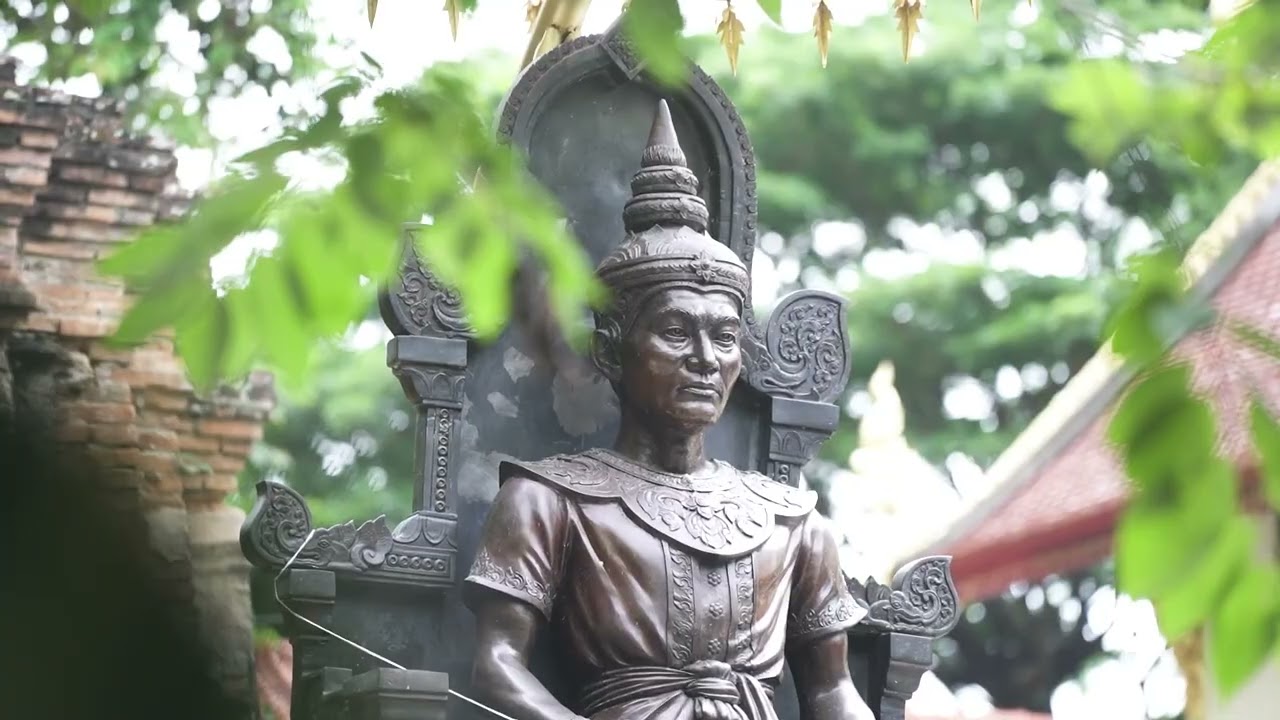
 Click to Access the Navigation Map GPS
Wat Ngam Mueang Map
Recommend

 Art, Culture and Heritage
 Historical Sites and Monuments(3)
 Landmarks and Memorials(7)
 Art, Craft Centres, Tradition(6)
 Museums(8)
 Historic Homes and Cities(1)
 Educational Places
 Museum for Study(1)
 Library(1)
 Educational Gardens, Farm(3)
Temple(38)
Educational Gardens, Farm(3)
Temple(38)
 Other Sacred Sites(5)
 Research and Development
 Royal Project(9)
 Suburban Living
 Village, Community(16)
 Local Market(5)
 Nature and Wildlife
 National Parks and Marine Reserves(18)
 Mountain (Doi)(20)
 Dam, Reservoir, Lake(8)
 Waterfalls(16)
 Hot Springs(6)
 Caves(8)
 River, Canal(10)
 Sea, Beach(1)
 Other natural attractions(3)
 Entertainment and Agricultural
 Animal camps and shows(1)
 Farms, Parks and Ecotourism(9)
 Shopping
 Shopping and Night Market(2)
 Call Customer Service in Tourism
 Call Customer Service in Tourism(1)
 Travel Articles, Recipes
 Travel Review, Food Review(1)
 Food Menu, North Recipes(1)


