
lovethailand home >Central Travel Attractions >Bangkok Travel Attractions >Nong Chok >Khlong Sip > Wat Saen Kasem
TL;DR: Wat Saen Kasem is located at Moo 8, Khlong Sip Sam Sai Lang, Khlong Sip Song, Nong Chok, Bangkok, open Daily, hours 08.00 – 17.00.
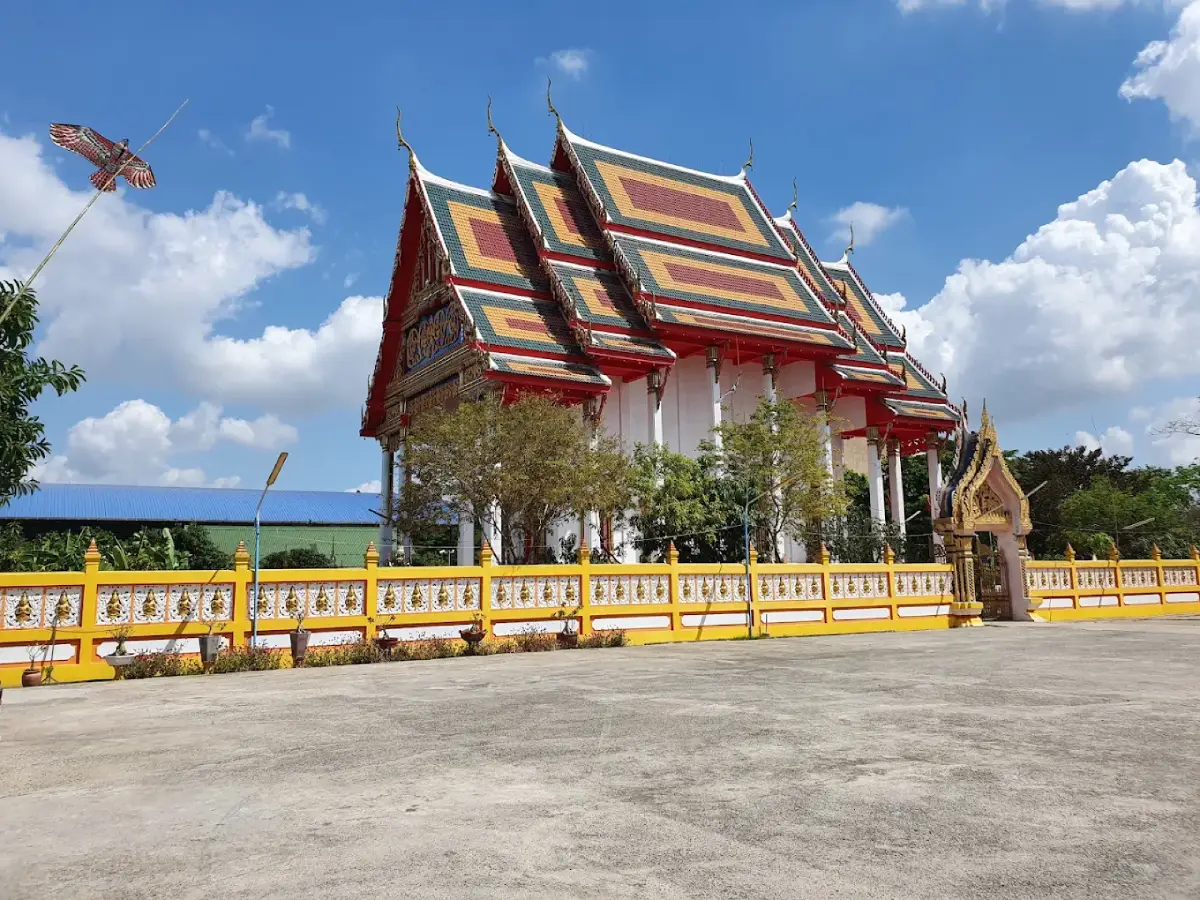
Wat Saen Kasem
Open Days: Daily
Opening Hours: 08.00 – 17.00
Wat Saen Kasem is a private Buddhist temple under the Maha Nikaya order, located in Moo 8, Khlong Sip Sam Sai Lang, Khlong Sip Song Subdistrict, Nong Chok District, Bangkok 10530. It is one of the historic community temples of eastern Bangkok and has long served the Khlong Sip Song area as a center for Buddhist worship, religious education, local ceremonies, and community life. The temple was formerly known as Wat Sip Sam, a name linked with the canal-side geography of the area, before developing into the present Wat Saen Kasem.
Wat Saen Kasem is valuable for travelers who want to understand Nong Chok beyond its role as an outer Bangkok district. The temple stands in an area shaped by canals, old agricultural communities, schools, local roads, and village-style settlements. This part of Bangkok still preserves a slower community rhythm, and Wat Saen Kasem helps visitors see how temples continue to support religious, educational, and social life in Bangkok’s eastern outskirts.
The temple’s history began with the faith of Nai Amphoe Kaeo and his wife Nang Klam, who donated 13 rai, 3 ngan, and 60 square wah of land for the construction of the temple. Because of its relationship with Khlong Sip Sam and the local canal landscape, the temple was originally called Wat Sip Sam. Permission to build the temple was granted on 9 May 1890, and the temple later developed steadily through the work of successive abbots and the support of the local community.
The name Wat Saen Kasem carries an auspicious meaning. “Saen” suggests abundance or a great amount, while “Kasem” means happiness, peace, and well-being. As a temple name, it gives the sense of a peaceful religious place that brings calm and spiritual comfort to the community. The official name therefore adds a more auspicious meaning while still preserving the memory of the older local name Wat Sip Sam.
The temple land covers 20 rai, 3 ngan, and 60 square wah in Khlong Sip Song, Nong Chok. In the past, the area was lowland farmland with houses spread along canals and local roads. The nearby Khlong Sip Sam Sai Lang was part of the older local landscape that shaped movement, farming, and community life. Wat Saen Kasem therefore grew as a religious center for people living across a broad canal-side community, not only for residents immediately beside the temple.
Wat Saen Kasem received its first royal consecrated boundary in 1912. As temple structures later deteriorated, the temple underwent restoration and development. It received a new royal consecrated boundary on 30 December 1975, measuring 40 meters wide and 80 meters long. The boundary was formally marked on 28 February 1977. These milestones confirm the temple’s status as an established Buddhist temple with a proper sacred area for formal Sangha acts.
The ordination hall is one of the most important buildings of Wat Saen Kasem. It measures 8 meters wide and 18 meters long and was completed in 1977. The hall has a three-tiered roof and serves as the central space for important Buddhist ceremonies and formal Sangha acts. For lay visitors, the ordination hall is also an important worship area where they can pay respect to Buddha images, make merit, chant, and reflect quietly.
The temple’s most important sacred object is Luang Pho Chiang Saen, a Buddha image in the meditation posture with a lap width of 2 feet and 8 inches. It was made by early Chiang Saen craftsmen. This Buddha image is significant both as an object of devotion and as a work of Buddhist art. Chiang Saen art is associated with firmness, serenity, and the refined spiritual character of northern Thai Buddhist sculpture.
The meditation posture of Luang Pho Chiang Saen expresses calmness, concentration, and mental steadiness. This makes the Buddha image especially meaningful in a community temple that emphasizes quiet worship and religious continuity. Visitors can use the space for merit-making, chanting, reflection, and a short pause from the pace of daily life.
Other important temple facilities include ten monks’ residences, built in a mix of wooden, concrete, and half-wooden half-concrete styles, as well as a sermon hall and a chanting hall. These structures allow the temple to support monastic residence, Buddhist ceremonies, Dhamma listening, chanting, local meetings, and annual religious events. Wat Saen Kasem is therefore a living temple with regular community use, not only a historical site.
The sermon hall and chanting hall are important to the everyday life of the temple. They are used for Buddhist holy-day merit-making, Dhamma talks, chanting, meetings, and community ceremonies. These spaces enable monks and laypeople to gather during both ordinary days and major festivals, reinforcing the temple’s role as a shared religious and social space for Khlong Sip Song.
Wat Saen Kasem also has an important educational role. Historical temple records state that Buddhist scripture teaching began in 1957. This function makes the temple more than a place for ceremonies. It also serves as a place where monks, novices, and people connected with Buddhist education can study Buddhist teachings and discipline. This reflects the traditional role of Thai temples as centers of faith, learning, and moral development.
The temple’s educational role also extends to the local school. Wat Saen Kasem School stands on land owned by Wat Saen Kasem and offers education from early childhood through primary school. This makes the relationship between home, temple, and school clearly visible in the local community. Children, parents, teachers, monks, and local residents all connect with the temple through learning, ceremonies, festivals, and public activities.
The presence of the school strengthens the temple’s social role. Children in the community grow up with the temple as part of their environment, not as a distant religious place. The temple supports school-related activities, moral education, and annual Buddhist traditions, helping maintain continuity between younger generations and the local Buddhist community even as Nong Chok becomes more urbanized.
The list of abbots of Wat Saen Kasem reflects long continuity across generations. The temple has been associated with Phra Achan Si, Phra Achan Sutthi, Phra Achan Plot, Phra Achan Im, Phra Achan Son, Phra Achan Chum, Phra Samuh Koet, Phra Palat Thong, Phra Achan Chong Phasuktham, Phra Achan La-o Suea Chui, Phra Khru Phiphat Khemakit, Phra Khru Kasem Kitjanukun, Phra Khru Sangkharak Sombun Chanthathammo, Phra Samuh Amphon Akkathammo, and Phra Maha Natthawut Natthiko. These names show the continued stewardship of the temple over many periods.
The current abbot is Phra Maha Natthawut Natthiko, also known locally as Luang Pho Nen. He was appointed abbot of Wat Saen Kasem in 2025. The appointment record describes Wat Saen Kasem as a temple located among a community and a school, and emphasizes the importance of strengthening lay faith while developing the temple. This fits the temple’s long-standing identity as a place where home, temple, and school support one another.
Phra Khru Phiphat Khemakit, also known as Luang Pho Phat Khemako, is one of the important former abbots connected with Wat Saen Kasem. He was a practicing monk who supported the education of monks and novices, helped students from the Khlong Sip Sam community, and contributed to the development of temple assets. His story adds another layer of devotion, leadership, and local memory to the temple’s history.
The current active status of Wat Saen Kasem is confirmed by 2026 activity records from Nong Chok District Office. The temple is listed among local temples participating in Thai tradition preservation, candle casting, and the Buddhist Lent candle procession. This confirms that Wat Saen Kasem remains part of Nong Chok’s active religious and cultural network and continues to work with local residents and public agencies.
Wat Saen Kasem also participates in the wider Buddhist calendar throughout the year. Important activities include Makha Bucha Day, Visakha Bucha Day, Asalha Bucha Day, Buddhist Lent, the end of Buddhist Lent, Kathin ceremonies, robe-offering events, Buddhist holy-day merit-making, chanting, Dhamma listening, and family memorial ceremonies. These activities keep the temple closely connected with the everyday religious life of the community.
Recent Kathin information from 2024 records six resident monks at Wat Saen Kasem and a Kathin ceremony on 20 October 2024. Kathin is one of the most important ceremonies after the end of Buddhist Lent. Its continued organization shows that the temple remains active, with resident monks and a living relationship between the Sangha and lay supporters.
Wat Saen Kasem is suitable for visitors interested in old temples in Nong Chok, Maha Nikaya community temples, canal-side local history, Buddhist education, and the Buddha image Luang Pho Chiang Saen. The temple’s appeal does not depend on being a large tourist landmark. Its value lies in the completeness of its history, land donation story, former name, ordination hall, Buddha image, educational role, and ongoing community use.
The atmosphere of Wat Saen Kasem is quiet and local. Visitors will find a working community temple rather than a commercial sightseeing destination. The temple is suitable for merit-making, worship, observing local Buddhist life, and understanding the older community landscape of Khlong Sip Song. It is a meaningful stop for travelers who prefer cultural depth over crowded attractions.
For those interested in local history, Wat Saen Kasem helps explain Nong Chok more clearly. Nong Chok has long been a culturally and religiously diverse district with Buddhist temples, mosques, schools, markets, agricultural communities, and outer-Bangkok neighborhoods. Wat Saen Kasem represents the Buddhist community dimension of this district and shows how temples preserve religious, educational, and social continuity.
Getting There to Wat Saen Kasem is easiest by private car, taxi, or local ride. Main approach routes include Pracha Samran Road, Chueam Samphan Road, Khu Khlong Sip Road, Khlong Sip Sam Road, and local roads in Khlong Sip Song, depending on the starting point. When using a navigation app, enter “Wat Saen Kasem Khlong Sip Song Nong Chok” or use the coordinates 13.904096, 100.890016.
Travelers using public transport can use bus routes serving the Khlong Sip Song and Khlong Sip Sam areas, then continue by a local ride to the temple. Useful local reference points include Wat Saen Kasem School, Liap Khlong Sip Sam Road, and Soi Saen Kasem. Daytime travel is recommended because Nong Chok includes local roads and canal-side routes that may be less familiar to first-time visitors.
Visitors should dress modestly, keep noise low, and respect areas used for Buddhist practice, especially the ordination hall, sermon hall, chanting hall, and monks’ residences. Photography should be done without disturbing monks, students, elderly residents, or people making merit. Because the temple is closely connected with a school and local community, visitors should be especially mindful of shared community space.
Wat Saen Kasem can be included in a cultural route through Nong Chok and Khlong Sip Song. Nearby places include Khlong 12 Lam Sai Market, Wat Nari Rat Pradit, Wat Prayong Kittivanaram, Wat Si Chomphu, Wat Nong Chok, and the Bangkok Local Museum in Nong Chok District. This route suits a half-day or full-day itinerary focused on temple visits, local food, old community landscapes, and the quieter eastern side of Bangkok.
Overall, Wat Saen Kasem is an old Nong Chok temple with value across several dimensions: land-donation history, the former name Wat Sip Sam, royal consecrated boundary records, a three-tiered-roof ordination hall, Luang Pho Chiang Saen, monastic facilities, Buddhist scripture teaching, Wat Saen Kasem School, and current district-level religious activities. It is a living community temple and an important cultural marker of Khlong Sip Song.
| Name | Wat Saen Kasem |
| Place Type | Private Buddhist Temple Under The Maha Nikaya Order |
| Location | Moo 8, Khlong Sip Sam Sai Lang, Khlong Sip Song, Nong Chok, Bangkok |
| Address | 14 Moo 8, Liap Khlong Sip Sam Road, Khlong Sip Song Subdistrict, Nong Chok District, Bangkok 10530, Thailand |
| Coordinates | 13.904096, 100.890016 |
| Phone | 089-260-8983 |
| Open Days | Daily |
| Opening Hours | 08.00 – 17.00 |
| Temple Land | 20 rai, 3 ngan, and 60 square wah |
| Current Status | Active private Buddhist temple and community religious center in Khlong Sip Song, Nong Chok |
| History | Formerly known as Wat Sip Sam. Permission to build the temple was granted on 9 May 1890. The temple received its first royal consecrated boundary in 1912, received a new royal consecrated boundary on 30 December 1975, and formally marked the boundary on 28 February 1977. |
| Founding Figures | Nai Amphoe Kaeo and his wife Nang Klam donated 13 rai, 3 ngan, and 60 square wah of land for the temple. |
| Former Name | Wat Sip Sam |
| Name Origin | The former name is linked with Khlong Sip Sam and the local area, while the current name suggests peace, happiness, and auspiciousness. |
| Abbot / Caretaker | Phra Maha Natthawut Natthiko |
| Highlights | Historic Khlong Sip Song temple, three-tiered-roof ordination hall, Luang Pho Chiang Saen Buddha image, Wat Saen Kasem School, and a strong home-temple-school community role |
| Important Sacred Object | Luang Pho Chiang Saen, a Buddha image in the meditation posture with a lap width of 2 feet and 8 inches, made by early Chiang Saen craftsmen |
| Main Areas / Zones | Ordination hall, monks’ residences, sermon hall, chanting hall, merit-making area, community activity area, and Wat Saen Kasem School area |
| Educational Role | Buddhist scripture teaching began in 1957, and Wat Saen Kasem School stands on land owned by the temple. |
| Facilities | Merit-making areas, sermon hall, chanting hall, temple courtyard, community activity area, and school area within the temple grounds |
| Travel Information | Accessible by private car, taxi, local ride, or bus routes serving Khlong Sip Song and Khlong Sip Sam. Use “Wat Saen Kasem Khlong Sip Song Nong Chok” or coordinates 13.904096, 100.890016 as the navigation destination. |
| Nearby Tourist Attractions | 1. Wat Nari Rat Pradit, also known as Wat Phraya Pla, about 4 km 2. Khlong 12 Lam Sai Market, about 5 km 3. Wat Prayong Kittivanaram, about 6 km 4. Wat Si Chomphu, about 6 km 5. Wat Nong Chok, about 10 km 6. Bangkok Local Museum, Nong Chok District, about 11 km 7. Harajuku Thailand, about 15 km |
| Nearby Restaurants | 1. Jae Nin Made-To-Order Food, about 4 km, Tel. 084-966-7286, 099-764-8829 2. Long Si Khao Khai Khon And Khanom Chin Nam Ya, about 4 km, Tel. 085-664-3747 3. Pan Sri Spicy Isan Kitchen, about 4 km, Tel. 096-875-4472 4. Yam Sadet Phet Khot Khot, about 5 km, Tel. 095-368-7758 5. Mee Khao Khrua Nong Chok Branch 1, about 5 km, Tel. 094-596-1642 6. Tea And Coffee Pracha Samran, about 5 km, Tel. 080-250-6570 |
| Nearby Accommodations | 1. Two One Water Park Resort, about 2 km, Tel. 097-454-2632 2. MU Home Resort, about 11 km, Tel. 093-459-3978 3. Chai Na Resort, about 17 km, Tel. 02-430-4464 4. Ruean Thai Resort, about 17 km, Tel. 02-988-9595 5. Bangkok Yesterday Resort, about 17 km, Tel. 083-235-3915 |
Frequently Asked Questions (FAQ)
Q: Where is Wat Saen Kasem located?
A: Wat Saen Kasem is located in Moo 8, Khlong Sip Sam Sai Lang, Khlong Sip Song Subdistrict, Nong Chok District, Bangkok 10530.
Q: What are the opening days and hours of Wat Saen Kasem?
A: Wat Saen Kasem is open daily from 08.00 to 17.00.
Q: What is the history of Wat Saen Kasem?
A: Wat Saen Kasem was formerly called Wat Sip Sam. Nai Amphoe Kaeo and his wife Nang Klam donated 13 rai, 3 ngan, and 60 square wah of land for the temple, and permission to build it was granted on 9 May 1890.
Q: When did Wat Saen Kasem receive its royal consecrated boundary?
A: The temple received its first royal consecrated boundary in 1912, received a new royal consecrated boundary on 30 December 1975, and formally marked the boundary on 28 February 1977.
Q: What is the important sacred object at Wat Saen Kasem?
A: The important sacred object is Luang Pho Chiang Saen, a Buddha image in the meditation posture with a lap width of 2 feet and 8 inches, made by early Chiang Saen craftsmen.
Q: Who is the current abbot of Wat Saen Kasem?
A: The current abbot is Phra Maha Natthawut Natthiko.
Q: How is Wat Saen Kasem connected with education?
A: The temple began Buddhist scripture teaching in 1957, and Wat Saen Kasem School stands on land owned by the temple, giving the temple an important religious and educational role in the community.
Q: How can visitors get to Wat Saen Kasem?
A: Visitors can travel by private car, taxi, local ride, or bus routes serving Khlong Sip Song and Khlong Sip Sam. Use “Wat Saen Kasem Khlong Sip Song Nong Chok” or coordinates 13.904096, 100.890016 as the navigation destination.
 Category: ●Places of Worship
 Group: ●Temple
Last Update : 1 WeekAgo
 Last Update : 1 WeekAgo
 Click to Access the Navigation Map GPS
 Phra Nakhon(24)Dusit(17)Khlong San(7)Khlong Toei(3)Jatujak(2)Don Muang(5)Taling Chan(26)Thon Buri(23)Bangkok Noi(31)Bangkok Yai(13)Bang Kapi(5)Bang Kun Tien(15)Bang Khen(3)Bang Kholam(10)Bang Sue(9)Bang Plad(23)Bang Rak(6)Chom Thong(16)Bung Kum(5)Pra Wet(6)Patum Wan(6)Pom Prap Sattru Phai(11)Paya Thai(1)Pra Kanong(4)Pa Sri Charoen(23)Min Buri(7)Yan Na Wa(8)Ratchathewi(4)Rat Burana(6)Lat Krabang(13)Nong Chok(16)Lat Phrao(4)Sathorn(4)Sam Phan Tha Wong(12)Nong Khaem(7)Huai Khwang(3)Suan Luang(7)Din Daeng(2)Lak Si(1)Sai Mai(8)Khan Na Yao(2)Wang Thong Lang(1)Klong Sam Wa(10)Watthana(2)Bang Na(4)Thawi Watthana(3)Bang Khae(5)Thung Khru(4)Bang Bon(3)


