
TL;DR: Wat Photithammachotiyaram (Wat Pho Plam) is located at Village No. 5, Tha Chang Subdistrict, Wiset Chai Chan District, Ang Thong, Thailand, open Open Daily, hours 08:00 – 17:00.
Wat Photithammachotiyaram (Wat Pho Plam)
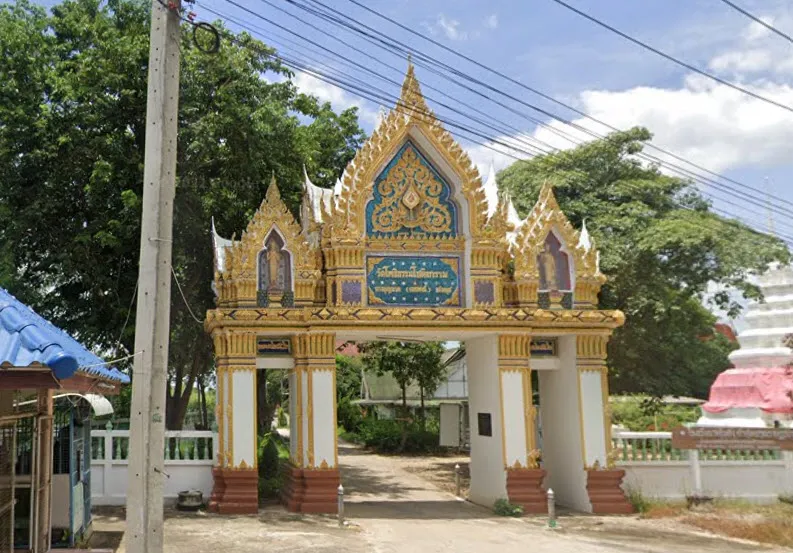
Open Days: Open Daily
Opening Hours: 08:00 – 17:00
Wat Photithammachotiyaram (Wat Pho Plam) in Wiset Chai Chan District, Ang Thong, is an old community temple in Tha Chang Subdistrict with a quiet, understated charm that rewards slow, attentive visiting. Highlights include the large Sangkhachai statue in front of the ordination hall, the calm atmosphere typical of Thailand’s Central Plains countryside temples, and the layered local narrative of how the temple was founded and developed across different periods. It is well-suited to an unhurried merit-making visit—walking the grounds, observing architectural details and traces of craftsmanship, and taking a reflective pause in a place that still functions as a true community center.
Wat Photithammachotiyaram (Wat Pho Plam) is located in Village No. 5, Tha Chang Subdistrict, Wiset Chai Chan District, Ang Thong Province. Locals commonly refer to it as “Wat Pho Plam,” and many people immediately think of the large Sangkhachai statue near the front of the ordination hall. This Sangkhachai figure is not merely a spot for photos or a quick customary stop; it has become a shared symbol of the temple that helps visitors feel the genuine, lived-in character of a community temple. In many Central Plains communities, Sangkhachai is closely associated with abundance, cheerfulness, and auspicious beginnings. When people return again and again to pay respects, the temple gains a kind of everyday vitality—as a place of hope and emotional ease.
What makes Wat Photithammachotiyaram distinctive is that it does not try to project “grandeur” in the way modern tourist attractions often do. Instead, it relies on the calm and authenticity of a local temple as its core appeal. The grounds feel naturally shaded and relaxed, with a slower rhythm that suits cultural travelers who prefer reading details rather than rushing to check off multiple locations. If you enjoy noticing craftsmanship and the traces of time, you will likely appreciate walking around the religious buildings here. Small elements such as wall textures, repair seams, plaster layers, and the proportions of structures often tell their own story—revealing how the temple has been maintained and restored over the years.
In terms of “history,” it helps to understand Wat Photithammachotiyaram through two complementary layers: the oral/local narrative passed down within the community, and the formal framework provided by temple registration records. In local storytelling, the temple is frequently described as old and rooted in the late Ayutthaya period, which aligns with the mood people associate with an “old temple” and the way they interpret its architectural character. At the same time, official records typically provide clearer anchor points—such as founding and boundary (wisungkhamsima) details that help place the temple within a more precise timeline. Considering both layers together makes a visit richer: you gain the cultural meaning the temple holds for residents, while also having a structured time frame that connects the site to broader local history.
The nickname “Wat Pho Plam” itself adds a linguistic charm. Nicknames for community temples usually arise from shared local perception—something people see, experience, and repeatedly refer to in everyday life, whether tied to a tree, landscape, a story, or an important feature of the temple. Such names are culturally significant because they show that the relationship between temple and community is not only ceremonial; it is practical, habitual, and rooted in real usage. When a nickname continues to be used across generations, it often indicates that the temple remains integrated into community life rather than becoming a detached “site” separate from the people.
When it comes to key features, most visitors naturally begin at the large Sangkhachai statue in front of the ordination hall because it is visually prominent and invites a respectful stop. From there, a good next step is to enter the ordination hall area, which is typically the spiritual core of a Thai temple’s sacred space. Wat Photithammachotiyaram is often described as having an ordination hall that reflects late-Ayutthaya artistic sensibilities, with a principal Buddha image revered by local devotees. Viewing the ordination hall attentively allows you to “read” the building through its proportions, spatial arrangement, and signs of ongoing restoration—evidence of an effort to keep the temple functioning continuously into the present. This continuity is especially important for community temples, which must serve both as sacred ritual space and as a practical public place for local religious life.
Another feature that can make community temples especially engaging is visual storytelling—whether in the form of mural paintings or other pictorial decorations. In temples, images rarely exist only for beauty; they have historically served as teaching tools and vehicles of belief. If there are murals inside the ordination hall, the most rewarding way to view them is gradually: begin by identifying what the scene is trying to convey, then look for smaller elements such as settings, characters, gestures, and color choices. Details like these often reveal the skill of artisans and the aesthetic preferences of an era. In places that have undergone multiple restoration phases, noticing layers of repainting or repair can also offer insight into how local preservation has evolved over time.
Still, the appeal of Wat Photithammachotiyaram is not limited to “looking at buildings.” It also lies in the temple’s role as a center for merit-making and communal activity. In many Central Plains villages, temples are gathering places during key festivals and religious events—Songkran, Buddhist Lent (Khao Phansa), the end of Lent (Ok Phansa), kathin ceremonies, and various local merit-making traditions. When a temple continues to host such events year after year, it becomes more than a cultural destination; it is a living space shaped by real community participation. If you visit on an observance day or in the morning when residents come to make merit, you may feel the temple’s community identity more clearly, and the visit becomes less about sightseeing and more about experiencing an ongoing cultural relationship.
To make the visit feel complete, consider walking the grounds in a simple sequence. Start at the front to pay respects at the Sangkhachai statue and take in the overall layout. Then move toward the ordination hall to pay respects to the principal Buddha image and observe interior and structural elements. Afterward, walk around the exterior to notice craftsmanship details—wall surfaces, the base structure, ventilation openings, or areas that show evidence of restoration over time—before exploring any additional buildings on the grounds as appropriate. This approach helps you avoid missing small but meaningful details and makes the visit feel like reading a story, page by page, rather than simply passing through.
The overall atmosphere also makes Wat Photithammachotiyaram a good place to slow down and reset. Rural temples tend to be quieter and greener than major urban attractions. If you want photographs with a calm, natural feel, morning is usually best: the light is softer, the temperature is more comfortable, and the surroundings are quieter. It also reduces the chance of disturbing people who are actively engaged in religious practice. Afternoons can work well for a shorter merit-making stop before continuing to other nearby temples or local community sites in Wiset Chai Chan—an area where you can plan a cultural temple route within a single day.
As with any temple visit, basic etiquette matters. Dress modestly, keep your voice low, remove shoes before entering sacred buildings, and avoid touching walls or surfaces that may be fragile due to age or artistic work. These practices are not only respectful but also reduce the risk of damage to older craftsmanship. If you take photos, do so discreetly, and avoid using flash in areas that may include murals or sensitive artwork to help preserve the temple’s condition for the future.
If you want the experience to go “beyond simply paying respects,” try asking questions as you walk: Why does the community place special emphasis on the Sangkhachai statue in this position? Why is the ordination hall arranged the way it is? What do the repair traces suggest about different restoration periods? What roles does the temple serve for the community today? Questions like these keep the visit from becoming a quick glance and instead connect the temple to the community and local history—at the heart of meaningful cultural travel.
Getting There Wat Photithammachotiyaram (Wat Pho Plam) is located in Village No. 5, Tha Chang Subdistrict, Wiset Chai Chan District, Ang Thong Province. If traveling by private car from Ang Thong town, drive toward Wiset Chai Chan District and continue to Tha Chang Subdistrict, then follow local direction signs to the temple. The overall travel time is typically about 20–40 minutes depending on your starting point and traffic. From Bangkok, you can take Highway 32 through Phra Nakhon Si Ayutthaya into Ang Thong, then continue toward Wiset Chai Chan District and Tha Chang Subdistrict to reach the temple conveniently.
| Name | Wat Photithammachotiyaram (Wat Pho Plam) |
| Summary | An old community temple in Tha Chang Subdistrict, Wiset Chai Chan, notable for its large Sangkhachai statue in front of the ordination hall and a calm Central Plains rural atmosphere, ideal for an unhurried cultural temple visit. |
| Address | Village No. 5, Tha Chang Subdistrict, Wiset Chai Chan District, Ang Thong, Thailand |
| Highlights | Large Sangkhachai statue in front of the ordination hall, community temple atmosphere, architectural details worth observing, and a slow-paced cultural travel experience. |
| Abbot (Latest) | Phra Khru Wiset Chotitham (Sajja, P.Th. 4) |
| Current Status | A local Buddhist temple open for merit-making, worship, and visits. |
| Nearby Attractions (Approx. Distance) | 1) Sala Chao Rong Thong Market (Approx. 10 km) 2) Wat Khian (Approx. 12 km) 3) Wat Oi (Approx. 13 km) 4) Wat Muang (Approx. 25 km) 5) Wat Khun Inthapramun (Approx. 28 km) |
| Popular Restaurants Nearby (Approx. Distance + Phone) | 1) Niramit Restaurant (Approx. 15 km) Tel. 081-852-4777 2) Krua Mae Wandi (Approx. 15 km) Tel. 080-099-5688 3) Ruen Rap Kwan (Approx. 16 km) Tel. 081-854-1894 4) DR STEAK (Approx. 19 km) Tel. 035-632-145 5) Samoe Jai Restaurant (Approx. 21 km) Tel. 035-622-755 |
| Popular Accommodations Nearby (Approx. Distance + Phone) | 1) Patamanan Residence (Approx. 18 km) Tel. 095-505-1935 2) Wiset Sabai Resort (Approx. 19 km) Tel. 081-587-5993 3) Thi Ni Mee Dee Resort (Approx. 20 km) Tel. 094-131-8081 4) Bualuang Ang Thong Hotel (Approx. 30 km) Tel. 035-611-116 5) Ratchaphruek DC Resort Ang Thong (Approx. 32 km) Tel. 080-193-3277 |
Frequently Asked Questions (FAQ)
Q: Where is Wat Photithammachotiyaram (Wat Pho Plam) located?
A: The temple is in Village No. 5, Tha Chang Subdistrict, Wiset Chai Chan District, Ang Thong Province, Thailand.
Q: What is the main highlight that most visitors come to see?
A: The most eye-catching feature is the large Sangkhachai statue near the front of the ordination hall, which has become a signature landmark of the temple.
Q: How much time should I plan to visit the temple?
A: For worship and a slow walk around the ordination hall and key areas, planning about 45–90 minutes is usually ideal.
Q: What is the best time to visit for a calm atmosphere and photos?
A: Morning (around 08:00–10:00) is best for cooler weather, softer light, and a quieter setting.
Q: What etiquette should visitors follow inside the ordination hall?
A: Dress modestly, keep noise low, remove shoes before entering sacred buildings, and avoid touching walls or fragile surfaces—especially older areas or any artwork.
Q: What other places can I combine with this temple in a day trip?
A: You can combine this visit with Sala Chao Rong Thong Market, Wat Khian, Wat Oi, Wat Muang, and Wat Khun Inthapramun, depending on your schedule and travel style.
 Category: ●Places of Worship
 Group: ●Temple
 Last Update : 1 MonthAgo
 Click to Access the Navigation Map GPS
 Art, Culture and Heritage
 Landmarks and Memorials(
 Royal Palace(
 Art, Craft Centres, Tradition(
 Museums(
 Historical Houses and The Ancient City(
 Educational Places
 Educational Gardens, Farm(
 Other religious and spiritural sites(
 Research and Development
 Royal Project(
 Suburban Living
 Village, Community(
 Local Market(
 Floating Market(
 Nature and Wildlife
 River, Canal(
 Other natural attractions(
 Entertainment and Agricultural
 Farm, Parks, Gardens and Ecotourism(
 Outdoor and Adventure Activities(
 Shopping
 Shopping and Night Market(
 Travel Articles, Recipes
 Travel Review, Food Review(
 Central Thai Cuisine, Central Thai food recipes(


