
lovethailand home >North Travel Attractions >Tak Travel Attractions >Prop Phra >Khiri Rat > Romklao 1 Reservoir
TL;DR: Romklao 1 Reservoir is located at Ban Pa Kha, Village No. 4, Khiri Rat Subdistrict, Phop Phra District, Tak Province, open Public reservoir area, suitable for daily daytime visits, hours Best visited during daytime and late afternoon before sunset.
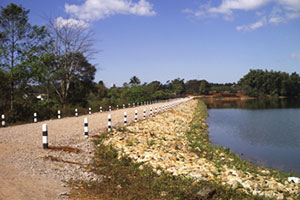
Romklao 1 Reservoir
Open Days: Public reservoir area, suitable for daily daytime visits
Opening Hours: Best visited during daytime and late afternoon before sunset
Romklao 1 Reservoir in Tak Province is a medium-sized reservoir located at Ban Pa Kha, Village No. 4, Khiri Rat Subdistrict, Phop Phra District, Tak Province. It lies along the Mae Sot-Umphang route, one of the most scenic mountain routes in western Tak. Originally connected with a security-development project along this important route, the reservoir now serves as a local water resource, irrigation support system, and quiet nature stop for travelers passing through the Phop Phra area. Its setting combines water, hills, farmland, and rural highland communities, giving visitors a calm and authentic view of Tak’s western border landscape.
Romklao 1 Reservoir is suitable for travelers who prefer simple and peaceful nature destinations rather than crowded tourist attractions. The reservoir is not a large commercial tourism site. Instead, it offers a modest earth-dam landscape, a quiet water surface, and a rural atmosphere that reflects the daily life of local communities. Visitors can stop to enjoy the view, take photographs, rest from the winding road, and observe how a small reservoir supports irrigation and agriculture in the highland area of Phop Phra.
The reservoir was constructed in 1981. Its background is associated with development for security along the Mae Sot-Umphang route, an area that historically required infrastructure to support local settlement, farming, and stability. The reservoir therefore has meaning beyond water storage. It represents a stage of development in a borderland area where water, roads, agriculture, and community security were closely connected. Today, it remains part of the local irrigation network and a quiet place that can be included in a nature-focused trip through Phop Phra.
The reservoir is an earth dam with a crest height of 5.00 meters and a crest length of 287.00 meters. Its storage capacity is approximately 0.300 million cubic meters. Although it is smaller than many major reservoirs in Tak Province, it plays an important local role by supporting an irrigation area of 2,000 rai. The project’s water-distribution system consists of 3 asbestos-cement pipelines with a total length of 9,149.258 meters. This system helps distribute water from the reservoir to agricultural areas in the surrounding community.
The water-distribution system is one of the key features of Romklao 1 Reservoir. Pipeline 1R has a diameter of 0.50 meters and a total length of 3,949.000 meters, with 13 reinforced-concrete water tanks, each with a capacity of 75 cubic meters. Pipeline 1R-1L has a diameter of 0.40 meters and a total length of 4,100.580 meters, with 17 reinforced-concrete water tanks of the same capacity. Pipeline 1R-2L has a diameter of 0.30 meters and a total length of 1,100.000 meters, with 5 reinforced-concrete water tanks. These structures allow stored water to be distributed more effectively across agricultural land.
Geographically, Romklao 1 Reservoir is part of the Salween River Basin. The surrounding area of Phop Phra District is characterized by highland terrain, agricultural areas, forested slopes, rural communities, and roads leading toward Umphang. Khiri Rat Subdistrict is also known as an area with highland communities and farmland. In this setting, a medium-sized reservoir is not only a body of water but also a practical infrastructure project that supports farming and local resilience during dry periods.
The atmosphere around the reservoir is best enjoyed in the morning or late afternoon. Morning visits offer cooler air and soft light over the water, while late afternoon creates a warmer and more relaxed atmosphere. During the cool season, the Phop Phra highlands can feel especially pleasant. In some periods, light mist may appear in the morning, adding charm to the water and surrounding hills. The reservoir is a good place to pause, breathe, and enjoy the slow rhythm of a rural mountain route.
For photography, the reservoir offers simple but meaningful compositions: the earth-dam embankment, the calm water surface, highland farmland, open sky, and mountain scenery. It is not a place of dramatic facilities, but its quietness is part of its appeal. Visitors should photograph respectfully, avoid entering pipeline areas or water tanks, and avoid disturbing local residents or irrigation operations. The best images here often show the relationship between water, farmland, and the rural landscape.
Romklao 1 Reservoir can be used as a short stop on the Mae Sot-Phop Phra-Umphang route. Travelers driving from Mae Sot toward Phop Phra can include the reservoir as a quiet break before continuing to waterfalls, viewpoints, or highland attractions. Nearby natural destinations include Pa Wai Waterfall, Namtok Pha Charoen National Park, and Pha Charoen Waterfall. Longer routes can continue toward Umphang, though travelers should plan carefully because the road is mountainous and winding.
For visitors interested in irrigation, Romklao 1 Reservoir is a useful example of a small-to-medium water resource with a pipeline-based distribution system. Instead of relying only on open canals, the project uses pipelines and reinforced-concrete water tanks to move water through the area. This kind of system is suitable for terrain where farms and communities are spread across varied elevations and slopes. Seeing the reservoir helps visitors understand that water management includes not only storage but also careful distribution.
For local communities, the reservoir is more important as a water resource than as a tourist site. It supports agricultural land, helps maintain water availability, and forms part of the shared infrastructure of Ban Pa Kha and nearby areas. Visitors should therefore use the area respectfully. They should not litter, make loud noise, enter operational structures, or do anything that could affect water quality or the irrigation system. The quiet character of the site should be preserved for both local use and future visitors.
Getting There is most convenient by private car or rental car. From Mae Sot, drive toward Phop Phra District on the Mae Sot-Umphang route, then continue to Khiri Rat Subdistrict and Ban Pa Kha, Village No. 4. Some parts of the route are mountainous and rural, so drivers should check vehicle condition, drive carefully, and avoid speeding. Extra caution is needed during rain, fog, or low visibility. Travelers unfamiliar with the area should use map navigation and confirm the route before departure.
Travelers coming from Tak town should first cross the mountain route to Mae Sot before continuing toward Phop Phra. This makes the journey longer and requires more planning. The Tak-Mae Sot and Mae Sot-Phop Phra routes include hills, curves, and local traffic. Driving during daylight is recommended for visitors who are not familiar with the road. For those heading toward Umphang, Romklao 1 Reservoir can be a short rest stop along the journey.
The best visiting period is the cool season and the late rainy season, when the landscape is greener and the air is more comfortable. Midday can be hot and exposed, while some reservoir-edge areas may have limited shade. Visitors should bring drinking water, a hat, sun protection, comfortable shoes, and a small trash bag. If they plan to sit for a while, a mat or folding chair can be useful. However, they should choose safe areas and avoid blocking local roads or irrigation access points.
Families can visit the reservoir for a short outdoor break, but children should be supervised closely. They should not walk near the water’s edge, pipelines, water tanks, or sloping areas without adults. Elderly visitors should choose areas that require minimal walking and avoid slippery ground after rain. Reservoirs are working water-resource areas, so the safest way to enjoy the site is through sightseeing, resting, and photography rather than entering operational zones or playing near water-control structures.
A one-day travel plan can begin in Mae Sot, continue toward Phop Phra for cafés or local food, stop at Romklao 1 Reservoir, and then continue to Pa Wai Waterfall or Pha Charoen Waterfall depending on time and season. This route is suitable for travelers who enjoy mountain roads, quiet nature, and local landscapes. With more time, visitors may continue toward Umphang, but accommodation and road conditions should be checked in advance.
Food and accommodation near the reservoir are limited compared with Mae Sot town, so travelers should plan ahead. Restaurants and cafés are mostly located in Phop Phra District or along the main route. Options include Hey Captain Jack, Ban Rai Un Rak, Rocha Cafe, Yada Cafe, 3t:mes Cafe, and other local cafés. Accommodation options are available in Phop Phra and Mae Sot. Visitors who want more hotel choices, restaurants, and services may prefer staying in Mae Sot, while those who want to explore Phop Phra more deeply can stay closer to the district.
Compared with famous Tak attractions such as Thi Lo Su Waterfall, Pha Charoen Waterfall, or Rim Moei Market, Romklao 1 Reservoir is quieter and more local. That quietness is its value. It gives travelers a chance to see an actual community water resource, understand highland irrigation, and experience the landscape of the Mae Sot-Umphang route beyond the main tourist stops. It is a small destination, but it adds depth to a trip through western Tak.
Cleanliness is essential at Romklao 1 Reservoir. Plastic bags, food containers, drink bottles, and other waste can damage the scenery and affect water quality. Visitors should take all rubbish back with them, avoid throwing anything into the water, and leave the place as clean as they found it. Responsible travel helps preserve the reservoir for farmers, residents, and future travelers.
Overall, Romklao 1 Reservoir in Tak Province is a meaningful medium-sized reservoir that combines irrigation value, borderland development history, and quiet rural scenery. Its earth dam is modest in size, but its 3 pipeline systems extend more than 9 kilometers and support 2,000 rai of irrigated land. For travelers driving through Mae Sot, Phop Phra, and Umphang, it is a worthwhile short stop for scenery, rest, and a clearer understanding of how water supports life in the highlands of western Tak.
| Name | Romklao 1 Reservoir |
| Location | Ban Pa Kha, Village No. 4, Khiri Rat Subdistrict, Phop Phra District, Tak Province |
| Address | Ban Pa Kha, Village No. 4, Khiri Rat Subdistrict, Phop Phra District, Tak Province 63160 |
| Highlights | A peaceful medium-sized reservoir on the Mae Sot-Umphang route, suitable for scenery, short rests, photography, and learning about highland irrigation |
| History | Built in 1981 and originally associated with a security-development project along the Mae Sot-Umphang route |
| Distinctive Features | Earth dam, 5.00 meters high, 287.00 meters long, with a storage capacity of 0.300 million cubic meters |
| Water-Distribution System | Three asbestos-cement pipelines with a total length of 9,149.258 meters, supported by reinforced-concrete water tanks |
| Pipeline Details | Line 1R: 0.50 m diameter, 3,949.000 m long with 13 tanks; Line 1R-1L: 0.40 m diameter, 4,100.580 m long with 17 tanks; Line 1R-2L: 0.30 m diameter, 1,100.000 m long with 5 tanks |
| Irrigation Area | 2,000 rai |
| River Basin | Salween River Basin |
| Recommended Activities | Sightseeing, walking, photography, relaxing by the water, and taking a short rest on the Mae Sot-Phop Phra-Umphang route |
| Travel Information | Best accessed by private car or rental car from Mae Sot toward Phop Phra District, then to Khiri Rat Subdistrict and Ban Pa Kha |
| Current Status | A reservoir and water-distribution system in Khiri Rat Subdistrict under local irrigation management |
| Open Days | Public reservoir area, suitable for daily daytime visits |
| Opening Hours | Best visited during daytime and late afternoon before sunset |
| Facilities | Reservoir viewpoints, earth-dam embankment, suitable parking areas, and local shops or restaurants along the Phop Phra route |
| Main Areas / Zones | Earth dam crest, reservoir edge, water-view area, pipeline system, and reinforced-concrete water tanks |
| Caretaker | Royal Irrigation Department, Ministry of Agriculture and Cooperatives, through Tak Irrigation Project, Water Delivery and Maintenance Division 4 |
| Official Website / Official Page | Tak Irrigation Project website: tak.rid.go.th and Tak Irrigation Project official page |
| Nearby Tourist Attractions | 1. Pa Wai Waterfall, about 14 km 2. Namtok Pha Charoen National Park, about 25 km 3. Pha Charoen Waterfall, about 25 km 4. Mon Mok Tawan, about 28 km 5. Doi Hua Mot, Umphang District, about 95 km 6. Rim Moei Market, Mae Sot, about 52 km 7. Thai-Myanmar Friendship Bridge No. 1, about 53 km |
| Nearby Restaurants | 1. Hey Captain Jack, about 18 km, Tel. 082-225-1147 2. Ban Rai Un Rak, about 24 km 3. Rocha Cafe, about 20 km 4. Yada Cafe Phop Phra, about 20 km 5. 3t:mes Cafe Phop Phra, about 28 km 6. Lemon Valley Cafe&Cocktail, about 22 km |
| Nearby Accommodations | 1. Baan Suan Resort Phop Phra, about 20 km, Tel. 093-223-3886 2. Rooms Near Phop Phra Hospital, about 20 km, Tel. 097-136-7073 3. Ma-L Homestay Phop Phra, about 22 km 4. Flora Cottages Phop Phra, about 22 km 5. Swiss Hill View Phop Phra, about 25 km 6. Hotels in Mae Sot town, about 50 km |
Frequently Asked Questions (FAQ)
Q: Where is Romklao 1 Reservoir located?
A: Romklao 1 Reservoir is located at Ban Pa Kha, Village No. 4, Khiri Rat Subdistrict, Phop Phra District, Tak Province, along the Mae Sot-Phop Phra-Umphang route.
Q: Why is Romklao 1 Reservoir important?
A: It is a medium-sized reservoir in the Salween River Basin, originally linked with a security-development project and supporting 2,000 rai of irrigated land.
Q: When was Romklao 1 Reservoir built?
A: Romklao 1 Reservoir was built in 1981 to support water-resource development along the Mae Sot-Umphang route.
Q: What activities are suitable at Romklao 1 Reservoir?
A: Visitors can enjoy sightseeing, walking, photography, relaxing by the water, and taking a short rest while traveling through Phop Phra.
Q: How can visitors get to Romklao 1 Reservoir?
A: The most convenient way is by private car or rental car from Mae Sot toward Phop Phra District, then to Khiri Rat Subdistrict and Ban Pa Kha.
Q: What is the best time to visit Romklao 1 Reservoir?
A: Morning and late afternoon are the best times because the weather is more comfortable and the light is suitable for photography.
Q: Are there nearby attractions around Romklao 1 Reservoir?
A: Yes. Nearby attractions include Pa Wai Waterfall, Namtok Pha Charoen National Park, Pha Charoen Waterfall, and destinations along the Phop Phra-Umphang route.
Q: What should visitors be careful about at Romklao 1 Reservoir?
A: Visitors should be careful near the water’s edge, pipeline areas, reinforced-concrete water tanks, and sloping ground, and should take all rubbish back with them.
 Category: ●Nature and Wildlife
 Group: ●Dam, Reservoir, Lake
Last Update : 4 MonthAgo
 Last Update : 4 MonthAgo
 Click to Access the Navigation Map GPS
Romklao 1 Reservoir Map
Recommend

 Art, Culture and Heritage
 Historical Sites and Monuments(2)
 Landmarks and Memorials(3)
 Art, Craft Centres, Tradition(6)
 Historic Homes and Cities(2)
 Educational Places
 Educational Gardens, Farm(2)
 Places of Worship
 Temple(22)
 Other Sacred Sites(9)
 Suburban Living
 Village, Community(5)
 Local Market(3)
 National Parks and Marine Reserves(9)
 Mountain (Doi)(9)
Dam, Reservoir, Lake(14)
Mountain (Doi)(9)
Dam, Reservoir, Lake(14)
 Waterfalls(23)
 Hot Springs(2)
 Caves(6)
 River, Canal(1)
 Bays and Beaches(1)
 Islands(1)
 Other natural attractions(1)
 Entertainment and Agricultural
 Farms, Parks and Ecotourism(5)
 Outdoor and Adventure Activities(4)


