
lovethailand home >North Travel Attractions >Tak Travel Attractions >Sam Ngao >Ban Na > Phra Phutthabat Doi Khao Nam
TL;DR: Phra Phutthabat Doi Khao Nam is located at Bhumibol Dam Reservoir Area, Ban Na Subdistrict, Sam Ngao District, Tak Province, Approximately 5 Km. From The Bhumibol Dam Crest, open Daily, hours Depending On Boat Service Hours And Weather Conditions.
Phra Phutthabat Doi Khao Nam
Open Days: Daily
Opening Hours: Depending On Boat Service Hours And Weather Conditions
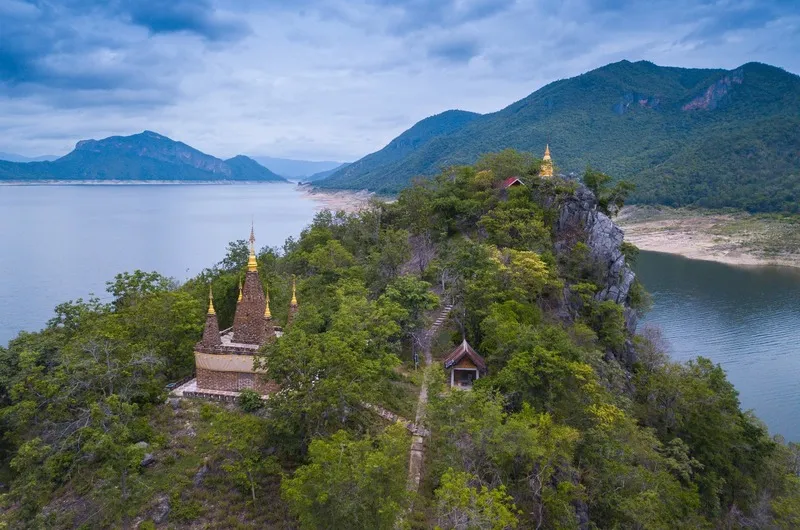
Phra Phutthabat Doi Khao Nam, Tak Province, is a sacred Buddhist site located on a hilltop island within the Bhumibol Dam reservoir in Ban Na Subdistrict, Sam Ngao District, Tak Province. It is approximately 5 km. from the Bhumibol Dam crest. The site enshrines a sacred Buddha footprint believed by local people to have been discovered around 1947. Today, the footprint is protected by a distinctive 5-spired mondop on the hilltop. Access requires a boat or raft from the Bhumibol Dam area, making this a meaningful destination for worship, merit-making, lake scenery, and learning about the Songkran tradition of bathing the Buddha footprint in Sam Ngao District.
Phra Phutthabat Doi Khao Nam in Tak Province is one of the sacred places deeply respected by local people in Sam Ngao District and by devotees who travel to the Bhumibol Dam area. The site is located on a hilltop in the middle of the Bhumibol Dam reservoir, in Ban Na Subdistrict, Sam Ngao District, Tak Province, about 5 km. from the dam crest. The area is a hill surrounded by the wide water surface of Mae Ping Lake, giving Phra Phutthabat Doi Khao Nam a distinctive character that combines sacredness, peace, and natural scenery unlike ordinary religious attractions.
The importance of Phra Phutthabat Doi Khao Nam begins with local belief in the Buddha footprint on the hilltop. According to local history, the footprint was first discovered around 1947 by Mr. Sao Kaeo Khao Luang, a resident of the former Ban Na Subdistrict area. After villagers found a mark resembling a Buddha footprint on Doi Khao Nam, faith gradually developed, and people began traveling up to pay respect. Although access to the hilltop was not as convenient in the past as it is today, the community’s devotion gradually turned this place into a spiritual center for people in Sam Ngao District.
A Buddha footprint is a meaningful Buddhist symbol because it reminds devotees of the Buddha and the path of Dhamma. When villagers found the footprint on Doi Khao Nam, they believed the place was sacred and should be preserved. Paying respect to the Buddha footprint is therefore not only a prayer for good fortune, but also an act of reverence toward Buddhism and a confirmation of the relationship between the community and a sacred site surrounded by nature.
In the early period after its discovery, the Buddha footprint at Doi Khao Nam remained in a simple condition on the hilltop. Those who wished to pay respect had to travel with determination and endurance because the site was located on a hill and the terrain was not easy to access. Later, in 1973, Khruba Thip Inthapanyo, the first abbot of Wat Chonlaprathan Rangsan, built a roof to cover the Buddha footprint and improved the surrounding area to make it more beautiful. This development was an important step that helped stabilize the site and make it more suitable for devotees.
In 1976, Phra Athikan Somphon Asapho, the second abbot of Wat Chonlaprathan Rangsan, led the construction of a pavilion and enshrined a principal Buddha image inside for religious activities. The construction of the pavilion and Buddha image transformed Phra Phutthabat Doi Khao Nam from a simple footprint worship site into a place for community religious practice and Buddhist activities. This reflects the development of the site from a locally discovered Buddha footprint into a monastic retreat and religious attraction recognized within the Bhumibol Dam area.
Today, the Buddha footprint is protected by a 5-spired mondop, built to preserve the footprint and enhance the beauty of the sacred site. The 5-spired mondop stands on the hilltop and can be clearly seen from the surrounding area. As a boat or raft approaches the island in the reservoir, visitors can see the mondop rising prominently above the hill, becoming the visual landmark of Phra Phutthabat Doi Khao Nam. The elegance of the mondop combined with the surrounding water and mountains creates an atmosphere that is both sacred and serene.
Doi Khao Nam is now effectively an island within the Bhumibol Dam reservoir. Access requires a boat or raft from the dam area, giving the journey to Phra Phutthabat Doi Khao Nam a unique character. Visitors are not simply traveling to a religious site on a hill; they must pass across the water of Mae Ping Lake, enjoying views of the dam, mountains, and small islands along the way. This water journey adds a special experience to the visit because it combines faith and nature in a single trip.
Phra Phutthabat Doi Khao Nam is closely associated with the tradition of bathing the Buddha footprint during the Songkran Festival, a ritual that local people have valued for a long time. During Songkran, the community travels to the site to pour scented water over the Buddha footprint, showing reverence and praying for auspiciousness in the Thai New Year. The bathing ritual clearly connects Buddhist devotion with the Thai New Year tradition, as water symbolizes purity, the cleansing away of misfortune, and a new beginning filled with blessings.
In the past, the Songkran ceremony at Phra Phutthabat Doi Khao Nam was not only a religious ritual but also a joyful community occasion. There were traditional folk games and rocket competitions between villages, creating a lively atmosphere and serving as a gathering time for people in Sam Ngao District. The rocket competition reflected enjoyment, cooperation, and village pride, while also giving the local Songkran tradition a memorable identity for many generations.
Although some activities may have changed over time, the core meaning of the Buddha footprint bathing ceremony remains. It is a time for the community to gather, show respect for the sacred site, make merit, preserve local tradition, and pass on the memory of the place to younger generations. Those who visit Phra Phutthabat Doi Khao Nam during Songkran do not merely witness a water-pouring ritual; they also experience the spiritual energy of the community and the deep relationship between local people and the Buddha footprint on the hilltop.
The atmosphere of Phra Phutthabat Doi Khao Nam is different from temples or religious sites in the city because it is surrounded by nature and must be reached by crossing the water. Once visitors arrive on the hilltop, they encounter the quietness of the site and wide views of the Bhumibol Dam reservoir. Around the area are water, mountains, and the fresh air of Sam Ngao District. This peaceful setting intensifies the feeling of worship because visitors are separated from urban distractions and enter a sacred space enclosed by nature.
Visitors commonly pray for auspiciousness, good health, safe travel, prosperity, and peace of mind. Many come with the intention of making merit and paying respect to the Buddha footprint, while others travel here to admire the scenery of Bhumibol Dam and experience the atmosphere of a temple-like site in the middle of the water. Both groups can gain different but fulfilling experiences: devotees receive spiritual calm, while nature lovers remember the scenery of Mae Ping Lake and the graceful hilltop landscape.
One of the most important features to observe at Phra Phutthabat Doi Khao Nam is the 5-spired mondop covering the Buddha footprint. The mondop is prominent from a distance and even more interesting when seen up close because it gives the hilltop site an elegant and sacred focal point. Visitors should also notice the pavilion, the principal Buddha image, the religious activity area, and the surrounding island scenery. Together, these elements show that the site functions as a sacred place, a monastic retreat, and a natural viewpoint within the Bhumibol Dam landscape.
Phra Phutthabat Doi Khao Nam is also valuable as a religious and cultural attraction in Tak Province. Tak is often known for mountains, waterfalls, dams, and routes toward Northern Thailand or Mae Sot, but Phra Phutthabat Doi Khao Nam reveals another dimension of the province: faith set within a vast natural landscape. A trip here is therefore not only a scenic boat ride or a viewpoint visit, but also an encounter with the story of a community that has preserved devotion to the Buddha footprint for more than 70 years.
Traveling to Phra Phutthabat Doi Khao Nam requires advance planning because the site is located in the middle of the Bhumibol Dam reservoir and must be reached by water transport. Visitors should contact boat or raft operators, or relevant offices around the Bhumibol Dam area, before traveling to ask about boat schedules, weather conditions, water levels, and safety requirements. Proper preparation helps make the trip smooth and suitable for the actual conditions of the site.
Getting There from Tak city to Bhumibol Dam can be done by taking Phahonyothin Road or the main route toward Sam Ngao District. Continue to the Bhumibol Dam area in Sam Ngao and Ban Na subdistricts. From the dam area, visitors must take a boat or raft to Phra Phutthabat Doi Khao Nam Island. The distance from the dam crest to the Buddha footprint area is approximately 5 km. by water. Travel time depends on the type of boat, the route used, and water conditions on the day of travel. Visitors who are not traveling in an organized group should ask about boat services in advance to avoid arriving without available transport.
Travelers from Bangkok can drive north along Phahonyothin Road through Kamphaeng Phet and into Tak Province, then continue to Sam Ngao District and Bhumibol Dam. Those traveling from Chiang Mai, Lampang, or other northern provinces can use main routes toward Tak and connect to Sam Ngao District. Visitors using public buses should get off in Tak city or at a transport point in Sam Ngao District, then continue by local transport or hired vehicle to Bhumibol Dam before taking a boat to Phra Phutthabat Doi Khao Nam.
The best time to visit is from morning to afternoon, allowing enough time for the boat ride, worship on the hilltop, and the return trip to the shore without rushing. Morning usually offers cooler air, beautiful natural light, and good conditions for photographing the Bhumibol Dam landscape. The Songkran period is especially meaningful because of the Buddha footprint bathing tradition. Visitors seeking a quiet atmosphere should choose weekdays or non-festival periods, while those who want to experience local tradition should plan for Songkran and confirm boat availability in advance.
Visitors should prepare appropriately for both water travel and walking uphill. Comfortable footwear is recommended, along with drinking water, a hat or umbrella, and modest clothing suitable for a sacred site. If traveling with elderly people or children, extra attention should be given to safety when boarding or leaving the boat and when walking on slopes or steps around the hill. Traveling to a sacred place in the middle of a reservoir is beautiful, but it requires more caution than places that can be reached directly by car.
Proper manners at Phra Phutthabat Doi Khao Nam should be based on respect and modesty. Visitors should dress politely, avoid loud noise, not climb on the mondop or sacred areas, and not leave trash on the island or in the water. Photography should be done from appropriate angles and should not disturb people who are worshipping or making merit. Maintaining cleanliness and peace is essential because this site is both sacred and part of the ecological environment of the Bhumibol Dam reservoir.
Phra Phutthabat Doi Khao Nam is suitable for several types of visitors. The first group includes devotees who wish to pay respect to the Buddha footprint and make merit. The second group includes those interested in local traditions, especially the Songkran Buddha footprint bathing ceremony. The third group includes nature lovers and travelers who enjoy water journeys, because the route passes through the scenic landscape of Bhumibol Dam and Mae Ping Lake. Families can also use the trip as an opportunity to learn about Buddhism, local tradition, and the geography of Sam Ngao District.
For a 1-day itinerary, visitors can begin with Bhumibol Dam in the morning, enjoy the dam crest and nearby viewpoints, then take a boat to Phra Phutthabat Doi Khao Nam for worship and hilltop views. After returning, have a meal near the dam or in Sam Ngao District. In the afternoon, continue to viewpoints around Bhumibol Dam or return to Tak city for King Taksin The Great Shrine, Trok Ban Chin, or the Rattanakosin Bicentennial Bridge. With good planning, this route offers faith, nature, and Tak city history in one day.
For an overnight trip, visitors may stay around Bhumibol Dam, in Sam Ngao District, or return to Tak city. Staying near the dam is suitable for those who prefer a quiet atmosphere and easy access to natural attractions. Staying in Tak city is more convenient for restaurants, accommodation options, and onward travel to other attractions. Travelers should choose accommodation based on their real travel plan and confirm boat arrangements to Phra Phutthabat Doi Khao Nam before finalizing the trip.
The value of Phra Phutthabat Doi Khao Nam is not only in the beauty of its mondop or the scenery of Bhumibol Dam. It lies in the continuity of community faith: the discovery of the Buddha footprint around 1947, the roof built to cover it in 1973, the pavilion and principal Buddha image built in 1976, and the Songkran tradition of bathing the footprint. These stories keep the place alive in local memory and show how faith can exist beautifully alongside nature.
Phra Phutthabat Doi Khao Nam is also an example of a religious site closely tied to a water landscape. After the construction of the Bhumibol Dam created a large reservoir, Doi Khao Nam took on the character of an island in the water. Traveling by boat makes visitors feel as if they are gradually entering a sacred space step by step: leaving the shore, crossing the water, seeing the spired mondop on the hill, and finally climbing to worship the Buddha footprint. This experience turns physical travel into a kind of inner journey as well.
Overall, Phra Phutthabat Doi Khao Nam in Tak Province is a place worth visiting when traveling to Bhumibol Dam and Sam Ngao District. It brings together the sacredness of the Buddha footprint, the history of its discovery by local villagers, the Songkran footprint-bathing tradition, the striking 5-spired mondop, and the scenery of Mae Ping Lake in one place. Visitors can gain auspiciousness, peace of mind, and a religious travel experience unlike most other attractions in Tak.
A visit to Phra Phutthabat Doi Khao Nam is therefore more than paying respect to a Buddha footprint on a hill. It is a journey through the landscape of Bhumibol Dam, toward a sacred footprint respected by villagers for more than 70 years, and a lesson in how the people of Sam Ngao use religion, tradition, and nature to connect the community. For travelers visiting Tak Province who wish to experience a sacred place with both spiritual and natural uniqueness, Phra Phutthabat Doi Khao Nam is a destination that deserves a place in the itinerary.
| Place Name | Phra Phutthabat Doi Khao Nam |
| Other Names | Wat Phra Phutthabat Khao Nam / Phra Phutthabat Khao Nam Island / Phra Phutthabat Khao Nam Monastic Retreat |
| Location | Bhumibol Dam Reservoir Area, Ban Na Subdistrict, Sam Ngao District, Tak Province, Approximately 5 Km. From The Bhumibol Dam Crest |
| Address | Ban Na Subdistrict, Sam Ngao District, Tak Province 63130 |
| Approximate Coordinates | 6WXQ+J33, Ban Na Subdistrict, Sam Ngao District, Tak Province |
| Highlights | Sacred Buddha Footprint On A Hilltop Island In Bhumibol Dam, 5-Spired Mondop, Mae Ping Lake Scenery, And The Songkran Tradition Of Bathing The Buddha Footprint |
| History / Period / Era | The Buddha Footprint Was Discovered Around 1947 By Mr. Sao Kaeo Khao Luang, A Resident Of The Former Ban Na Subdistrict. In 1973, Khruba Thip Inthapanyo Built A Roof To Cover The Footprint. In 1976, Phra Athikan Somphon Asapho Built A Pavilion And Enshrined A Principal Buddha Image For Religious Activities. |
| Distinctive Features | A Sacred Hilltop Site In The Middle Of Bhumibol Dam Reservoir, Reached By Boat Or Raft, With A 5-Spired Mondop Covering The Buddha Footprint And Surrounded By Water And Mountain Scenery |
| Significance | A Spiritual Center For Local People In Sam Ngao District, A Religious And Cultural Attraction Of Tak Province, And A Natural Viewpoint Within The Bhumibol Dam Landscape |
| Traditions / Rituals | The Buddha Footprint Bathing Tradition Is Held During Songkran. In The Past, The Festival Included Folk Games And Rocket Competitions Between Villages, Reflecting The Faith And Community Spirit Of Sam Ngao District. |
| Getting There | Travel From Tak City Or Sam Ngao District To Bhumibol Dam, Then Continue By Boat Or Raft To Phra Phutthabat Doi Khao Nam, About 5 Km. From The Dam Crest. Boat Service And Weather Conditions Should Be Checked Before Traveling. |
| Current Status | A Monastic Retreat And Religious Attraction In Bhumibol Dam Reservoir, Open To Devotees And Visitors Depending On Boat Accessibility And Weather Conditions |
| Open Days | Daily |
| Opening Hours | Depending On Boat Service Hours And Weather Conditions |
| Admission Fee | No Admission Fee For The Site. Boat Or Raft Fees Depend On Local Operators. |
| Visitor Guidelines | Dress Modestly, Avoid Loud Noise, Keep The Area Clean, Do Not Leave Trash In The Water Or On The Island, Be Careful When Boarding Boats, And Follow Instructions From Caretakers Or Boat Operators. |
| Administrator / Information Contact | Phra Phutthabat Khao Nam Monastic Retreat Is Cared For By Local Monks. Travel Information Can Also Be Asked Around Bhumibol Dam / Khun Saichon Villa Bhumibol Dam, Tel. 055-881237, 055-881211 Ext. 4002, 4003 |
| Main Contact Number | 055-881237, 055-881211 Ext. 4002, 4003 |
| Nearby Tourist Attractions | 1. Bhumibol Dam, Approximately 5 Km. By Water 2. Mae Ping Lake / Bhumibol Dam Reservoir, Approximately 0 Km. 3. Bhumibol Dam Crest, Approximately 5 Km. By Water 4. Bhumibol Dam Viewpoint, Approximately 6 Km. From The Dam Pier Area 5. Sam Ngao District, Approximately 20 Km. From The Dam Area 6. King Taksin The Great Shrine, Approximately 70 Km. |
| Nearby Restaurants | 1. Huen Phu Kaew Restaurant, Bhumibol Dam, Approximately 6 Km. Tel. 089-961-6572, 055-881211 Ext. 4005 2. Phu Kaew Guesthouse Restaurant Area, Approximately 6 Km. 3. Nong Name Khon Dee Restaurant, Approximately 7 Km. 4. Pa On Ahan Tam Sang, Approximately 13 Km. 5. Khrua 3 Mor Restaurant, Ban Pak Thang Bhumibol Dam, Approximately 18 Km. Tel. 081-888-7694 6. Café Amazon PTT Wang Man, Approximately 23 Km. |
| Nearby Accommodations | 1. Khun Saichon Villa Bhumibol Dam, Approximately 5 Km. From The Dam Pier Area. Tel. 055-881237, 055-881211 Ext. 4002, 4003 2. Bhumibol Dam Guesthouse, Approximately 5 Km. From The Dam Pier Area. Tel. 055-549509 3. Bantak House, Approximately 45 Km. 4. White House Hotel Tak, Approximately 65 Km. Tel. 055-514-444, 099-234-7774 5. B-Rich Hotel, Approximately 70 Km. 6. Viang Tak Riverside Hotel, Approximately 72 Km. Tel. 055-512-507, 081-887-2905 |
Frequently Asked Questions (FAQ)
Q: Where Is Phra Phutthabat Doi Khao Nam Located?
A: Phra Phutthabat Doi Khao Nam is located on a hilltop in the Bhumibol Dam reservoir, Ban Na Subdistrict, Sam Ngao District, Tak Province, approximately 5 km. from the Bhumibol Dam crest.
Q: How Can Visitors Travel To Phra Phutthabat Doi Khao Nam?
A: Visitors must first travel to the Bhumibol Dam area, then continue by boat or raft to Phra Phutthabat Khao Nam Island because the site is located in the middle of the reservoir. Boat service and weather conditions should be checked before traveling.
Q: When Was Phra Phutthabat Doi Khao Nam Discovered?
A: The Buddha footprint was discovered around 1947 by Mr. Sao Kaeo Khao Luang, a resident of the former Ban Na Subdistrict area. After the discovery, local villagers developed faith in the site and began traveling there to pay respect.
Q: What Is Important At Phra Phutthabat Doi Khao Nam?
A: The main highlight is the sacred Buddha footprint on the hilltop, covered by a 5-spired mondop. The site also includes a pavilion, a principal Buddha image, and panoramic views of Bhumibol Dam and Mae Ping Lake.
Q: Which Tradition Is Connected With Phra Phutthabat Doi Khao Nam?
A: The site is connected with the Songkran tradition of bathing the Buddha footprint, an important ritual for the Sam Ngao community. In the past, the festival also included folk games and rocket competitions between villages.
Q: Is There An Admission Fee To Visit Phra Phutthabat Doi Khao Nam?
A: There is no admission fee for the site, but visitors must use a boat or raft to reach it. Boat or raft fees depend on local operators.
Q: What Is The Best Time To Visit Phra Phutthabat Doi Khao Nam?
A: Morning to afternoon is the best time because visitors have enough time for the boat trip, worship, sightseeing, and the return journey. Songkran is especially meaningful for those who want to experience the Buddha footprint bathing tradition.
Q: Where Should Visitors Go After Visiting Phra Phutthabat Doi Khao Nam?
A: Visitors can continue to Bhumibol Dam, the Bhumibol Dam viewpoint, Mae Ping Lake, or return to Tak city to visit King Taksin The Great Shrine, Trok Ban Chin, and the Rattanakosin Bicentennial Bridge.
 Category: ●Places of Worship
 Group: ●Other Sacred Sites
Last Update : 4 MonthAgo
 Last Update : 4 MonthAgo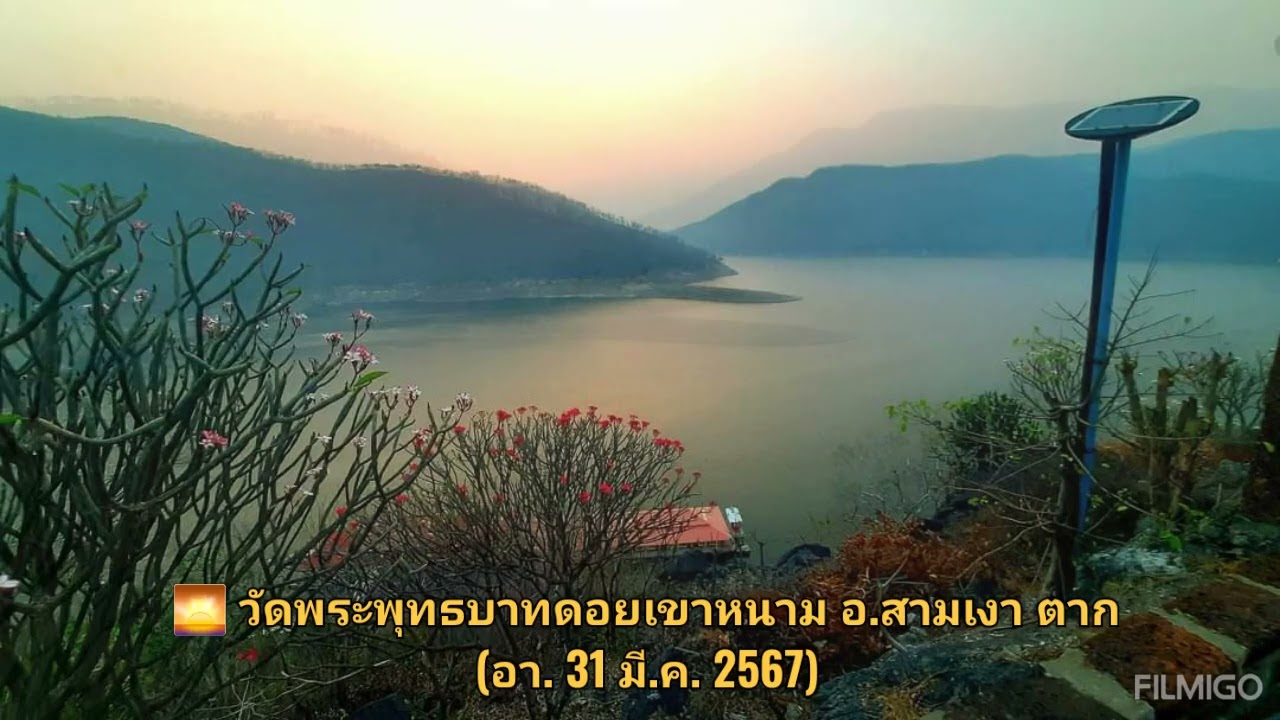
 Click to Access the Navigation Map GPS
Phra Phutthabat Doi Khao Nam Map
Recommend

 Art, Culture and Heritage
 Historical Sites and Monuments(2)
 Landmarks and Memorials(3)
 Art, Craft Centres, Tradition(6)
 Historic Homes and Cities(2)
 Educational Places
 Educational Gardens, Farm(2)
 Temple(22)
Other Sacred Sites(9)
Temple(22)
Other Sacred Sites(9)
 Suburban Living
 Village, Community(5)
 Local Market(3)
 Nature and Wildlife
 National Parks and Marine Reserves(9)
 Mountain (Doi)(9)
 Dam, Reservoir, Lake(14)
 Waterfalls(23)
 Hot Springs(2)
 Caves(6)
 River, Canal(1)
 Bays and Beaches(1)
 Islands(1)
 Other natural attractions(1)
 Entertainment and Agricultural
 Farms, Parks and Ecotourism(5)
 Outdoor and Adventure Activities(4)


