
lovethailand home >North Travel Attractions >Tak Travel Attractions >Muang Tak >Mae Tho > Wat Doi Khoi Khao Kaeo
TL;DR: Wat Doi Khoi Khao Kaeo is located at Bypass Road, Route Cho. 3, Mae Tho Subdistrict, Mueang Tak District, Tak Province, open Daily, hours Daytime visits are recommended.
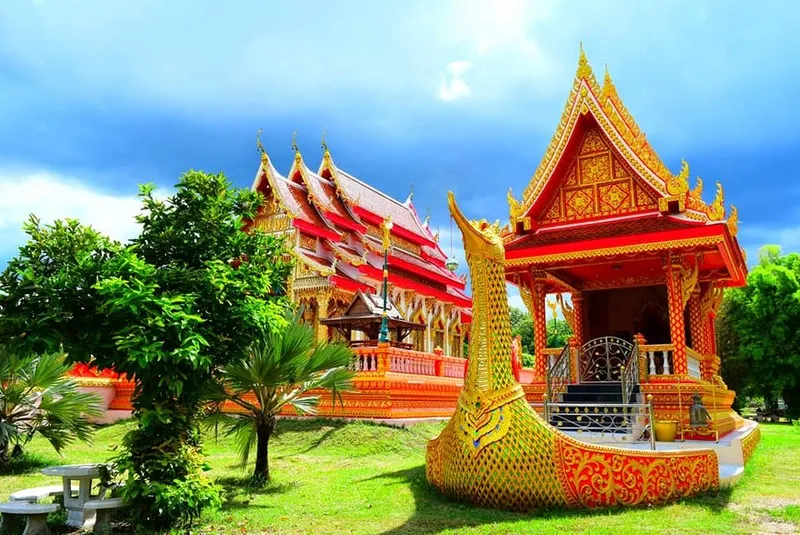
Wat Doi Khoi Khao Kaeo
Open Days: Daily
Opening Hours: Daytime visits are recommended
Wat Doi Khoi Khao Kaeo and Wat Klang Suan Dok Mai in Tak Province are historically significant Buddhist sites in Mae Tho Subdistrict, Mueang Tak District. Located along the bypass road known as Route Cho. 3, about 250 meters west of the Ping River, the two sites are closely linked with the story of King Taksin the Great when he was still known as Phraya Tak. They are remembered as places connected with a famous act of spiritual divination, a glass cup, sacred crystal balls, and the belief in Phraya Tak’s extraordinary merit and destiny.
For travelers interested in Thai history, these two temples offer more than a simple temple visit. They help explain why Tak Province holds such an important place in the life story of King Taksin the Great. Tak was a strategic frontier town connected with the Ping River, overland routes, military movement, trade, and political change. The story of Phraya Tak’s divination at Wat Doi Khoi Khao Kaeo therefore belongs not only to local memory, but also to the wider historical identity of the province.
The most important story associated with Wat Doi Khoi Khao Kaeo took place when King Taksin the Great was still serving as Phraya Tak. According to local historical tradition, he made a vow at the temple. He declared that if he truly possessed enough merit and spiritual power to become a reliable refuge for the people, the bell striker he threw toward a glass cup placed about five wa away should strike only the narrow middle part of the cup and break it without damaging the other parts. When he threw the striker, the result happened exactly as he had vowed. The event was witnessed by Buddhist devotees at the temple and led people to say that Phraya Tak possessed extraordinary merit and charisma.
This story carries deep symbolic meaning. It presents Phraya Tak as a figure of destiny before he became the founder of the Thonburi Kingdom. The broken glass cup became a sign through which the local community recognized his unusual merit. Whether approached as history, legend, or devotional memory, the story shows how strongly the people of Tak connected Phraya Tak with spiritual authority and future leadership.
After the divination, Phraya Tak ordered craftsmen to place one crystal ball on the top of the stupa at Wat Doi Khoi Khao Kaeo. Another crystal ball was requested by officials, merchants, and local people, who placed it on the top of the stupa at Wat Klang Suan Dok Mai. This is why the two temples are historically linked. Wat Doi Khoi Khao Kaeo is remembered as the place of the divination, while Wat Klang Suan Dok Mai is connected through the second crystal ball and the community’s shared faith in Phraya Tak.
Over the years, the crystal balls on the tops of the stupas disappeared after the upper parts of the stupas collapsed. Although the physical objects were lost, the story remained alive in local memory. This is one of the most important qualities of the site: even when material evidence changes or disappears, community memory continues to preserve the meaning of the place.
Historical accounts also mention that when King Taksin of Thonburi later traveled to Chiang Mai for the second time in 1774, he visited the abbot of Wat Doi Khoi Khao Kaeo and asked about the crystal ball connected with his earlier divination as Phraya Tak. This suggests that the temple was not only remembered by local people, but also remained meaningful to the king himself.
Prince Damrong Rajanubhab later suggested that King Taksin may have ordered the restoration of the entire monastery when returning from Chiang Mai in 1774. This interpretation gives Wat Doi Khoi Khao Kaeo additional importance as a temple that may have received royal attention. The temple is therefore meaningful in the context of both local Buddhist devotion and national history.
Important historical features at Wat Doi Khoi Khao Kaeo include the ordination hall with double boundary stones. Such double boundary stones indicate royal patronage and give the temple a special status. Inside the ordination hall are a stupa and a replica of the Buddha’s footprint. In front of the hall stand two stupas that contain the ashes of the father and mother of King Taksin the Great. These elements make the temple a key place for those who want to understand the personal and historical connections between King Taksin and Tak Province.
The replica Buddha footprint represents Buddhist devotion and the recollection of the Buddha’s teachings. The stupas containing the ashes of King Taksin’s parents add a strong emotional and familial dimension to the site. Wat Doi Khoi Khao Kaeo is therefore not only a place of legend, but also a place of memory, gratitude, and respect for the lineage of one of Thailand’s most important historical figures.
Wat Doi Khoi Khao Kaeo has been registered as a national historic site, with the registration announced in the Royal Gazette, Volume 52, Section 75, dated March 8, 1935. This confirms its value as a cultural heritage site of national importance. Visitors should therefore treat the area with care, avoid climbing on historic structures, avoid touching or moving old materials, and help preserve the dignity of the site.
Wat Klang Suan Dok Mai provides the second part of the story. It is a local Mahā Nikāya temple in Mae Tho Subdistrict. Records identify it as a private local temple established in 1916, with its consecrated boundary granted on January 5, 2009. In local historical memory, the temple is significant because the second crystal ball from the Phraya Tak divination story was placed on the top of its stupa. This gives the temple a direct connection to the same cycle of memory as Wat Doi Khoi Khao Kaeo.
The two temples should be understood together. Visiting only one gives an incomplete picture of the story. Wat Doi Khoi Khao Kaeo preserves the main setting of the divination and the royal-related historic structures. Wat Klang Suan Dok Mai preserves the memory of the second crystal ball and the role of local people, officials, and merchants in carrying the story forward. Together, they form a historical landscape of faith, kingship, and community memory.
Their location near the western side of the Ping River is also important. Like many historic communities in northern and western Thailand, Tak developed in close relationship with the river. Temples, settlements, travel routes, and local rituals were all shaped by proximity to the Ping River. Visiting these temples therefore invites travelers to think not only about buildings, but also about the river landscape that shaped old Tak.
Getting There is convenient from Tak town center. Travelers can follow the bypass road, Route Cho. 3, toward Mae Tho Subdistrict. The sites are located about 250 meters from the western side of the Ping River and can be reached by private car or local transport. They can be combined with other cultural sites in Tak town such as King Taksin the Great Shrine, Wat Bot Mani Si Bun Rueang, Wat Sitalaram, Ban Chin Alley, and Rattanakosin 200th Anniversary Bridge.
The best time to visit is in the morning or late afternoon when the weather is more comfortable and the light is suitable for photography. Travelers who want to understand the story properly should allow around 1 to 2 hours for both Wat Doi Khoi Khao Kaeo and Wat Klang Suan Dok Mai. Starting at Wat Doi Khoi Khao Kaeo helps visitors understand the divination story, while continuing to Wat Klang Suan Dok Mai completes the story of the second crystal ball.
For history lovers, the visit can be part of a King Taksin heritage route in Tak. A meaningful route can begin at King Taksin the Great Shrine, continue to Wat Doi Khoi Khao Kaeo, and then connect to Wat Klang Suan Dok Mai. This creates a coherent journey through places associated with Phraya Tak’s memory, local faith, and the historical identity of the province.
For families and young visitors, the site can serve as an outdoor history classroom. The story of the bell striker, glass cup, crystal balls, and royal merit is vivid and easy to imagine. It helps explain how historical memory often survives through temples, legends, monuments, and local storytelling rather than through textbooks alone.
Because Wat Doi Khoi Khao Kaeo is a registered historic site, visitors should be especially careful. Do not climb on old structures, touch fragile elements, move stones or materials, or leave offerings in inappropriate places. Respectful behavior helps protect the site and allows future visitors to learn from it.
Wat Doi Khoi Khao Kaeo and Wat Klang Suan Dok Mai are valuable because they bring together faith, history, royal memory, local identity, and the Ping River landscape. They may not be large tourist attractions in the usual sense, but they are deeply meaningful for anyone who wants to understand Tak Province and its connection with King Taksin the Great.
| Name | Wat Doi Khoi Khao Kaeo and Wat Klang Suan Dok Mai |
| Location | Bypass Road, Route Cho. 3, Mae Tho Subdistrict, Mueang Tak District, Tak Province |
| Address | Mae Tho Subdistrict, Mueang Tak District, Tak Province 63000, Thailand |
| Coordinates | Wat Doi Khoi Khao Kaeo: 16.8629780285, 99.1162940294 |
| Highlights | Historic site associated with Phraya Tak’s divination of royal merit, ordination hall with double boundary stones, stupas, replica Buddha footprint, and stupas containing the ashes of King Taksin’s parents |
| History | Associated with the divination story of Phraya Tak and with the later memory of King Taksin the Great. Prince Damrong Rajanubhab suggested that King Taksin may have restored the monastery after returning from Chiang Mai in 1774. |
| Name Origin | Wat Doi Khoi Khao Kaeo is linked with the glass cup and crystal ball from the divination story, while Wat Klang Suan Dok Mai is linked with the second crystal ball placed on its stupa |
| Distinctive Features | A religious and historic landscape west of the Ping River, closely associated with King Taksin the Great and the historical memory of Tak Province |
| Sacred Objects / Key Features | Ordination hall with double boundary stones, stupa, replica Buddha footprint, and two stupas containing the ashes of the father and mother of King Taksin the Great |
| Local Story / Tradition | The story of Phraya Tak throwing a bell striker toward a glass cup to test his merit and destiny, leading to local recognition of his extraordinary spiritual power |
| Historic Site Status | Wat Doi Khoi Khao Kaeo was registered as a historic site and announced in the Royal Gazette, Volume 52, Section 75, dated March 8, 1935 |
| Wat Klang Suan Dok Mai Information | A local Mahā Nikāya temple established in 1916 and granted consecrated boundary on January 5, 2009 |
| Travel Information | From Tak town, follow the bypass road, Route Cho. 3, toward Mae Tho Subdistrict. The sites are about 250 meters west of the Ping River and are best reached by private car or local transport. |
| Current Status | Historical, religious, and cultural attraction in Tak. Visitors should respect the sacred space and historic-site conditions. |
| Open Days | Daily |
| Opening Hours | Daytime visits are recommended |
| Facilities | Temple and historic-site area for worship, historical study, and quiet walking; located within reach of restaurants, accommodations, and attractions in Tak town |
| Main Areas / Zones | Ordination hall, double boundary stones, stupas, replica Buddha footprint, stupas containing the ashes of King Taksin’s parents, and areas associated with the divination story |
| Abbot / Caretaker | Wat Klang Suan Dok Mai: Phra Khru Wirot Thammaprasit Wat Doi Khoi Khao Kaeo: registered historic site; visitors should follow historic-site preservation guidelines |
| Nearby Tourist Attractions | 1. King Taksin the Great Shrine, about 3 km 2. Wat Bot Mani Si Bun Rueang, about 3 km 3. Wat Sitalaram / Wat Nam Hak, about 4 km 4. Ban Chin Alley, about 4 km 5. Rattanakosin 200th Anniversary Bridge, about 5 km |
| Nearby Restaurants | 1. Pad Thai Trok Ban Chin, about 4 km, Tel. 055-511330 2. Im Aroi Khao Tom Mueang Tak, about 4 km, Tel. 062-6156415 3. Khao Tom Mueang Tak Im Aroi, about 4 km, Tel. 081-8872438 4. TARA Kaffee&Patisserie, about 5 km 5. Tiengna Coffee and Bakery Farm, about 9 km, Tel. 096-805-0363 |
| Nearby Accommodations | 1. Viang Tak Riverside Hotel, about 4 km, Tel. 055-512507, 055-512508 2. Berich Hotel Tak, about 5 km, Tel. 082-4446242 3. HOP INN Tak, about 6 km, Tel. 02-0802222 4. White House Hotel Tak, about 7 km, Tel. 099-2347774 5. BanRai ChernMa Resort, about 10 km, Tel. 055-893030 |
Frequently Asked Questions (FAQ)
Q: Where are Wat Doi Khoi Khao Kaeo and Wat Klang Suan Dok Mai located?
A: They are located along the bypass road, Route Cho. 3, in Mae Tho Subdistrict, Mueang Tak District, Tak Province, about 250 meters west of the Ping River.
Q: How is Wat Doi Khoi Khao Kaeo connected with King Taksin the Great?
A: It is remembered as the place where King Taksin, when still Phraya Tak, made a divination vow using a bell striker and a glass cup, leading people to believe in his extraordinary merit and destiny.
Q: How is Wat Klang Suan Dok Mai connected with the crystal ball story?
A: After the divination, one crystal ball was placed on the stupa at Wat Doi Khoi Khao Kaeo, while another was placed on the stupa at Wat Klang Suan Dok Mai by officials, merchants, and local people.
Q: What are the important features of Wat Doi Khoi Khao Kaeo?
A: Important features include the ordination hall with double boundary stones, a stupa, a replica Buddha footprint, and two stupas containing the ashes of King Taksin’s father and mother.
Q: Is Wat Doi Khoi Khao Kaeo a registered historic site?
A: Yes. It was registered as a historic site and announced in the Royal Gazette, Volume 52, Section 75, dated March 8, 1935.
Q: Who is the abbot of Wat Klang Suan Dok Mai?
A: The abbot of Wat Klang Suan Dok Mai is Phra Khru Wirot Thammaprasit.
Q: What nearby places can be visited with these temples?
A: Nearby places include King Taksin the Great Shrine, Wat Bot Mani Si Bun Rueang, Wat Sitalaram, Ban Chin Alley, and Rattanakosin 200th Anniversary Bridge.
Q: How should visitors behave at the historic site?
A: Visitors should dress modestly, keep quiet, avoid climbing on old structures, avoid touching or moving historic materials, keep the area clean, and respect the sacred atmosphere of the temples.
 Category: ●Places of Worship
 Group: ●Temple
Last Update : 4 MonthAgo
 Last Update : 4 MonthAgo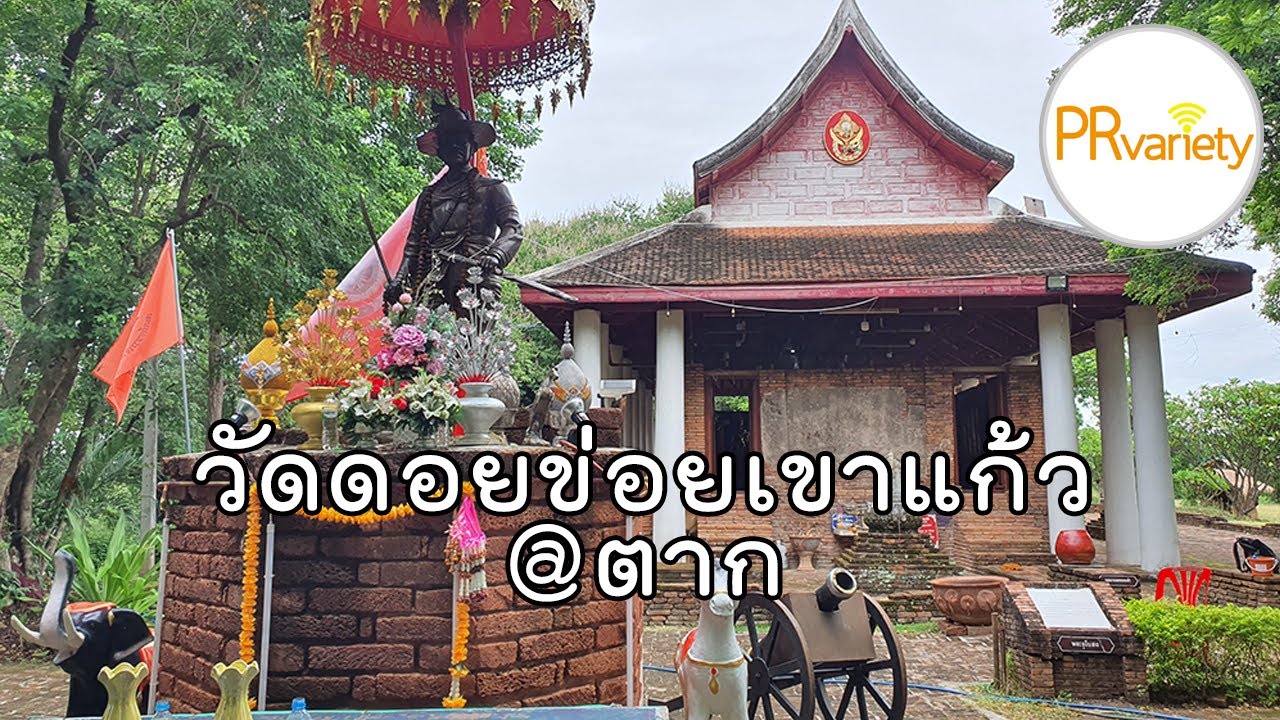
 Click to Access the Navigation Map GPS
Wat Doi Khoi Khao Kaeo Map
Recommend

 Art, Culture and Heritage
 Historical Sites and Monuments(2)
 Landmarks and Memorials(3)
 Art, Craft Centres, Tradition(6)
 Historic Homes and Cities(2)
 Educational Places
 Educational Gardens, Farm(2)
Temple(22)
Educational Gardens, Farm(2)
Temple(22)
 Other Sacred Sites(9)
 Suburban Living
 Village, Community(5)
 Local Market(3)
 Nature and Wildlife
 National Parks and Marine Reserves(9)
 Mountain (Doi)(9)
 Dam, Reservoir, Lake(14)
 Waterfalls(23)
 Hot Springs(2)
 Caves(6)
 River, Canal(1)
 Bays and Beaches(1)
 Islands(1)
 Other natural attractions(1)
 Entertainment and Agricultural
 Farms, Parks and Ecotourism(5)
 Outdoor and Adventure Activities(4)


