
lovethailand home >North Travel Attractions >Tak Travel Attractions >Muang Tak >Nong Bua Tai > Khlong Wang Chao National Park
TL;DR: Khlong Wang Chao National Park is located at The park covers areas of Tak and Kamphaeng Phet Provinces. The park headquarters is located in Kosamphi Subdistrict, Kosamphi Nakhon, open Daily, hours 08.30 – 16.30.
Khlong Wang Chao National Park
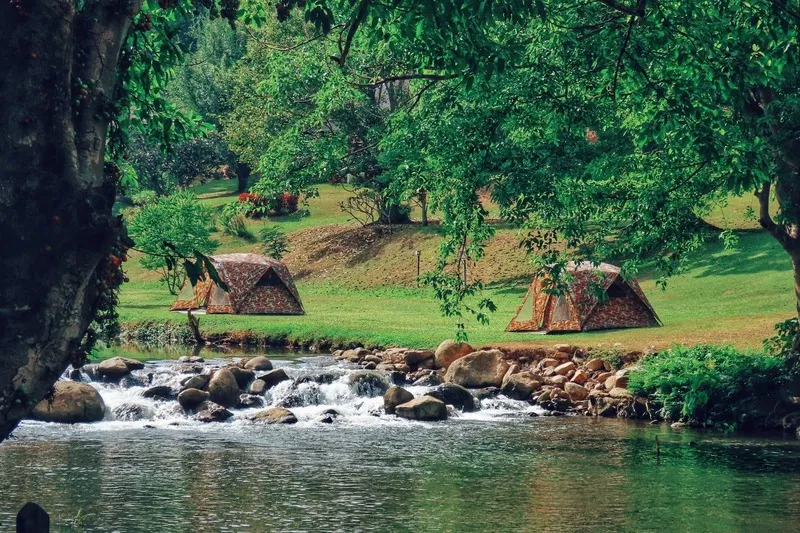
Open Days: Daily
Opening Hours: 08.30 – 16.30
Khlong Wang Chao National Park in Tak Province is one of the most ecologically rich and geographically diverse forest areas in western Thailand. The park covers areas of both Tak and Kamphaeng Phet Provinces and lies in a transitional zone between the western mountain ranges and the edge of the central plains. Its landscape is dominated by complex mountain ranges running mainly from north to south as part of the Thanon Thong Chai Range. What makes Khlong Wang Chao National Park especially remarkable is not only its waterfalls and streams, but also its complete natural setting of mountains, forests, river basins, wildlife habitats, viewpoints, nature trails, camping areas, and cool forest valleys.
The central part of the park contains small basin-like flat areas surrounded by mountains. These natural basins cover approximately 2,000–5,000 rai and create a distinctive landscape of valleys, ridges, streams, and forest zones at different elevations. Important mountains in the park include Khao Yen, Khao Son, Khao Tao Dam, Khao Khanun, Khao Kha Laeng, Khao I Lo Kho, Khao Wang Chao, Khao Pang Yai, Doi Luak, and Khao Wung Kasang. Khao Yen, located in the western part of the park, is the highest peak in the area at approximately 1,898 meters above sea level. Its elevation helps shape the climate, water system, and biodiversity of the park.
Khlong Wang Chao National Park forms part of the Ping River basin and contains two major watershed systems: the Khlong Wang Chao watershed and the Khlong Suan Mak watershed. Several important streams run through the park, including Khlong Mae Yama, Khlong Khun Mak, Khlong Khayaeng, Khlong Phrai, Khlong Wung Kasang, and Khlong Tao Dam. These streams are the lifelines of the forest. They feed waterfalls, create natural pools, provide water for wildlife, and maintain humidity in the forest ecosystem. Visiting Khlong Wang Chao is therefore not simply about seeing waterfalls, but about experiencing a complete watershed landscape.
The park’s climate is influenced by the southwest monsoon from mid-May to mid-October, bringing high humidity, heavy cloud cover, and frequent rainfall. Average annual rainfall is around 1,318 millimeters. During the rainy season, the waterfalls are especially powerful, the forest becomes lush and green, and streams throughout the park are full of life. From mid-October to mid-February, the northeast monsoon brings cooler weather, clearer skies, and comfortable conditions for hiking, camping, and scenic photography. The lowest temperatures are usually recorded in January, at around 14 degrees Celsius, while the hottest period can reach approximately 36 degrees Celsius. The average annual temperature is around 26 degrees Celsius.
The forest of Khlong Wang Chao National Park is highly diverse and consists of 5 main forest types: mixed deciduous forest, hill evergreen forest, dry evergreen forest, dry dipterocarp forest, and pine forest. This variety creates several ecological zones within one protected area, ranging from lower-elevation forests and valley forests to cool mountain forests and pine-covered ridges. The diversity of forest types supports a wide range of plants, mammals, birds, reptiles, insects, ferns, fungi, and aquatic species, making the park an excellent destination for nature study.
Mixed deciduous forest covers approximately 65 percent of the park and can be found from around 200–1,000 meters above sea level. Important tree species include teak, rok fa, daeng, pradu, makok kluean, rak yai, salao, mok man, sathip, kang khi mot, and po tup hu chang. Bamboo species such as pai sang nuan and pai rai are also common. This forest type is especially important for wildlife because it provides food, cover, nesting areas, and seasonal resources for animals such as gaur, barking deer, sambar deer, fishing cats, wild boar, and junglefowl.
Hill evergreen forest is found on steep mountain areas in the western section of the park, extending north to south at elevations above 1,000 meters. Tree species include various oaks, fa la mi, kha hot, saraphi doi, phawa, pho bai, ko mon, and thalo. The forest floor is dense with ferns, wild cardamom, reeds, grasses, and rattan. This cool and humid forest type provides important seasonal habitat for large mammals such as gaur and smaller species such as the white-cheeked flying squirrel, tiny white-bellied flying squirrel, scarlet minivet, small minivet, and velvet-fronted nuthatch.
Dry evergreen forest occurs mainly in valley areas in the central section of the park, at elevations of around 400–1,000 meters. This forest is more humid than mixed deciduous forest but less humid than hill evergreen forest. Important plant species include chumsaeng daeng, salao, yom hin, kradong daeng, toem, saban nga, krathum nam, lamphu pa, fig trees, tao, tao rang, and kho. It provides food and shelter for wildlife such as gaur, sambar deer, lesser mouse-deer, Asian golden cat, leopard cat, great hornbill, wreathed hornbill, and other forest birds.
Dry dipterocarp forest appears in patches on hilltops and low ridges in the eastern and northern parts of the park, at elevations of around 200–800 meters. Important species include teng, rang, hiang, phluang, krathom mu, ko nok, ko phae, san yai, and mango-like wild trees. The forest floor is often covered with grasses such as ya phek, chot, ya kha, and small ya nuat rue si. Although this forest type is drier and more open than other forest zones, it provides habitat for species such as wild boar, barking deer, monitor lizards, and yellow tortoises.
Pine forest occurs in scattered patches along ridges and mountain tops at elevations of around 900–1,200 meters. Dominant species include three-needle pine, mako, thalo, saraphi doi, and tam sao nu. This forest type has a different atmosphere from denser evergreen or mixed deciduous forest, with more open light and a cooler mountain feeling. Wildlife found in pine forest areas includes serow, wild boar, pig-tailed macaque, banded palm civet, Asiatic brush-tailed porcupine, and yellow rajah rats. For visitors interested in mountain ecosystems, the pine forest zone is one of the park’s most distinctive environments.
Waterfalls are among the main highlights of Khlong Wang Chao National Park. Important waterfalls include Khlong Wang Chao Waterfall, Tao Dam Waterfall, and Wung Kasang Waterfall. These waterfalls are medium to large in size and flow through natural forest streams into clear pools surrounded by lush vegetation, ferns, wet rocks, and large trees. The atmosphere around the waterfalls is cool and refreshing, making them ideal for relaxation, nature photography, and forest stream study. The waterfalls are not only scenic attractions; they are also important water sources for wildlife and indicators of the health of the forest ecosystem.
Khlong Wang Chao Waterfall is one of the most important waterfalls in the park and reflects the identity of the national park itself. The stream flows through natural forest and rock formations before dropping into pools below. The surrounding area is shaded and peaceful, suitable for visitors who want to experience nature at a slow pace. Visitors should walk carefully around the waterfall because rocks and wet surfaces may be slippery, especially after rainfall or during the rainy season. Photography should be done from safe areas, and visitors should avoid climbing on rocks near strong currents.
Tao Dam Waterfall is another outstanding attraction for nature lovers and more adventurous travelers. The waterfall is formed by forest streams flowing through layers of rock and deep woodland. The surrounding landscape feels wild and highly natural. Visitors should check trail conditions with park staff before going to Tao Dam Waterfall because access may involve walking, stairs, slopes, or seasonal trail changes. Proper footwear, drinking water, and sufficient time for the return journey are recommended.
Wung Kasang Waterfall adds to the variety of water features in the park. The area around the waterfall includes streams, forest, and a quiet natural setting suitable for travelers who prefer a less crowded atmosphere. Visitors to all waterfalls in the park should follow park regulations, avoid littering, avoid using soap or shampoo in streams, keep noise levels low, and never leave food waste in forest areas because it can affect wildlife and water quality.
Viewpoints on mountain peaks such as Khao Yen and Khao Son are suitable for travelers who enjoy mountain landscapes and scenic photography. During the cool season, clear skies and good visibility make it possible to see the surrounding Thanon Thong Chai Range and the basin-like landforms in the central part of the park. Some mornings may offer mist, cool air, and soft light over the ridgelines. Visitors interested in viewpoints should ask park staff about current trail conditions, safety, and whether a local guide is required, because some areas may not be suitable for independent travel without updated information.
Khlong Wang Chao National Park is also a valuable destination for birdwatching and wildlife observation. Species associated with the park include the white-cheeked flying squirrel, tiny white-bellied flying squirrel, scarlet minivet, small minivet, velvet-fronted nuthatch, serow, Asian golden cat, leopard cat, and wreathed hornbill. Aquatic species in streams include snakehead fish, waterfall barb, stone carp, and striped blackline rasbora. Wildlife sightings are never guaranteed, but quiet movement, patience, and early morning or late afternoon observation can increase the chance of seeing animal tracks, bird activity, or wildlife behavior.
Tourism activities in the park include short nature walks, forest study, waterfall visits, birdwatching, nature photography, camping, staying in park accommodation, scenic viewpoints, and water-based activities only in areas permitted by staff. All activities should be planned with safety and conservation rules in mind. During the rainy season, visitors should check with park staff about trail conditions, flash flood risks, and any temporary restrictions before entering waterfall or forest areas.
For overnight stays, the park provides camping areas and basic visitor facilities such as toilets, shower rooms, welfare shops, parking areas, visitor service zones, and park accommodation. The area around park headquarters has a quiet natural atmosphere suitable for travelers who want to stay close to the forest. Visitors who want to reserve park accommodation or camp overnight should contact the park in advance, especially during weekends, public holidays, and peak travel seasons. Personal items such as flashlights, warm clothing, medicine, trash bags, and suitable walking shoes should be prepared.
The best time to visit Khlong Wang Chao National Park depends on the traveler’s purpose. Those who want to see waterfalls at their most powerful should visit during the rainy season or early cool season, when the forest is green and water levels are high. However, extra caution is needed because of slippery trails, rain, and possible flash floods. Those who want to hike, camp, enjoy viewpoints, and photograph mountains will find the cool season most comfortable. The hot season is suitable for relaxing near streams and waterfalls, but visitors should prepare enough drinking water and sun protection.
Getting There to Khlong Wang Chao National Park is most convenient by private car. From Kamphaeng Phet Province, follow the Asian Highway A1 to Wang Chao Market Intersection, then turn left toward Ban Na Bot. Continue along Provincial Highway 1110 for about 3 kilometers to Ban Den Kha Junction. From there, turn left toward Ban Nong Daen and then turn right for another 7 kilometers to reach the park headquarters. The total distance is about 28 kilometers. Another route from Kamphaeng Phet follows Asian Highway A1 to a left turn about 500 meters before Ban Wang Chao Intersection, then continues toward Ban Lo Kho and Ban Nong Daen for a total distance of about 30 kilometers. The access road is paved, making the park reachable throughout the year.
Although the main access road is paved, travelers should still check their vehicle before departure, especially brakes, tires, fuel, and lights. During the rainy season, extra caution is required because some road sections may be slippery during heavy rain. Traveling in the morning or during daylight is safer and makes road signs easier to see. Visitors using online maps should still confirm the route with park staff or local residents when needed, because some minor routes may vary in condition by season.
Visitors to Khlong Wang Chao National Park should strictly respect nature. Do not collect plants, disturb wildlife, feed animals, make loud noises, leave trash, or remove natural objects from the park. Camp only in designated areas and avoid lighting fires outside permitted zones. Responsible travel ensures that the forest remains healthy for wildlife, local communities, and future visitors.
The park is suitable for many types of travelers. Families can enjoy streams and waterfalls. Hikers can explore nature trails. Photographers can capture waterfalls, forests, birds, and mountains. Birdwatchers can spend time observing forest species, while travelers seeking peace can camp or stay in park accommodation to enjoy the quiet atmosphere of the western forest.
Nearby places that can be combined with a trip to Khlong Wang Chao National Park include Khlong Wang Chao Waterfall, Tao Dam Waterfall, Khlong Samo Klueai Waterfall, Pong Pao Waterfall, Khlong Lan National Park, Lan Sang National Park, and Wang Chao District. Travel plans should consider actual road distances, seasonal conditions, and opening hours of each site. If visiting several places in one day, travelers should start early and avoid overloading the itinerary because nature destinations require time for safe travel and proper rest.
Food options near the park include local restaurants around Na Bot, Wang Chao District, Kamphaeng Phet, and Tak. Visitors should carry snacks and drinking water, especially if planning to visit several points inside the park. The park’s welfare shop provides basic services, but travelers looking for more restaurant choices should plan meals in Wang Chao District, Kosamphi Nakhon District, Kamphaeng Phet, or Tak town before or after entering the park.
For accommodation, visitors can choose park accommodation or the campground inside Khlong Wang Chao National Park. These options are best for travelers who want to stay close to nature and spend more time in the park. Those who prefer hotels, resorts, or more convenient services can stay in Wang Chao District, Tak town, or Kamphaeng Phet town and visit the park as a day trip. The choice depends on the travel style: camping and park accommodation suit nature-focused travelers, while city accommodation is more convenient for families or older visitors.
Overall, Khlong Wang Chao National Park is a complete nature destination with forests, mountains, waterfalls, streams, wildlife, viewpoints, camping areas, and nature study opportunities. It is ideal for travelers who want to experience the richness of Thailand’s western forest without traveling too far from Kamphaeng Phet or Tak. The diversity of 5 forest types, the height of Khao Yen, the Khlong Wang Chao and Khlong Suan Mak watershed systems, and several important waterfalls make this national park one of the most valuable natural destinations in Tak and Kamphaeng Phet Provinces.
| Name | Khlong Wang Chao National Park |
| Location | The park covers areas of Tak and Kamphaeng Phet Provinces. The park headquarters is located in Kosamphi Subdistrict, Kosamphi Nakhon District, Kamphaeng Phet Province. |
| Address | 446 Mu 22, Kosamphi Subdistrict, Kosamphi Nakhon District, Kamphaeng Phet Province 62000 |
| Highlights | Large natural forest area, Thanon Thong Chai Range, Khao Yen, Khlong Wang Chao Waterfall, Tao Dam Waterfall, Wung Kasang Waterfall, natural streams, viewpoints, birdwatching, and wildlife observation |
| Geography | Complex mountain ranges running north–south, with two small basin-like flat areas in the central part of the park and many streams flowing through the forest |
| Important Mountains | Khao Yen, Khao Son, Khao Tao Dam, Khao Khanun, Khao Kha Laeng, Khao I Lo Kho, Khao Wang Chao, Khao Pang Yai, Doi Luak, and Khao Wung Kasang. Khao Yen is approximately 1,898 meters above sea level. |
| Watersheds and Streams | Khlong Wang Chao watershed and Khlong Suan Mak watershed, with streams such as Khlong Mae Yama, Khlong Khun Mak, Khlong Khayaeng, Khlong Phrai, Khlong Wung Kasang, and Khlong Tao Dam |
| Forest Types | Mixed deciduous forest, hill evergreen forest, dry evergreen forest, dry dipterocarp forest, and pine forest |
| Wildlife | Gaur, barking deer, sambar deer, wild boar, serow, Asian golden cat, leopard cat, fishing cat, white-cheeked flying squirrel, tiny white-bellied flying squirrel, scarlet minivet, small minivet, velvet-fronted nuthatch, great hornbill, and wreathed hornbill |
| Recommended Activities | Waterfall visits, nature trails, birdwatching, nature photography, camping, park accommodation, mountain viewpoints, and western forest ecosystem study |
| Travel Information | From Kamphaeng Phet, follow Asian Highway A1 to Wang Chao Market Intersection, turn toward Ban Na Bot, continue on Provincial Highway 1110 to Ban Den Kha Junction, then toward Ban Nong Daen and the park headquarters. The total distance is about 28 km. Another route turns toward Ban Lo Kho before Ban Wang Chao Intersection and continues through Ban Nong Daen for about 30 km. |
| Current Status | Open as a national park, natural attraction, camping area, and nature study destination |
| Open Days | Daily |
| Opening Hours | 08.30 – 16.30 |
| Fees | Thai visitors: Adults 40 Baht, Children 20 Baht / Foreign visitors: Adults 200 Baht, Children 100 Baht / Vehicle fee: 30 Baht |
| Facilities | Visitor center, park accommodation, campground, toilets, shower rooms, welfare shop, parking area, and nature study areas |
| Main Areas / Zones | Park headquarters, campground, park accommodation, Khlong Wang Chao Waterfall, Tao Dam Waterfall, Wung Kasang Waterfall, hiking trails, viewpoints, and natural streams |
| Caretaker / Information Contact | Khlong Wang Chao National Park, Tel. 093-790-0935 |
| Nearby Local Information | Na Bot Subdistrict Administrative Organization, Wang Chao District, Tak Province, Tel. 055-895-073 |
| Nearby Tourist Attractions | 1. Khlong Wang Chao Waterfall, about 1 km 2. Tao Dam Waterfall, about 12 km 3. Khlong Samo Klueai Waterfall, about 18 km 4. Pong Pao Waterfall, Na Bot Subdistrict, about 20 km 5. Khlong Lan National Park, about 45 km 6. Lan Sang National Park, about 60 km |
| Nearby Restaurants | 1. Khlong Wang Chao National Park Welfare Shop, about 0.1 km 2. Baan Kaprao @ Na Bot, about 16 km, Tel. 095-925-2930, 064-009-9871 3. Khrua Baan Suan at Wang Chao, about 30 km, Tel. 061-982-4391 4. DMG Coffee & Cafe Kamphaeng Phet, about 46 km 5. Thiang Na Coffee and Bakery Tak, about 60 km 6. Restaurants in Kamphaeng Phet town, about 45 km |
| Nearby Accommodations | 1. Khlong Wang Chao National Park Accommodation, about 0.1 km, Tel. 093-790-0935 2. Khlong Wang Chao National Park Campground, about 0.1 km, Tel. 093-790-0935 3. StationHouse Wang Chao, about 30 km, Tel. 083-270-9696 4. Pak Dee Resort Wang Chao, about 30 km, Tel. 088-557-6917, 081-870-3602 5. Baan Din Baramee Resort Kamphaeng Phet, about 45 km 6. Mai Yai Resort Kamphaeng Phet, about 48 km |
Frequently Asked Questions (FAQ)
Q: Where is Khlong Wang Chao National Park located?
A: Khlong Wang Chao National Park covers areas of Tak and Kamphaeng Phet Provinces. The park headquarters is located at 446 Mu 22, Kosamphi Subdistrict, Kosamphi Nakhon District, Kamphaeng Phet Province.
Q: What are the opening hours of Khlong Wang Chao National Park?
A: The park is open daily from 08.30 to 16.30. Visitors who want to stay overnight in park accommodation or camp should contact the park in advance.
Q: What is the entrance fee for Khlong Wang Chao National Park?
A: General entrance fees are 40 Baht for Thai adults and 20 Baht for Thai children. Foreign visitors pay 200 Baht for adults and 100 Baht for children. The vehicle fee is 30 Baht.
Q: Which waterfalls are interesting in Khlong Wang Chao National Park?
A: Important waterfalls include Khlong Wang Chao Waterfall, Tao Dam Waterfall, and Wung Kasang Waterfall. These waterfalls are set within natural forest landscapes with streams, pools, and shaded surroundings.
Q: What activities are suitable at Khlong Wang Chao National Park?
A: Recommended activities include nature walks, waterfall visits, birdwatching, nature photography, camping, park accommodation, mountain viewpoints, and studying western forest ecosystems.
Q: How can travelers get to Khlong Wang Chao National Park?
A: From Kamphaeng Phet, follow Asian Highway A1 to Wang Chao Market Intersection, then continue toward Ban Na Bot and Ban Nong Daen to reach the park headquarters. The main access route is about 28 km. Another route passes Ban Lo Kho and Ban Nong Daen for about 30 km.
Q: When is the best time to visit Khlong Wang Chao National Park?
A: The cool season is best for hiking, camping, and viewpoints because the weather is comfortable and skies are clearer. The rainy season through early cool season is best for waterfalls because the forest is green and water levels are high.
Q: Does Khlong Wang Chao National Park have accommodation?
A: Yes. The park has accommodation, a campground, toilets, shower rooms, and a welfare shop. Visitors who want to stay overnight should contact the park at 093-790-0935 before traveling.
Mobile : 0937900935
 Mobile : 0937900935
 Category: ●Nature and Wildlife
 Group: ●National Parks and Marine Reserves
Last Update : 2 MonthAgo
 Last Update : 2 MonthAgo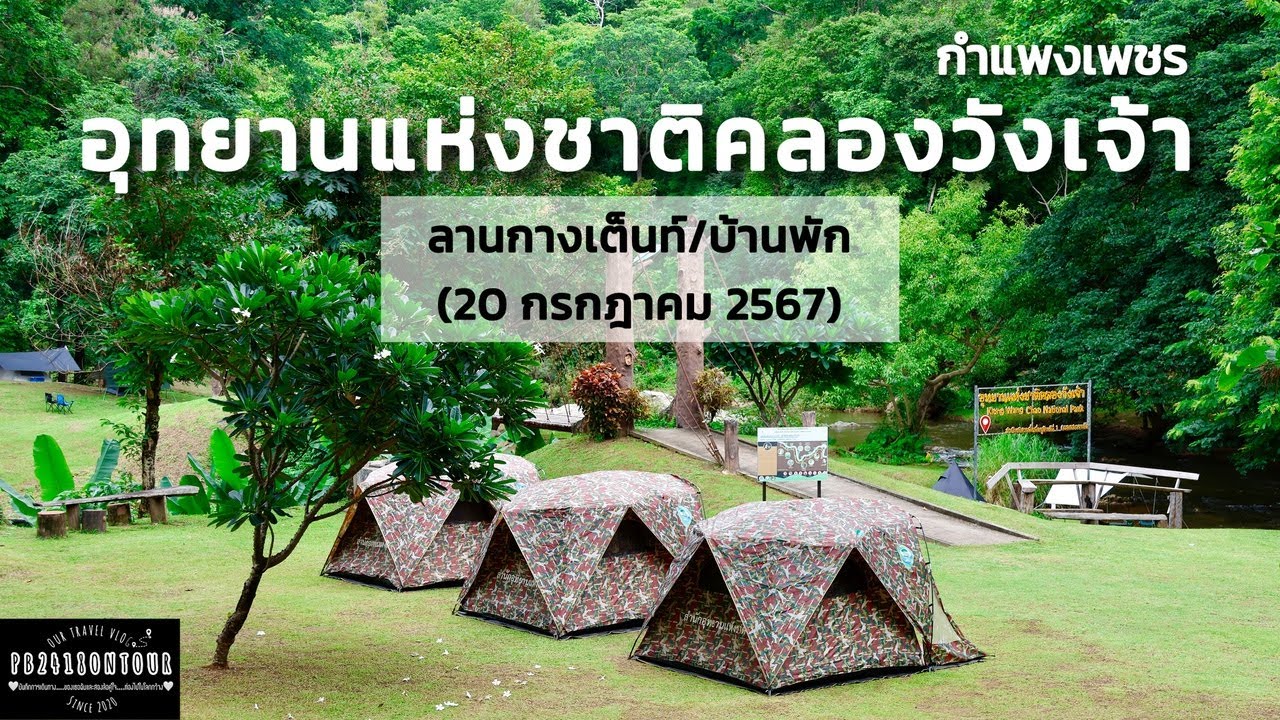
 Click to Access the Navigation Map GPS
Khlong Wang Chao National Park Map
Recommend

 Art, Culture and Heritage
 Historical Sites and Monuments(2)
 Landmarks and Memorials(3)
 Art, Craft Centres, Tradition(6)
 Historic Homes and Cities(2)
 Educational Places
 Educational Gardens, Farm(2)
 Places of Worship
 Temple(22)
 Other Sacred Sites(9)
 Suburban Living
 Village, Community(5)
 Local Market(3)
National Parks and Marine Reserves(9)
Local Market(3)
National Parks and Marine Reserves(9)
 Mountain (Doi)(9)
 Dam, Reservoir, Lake(14)
 Waterfalls(23)
 Hot Springs(2)
 Caves(6)
 River, Canal(1)
 Bays and Beaches(1)
 Islands(1)
 Other natural attractions(1)
 Entertainment and Agricultural
 Farms, Parks and Ecotourism(5)
 Outdoor and Adventure Activities(4)


