
lovethailand home >North Travel Attractions >Chiang Mai Travel Attractions >Muang Chiang Mai >Phra Sing > Wat Phra Chao Mengrai
TL;DR: Wat Phra Chao Mengrai is located at Phra Sing Subdistrict, Mueang Chiang Mai District, Chiang Mai Province, open Daily, hours 08.00 – 17.00.
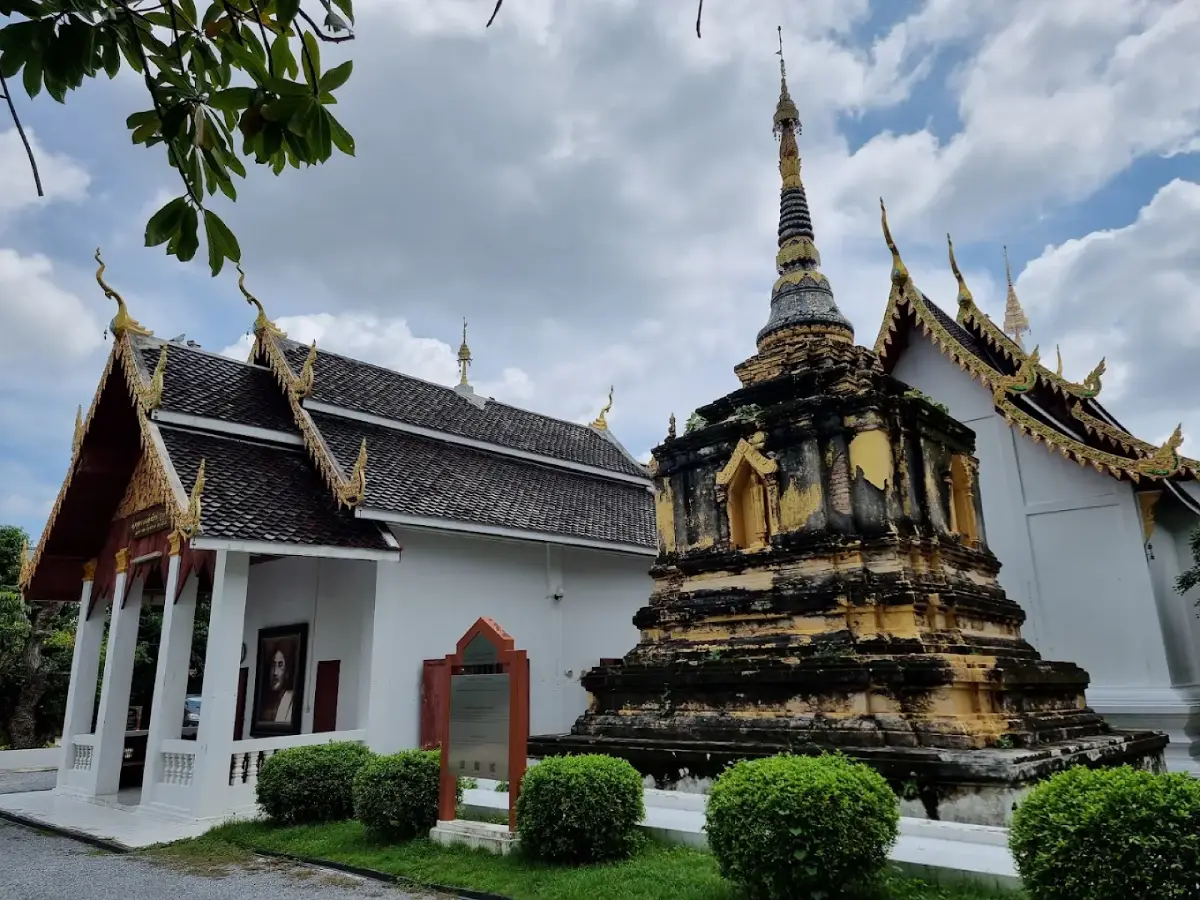
Wat Phra Chao Mengrai
Open Days: Daily
Opening Hours: 08.00 – 17.00
Wat Phra Chao Mengrai is an old Buddhist temple in Chiang Mai’s historic old city area. It is located around Ratchamankha Road Soi 6, Phra Sing Subdistrict, Mueang Chiang Mai District, Chiang Mai Province. The temple is a local Buddhist monastery under the Mahanikaya order and is one of Chiang Mai’s culturally important temples because of its close association with King Mangrai, the founder of Chiang Mai and the first king of the Mangrai Dynasty. Its key highlights include the legend of Phra Chao Kha Khing Phaya Mangrai, old bronze Buddha images, a silver reliquary inscription under the base of the principal Buddha image, a Buddha image modeled after Phra Phuttha Sihing created in 2012 B.E., and the temple’s registration as a national ancient monument in the Royal Gazette on 8 March 2478 B.E.
Wat Phra Chao Mengrai is suitable for visitors who want to understand Chiang Mai through history, sacred art, and old-city legends. The temple is not only a place for worship. It is also a site connected with the founding of Chiang Mai, the movement of a sacred Buddha image from Wiang Kum Kam, the foundation of Wat Chiang Man, old Lanna inscriptions, and Buddhist sculpture from the early 21st Buddhist century. A visit to this temple gives travelers a clear view of how temple names, inscriptions, Buddha images, and city legends preserve the deeper historical memory of Lanna.
The temple was formerly known as Wat Khan Khod or Wat Khan Khat. These names are connected with the northern Thai expression “Ka La Kot” or “Kan La Kot.” In the local language, “kan” refers to a carrying pole, while “khod” or “khat” suggests being narrowed, worn, or broken. The name is linked with the legend that the carrying pole used to transport Phra Chao Kha Khing Phaya Mangrai from Wiang Kum Kam toward Wat Chiang Man broke at this spot. King Mangrai interpreted the incident as an important sign and ordered that a temple be established there to enshrine the Buddha image.
The temple was also known by another historical name, Wat Si Soi Tha Chaeng, before it was renamed Wat Phra Chao Mengrai after World War II. The present name strengthens the temple’s association with King Mangrai. It immediately identifies the temple as more than an ordinary neighborhood monastery. It is a site tied to the memory of Chiang Mai’s founder and to the sacred geography of early Lanna.
Historical sources citing the National Office of Buddhism state that Wat Phra Chao Mengrai was established and received its royal granting of the visungkhamsima in 1839 B.E. This year is significant because it is also associated with the founding of Chiang Mai as Nopburi Si Nakhon Ping Chiang Mai. The temple should therefore be understood within the larger context of King Mangrai’s city planning, the formation of a new Lanna capital, and the establishment of Buddhist institutions within the new city.
The legend of Phra Chao Kha Khing Phaya Mangrai begins during King Mangrai’s period at Wiang Kum Kam. In 1831 B.E., a respected monk named Phra Maha Kassapa Thera, together with five disciples, practiced near Wiang Kum Kam. King Mangrai was deeply impressed by the monk’s discipline and spiritual qualities. After hearing teachings on the merit of creating Buddha images, the king ordered the construction of a monastery and the casting of five Buddha images: three seated images and two standing images. One of the standing images was made to correspond to the king’s own body size.
The name Phra Chao Kha Khing Phaya Mangrai has a specific meaning in northern Thai. “Phra Chao” means a Buddha image, “kha” means equal to or equivalent, and “khing” refers to the body or bodily height. The name therefore refers to a Buddha image whose size was associated with King Mangrai’s own body. The image is a large standing bronze Buddha in the forbidding-the-relatives posture, about 540 centimeters high. It is one of the important early Chiang Mai Buddha images, and its story appears in Chiang Mai local chronicles and the Yonok Chronicle.
After King Mangrai founded Chiang Mai, he established Wat Chiang Man as one of the most important early temples inside the city. He then ordered Phra Chao Kha Khing Phaya Mangrai to be brought from Wiang Kum Kam to the new city. As the image was being carried, the pole broke at the place later associated with Wat Khan Khod. King Mangrai took this as an auspicious sign and ordered a temple to be built there so that the image could be enshrined at that spot. This story tightly connects the temple name, the Buddha image, Wiang Kum Kam, Wat Chiang Man, and the founding memory of Chiang Mai.
Phra Chao Kha Khing Phaya Mangrai is a standing Buddha image in the forbidding-the-relatives posture. The right hand is raised at chest level with the palm facing outward, while the left hand hangs alongside the body. The robe clings closely to the body, the hair curls are large, and the flame-like ushnisha rises above the head. In Buddhist tradition, this posture refers to the episode in which the Buddha stopped conflict between relatives over water at the Rohini River. The image therefore carries a meaning of peace, restraint, reconciliation, and the resolution of conflict through Dharma.
The importance of Phra Chao Kha Khing Phaya Mangrai is not limited to its size. It is a sacred image deeply connected with Chiang Mai’s founding narrative. It links King Mangrai, Wiang Kum Kam, Wat Chiang Man, the broken carrying pole, and the naming of Wat Khan Khod. When visitors come to Wat Phra Chao Mengrai, they are not only paying respect to a Buddha image. They are entering a place where Chiang Mai’s city legend and Buddhist devotion meet.
Another important piece of evidence at Wat Phra Chao Mengrai is the silver reliquary inscription found under the base of the principal Buddha image in the viharn. It was discovered during restoration work in 2510 B.E. and was written in the Thai Yuan or local Lanna script. The inscription refers to Kruba Ubala, who created a silver reliquary to enshrine relics and sacred objects in Wat Karakot for the support of Buddhism through 5000 years of the Buddha’s dispensation. This inscription strengthens the historical connection between the old name of the temple and the term Ka La Kot.
Inside the main viharn is a Buddha image modeled after Phra Phuttha Sihing. It was created by Si Satthamma Maha Sangharaja in 2012 B.E. The image has a lap width of 86 centimeters, an overall height including the base of 133 centimeters, and a base width of 115 centimeters. This image is important because its creation belongs to the period of King Tilokaraj of the Mangrai Dynasty, a time when Buddhism and Lanna Buddhist art flourished in Chiang Mai. It is one of the temple’s most important art-historical objects.
Wat Phra Chao Mengrai also contains several bronze Buddha images in the Mara-vijaya posture. Some of these images have inscriptions and can be studied as examples of Buddha image forms from around the early 21st Buddhist century. These images reveal Lanna bronze-casting skills, devotional merit-making, and Chiang Mai’s artistic preferences during an important period. Together with the inscriptions and other sacred objects, they give the temple considerable scholarly value.
The walking Buddha image in the smaller viharn is another significant sacred object. It is a Lanna Buddha image of the Chiang Mai school, made of gilded bronze and dated to around the 21st–22nd Buddhist centuries. It was listed in the Royal Gazette, Volume 52, Part 75, on 8 March 2478 B.E. This image helps visitors understand the elegance of Lanna sculpture through posture, movement, gilded bronze, and the refinement of the Chiang Mai artisan tradition.
The temple also has a castle-shaped stupa, an important architectural feature of the compound. This type of stupa is connected with Lanna Buddhist architectural ideas, including tiered forms, niches for Buddha images, and a sacred central axis. The stupa adds architectural depth to the temple and should be viewed together with the main viharn, smaller viharn, scripture hall, library, and entrance arch.
The temple gateway is also meaningful. An old gateway once stood in the temple compound, and the present gateway was built in a form that imitates the older structure. In Lanna temple architecture, a gateway marks the transition from everyday space into sacred space. Passing through it into Wat Phra Chao Mengrai is therefore more than a physical act. It is an entrance into a space of Buddha images, city legends, inscriptions, and local devotion.
The temple’s architectural components include the viharn, ordination hall, smaller viharn, Tripitaka hall, library, multipurpose hall, merit-making hall, castle-shaped stupa, and entrance arch. These areas show that the temple has served many functions. It is a place for worship, study, community activities, scriptural preservation, merit-making, and monastic life, not only a place where sacred Buddha images are kept.
The temple land covers 4 rai, 3 ngan, and 3 square wah. Its northern boundary adjoins a community clinic and Ratchamankha Road, the southern side adjoins private houses, the eastern side adjoins Ratchamankha Road Soi 6, and the western side adjoins Ratchamankha Road Soi 7 and private residences. These details show how closely the temple is embedded in the old city neighborhood. Wat Phra Chao Mengrai is an old sacred site surrounded by lanes, homes, and daily urban life.
Wat Phra Chao Mengrai also has importance in monastic education. Historical temple data records that a Buddhist scripture school for Dhamma studies once operated at the temple. This reflects the broader role of Thai and Lanna temples as centers of religious learning, discipline, scriptural knowledge, and education for monks and novices. The temple is therefore both a place of devotion and a place of learning.
Wat Phra Chao Mengrai remains open to worshippers and visitors today. It is listed as a local temple in Phra Sing Subdistrict and continues to have resident monks. Recent temple activity data records 5 resident monks and lists Phra Khru Baidika Charin Dhammasaro as the abbot. This confirms that the temple is not abandoned. It remains a living Buddhist monastery with ongoing religious activity.
The atmosphere inside Wat Phra Chao Mengrai is generally calm compared with the busiest landmark temples in Chiang Mai’s old city. Visitors can begin at the main viharn, then continue to the smaller viharn, castle-shaped stupa, scripture hall, library, gateway, and other religious activity areas. The temple should be explored slowly because its value is not only in architectural scale but in the stories preserved through its name, inscriptions, bronze Buddha images, and connection with Chiang Mai’s founding legend.
Getting There is convenient from many points inside Chiang Mai’s old city. From Wat Phra Singh, visitors can continue along Ratchamankha Road and nearby lanes toward the temple. From Wat Chedi Luang or Prapokklao Road, visitors can walk through Ratchamankha Road to reach the temple area. Travelers staying around the southern old city, Chiang Mai Gate, the Sunday Walking Street route, or Wua Lai Road can reach the temple by walking, red songthaew, tuk-tuk, motorcycle taxi, or private car.
Visitors driving to Wat Phra Chao Mengrai should plan carefully because the temple is in an old-city neighborhood with narrow roads and limited parking. Parking may be more difficult on weekends, during Sunday Walking Street, and during major Chiang Mai festivals. Walking from nearby accommodation or using local transport is often easier, especially for travelers planning to combine the temple with nearby old-city attractions.
The best time to visit Wat Phra Chao Mengrai is in the morning or late afternoon. These periods are suitable for worship, quiet observation, and photography without rushing. Midday can be hot for travelers walking between several temples, while arriving too close to closing time may leave too little time for detailed observation. Visitors who enjoy history should allow around 30–60 minutes for the temple and additional time for nearby sites such as Wat Chedi Luang, Wat Phan Tao, Wat Chang Taem, and Wat Phra Singh.
Wat Phra Chao Mengrai can be included in several old-city routes. A King Mangrai historical route can connect the temple with Wat Chiang Man, Wiang Kum Kam, and the Three Kings Monument. A classic old-city temple route can include Wat Phra Singh, Wat Chedi Luang, Wat Phan Tao, Wat Chang Taem, Wat Chet Lin, and the Sunday Walking Street. For visitors interested in smaller temples with important sacred objects, Wat Phra Chao Mengrai is an essential stop.
Visitors should follow normal Thai temple etiquette. Dress respectfully, speak quietly, remove shoes before entering designated sacred areas, avoid disturbing monks or worshippers, and do not touch Buddha images, inscriptions, ancient objects, or religious structures without permission. Because Wat Phra Chao Mengrai contains important sacred and historical objects, respectful conduct helps preserve both the temple atmosphere and the heritage value of the site.
The value of Wat Phra Chao Mengrai lies in the way it brings many layers of Chiang Mai history together: King Mangrai, Wiang Kum Kam, the founding of Chiang Mai, Wat Chiang Man, Phra Chao Kha Khing Phaya Mangrai, the broken carrying pole legend, the name Wat Khan Khod, the silver reliquary inscription, the Phra Phuttha Sihing-style image, bronze Buddha images, the walking Buddha image, the smaller viharn, the castle-shaped stupa, and national ancient monument registration. This compact temple has exceptional depth and is highly suitable for travelers who want to understand Chiang Mai through Lanna history and Buddhist art.
In summary, Wat Phra Chao Mengrai is a meaningful temple for visitors interested in King Mangrai, the founding of Chiang Mai, old temples in Phra Sing Subdistrict, Lanna bronze Buddha images, and ancient monuments inside the old city. The temple was formerly known as Wat Khan Khod or Wat Khan Khat and was also associated with the name Wat Si Soi Tha Chaeng before being renamed Wat Phra Chao Mengrai after World War II. Its important features include Phra Chao Kha Khing Phaya Mangrai, the Phra Phuttha Sihing-style Buddha image created in 2012 B.E., the silver reliquary inscription, bronze Buddha images, the Lanna walking Buddha image, and the castle-shaped stupa. It is one of Chiang Mai’s old-city temples where legend, history, sacred art, and archaeological evidence are strongly connected.
| Name | Wat Phra Chao Mengrai |
| Former / Related Names | Wat Khan Khod, Wat Khan Khat, Wat Ka La Kot, Wat Si Soi Tha Chaeng |
| Temple Type | Local Buddhist temple under the Mahanikaya order |
| Location | Phra Sing Subdistrict, Mueang Chiang Mai District, Chiang Mai Province |
| Address | Ban Phra Chao Mengrai, Ratchamankha Road Soi 6, Phra Sing Subdistrict, Mueang Chiang Mai District, Chiang Mai Province 50200 |
| Coordinates | Latitude 18.7848539877, Longitude 98.9841800147 |
| Highlights | Phra Chao Kha Khing Phaya Mangrai, broken carrying pole legend, silver reliquary inscription, Phra Phuttha Sihing-style Buddha image, Lanna bronze Buddha images, walking Buddha image, smaller viharn, castle-shaped stupa, and Lanna-style gateway |
| History | Established and granted visungkhamsima in 1839 B.E., connected with the founding of Chiang Mai and the legend of King Mangrai |
| Name Origin | The former name Wat Khan Khod or Ka La Kot is linked with the legend of the carrying pole that broke while Phra Chao Kha Khing Phaya Mangrai was being transported from Wiang Kum Kam toward Wat Chiang Man |
| Important Buddha Images | Phra Chao Kha Khing Phaya Mangrai, a large standing bronze Buddha image about 540 centimeters high, and a Buddha image modeled after Phra Phuttha Sihing, created in 2012 B.E. |
| Key Evidence | Silver reliquary inscription under the base of the principal Buddha image, written in Thai Yuan script and discovered during viharn restoration in 2510 B.E., together with several inscribed bronze Buddha images |
| Ancient Monument Registration | Registered in the Fine Arts Department’s list of national ancient monuments in the Royal Gazette, Volume 52, dated 8 March 2478 B.E. |
| Important Areas | Main viharn, ordination hall, smaller viharn, Tripitaka hall, library, multipurpose hall, merit-making hall, castle-shaped stupa, gateway, and religious activity areas |
| Temple Area | 4 rai, 3 ngan, and 3 square wah |
| Travel Information | Accessible from Wat Phra Singh, Wat Chedi Luang, Ratchamankha Road, Samlan Road, and the Sunday Walking Street route by walking, red songthaew, tuk-tuk, motorcycle taxi, or private car |
| Current Status | Open to worshippers and visitors; it remains an active local Buddhist temple with resident monks and ongoing religious activities |
| Open Days | Daily |
| Opening Hours | 08.00 – 17.00 |
| Abbot / Caretaker | Phra Khru Baidika Charin Dhammasaro |
| Resident Monks | 5 monks |
| Facilities | Viharn, worship areas, temple courtyard, multipurpose hall, merit-making hall, library, and limited parking depending on old-city conditions |
| Main Areas / Zones | Main viharn, smaller viharn, ordination hall, castle-shaped stupa, Tripitaka hall, library, gateway, courtyard, and the area where Phra Chao Kha Khing Phaya Mangrai is enshrined |
| Nearby Tourist Attractions | 1. Wat Chang Taem, about 0.4 km 2. Wat Chedi Luang, about 0.5 km 3. Wat Phan Tao, about 0.6 km 4. Sunday Walking Street, about 0.6 km 5. Wat Phra Singh Woramahawihan, about 0.7 km 6. Wat Chet Lin, about 0.8 km 7. Chiang Mai Gate, about 0.9 km 8. Three Kings Monument, about 1 km |
| Nearby Restaurants | 1. Khom Chocolatier House Ratchamankha Soi 6, about 0.1 km 2. 294 Bistro Chiangmai, about 0.1 km 3. Coconut Shell, about 0.6 km, Tel. 086-654-2746 4. Huen Phen, about 0.7 km, Tel. 053-814-548 5. Rachamankha Restaurant, about 0.8 km, Tel. 053-904-111 6. See You Soon Cafe, about 0.9 km, Tel. 081-880-8380 7. Dash Teak House, about 1 km, Tel. 053-279-230 |
| Nearby Accommodations | 1. Amata Lanna Jangmuang, about 0.2 km, Tel. 053-814-320 2. Jomkitti Boutique Hotel, about 0.4 km, Tel. 098-831-2015 3. Pastell Oldtown Chiang Mai, about 0.4 km, Tel. 053-272-989 4. The Inside House, about 0.5 km, Tel. 053-904-699 5. Rachamankha Boutique Hotel, about 0.8 km, Tel. 053-904-111 6. Lavana Hotel Chiangmai, about 0.9 km, Tel. 053-216-111 |
Frequently Asked Questions (FAQ)
Q: Where is Wat Phra Chao Mengrai located?
A: Wat Phra Chao Mengrai is located around Ban Phra Chao Mengrai, Ratchamankha Road Soi 6, Phra Sing Subdistrict, Mueang Chiang Mai District, Chiang Mai Province. It is inside Chiang Mai’s old city, near Wat Chang Taem, Wat Chedi Luang, Wat Phan Tao, and Wat Phra Singh Woramahawihan.
Q: What are the opening days and hours of Wat Phra Chao Mengrai?
A: Wat Phra Chao Mengrai is open daily from 08.00 to 17.00. Morning and late afternoon are suitable times for worship and observing the temple’s historical objects.
Q: What was the former name of Wat Phra Chao Mengrai?
A: The temple was formerly known as Wat Khan Khod or Wat Khan Khat, connected with the northern Thai term Ka La Kot. It was also associated with the old name Wat Si Soi Tha Chaeng.
Q: What is Phra Chao Kha Khing Phaya Mangrai?
A: Phra Chao Kha Khing Phaya Mangrai is a large standing bronze Buddha image in the forbidding-the-relatives posture, about 540 centimeters high. It is connected with King Mangrai, Wiang Kum Kam, Wat Chiang Man, and the old name Wat Khan Khod.
Q: What important sacred objects are found at Wat Phra Chao Mengrai?
A: Important sacred objects include Phra Chao Kha Khing Phaya Mangrai, a Phra Phuttha Sihing-style Buddha image created in 2012 B.E., several bronze Buddha images in the Mara-vijaya posture, a Lanna walking Buddha image, and the silver reliquary inscription under the principal Buddha image.
Q: How is Wat Phra Chao Mengrai connected with King Mangrai?
A: The temple is linked with the legend that Phra Chao Kha Khing Phaya Mangrai was being carried from Wiang Kum Kam toward Wat Chiang Man when the carrying pole broke at this place. King Mangrai then ordered a temple to be built there.
Q: Is Wat Phra Chao Mengrai a registered ancient monument?
A: Yes. Wat Phra Chao Mengrai was included in the Fine Arts Department’s national ancient monument registration in the Royal Gazette, Volume 52, dated 8 March 2478 B.E.
Q: What nearby places can be included in the same route?
A: Nearby places include Wat Chang Taem, Wat Chedi Luang, Wat Phan Tao, Sunday Walking Street, Wat Phra Singh Woramahawihan, Wat Chet Lin, Chiang Mai Gate, and the Three Kings Monument.
 Category: ●Places of Worship
 Group: ●Temple
Last Update : 1 WeekAgo
 Last Update : 1 WeekAgo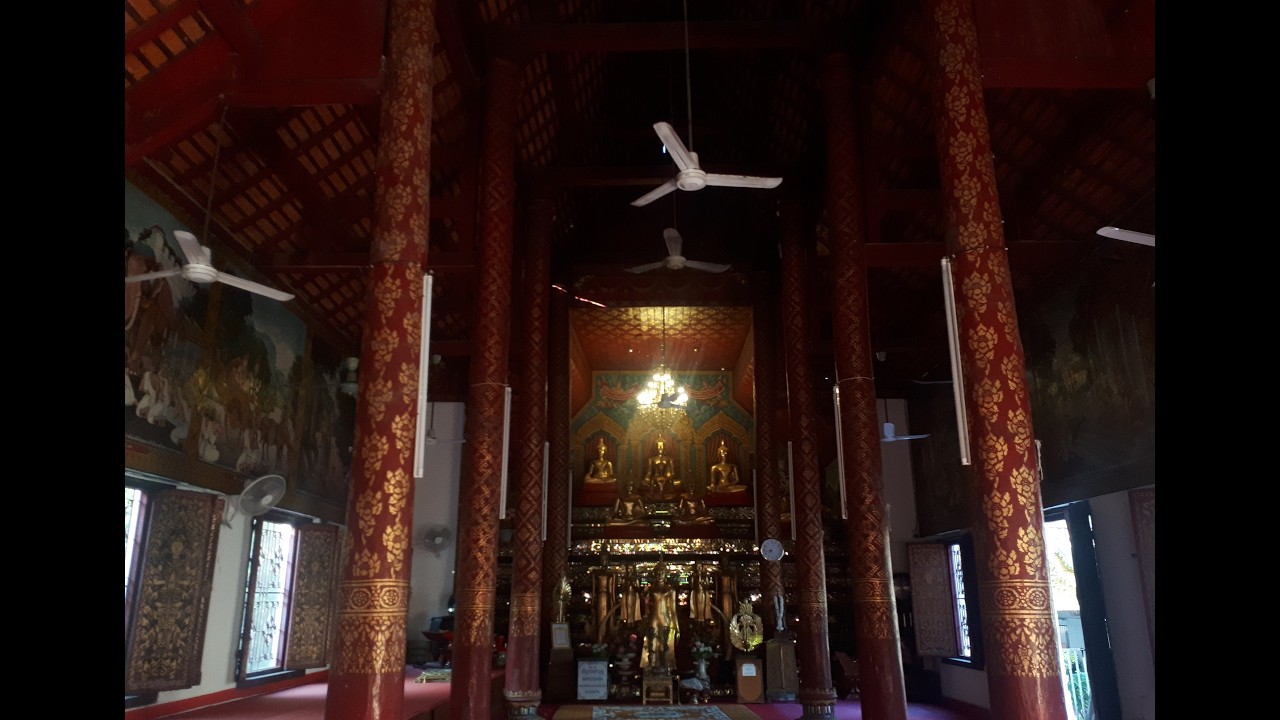
 Click to Access the Navigation Map GPS
Wat Phra Chao Mengrai Map
Recommend

 Muang Chiang Mai(121)Chom Thong(47)Mae Chaem(25)Chiang Dao(33)Doi Saket(68)Mae Taeng(85)Mae Rim(69)Samoeng(29)Fang(71)Mae Ai(59)Phrao(70)San Pa Tong(105)San Kamphaeng(66)San Sai(73)Hang Dong(74)Hot(32)Doi Tao(22)Omkoi(11)Saraphi(74)Wiang Haeng(15)Chai Prakan(28)Mae Wang(32)Mae On(22)Doi Lo(34)Galyani Vadhana(1)


