
lovethailand home >North Travel Attractions >Chiang Mai Travel Attractions >San Kamphaeng >On Tai > Sankampaeng Ceramic Museum
TL;DR: Sankampaeng Ceramic Museum is located at Inside Wat Pa Tueng (Khruba La), On Tai Subdistrict, Sankampaeng District, Chiang Mai 50130, open Daily, hours 09:00–16:00.

Sankampaeng Ceramic Museum
Open Days: Daily
Opening Hours: 09:00–16:00
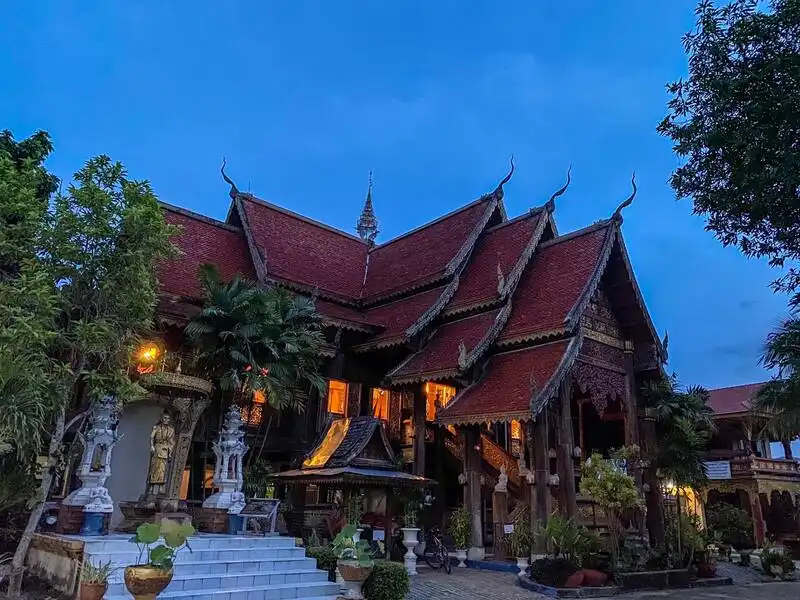
Sankampaeng Ceramic Museum in Chiang Mai is a local archaeological and historical learning site that tells the story of ancient ceramic kilns in the Sankampaeng area. Located within Wat Pa Tueng (Khruba La), the museum preserves fragments of pottery, ceramics, and important evidence from excavated kilns, allowing visitors to see both the artistic side of production and the everyday lives of the craftsmen who once worked here, all in the peaceful atmosphere of a rural temple.
Sankampaeng Ceramic Museum was established in 1960 (B.E. 2503) after the Fine Arts Department, in collaboration with Wat Pa Tueng, excavated and studied the remains of ancient ceramic kilns in Sankampaeng District. A major survey led by Professor Kraisi Nimmanahaeminda in 1952 (B.E. 2495) identified as many as 83 kilns in this area. These discoveries confirmed that Sankampaeng was once one of the most important ceramic production centers in Lanna, which eventually led to the creation of this museum to preserve and display the artifacts for future generations.
The museum building is a two-storey brick-and-mortar structure located opposite the large golden teakwood pavilion that houses the preserved body of Luang Pu La. The ground floor is used as an exhibition space for ceramics and pottery from the Sankampaeng kilns, including items excavated by the Fine Arts Department and pieces preserved by the temple. Vessels and fragments are carefully arranged in glass display cases, with explanatory labels that help visitors understand the origin and context of each piece more easily.
The display cases contain nearly complete vessels such as bowls, dishes, vases, and jars, as well as numerous ceramic fragments which, despite their broken condition, are highly valuable archaeologically. They reveal techniques of forming, glazing, stacking wares inside the kiln, and traces of heat and cracking from actual firing. Together, they offer a clearer picture of how the ancient kiln masters thought and worked than text in a book ever could.
Beyond ceramics and kiln fragments, the museum also exhibits other important evidence, such as the stone inscription pedestal of “Muen Dab Ruean” found in the nearby area, along with a replica and translation. These pieces show the connections between temples, local communities, land endowments, and the construction of significant Buddha images in the past. They highlight that this area was not only a production site for ceramics but also a spiritual and cultural hub for the people of that era.
The surroundings of Wat Pa Tueng are lush and tranquil, making it a pleasant place for a slow walk. Visitors can begin by paying respects and making merit at the golden teak pavilion, then cross over to the museum building to view the ceramics and learn about the Sankampaeng kilns up close. A visit here is not just about looking at old objects; it is a chance to reconnect with the “roots” of Lanna craftsmanship that once flourished and still leaves its traces beneath the soil of Sankampaeng today.
Getting There to Sankampaeng Ceramic Museum is straightforward. From Chiang Mai city, take the Chiang Mai–Sankampaeng Road and continue toward On Tai Subdistrict. Look for the entrance sign to “Wat Pa Tueng.” The total distance is about 25–30 km. The museum is best reached by private car, taxi, or chartered songthaew from the city, and can easily be combined into a day trip with other attractions in the Sankampaeng–Mae On area, such as Bo Sang Handicraft Centre, San Kamphaeng Hot Springs, Doi Nang Mo, or Ban Jang Nak Museum.
| Name | Sankampaeng Ceramic Museum |
| Location | Inside Wat Pa Tueng (Khruba La), On Tai Subdistrict, Sankampaeng District, Chiang Mai 50130 |
| Founded | Established in 1960 (B.E. 2503) following the excavation of ancient kilns by the Fine Arts Department and the survey of 83 kilns by Prof. Kraisi Nimmanahaeminda |
| Period / Era | Most ceramics and kilns are thought to date from early to later Lanna periods, several hundred years old, reflecting the flourishing era of ceramic production in the Mae On–Sankampaeng river basin |
| Key Evidence | Pottery and ceramics from the Sankampaeng kilns, kiln supports, glaze fragments, kiln structural remains, the Muen Dab Ruean inscription pedestal, and visual information on ancient kiln sites in the area |
| Origin of the Name | Named after the “Sankampaeng kilns,” a major ancient ceramic production site in Sankampaeng District, widely known in archaeological circles for the large number of kilns discovered and studied here |
| Open Days & Hours | Open daily, 09:00–16:00 (it is recommended to confirm current information with the temple before visiting) |
| Admission | Free admission; donation boxes are provided to support the museum’s upkeep and temple maintenance |
| Contact Number | 053-881130 |
| Getting There | From Chiang Mai city, take the Chiang Mai–Sankampaeng Road heading toward On Tai, approximately 25–30 km. The museum is accessible by private car, taxi, or chartered songthaew, with the entrance at Wat Pa Tueng. |
| Current Status | A small local museum within the temple grounds that remains open to visitors, overseen by the temple and local community, and serving as one of the key archaeological learning sites in Sankampaeng District. |
| Nearby Attractions | - Wat Chiang Saen (Wat Salak Kanlaya N Mahantararam), about 3–5 km - Doi Nang Mo and On Tai viewpoints, about 8–10 km - San Kamphaeng Hot Springs, about 18–22 km - Bo Sang Handicraft Centre, about 20–25 km - Ban Jang Nak Museum, about 18–22 km |
| Nearby Restaurants | - Local Northern food restaurants in On Tai community, around 2–4 km (several options) - Small cafés along the On Tai–Sankampaeng route, around 3–8 km - Huen Jai Yong, about 18–20 km, Tel. 053-338694 - Local Northern restaurants in the wider Sankampaeng area, about 15–20 km - Coffee shops and cafés along the road to San Kamphaeng Hot Springs, ideal for stopovers during a day trip |
| Nearby Accommodations | - On Tai Resort, about 3–10 km, Tel. 081-5959207 - The Loft @ Chiang Mai (Mae On–Sankampaeng route), about 15–20 km, Tel. 053-392450 - Sankampaeng Resort, about 15–20 km, Tel. 053-338020 - Mai Siam Resort (Mae On area), about 18–22 km, Tel. 053-965482 - Baanpong Lodge, about 20–25 km, Tel. 053-036496 |
| Facilities | Parking area within the temple, indoor exhibition walkway, glass display cabinets, basic interpretive signage, and a calm rural temple atmosphere ideal for a slow, relaxed visit. |
Frequently Asked Questions (FAQ)
Q: Who is the Sankampaeng Ceramic Museum suitable for?
A: It is ideal for those interested in archaeology, ancient ceramics, Lanna history, students, and travelers who want a new perspective on Sankampaeng as an historic ceramic production center.
Q: Do I need to book in advance before visiting?
A: In most cases, walk-in visits are fine without advance booking. However, for large groups or educational study trips, it is recommended to contact the temple or museum in advance for arrangements.
Q: How much time should I plan for a visit?
A: A general visit usually takes about 45–60 minutes. If you plan to read the information panels carefully and closely observe the details of each artifact, allow at least 1–1.5 hours.
Q: Are visitors allowed to take photos inside the museum?
A: Photography is generally allowed, but visitors should avoid using flash, refrain from touching the artifacts, and follow the instructions of staff or caretakers to ensure long-term preservation of the objects.
Q: Can I combine this visit with other attractions in Sankampaeng and Mae On?
A: Yes. It is easy to combine a visit to the museum with nearby sites such as Bo Sang Handicraft Centre, Ban Jang Nak Museum, San Kamphaeng Hot Springs, Doi Nang Mo, or other natural and cultural attractions in Mae On for a full-day trip.
 Category: ●Art, Culture and Heritage
 Group: ●Museums
Last Update : 9 MonthAgo
 Last Update : 9 MonthAgo
 Click to Access the Navigation Map GPS
Sankampaeng Ceramic Museum Map
Recommend

 Historical Sites and Monuments(8)
 Landmarks and Memorials(5)
 Royal Palace(2)
 Art, Craft Centres, Tradition(43)
Museums(24)
Art, Craft Centres, Tradition(43)
Museums(24)
 Educational Places
 Museum for Study(2)
 Educational Gardens, Farm(5)
 Training Center(1)
 Places of Worship
 Temple(79)
 Mosque(2)
 Other Sacred Sites(17)
 Research and Development
 Royal Project(44)
 Suburban Living
 Village, Community(41)
 Local Market(14)
 Nature and Wildlife
 National Parks and Marine Reserves(16)
 Mountain (Doi)(21)
 Dam, Reservoir, Lake(26)
 Waterfalls(43)
 Hot Springs(12)
 Caves(11)
 River, Canal(6)
 Other natural attractions(14)
 Entertainment and Agricultural
 Zoos and Aquariums(2)
 Animal camps and shows(3)
 Stadium(1)
 Farms, Parks and Ecotourism(19)
 Waterpark(2)
 Theater(1)
 Outdoor and Adventure Activities(10)
 Shopping
 Shopping and Night Market(6)
 Restaurant
 Michelin Star(1)
 Michelin Guide(23)
 Call Customer Service in Tourism
 Call Customer Service in Tourism(1)
 Travel Articles, Recipes
 Travel Review, Food Review(15)
 Food Menu, North Recipes(30)
 Thai Desserts, North Recipes(17)


