
lovethailand home >North Travel Attractions >Chiang Mai Travel Attractions >Muang Chiang Mai >Chang Moi > Wat Pa Phaeng
TL;DR: Wat Pa Phaeng is located at Mueang Samut Road, Chang Moi Subdistrict, Mueang Chiang Mai District, Chiang Mai Province, open Daily, hours 08.00 – 17.00.
Wat Pa Phaeng
Open Days: Daily
Opening Hours: 08.00 – 17.00
Wat Pa Phaeng in Chiang Mai is a community Buddhist temple under the Mahanikaya order, located at 117 Mueang Samut Road, Chang Moi Subdistrict, Mueang Chiang Mai District. The temple covers 4 rai, 2 ngan, and 49 square wa, and stands in an old urban neighborhood connected with Chang Moi, Wang Sing Kham, Wat Ket, Rattanakosin Road, Jing Jai Market, Warorot Market, Tha Phae Gate, and the Ping River area. Wat Pa Phaeng is not a large showcase temple, but it is a highly meaningful local temple with a strong connection to community faith, Lanna architecture, Buddhist education, funeral rites, and the everyday religious life of Chiang Mai residents.
The name Wat Pa Phaeng preserves the memory of the original landscape. “Pa” means forest or wooded area, while “Phaeng” refers to the local phaeng tree, also associated with sakae. The temple name therefore reflects the former grove that once stood in this area before the neighborhood became part of Chiang Mai’s urban fabric. This makes Wat Pa Phaeng valuable not only as a Buddhist temple but also as a place name that records how the Chang Moi and Wang Sing Kham area changed from a greener community landscape into a road-linked urban district.
Wat Pa Phaeng is a suitable stop for travelers who want to understand Chiang Mai beyond the most famous temples inside the old city. Its location is practical, especially for visitors exploring Jing Jai Market, Wat Ketkaram, Warorot Market, Tha Phae Gate, Chang Moi, and the riverside area. A visit can be made in around 30–60 minutes, but visitors who enjoy architecture and local history should walk slowly through the compound. The entrance gateway, viharn, ubosot, chedi, ho trai, bell tower, sermon hall, monks’ residences, funeral hall, crematorium area, and school-related community setting all help explain the temple’s layered role.
The foundation story of Wat Pa Phaeng begins in the early twentieth century. Pho Phraya Nawa, ancestor of the Nawarat family and a chief boatbuilder serving the Chiang Mai court, together with Thao Kham Pan, the kamnan of Pa Tan, encouraged local villagers to build a religious site in the former phaeng-tree grove. The land was connected with Chao Inthawarorot Suriyawong, the eighth ruler of Chiang Mai. This background shows that Wat Pa Phaeng grew from cooperation among the Chiang Mai ruling circle, skilled craftsmen, local leaders, and ordinary villagers.
When the site first developed as a monastic residence, monks from Wat Chomphu were invited to help establish religious life here. The first abbot was Khruba Khao Thep Wang Sai, also recorded in local material as Phra Khruba Khao Khepawaso. This connection with Wat Chomphu places Wat Pa Phaeng within a wider network of old temples on the eastern side of Chiang Mai, including Wat Chomphu, Wat Chetawan, Wat Mahawan, Wat Buppharam, and other temples around Chang Moi and Tha Phae Road. These temples help explain the Buddhist and mercantile history of the city’s eastern urban quarter.
Wat Pa Phaeng was officially registered as a temple in 1904 and received its consecrated boundary on 7 February 1918. The ubosot boundary measures 60 meters by 58 meters. This consecrated boundary is important in Buddhist practice because it marks the formal area for monastic rites, especially ordination and other Sangha ceremonies. The temple therefore has a clear religious status and continues to function as an active Buddhist institution rather than only as a historic site.
Over time, the temple developed permanent religious structures through the faith of villagers and patrons. These included a viharn, chedi, monks’ residences, and ho trai. The temple also adjusted to the changing city around it. Parts of the temple land were donated for road use, which caused the compound to become divided by the surrounding urban layout. This reflects a common reality of older city temples: they have to preserve sacred space while adapting to roads, schools, houses, shops, traffic, and public needs.
One of the most important contemporary roles of Wat Pa Phaeng is its use for funeral chanting, merit-making for the deceased, and cremation ceremonies. The temple has a crematorium and funeral-related facilities within the compound, making it a practical religious site for the community. This role should be understood with respect. In Thai Buddhist life, temples support people not only during festivals and merit-making days but also during moments of grief, remembrance, and family gathering. Wat Pa Phaeng therefore serves one of the most important social and spiritual functions of a neighborhood temple.
The temple is also closely linked with education. Wat Pa Phaeng Municipal School is located in the temple area and nearby community setting. This relationship reflects the traditional Thai connection between home, temple, and school. Children growing up near the temple encounter Buddhist space, community activities, merit-making, and local history as part of everyday life. For visitors, this helps explain why Wat Pa Phaeng should be seen as a living community institution, not only as a place for sightseeing.
The entrance gateway of Wat Pa Phaeng is one of the first features to notice. It has a distinctive appearance that sets it apart from many temple entrances in Chiang Mai. A temple gate is more than an architectural threshold. It marks the transition from the street and neighborhood into a sacred compound. For travelers interested in cultural photography and temple design, the gateway is a useful starting point because it establishes the character of the temple before visitors reach the main buildings.
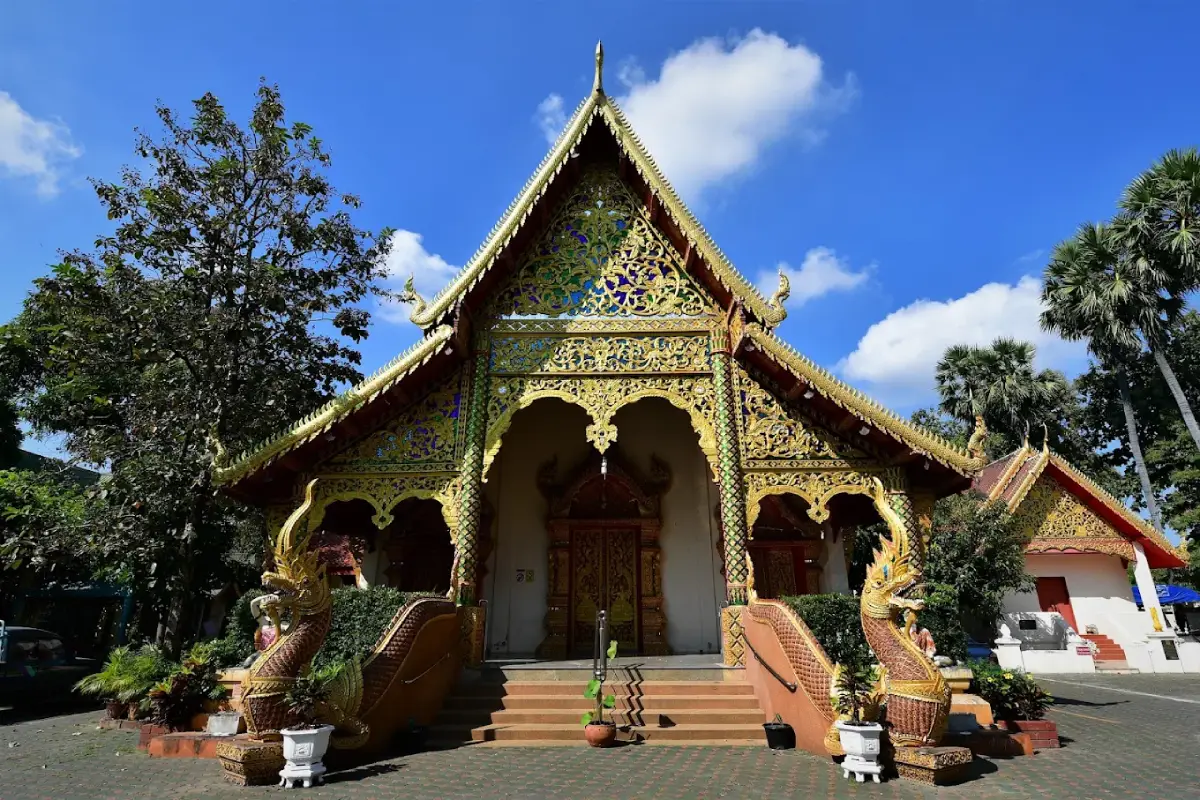
The ubosot at Wat Pa Phaeng is built in the Lanna Thai style. It is a brick-and-plaster building with a two-tiered roof. The hang hong elements are decorated with naga motifs and gilded lamyong ornaments. The gable contains gilded carved wood with foliate patterns, while the arched decorative frame is carved with scrolling vine designs. The building has no rueng phueng element. These details make the ubosot an important example of Lanna religious craftsmanship in a community temple setting.
The principal Buddha image inside the ubosot has a notable story. Monks from Wat Chai Mongkhon once found an abandoned temple with old sacred objects and brought some of them back, allowing temples that wished to preserve them to collect and enshrine them. Monks from Wat Pa Phaeng brought one old Buddha image to serve as the principal image in the ubosot. Because it was already an old image, its original name was not clearly preserved. This gives the image special meaning as a sacred object rescued from abandonment and returned to active worship.
When Wat Pa Phaeng reached its centennial, another Buddha image was cast and named Phra Chao Roi Pi, or the Hundred-Year Buddha. The name directly marks the temple’s 100-year milestone and stands as a symbol of continuity. It represents the faith of local people who maintained the temple across generations. For visitors, this Buddha image is not only a devotional object but also a marker of community memory.
The viharn is one of the most visually rewarding parts of Wat Pa Phaeng. It is a local Lanna-style hall with a two-tiered roof. The hang hong elements are decorated with gilded carved foliate patterns. The staircase has makara-and-naga balustrades with gilded details and colored glass. Above the entrance is an arched gateway featuring a peacock spreading its tail, while the door panels are carved with gilded celestial figures over red lacquer. These details combine Lanna craftsmanship, symbolic animals, devotional beauty, and local artistic skill.
The makara-and-naga stairway is especially meaningful. In Lanna Buddhist art, the naga is connected with protection, water, fertility, and the guardianship of Buddhism. The makara is a mythic creature often found in sacred architecture. Together, they create a symbolic passage from the ordinary world into the sacred space of the viharn. Visitors walking up the stairs are therefore moving through a designed religious threshold, not merely entering a building.
The peacock motif above the viharn entrance adds another distinct layer. In Buddhist and local artistic contexts, the peacock can represent beauty, dignity, auspiciousness, and spiritual brightness. Placing a peacock above the entrance strengthens the ceremonial character of the doorway. Together with the gilded celestial figures on the doors, the entrance shows how Lanna temple architecture treats thresholds as meaningful sacred boundaries.
The chedi at Wat Pa Phaeng is a prasat-style chedi with a raised indented base. A rounded malaitha section supports the bell-shaped body. The form is dignified without being monumental, which suits the scale of a community temple. The chedi serves as a central devotional object and should be approached respectfully. Visitors should not climb the base or touch old architectural elements, and they should take time to observe the proportions of the base, bell body, and upper structure.
The ho trai, or scripture hall, is a two-storey brick-and-plaster building. Its roof is decorated with hang hong elements, and its stucco decoration includes colored glass. In Thai and Lanna Buddhist temples, a ho trai is associated with the preservation of Buddhist scriptures, teachings, and religious knowledge. Wat Pa Phaeng’s ho trai was restored and moved from beneath the viharn to a position near the temple wall, reflecting the temple’s effort to preserve this important structure while adapting to the limits of the compound.
The bell tower is a permanent brick-and-plaster structure. In a Thai temple, a bell tower has both practical and symbolic value. The bell marks time, announces temple activities, and creates an acoustic identity for the sacred space. When viewed together with the viharn, ubosot, chedi, ho trai, sermon hall, and funeral facilities, the bell tower helps visitors understand Wat Pa Phaeng as a complete system of religious buildings rather than a single attraction.
Important sacred objects at the temple include gilded bronze Buddha images in the meditation posture, with forms associated with the Chiang Saen and Sukhothai styles. The Chiang Saen style often conveys firmness, serenity, and spiritual power, while the Sukhothai style is admired for idealized grace and flowing form. The presence of both artistic traditions gives Wat Pa Phaeng additional value for visitors interested in Buddhist sculpture and Thai art history.
The temple has been cared for by a succession of abbots, beginning with Khruba Khao Thep Wang Sai, followed by Phra Som Kham Tui, Phra In Som Kalanthasima, Phra Kham Tan Chayawong Sai, Phra Athikan Bun Pan Panyo, Phra Athikan Si Non Sakaro, and Phra Khru Uppatham Satsanakhun. The current abbot recorded in recent public sources is Phra Maha Prasert Bhaddacaro. This continuity of monastic leadership is one of the reasons the temple has remained active and relevant to the local community.
Wat Pa Phaeng also continues to host religious and public ceremonies. Its use for major merit-making events shows that the temple is still part of Chiang Mai’s living religious network. Temples like Wat Pa Phaeng are important in urban life because they provide places for worship, chanting, moral instruction, remembrance, community gathering, and public ceremonies. The temple’s importance therefore extends beyond tourism.
Getting to Wat Pa Phaeng is convenient from many parts of central Chiang Mai. From Tha Phae Gate, visitors can travel through Tha Phae Road, Chang Moi Road, or nearby local streets toward Mueang Samut Road. From Warorot Market or the Ping River area, it is easy to approach through the Wat Ket and Wang Sing Kham neighborhoods. Travelers staying near Rattanakosin Road, Jing Jai Market, Fa Ham, Chang Moi, or the riverside can reach the temple with a short ride.
Visitors can use a private car, red songthaew, tuk-tuk, taxi app, or short walk from nearby landmarks. When giving directions, use “Wat Pa Phaeng, Mueang Samut Road, Chang Moi” to avoid confusion with similarly named temples elsewhere in Chiang Mai Province. Drivers should allow extra time for small community roads and parking, especially when ceremonies or funeral rites are taking place at the temple.
The best time to visit Wat Pa Phaeng is in the morning or late afternoon. Morning is suitable for worship and quiet observation, while late afternoon works well for combining the temple with Jing Jai Market, Warorot Market, Wat Ket, Tha Phae Gate, or the Ping River area. Visitors interested in photography should come when natural light reveals the carved wood, gilded patterns, colored glass, viharn doorway, ho trai, and chedi clearly.
Visitors should follow standard Thai temple etiquette. Dress modestly, remove shoes before entering sacred buildings, keep voices low, and avoid touching Buddha images, carved wood, murals, scripture halls, chedis, or old decorative elements. Do not climb on the chedi base. Because Wat Pa Phaeng is also used for funeral and merit-making ceremonies, visitors should be especially respectful when a ceremony is taking place and should avoid photographing mourners or participants without permission.
Wat Pa Phaeng is suitable for cultural photography, especially for visitors who enjoy architectural details. Good subjects include the entrance gateway, Lanna-style viharn, makara-and-naga stairway, peacock entrance arch, gilded celestial door carvings, two-storey ho trai, prasat-style chedi, and the temple’s urban community setting. Photography should be done quietly and from an appropriate distance, with priority given to worshippers, monks, students, and ceremony participants.
For itinerary planning, Wat Pa Phaeng works well with several nearby routes. A market-and-community route can begin at Jing Jai Market, continue to Wat Pa Phaeng, then move to Wat Ketkaram, Warorot Market, and the Ping River. A historic temple route can connect Tha Phae Gate, Wat Buppharam, Wat Chetawan, Wat Mahawan, Wat Ou Sai Kham, and Wat Pa Phaeng. A Chang Moi and Wang Sing Kham route suits travelers who want to see old neighborhoods, local food, community temples, and Chiang Mai’s everyday urban culture.
The strength of Wat Pa Phaeng lies in its layered local identity. It preserves the memory of the former phaeng-tree grove, the role of Pho Phraya Nawa and Thao Kham Pan, the connection with Chao Inthawarorot Suriyawong, the invitation of Khruba Khao from Wat Chomphu, the construction of Lanna religious buildings through community faith, the donation of land for roads, the presence of a municipal school, and the temple’s continuing role in funeral and merit-making ceremonies. These details make it more than a roadside temple.
For travelers interested in Lanna architecture, Wat Pa Phaeng is worth careful observation. It contains a Lanna Thai ubosot, local Lanna viharn, prasat-style chedi, two-storey scripture hall, bell tower, and bronze Buddha images associated with Chiang Saen and Sukhothai styles. The temple shows that valuable Lanna craftsmanship is not limited to large royal temples. Community temples of modest scale can also preserve important details of woodcarving, gilding, colored glass, sacred animal motifs, and Buddhist spatial design.
Overall, Wat Pa Phaeng is a meaningful old temple in the Chang Moi area of Chiang Mai. It brings together local landscape memory, community faith, Lanna architecture, Buddhist education, funeral rites, and urban religious life in one compact compound. Visitors who want to understand Chiang Mai through its living neighborhood temples should include Wat Pa Phaeng in a route around Mueang Samut Road, Jing Jai Market, Wat Ketkaram, Warorot Market, Tha Phae Gate, and the Ping River. The temple offers calm, history, craftsmanship, and a clear view of how Buddhism remains woven into daily life in Chiang Mai.
| Name | Wat Pa Phaeng |
| Location | Mueang Samut Road, Chang Moi Subdistrict, Mueang Chiang Mai District, Chiang Mai Province |
| Address | 117 Mueang Samut Road, Chang Moi Subdistrict, Mueang Chiang Mai District, Chiang Mai Province, Thailand |
| Coordinates | 18.802600, 98.997810 |
| Temple Type | Community Buddhist Temple Under The Mahanikaya Order |
| Temple Area | 4 rai, 2 ngan, and 49 square wa |
| Highlights | Historic urban temple in Chang Moi with a distinctive gateway, Lanna Thai ubosot, local Lanna viharn, prasat-style chedi, two-storey ho trai, and an important community role in merit-making and funeral rites |
| History | Developed from a former phaeng-tree grove in the early twentieth century, officially registered as a temple in 1904, and granted its consecrated boundary on 7 February 1918 |
| Name Origin | The name comes from the former grove of phaeng or sakae trees in the area. “Pa Phaeng” preserves the memory of the old local landscape. |
| Founding Figures | Pho Phraya Nawa of the Nawarat family, a chief boatbuilder for the Chiang Mai court, together with Thao Kham Pan, kamnan of Pa Tan, and local villagers |
| First Abbot | Khruba Khao Thep Wang Sai, also recorded locally as Phra Khruba Khao Khepawaso, from Wat Chomphu |
| Current Abbot / Caretaker | Phra Maha Prasert Bhaddacaro |
| Main Contact Number | 053-234-560 |
| Open Days | Daily |
| Opening Hours | 08.00 – 17.00 |
| Current Status | Open for worship, merit-making, temple visits, and religious community activities during operating hours |
| Architectural Features | Lanna Thai ubosot with a two-tiered roof, gilded carved wooden gable, local Lanna viharn, makara-and-naga stairway, peacock entrance arch, gilded celestial door carvings, and prasat-style chedi |
| Sacred Objects | Old principal Buddha image in the ubosot, Phra Chao Roi Pi, gilded bronze Buddha images in the meditation posture associated with Chiang Saen and Sukhothai styles, prasat-style chedi, and two-storey scripture hall |
| Facilities | Parking, accessible entrance, restrooms, viharn, ubosot, sermon hall, monks’ residences, funeral hall, crematorium, ho trai, bell tower, and merit-making areas |
| Main Areas / Zones | Entrance gateway, ubosot, local Lanna viharn, principal Buddha image, Phra Chao Roi Pi, prasat-style chedi, two-storey ho trai, bell tower, sermon hall, monks’ residences, funeral hall, crematorium, and Wat Pa Phaeng Municipal School area |
| Travel Information | Accessible from Tha Phae Gate, Tha Phae Road, Chang Moi Road, Warorot Market, Wat Ket, Rattanakosin Road, and Jing Jai Market by private car, red songthaew, tuk-tuk, taxi app, or a short walk from nearby landmarks |
| Visitor Guidelines | Dress modestly, remove shoes before entering sacred buildings, do not touch Buddha images, old woodcarving, or historic decorative elements, do not climb the chedi base, and respect ceremony areas |
| Nearby Tourist Attractions | 1. Jing Jai Market Chiang Mai, About 0.8 km 2. Wat Ketkaram, About 1.2 km 3. Warorot Market, About 1.3 km 4. Tha Phae Gate, About 1.7 km 5. Tha Phae Walking Street, About 1.7 km 6. Three Kings Monument, About 1.8 km 7. Wat Lok Moli, About 1.8 km 8. Wat Chedi Luang Worawihan, About 2.1 km 9. Wat Phra Singh Woramahawihan, About 2.4 km |
| Nearby Restaurants | 1. Ros Ded Dee Stewed Beef And Pork Noodles, Wat Pa Phaeng Junction, About 0.1 km 2. Magnolia Cafe’ by Pinn Food Society, About 0.2 km, Tel. 061-684-8222 3. Busarin Cuisine, About 0.2 km, Tel. 081-671-2846 4. Tha Chang Cafe, About 0.4 km, Tel. 082-028-3736, 093-309-6299 5. Gallery Drip Coffee Chiang Mai, Jing Jai Market, About 0.4 km 6. Somtum House-Yokkrok, Jing Jai Village, About 0.7 km 7. The Banyan Riverhouse Cafe & Bistro, About 1.1 km, Tel. 052-001-438 |
| Nearby Accommodations | 1. At Pingnakorn Riverside, About 0.7 km, Tel. 053-249-222 2. Buri Sriping Riverside Resort & Spa, About 0.9 km, Tel. 052-001-437, 090-323-7795 3. sala lanna Chiang Mai, About 1.3 km, Tel. 053-242-588 4. The Rise Suites Hotel Chiang Mai, About 1.9 km, Tel. 098-661-6422 5. Chiang Mai Marriott Hotel, About 1.9 km, Tel. 053-253-666 6. Wintree City Resort Chiang Mai, About 2.3 km, Tel. 052-081-377 |
Frequently Asked Questions (FAQ)
Q: Where is Wat Pa Phaeng located?
A: Wat Pa Phaeng is located at 117 Mueang Samut Road, Chang Moi Subdistrict, Mueang Chiang Mai District, Chiang Mai Province, near Jing Jai Market, Wat Ketkaram, Warorot Market, and the Wang Sing Kham area.
Q: What are the opening hours of Wat Pa Phaeng?
A: Wat Pa Phaeng is open daily from 08.00 to 17.00.
Q: What is the history of Wat Pa Phaeng?
A: Wat Pa Phaeng developed from a former grove of phaeng or sakae trees. It was officially registered as a temple in 1904, with Pho Phraya Nawa, Thao Kham Pan, and local villagers playing key roles in its establishment. The temple received its consecrated boundary on 7 February 1918.
Q: What does the name Wat Pa Phaeng mean?
A: The name refers to the former wooded area of phaeng or sakae trees. It preserves the memory of the old landscape before this part of Chiang Mai became a more urban neighborhood.
Q: What should visitors see inside Wat Pa Phaeng?
A: Important features include the Lanna Thai ubosot, local Lanna viharn, makara-and-naga stairway, peacock entrance arch, gilded celestial door carvings, prasat-style chedi, two-storey ho trai, old principal Buddha image, and Phra Chao Roi Pi.
Q: Who is the current abbot of Wat Pa Phaeng?
A: The current abbot is Phra Maha Prasert Bhaddacaro.
Q: How can travelers get to Wat Pa Phaeng?
A: Travelers can reach the temple from Tha Phae Gate, Warorot Market, Chang Moi Road, Tha Phae Road, Rattanakosin Road, Wat Ket, or Jing Jai Market by private car, red songthaew, tuk-tuk, taxi app, or a short walk from nearby landmarks.
Q: What nearby places can be visited with Wat Pa Phaeng?
A: Nearby places include Jing Jai Market, Wat Ketkaram, Warorot Market, Tha Phae Gate, Tha Phae Walking Street, Three Kings Monument, Wat Lok Moli, Wat Chedi Luang Worawihan, and Wat Phra Singh Woramahawihan.
 Category: ●Places of Worship
 Group: ●Temple
Last Update : 6 DayAgo
 Last Update : 6 DayAgo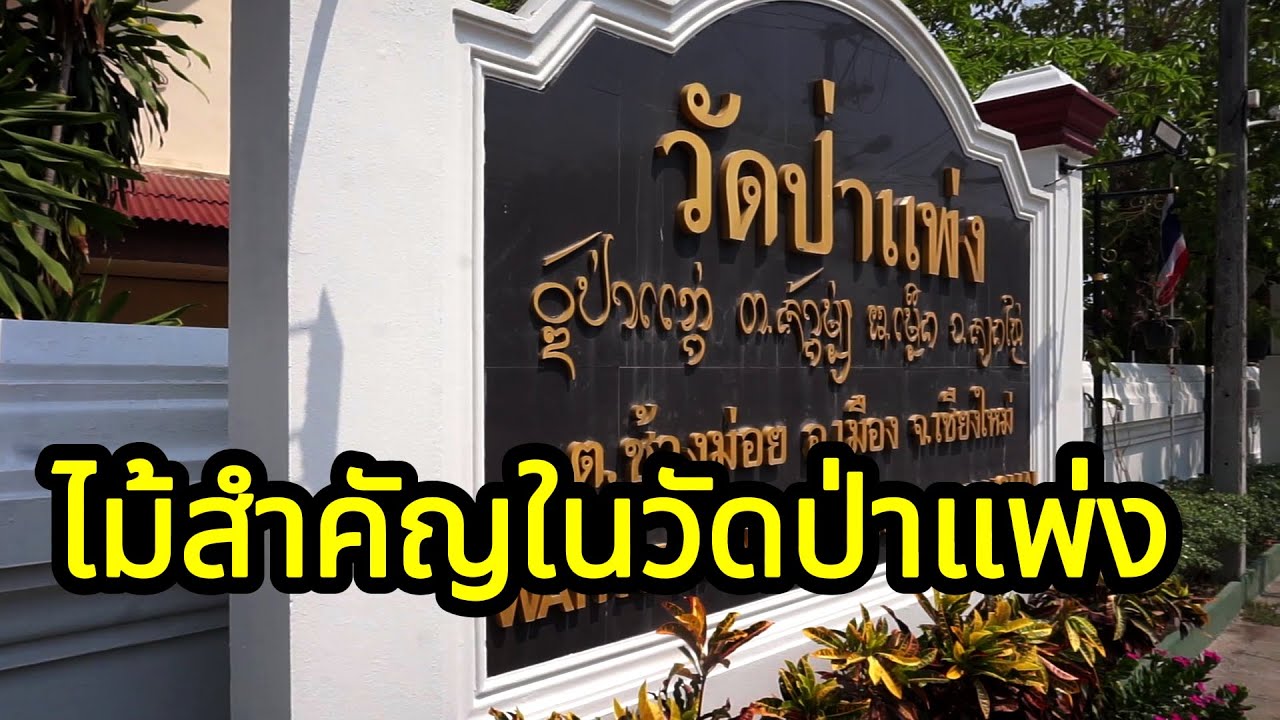
 Click to Access the Navigation Map GPS
Wat Pa Phaeng Map
Recommend

 Muang Chiang Mai(121)Chom Thong(47)Mae Chaem(25)Chiang Dao(33)Doi Saket(68)Mae Taeng(85)Mae Rim(69)Samoeng(29)Fang(71)Mae Ai(62)Phrao(70)San Pa Tong(105)San Kamphaeng(66)San Sai(73)Hang Dong(74)Hot(32)Doi Tao(22)Omkoi(11)Saraphi(74)Wiang Haeng(15)Chai Prakan(28)Mae Wang(32)Mae On(22)Doi Lo(34)Galyani Vadhana(1)


