
 Home
Home North(
 Chiang Mai(


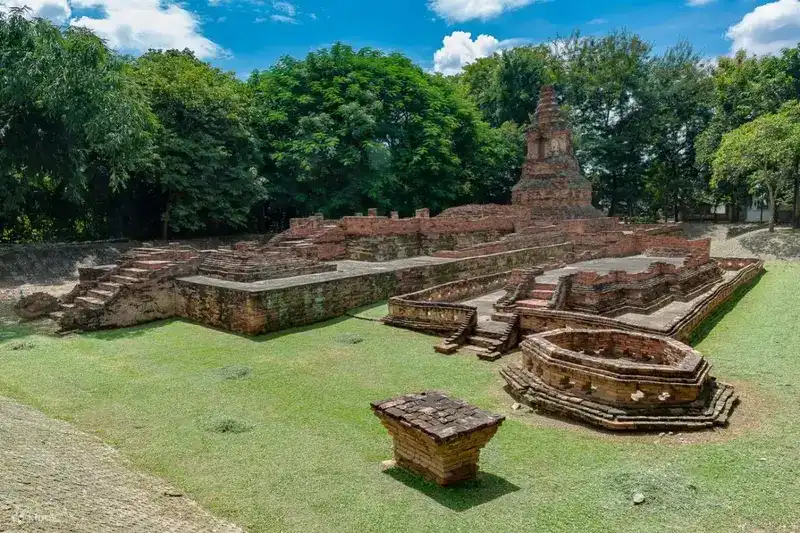
Rating: 3.5/5 (8 votes)
 |
|  Map
Map 
 Have Map
  No Map
Chiang Mai attractions
Attractions in Thailand
Opening days: Daily
Opening hours: 08.00 - 17.00
Wiang Kum Kam, the ancient city Travel to Chiang Mai Travel to the North History of Wiang Kum Kam is an ancient city that Phraya Mangrai (Father Khun Mengrai) ordered to be built in 1829 by digging moats on all 4 sides to release the water of the Ping River to be stored in the moats. Ancient sites that appear in Wiang Kum Kam and nearby areas, from surveys, found that there are 20 places, both ancient ruins and temples with monks living there. Each place is scattered, dating back to around the 21st-22nd Buddhist century.
Wiang Kum Kam It collapsed because of a great flood between the years 2101 - 2317, which was the period when Burma ruled Lanna. Burma ruled Lanna for more than two hundred years, but there is no evidence mentioning Wiang Kum Kam even though the great flood was very serious. The result of this flood caused Wiang Kum Kam to be buried under the sediment, making it difficult to restore. The condition of various temples and important ancient sites left are only ruins of abandoned temples and pagodas sunk underground at a depth of approximately 1.50-2.00 meters. The temple that was sunk the deepest is Wat I Kang, followed by Wat Pu Pia and Wat Ku Pa Dom.
In 1984, the story of Wiang Kum Kam began to interest scholars and the general public. As a result, the 4th Fine Arts Unit continuously excavated and restored the abandoned temple (excavated Wihan Kan Thom at Wat Chang Kham) and the surrounding area of Wiang Kum Kam until 2002. Currently, Wiang Kum Kam has been developed into a tourist attraction in Chiang Mai. However, it was seen that Wiang Kum Kam was complete and was a source of knowledge and study in terms of architecture, art, and various Lanna cultures. The center of tours to various historical sites is in the Wiang Kum Kam area at Wat Chang Kham.
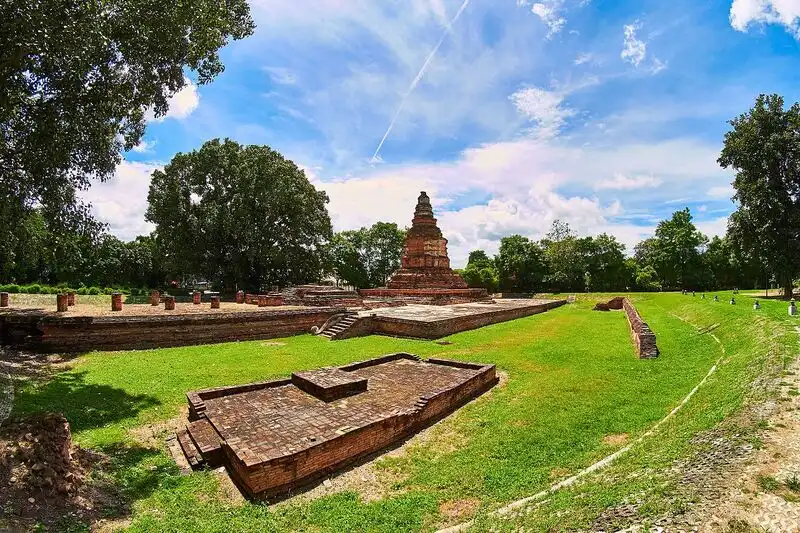
Wiang Kum Kam is currently located in the southeast of Chiang Mai city, approximately 3-4 kilometers on the Chiang Mai-Lamphun Road, in Tha Wang Tan Subdistrict, Saraphi District, and near the eastern bank of the Ping River. To get there, enter via the Nong Hoi police box and go straight until you reach the intersection of the island in the middle of the banana forest, continuing straight until you reach the Chedi Liam police box.
Wiang Kum Kam is an area in the Hariphunchai culture area. After King Mangrai ascended the throne and conquered the city, it was upgraded from a village to a large city. This is reflected in the archaeological excavation data and the excavated artifacts.
Wiang Kum Kam At present, it has been developed into a cultural heritage tourist attraction with true value close to the city, clearly clustered. Today, it has become a tourist attraction managed by many sectors involved, such as tourism management, horse-drawn carriages, and trams, managed by Saraphi District. As for tourism services, locals gather to take visitors to Wiang Kum Kam.
After the 4th Fine Arts Department in Chiang Mai Province excavated the remains of the city and more ancient sites, they discovered several more temples that were submerged underground, as follows:
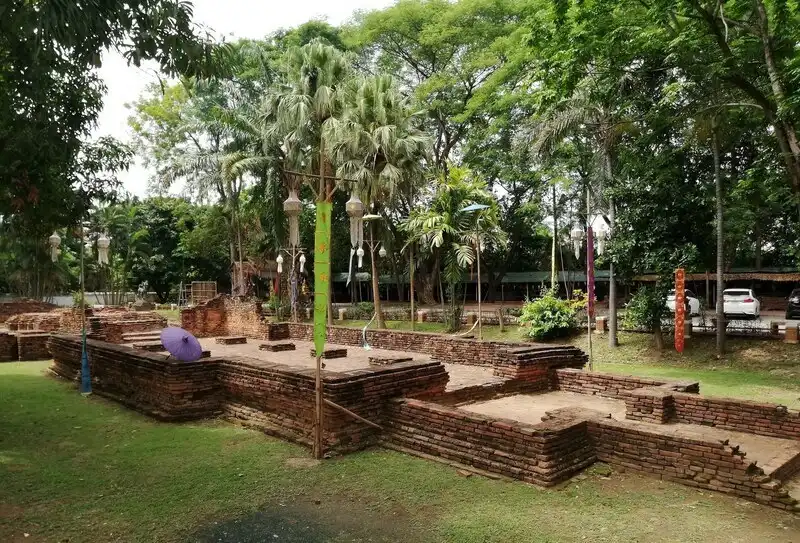
1. Wat KanthomKing Mangrai built this temple in 1833. It consists of a 12-meter wide and 18-meter high pagoda base with four niches in each direction, which have two layers of Buddha statues (the lower level has four seated Buddha statues and the upper level has two standing Buddha statues). The vihara and the pagoda are in the form of a pavilion on a low circumambulation platform. At the base of the vihara, there are Hariphunchai-style clay Buddha images buried all around. In addition, there is another pagoda in the form of a bell-shaped pavilion pagoda. In the area of Wat Kan Thom, there is also a Bodhi tree with seeds brought from Sri Lanka.
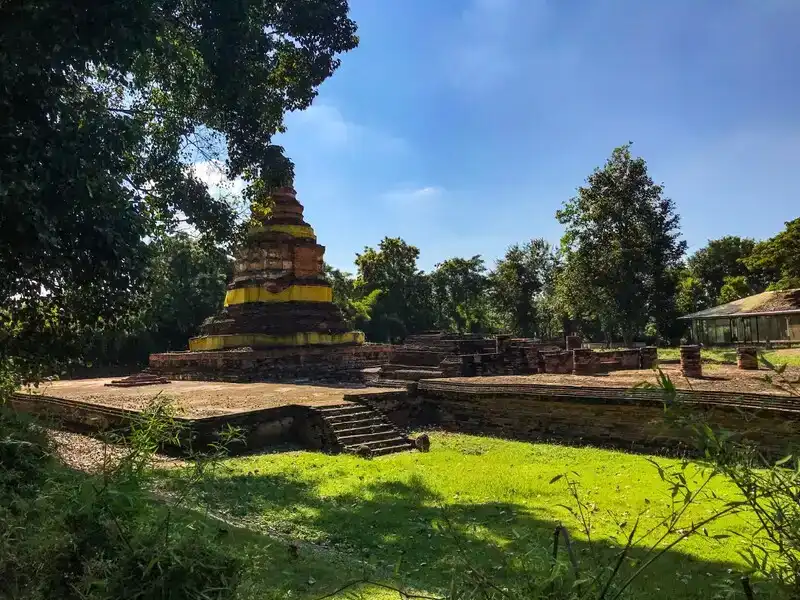
2. Wat Pu Pia It is considered one of the most beautiful temples in Wiang Kum Kam. The layout of the temple and the main pagoda and the pavilion are in relatively complete condition. The ancient site consists of a raised chapel, pagoda, ordination hall, butterfly shrine, and altar, with beautiful stucco decorations on the pagoda.
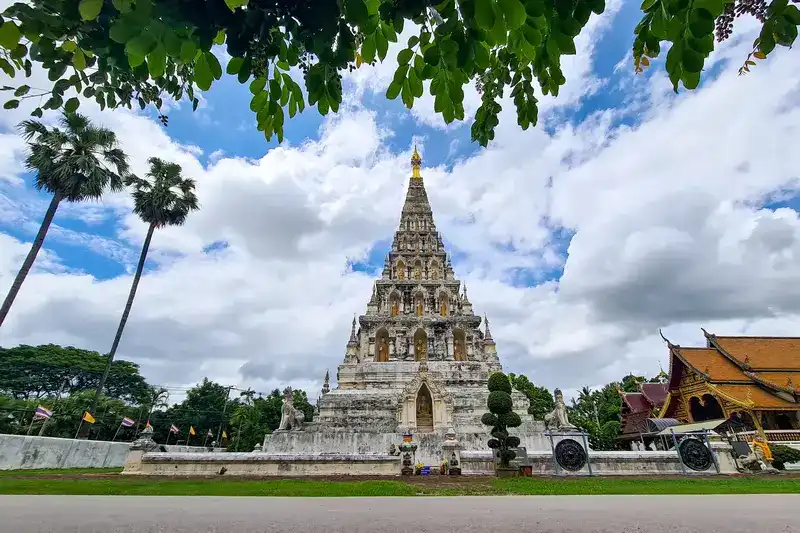
3. Wat Ku Kham Originally this temple was called Wat Ku Kham, where the word Ku means pagoda and Kham means gold. King Mangrai ordered its construction in 1831, which is an important antique of the temple, with the main pagoda in the form of a five-tiered pavilion. What makes this temple unique is that it was built by the king, and the pagoda's design shows the influence of the Hariphunchai state. King Mangrai ordered its construction in the early stages of Wiang Kum Kam.
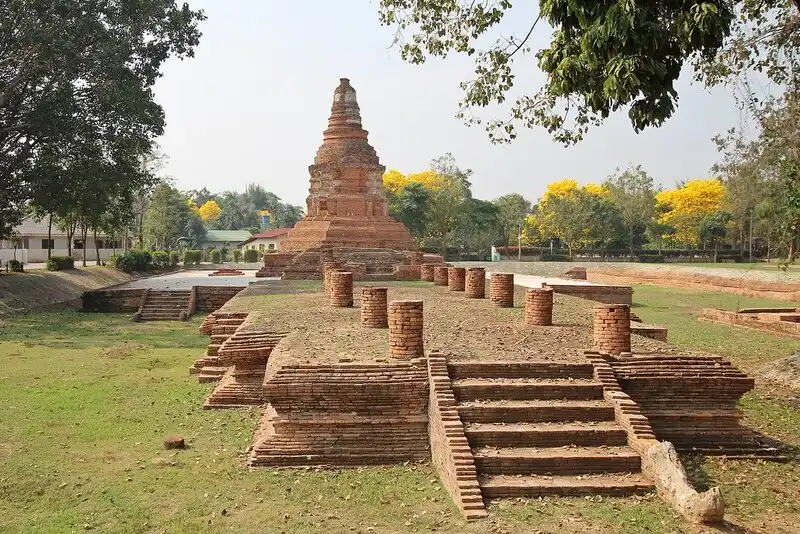
4. Wat Ikang Most people call it Wat E-Kang or E-Kang because in the past the temple area was a deserted forest and there were many monkeys and gibbons who used the temple ruins as their home. In the local language, gibbons are called "E-Kang". The ancient site consists of a chapel and a pagoda on the same base. The chapel is 20 x 13.50 meters in size and the pagoda is a round bell-shaped structure.
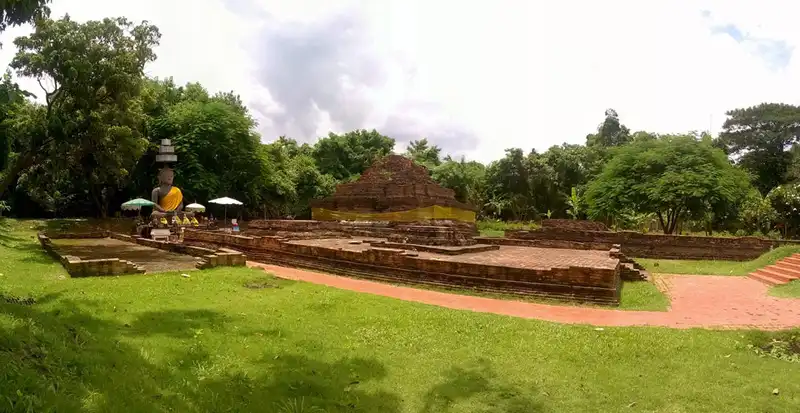
5. Wat Phra That Khao It is called Wat That Khao because originally the chedi was still plastered white. The ancient site consists of a chapel, a chedi, an ordination hall, and a pavilion. Construction was carried out in two stages: in the first stage, only the chedi, the chapel, and the ordination hall were built, but later they became damaged, so the base of the chedi was expanded. In the second stage, a pavilion was built to house a Buddha image.
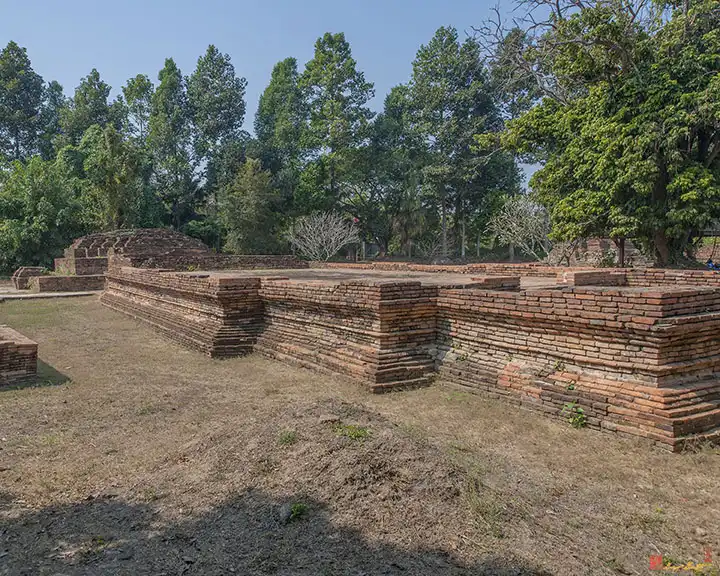
6. Wat Phraya Mangrai It is located near Wat Phra Chao Ong Dam to the southeast. The name Wat Phraya Mangrai is a new name given by the Fine Arts Department. However, there is no evidence of the history of this temple. When considering that it is located closest to Wat Phra Chao Ong Dam, it looks like the same temple. The uniqueness of this temple is the construction of a chapel with no main entrance at the front, but on the left (in the case of facing the front of the temple). In the pagoda, traces of stucco decoration with glass inserts were found.
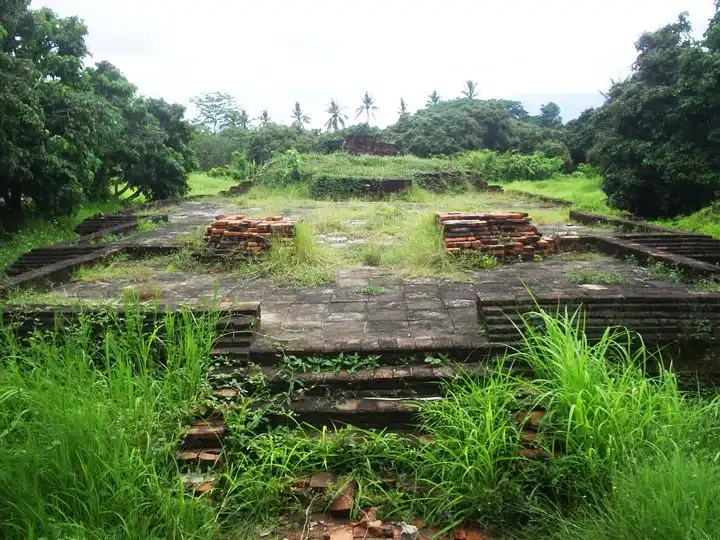
7. Wat Hua Nong It is located in Wiang Kum Kam near the northern city wall. Inside, there are large gate arches, a chapel, a pavilion, a temple, and a pagoda. The temple gate arches are decorated with beautiful stucco patterns of unicorns, lions, and swans.
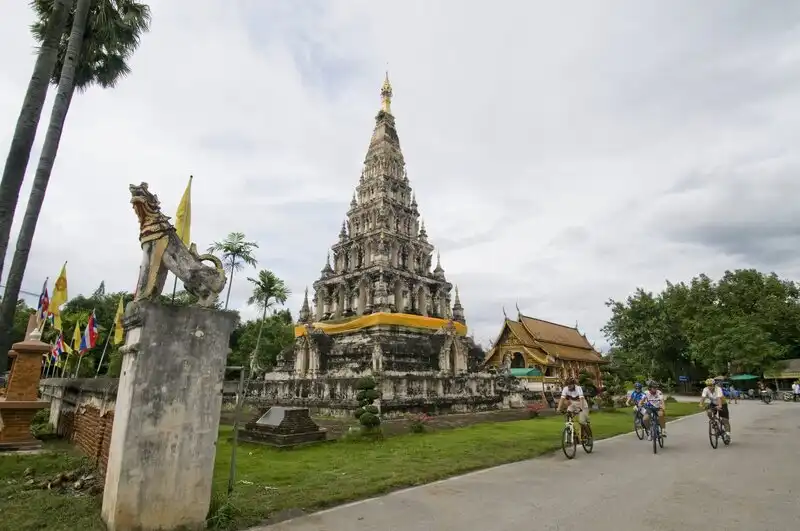
8. Wat Kumkam It is located in Wiang Kum Kam, on the northern side of Wat Kan Thom. The buildings inside the temple include a chapel with a Mulkanthakuti room and an octagonal pagoda.
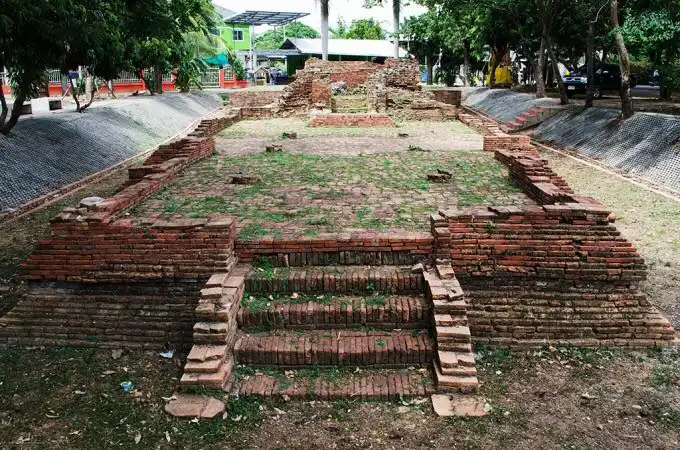
9. Wat Noi It is located to the west of Wat Kan Thom. Before the excavation, there were two earthen mounds. Villagers came to build houses on this ancient site. And there are also traces of excavation for treasure. The ancient site consists of a chapel and a pagoda. The chapel faces northeast with a rectangular plan. There are stairs in the front and one side. The floor of the chapel is paved with bricks. Behind the chapel is a niche for the principal Buddha image made of stucco. The pagoda has a square base measuring 13.35 × 13.35 meters and a height of 1.64 meters. And continuing up to the pagoda is a square measuring 6.20 × 6.20 meters. The pagoda has a large base but a small pagoda.
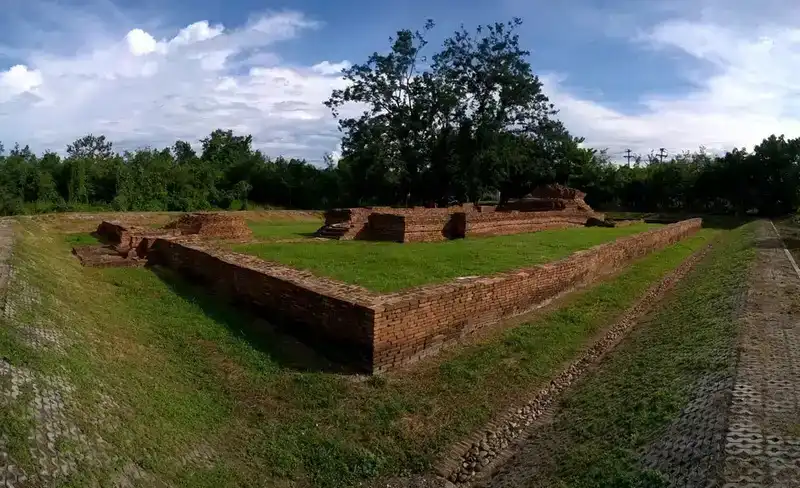
10. Wat Mai Song It is located in the southeast corner of Wiang Kum Kam. The area surrounding the temple is rice fields. Before the excavation, it was a rectangular mound with a large tree that the villagers called "Mai Song" (the origin of the temple's name). Originally, the ancient site consisted of an octagonal pagoda and a base of a gate arch with walls.
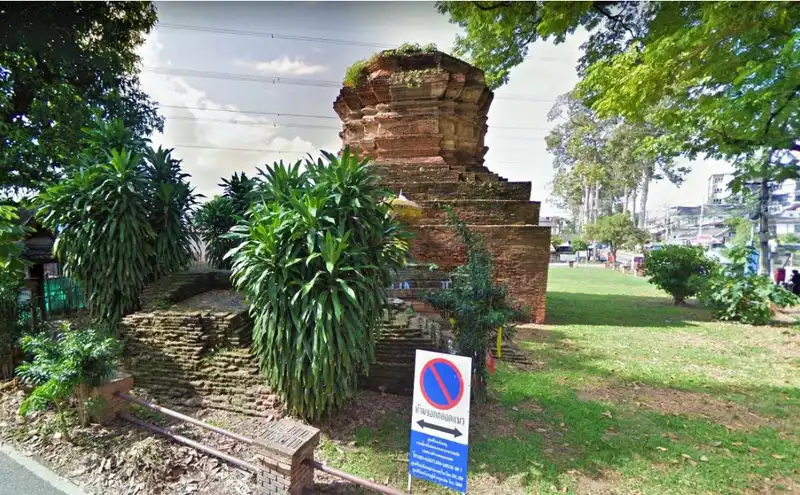
11. Wat Ku Khao It is located on the Chiang Mai-Lamphun Road, Nong Hoi Subdistrict, Mueang District, Chiang Mai Province. The condition around the temple before excavation found a chedi approximately 5 meters high and around which the chedi is a mound of earth. After excavation and dredging the soil that had accumulated, 3 ancient sites were found: a glass wall and a door arch behind the chedi; the main chedi is in Lanna art style with a high, solid chedi on all 4 sides (no niches for the Buddha); the top of the chedi is an octagonal lotus pedestal supporting a bell-shaped body; and a chapel with lotus pedestal corners, an original altar base, and lotus petal patterns.
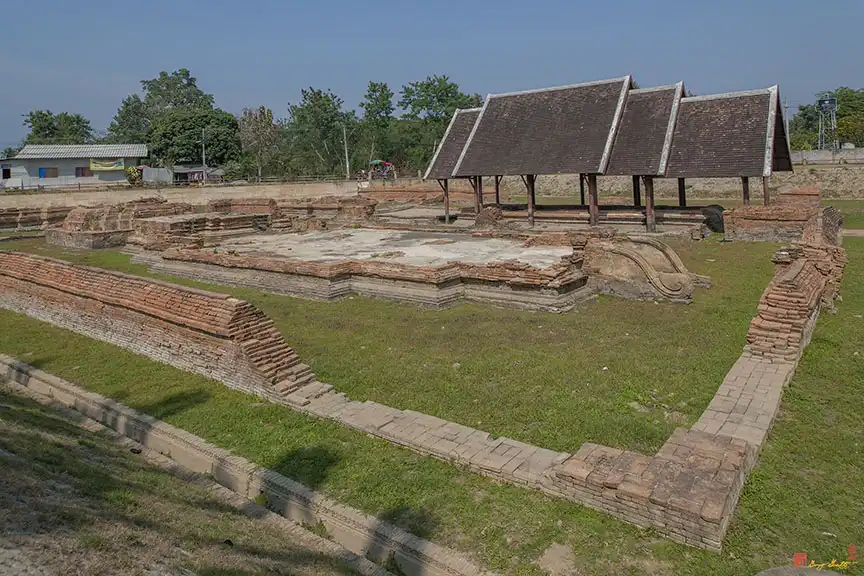
12. Wat Ku Pa Dom It is located in the southwest outside Wiang Kum Kam. The name of this temple was given after the owner of the land. The ancient site of the temple is large, consisting of a large base chapel with stairs leading up to the chapel and a railing at the end in the shape of a lone character. As for the chedi, only the base remains, which is surrounded by a glass wall. The glass wall in front of the entrance to the chapel has an arch. This temple is approximately 21st-22nd Buddhist centuries.
13. Wat Bot It is located on the west side outside Wiang Kum Kam. The ancient site consists of a temple with only the base remaining and a chedi with a square base.
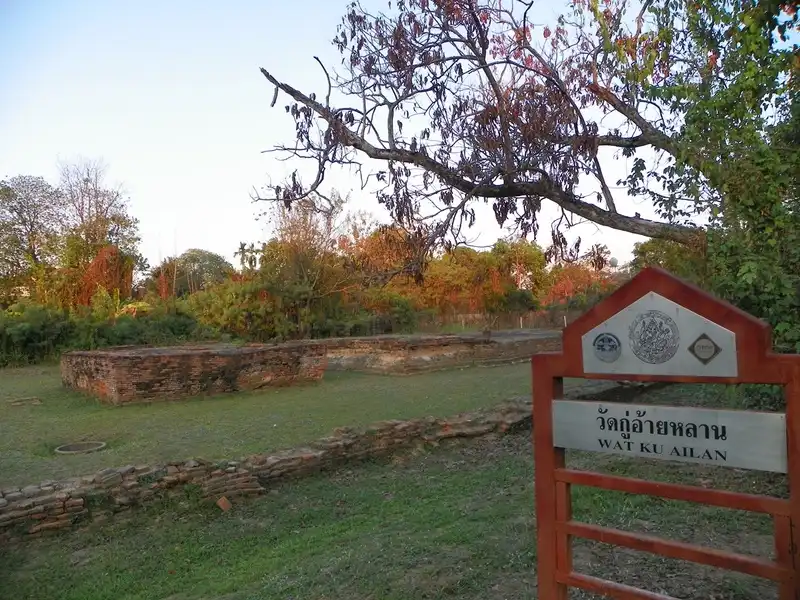
14. Wat Ku Ai Lan It is a small temple located on the north side of Wiang Kum Kam. It was named after its owner, Ai Lan. The ancient site consists of a viharn facing east, a square-based chedi, an altar, a wall, and an entrance gate on the east side.
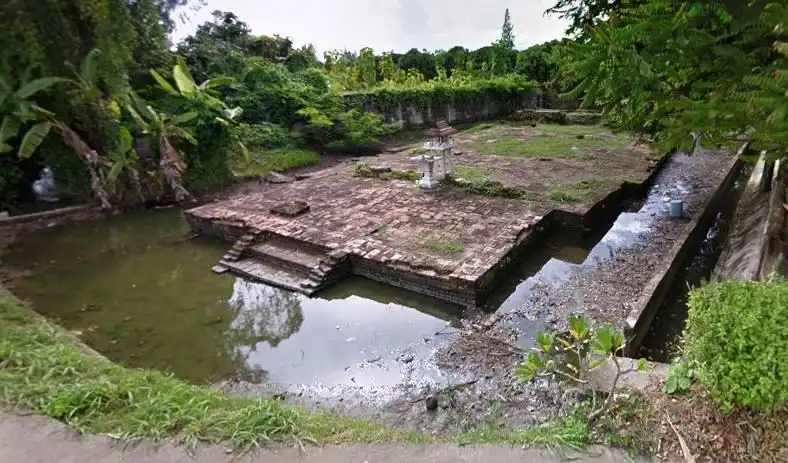
15. Wat Ku Ai Si It is a small temple. The ancient site consists of a chapel and a pagoda, of which only the base and altar remain.
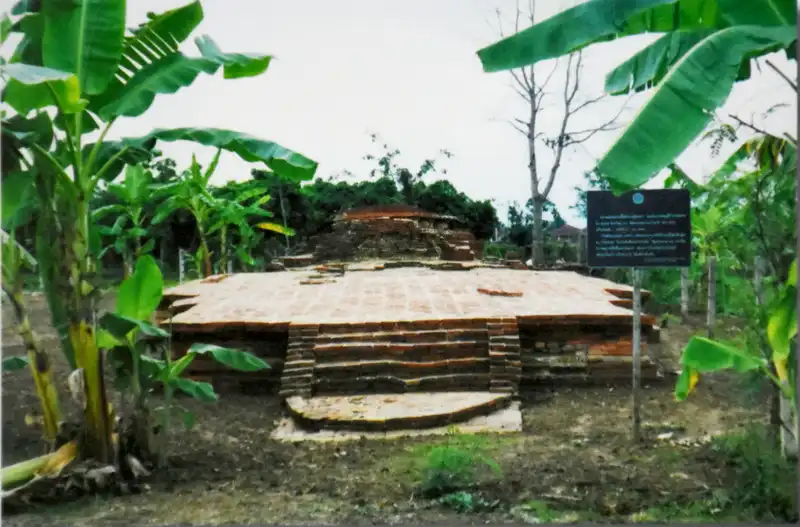
16. Wat Ku Makluea It is located in Wiang Kum Kam on the east side. The temple was named after the tree that grew on the ancient site. After excavating the soil, it was found that the chedi and the temple were situated on the same base and facing east.
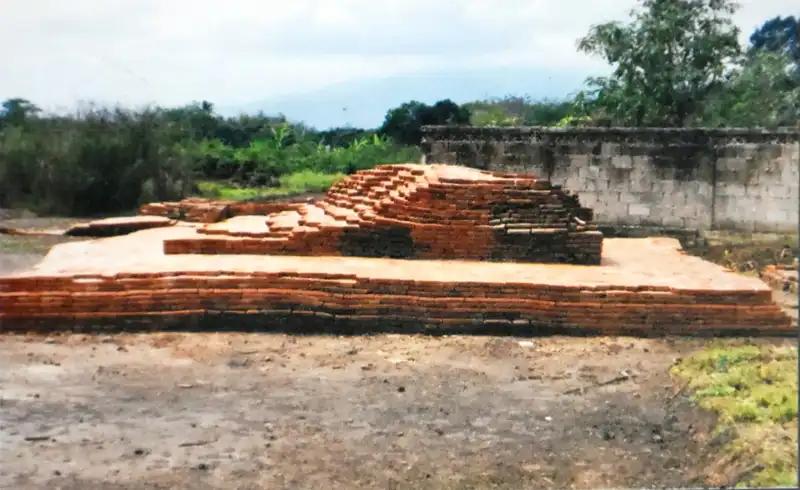
17. Wat Kulidmai It is located in the southern part of Wiang Kum Kam. The temple is called by the locals because of the Pega tree (a tree that cuts trees) growing on the temple hill. It is an ancient site consisting of a chapel facing east, a chedi behind the chapel with only the base remaining, and an octagonal chedi with a gate arch and a wall.
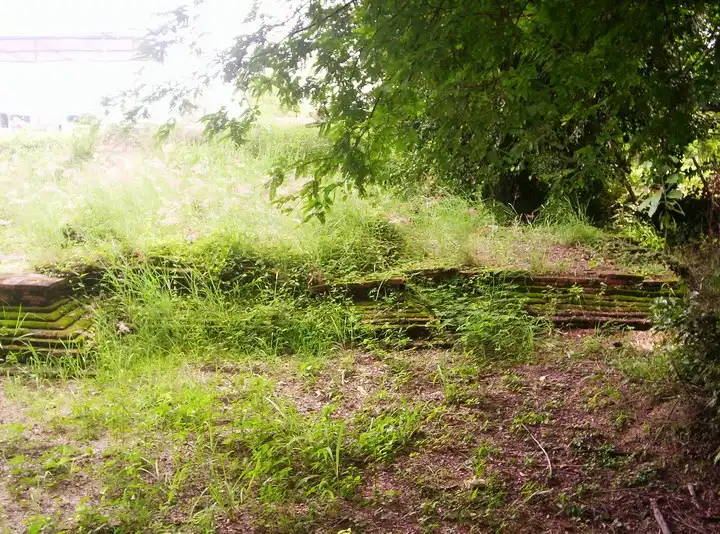
18. Wat Ku Chok Pok It is located outside the walls of Wiang Kum Kam in the southeast. The ancient site consists of a temple and a pagoda, of which only the base remains.
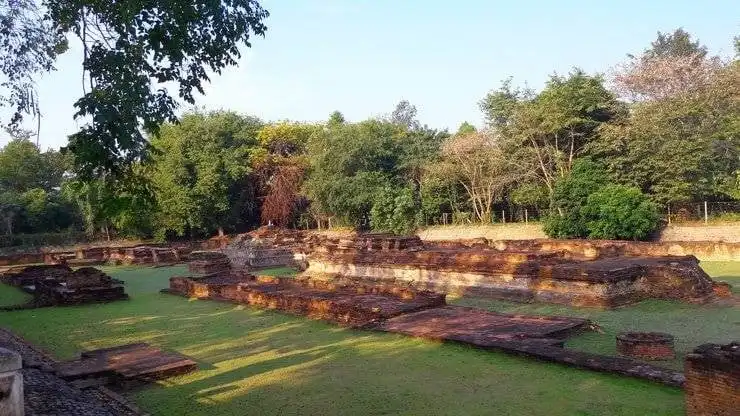
19. Wat Nanchang Named after the owner of the land, the front of the temple is near the Ping River. There is a small archway decorated with stucco. Next to the archway is a walkway and a chapel with a base of the principal Buddha image decorated with stucco. Behind the chapel is a square-based pagoda with two layers. The reliquary chamber is now damaged. Opposite the pagoda is a pavilion. Next to it is the ordination hall.
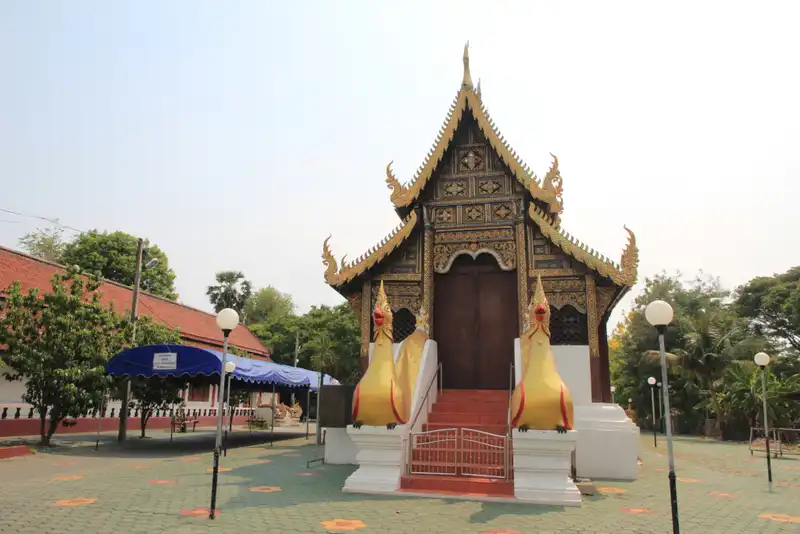
20. Wat Sao Hin t is located in Nong Hoi Subdistrict, Mueang District, Chiang Mai Province. However, at present, there is no evidence in historical records that mentions the story of this temple in the past.
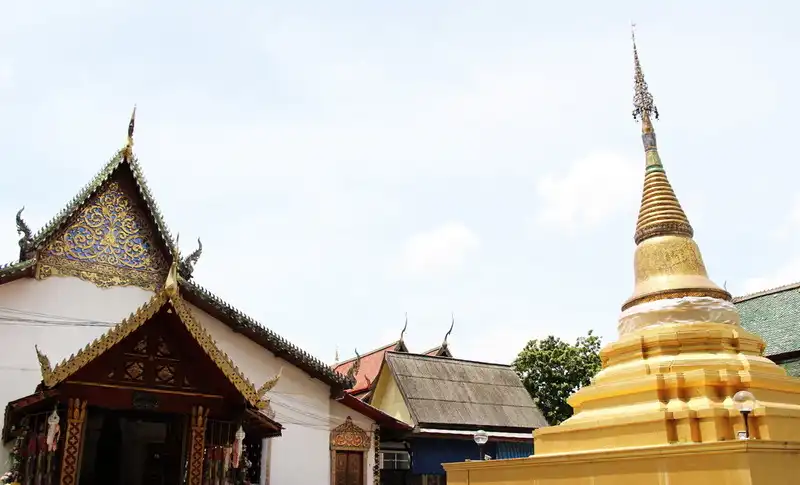
21. Wat Nong Phueng It is located on the west side of the Chiang Mai-Lamphun Road, Nong Phueng Subdistrict, Saraphi District, Chiang Mai Province. It was originally a temple in the Wiang Kum Kam-Chiang Mai period, or it may have existed as an original temple since the Hariphunchai period. Evidence of ancient objects in the Lamphun style has been discovered. The important building of this temple is the Reclining Buddha Shrine, which is a reclining Buddha or Buddha statue 38 sok (39 meters) long.
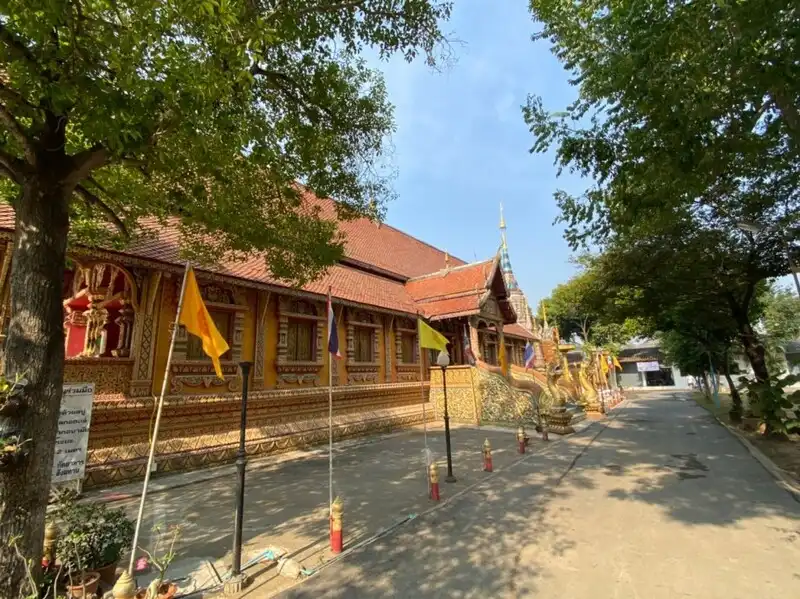
22. Wat Sribunruang It is located in Nong Hoi Subdistrict, Mueang District, Chiang Mai Province. It is a temple that has been renovated in a later period. Currently, there are monks residing at this temple.
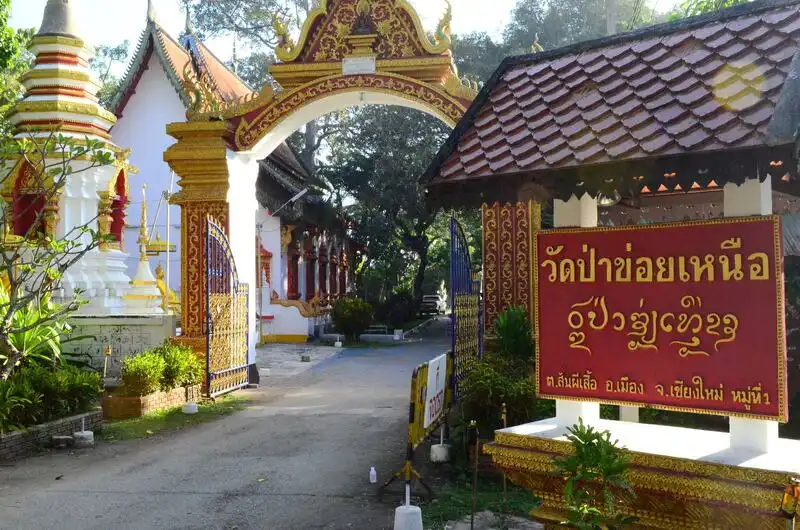
23. Wat Khoi Sam Ton It is located in the northeastern part of Wiang Kum Kam district, but the temple's name is based on three Khoi trees growing in the temple area. There is no mention of its origin in historical documents or representatives.
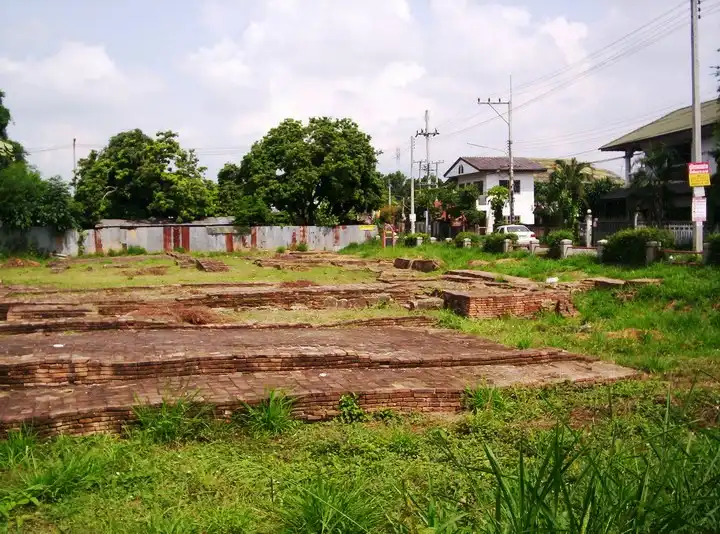
24. Wat Phan Lao Located in Nong Hoi Subdistrict, Mueang District, Chiang Mai Province, it was originally an abandoned temple with the original name that the community has passed down. It is expected that it comes from the name of the temple with the word "Phan" in front, which probably means a military rank or a nobleman. Originally, this temple may have been a temple under the patronage of a military officer or a nobleman named "Lao". It was originally located on the side of Tha Wang Tan Road, which is outside Wiang Kum Kam to the north. The ancient site has many bricks scattered around. Pieces of Buddha images and various buildings that cannot be clearly identified are found. It is still expected that there are many more temples that are submerged underground and houses of the villagers are waiting to be restored.
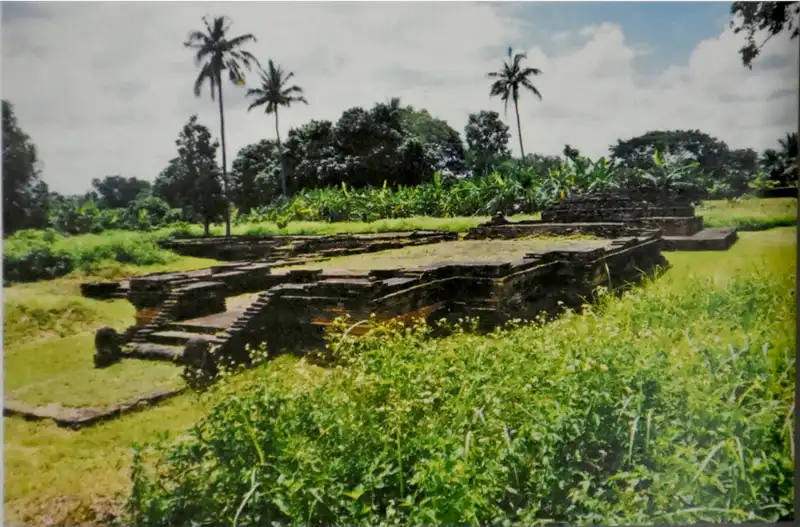
25. Wat Phra Chao Ong Dam It is located inside Wiang Kum Kam, close to the city walls to the northwest. Before the excavation, it was a longan orchard. There are two earthen mounds in the area, which the locals call the Noen Phaya Mangrai and Noen Phra Chao Dam. It is assumed that the temple is called Wat Phra Chao Dam because it used to have a black Buddha image enshrined in it. Most of the ancient sites found are several temples, with an archway and a wall. Next to the archway is a temple and a pagoda.
| Name | Wiang Kum Kam Ancient City and Wiang Kum Kam Archaeological Zone, Saraphi District, Chiang Mai |
| Location | Tha Wang Tan Subdistrict, Saraphi District, Chiang Mai Province, southeast of Chiang Mai Old City (approx. 3–4 km), close to the eastern bank of the Ping River and connected to Chiang Mai–Lamphun Road (Highway 106). |
| Main Characteristics | An ancient walled city with original moats and earthen ramparts, roughly rectangular in plan (approx. 500 × 700 meters). More than 20 temple ruins and archaeological sites are scattered throughout the area, including restored temples and active monasteries. Many ruins were buried 1.5–2 meters below the ground by centuries of sediment. Today Wiang Kum Kam serves as a major cultural heritage site where visitors can learn about Hariphunchai and Lanna architecture and art, with tram, horse carriage and local guided tours available around the city. |
| Period / History | Wiang Kum Kam is believed to have been founded in the late Hariphunchai–early Lanna period. King Mangrai ordered the construction of the city around B.E. 1829 after conquering Hariphunchai, using it as his capital before founding Chiang Mai. The city later suffered major flooding during the Burmese occupation of Lanna (around B.E. 2101–2317) and was abandoned, with its temples and structures buried under thick layers of sediment. It remained hidden for centuries until the Fine Arts Department began excavations and restoration in B.E. 2527 (1984). The area was officially registered as a historical site in B.E. 2543 and has since been developed into one of Chiang Mai’s key cultural heritage attractions. |
| Origin of the Name “Wiang Kum Kam” | In Northern Thai, “Wiang” refers to a fortified city with walls and moats. The term “Kum Kam” is thought to derive from “Khum Kham” or “Khum Kham”, in which “Khum” conveys the idea of protection or guarding, and “Kham/Kam” refers to a settlement or town. Together the name suggests “a protected or fortified city.” Another interpretation links the name to the concept of a royal or principal city enclosed by defensive earthworks and waterways, functioning as a stronghold in the Ping River basin. |
| Key Evidence / Notable Features | Visible sections of the ancient moat and earthen ramparts, numerous temple and chedi ruins such as Wat Chang Kam (Wat Kan Thom), Wat Chedi Liam (Wat Ku Kham), Wat Pu Pia, Wat E-Kang, Wat Nan Chang, Wat Phra That Khao, Wat Ku Khao, Wat Nong Phueng and Wat Phra Chao Ong Dam. Artifacts include sandstone and terracotta Buddha images, Hariphunchai-style votive tablets, brown-glazed burial jars, and Chinese Yuan Dynasty ceramics. The depth of flood sediments covering many ruins (up to nearly 2 meters in some areas) offers tangible evidence of major ancient flooding events. |
| Getting There | From Chiang Mai Old City, drive toward Nong Hoi and follow Chiang Mai–Lamphun Road (Highway 106) in the direction of Saraphi. After passing the Nong Hoi area, follow signs to Tha Wang Tan Subdistrict and “Wiang Kum Kam” / “Wiang Kum Kam Tourist Center”. The distance from the city moat is around 8–10 km. Continue another 1–2 km from the turnoff to reach the visitor center and parking area, which serve as the starting point for tram and horse carriage tours. Visitors can also come by local songthaew, taxi or ride-hailing services from the city. |
| Nearby Attractions (Approx. Distance) | - Main archaeological clusters of Wat Chang Kam, Wat Chedi Liam, Wat Pu Pia, Wat E-Kang, Wat Nan Chang, Wat Phra That Khao and Wat Phra Chao Ong Dam within Wiang Kum Kam, approx. 0.2–2 km along tram/horse-carriage routes - Wat Ku Khao (outside the main city wall, near Chiang Mai–Lamphun Road), approx. 2–3 km - Nong Hoi local market and food stalls, approx. 3–4 km - Chiang Mai Old City (Wat Phra Singh, Wat Chedi Luang and other major temples), approx. 6–8 km - Chiang Mai Night Bazaar and Chang Klan area, approx. 5–6 km, ideal for evening dining and shopping after a heritage tour |
| Recommended Restaurants (Distance & Phone) | - Huen Jai Yong (Northern Thai cuisine), San Kamphaeng area, approx. 12–15 km from Wiang Kum Kam, Tel. 086-671-8710 - Paak Dang Riverside Dining, riverside restaurant near Nawarat Bridge–Chang Klan, approx. 5–7 km, Tel. 094-994-9353 - Parc Thai Eatery, Thai restaurant at Parkborom City Resort, Mahidol–Airport intersection area, approx. 5–6 km, Tel. 062-309-8222 - Freshtime Chiang Mai, café and restaurant in the Chang Klan–Night Bazaar area, approx. 5–6 km, Tel. 096-246-6266 - Various local eateries, noodle shops and curry rice restaurants along Chiang Mai–Lamphun Road and around Nong Hoi–Tha Wang Tan, which can be chosen according to time and recent reviews |
| Recommended Accommodations (Distance & Phone) | - Wiang Kum Kam Resort, a quiet garden-style resort close to the ruins, approx. 0.5–1 km from the main temple cluster in Wiang Kum Kam, Tel. 097-949-4227 - Maraya Hotel & Resort, riverside hotel on the Ping River with views of the city and Doi Suthep, approx. 3–4 km, Tel. 053-812-121 - De Wiang Kum Kam, boutique hotel in the Wiang Kum Kam area, only a few hundred meters from key ruins (check latest phone and status via booking platforms before travel) - Guesthouses and small resorts around Nong Hoi, Chiang Mai–Lamphun Road and the airport area, all within roughly 10–20 minutes’ drive from Wiang Kum Kam |
| Facilities | Visitor center and parking area, ticket counter for tram and horse-carriage tours, local guides, public restrooms, small community shops selling drinks and souvenirs, and walking/cycling routes around some of the main ruins (visitors should check current service conditions in advance). |
| Fees | No entrance fee is charged for the general Wiang Kum Kam archaeological area. However, tram tours, horse carriages and guided packages have separate charges depending on route and group size. It is recommended to confirm current prices at the visitor center before booking. |
| Contact | Wiang Kum Kam Tourist Information Center, Tha Wang Tan Subdistrict, Saraphi District, Chiang Mai. Tel. 053-277-322, 053-277-344 (for tram schedules, tour routes and archaeological site information). |
Frequently Asked Questions (FAQ)
Q: Where exactly is Wiang Kum Kam located in relation to Chiang Mai City, and how do I get there?
A: Wiang Kum Kam lies southeast of Chiang Mai Old City, in Tha Wang Tan Subdistrict, Saraphi District, close to Chiang Mai–Lamphun Road and the eastern bank of the Ping River. From the city moat area, head toward Nong Hoi, follow Highway 106 (Chiang Mai–Lamphun), then turn into Tha Wang Tan following signs for “Wiang Kum Kam”. Continue about 1–2 km to reach the visitor center and parking area, which is the starting point for tram and horse-carriage tours.
Q: What are the opening hours, and is there an entrance fee to visit Wiang Kum Kam?
A: The archaeological area of Wiang Kum Kam is generally accessible every day, with the most convenient visiting time between 08:00 and 17:00, when trams, horse carriages and local guides are normally available. There is no admission fee for entering the archaeological zone itself, but there are separate charges for tram, horse-carriage and guided tours. Visitors should confirm current prices and schedules at the visitor center.
Q: How much time should I plan to explore Wiang Kum Kam, and should I walk or take a tram?
A: A short overview tour usually takes about 1–1.5 hours, while a more in-depth visit to several temple clusters can take 2–3 hours or more. Most visitors choose the tram or horse carriage, which stops at key ruins while a guide explains the history. Those who prefer independence can explore by bicycle or private car using a site map, but should study the route in advance because the ruins are spread throughout local neighborhoods.
Q: Which archaeological sites in Wiang Kum Kam are considered must-see?
A: Popular highlights include Wat Chang Kam (Wat Kan Thom), once a central temple of the city; Wat Chedi Liam (Wat Ku Kham), with its Hariphunchai-style stepped chedi; Wat Pu Pia with relatively well-preserved stucco decorations; Wat E-Kang, once buried nearly 2 meters under sediment; Wat Nan Chang, which shows clear evidence of ancient flooding; and the pair of sites Wat Phra Chao Ong Dam and Wat Phaya Mangrai, associated with the city’s founding king. Wat Ku Khao and Wat Nong Phueng nearby also illustrate later stages of community development.
Q: Is Wiang Kum Kam suitable for families with children and elderly travelers?
A: Yes. Wiang Kum Kam is excellent for family visits because it is an outdoor, open archaeological site where children can see real ruins while listening to stories from local guides. Elderly visitors can comfortably ride the tram or horse carriage without walking long distances. However, some areas have uneven ground and old brickwork, so it is advisable to wear comfortable shoes, avoid the hottest midday hours, and bring hats, umbrellas and drinking water.
Q: Can I visit Wiang Kum Kam without a private car?
A: Yes. You can take a songthaew or public bus that runs along Chiang Mai–Lamphun Road and get off near Nong Hoi or at the Tha Wang Tan turnoff. From there, hire a local songthaew, motorcycle taxi or taxi/ride-hailing service to the Wiang Kum Kam Visitor Center. Be sure to agree on fares and pick-up arrangements in advance for a smooth return to the city.
 Tel: 0861935049, 0810279513
 Wiang Kum Kam Map
 Category:
  Group:
  Last Update: 3 MonthAgo
Comment
 Nearby Attractions
| Keyword (Advance) |
 Facebook Fanpage
 Region
 Landmarks and Memorials(
 Royal Palace(
 Art, Craft Centres, Tradition(
 Museums(
 Educational Places
 Museum for Study(
 Educational Gardens, Farm(
 Training Center(
 University
 Places of Worship
 Temple(
 Mosque(
 Other religious and spiritural sites(
 Research and Development
 Royal Project(
 Suburban Living
 Village, Community(
 Local Market(
 Nature and Wildlife
 National Parks and Marine Reserves(
 Mountain (Doi)(
 Dam, Reservoir, Lake(
 Waterfalls(
 Hot Springs(
 Caves(
 River, Canal(
 Other natural attractions(
 Entertainment and Agricultural
 Zoos and Aquariums(
 Animal camps and shows(
 Stadium(
 Farm, Parks, Gardens and Ecotourism(
 Waterpark(
 Theater(
 Outdoor and Adventure Activities(
 Shopping
 Shopping and Night Market(
 Restaurant
 Michelin Star(
 Michelin Guide(
 Call Customer Service in Tourism
 Call Customer Service in Tourism(
 Travel Articles, Recipes
 Travel Review, Food Review(
 Food Menu, North Recipes(
 Thai Desserts, North Recipes(