

 Home
Home Chiang Mai(










Rating: 4/5 (4 votes)
 |
|  Map
Map 
 Have Map
  No Map
Chiang Mai attractions
Attractions in Thailand
Open Days: Generally “Daily” (some zones/trails may be temporarily closed due to official notices, safety, or habitat recovery)
Opening Hours: Generally 08:00 – 17:00 (hours/conditions may change depending on area management)
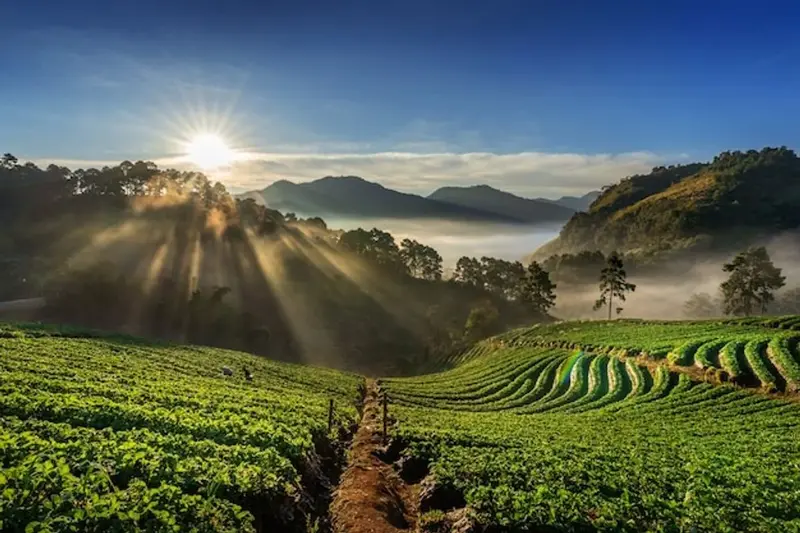
Doi Suthep–Pui National Park is Chiang Mai’s “backyard mountain” that most people know by name, yet many overlook one simple truth: it’s not just the road to a famous temple or a scenic lookout. It’s a living watershed forest that works every day—both as a source of small streams that help sustain the city, and as a natural mountain ecosystem that shifts with altitude. From the easy-access foothills to cooler, higher zones, the forest’s character changes continuously with moisture and temperature.
The park’s terrain is a complex range of ridges and peaks, with well-known mountains such as Doi Suthep, Doi Buak Ha, and Doi Pui. That’s why “a trip here” doesn’t look the same for everyone. If you travel for faith and history, climbing to Wat Phra That Doi Suthep can feel like touching the heart of Chiang Mai in the most direct way. If you’re more of a nature person, you’ll notice how quickly the air and the forest change the moment you turn off the main road toward a waterfall or a short forest walk. And if you’re drawn to living culture, continuing to the Hmong village at Doi Pui brings the human layer into the journey so it becomes more than just a photo stop.
What makes Doi Suthep–Pui a year-round destination is how flexible it is across seasons. In the rainy season, the forest turns intensely green and waterfalls often run beautifully, but you trade that for slippery paths, leeches, and the possibility of temporary trail restrictions for safety. Late rainy season into early winter is a favorite window for many travelers because the weather stabilizes, skies open up, and driving is generally easier. Winter itself is ideal for cool ridge air and clear views—morning light can be especially soft and photogenic, and temperatures are noticeably lower than in town, so a windbreaker is usually a smart call.
Another signature of the park is how naturally “nature + culture” can fit into a single itinerary. Huay Kaew Waterfall is so close to the city that it can feel like a casual stop, but once you step in, the sound of water and the shade of the forest can make the city disappear in minutes. Monthathan Waterfall requires a bit more climbing and often feels quieter, more distinctly “forest.” Higher up, Wat Phra That Doi Suthep is the landmark many people come to “reach for real.” Continue onward and you’ll arrive at Bhubing Palace, where manicured gardens and highland scenery create a different mood altogether—before ending at Doi Pui and the Hmong village, which adds viewpoints, cool air, and local stories to the mountain experience.
To enjoy Doi Suthep–Pui without wasting energy, it helps to pick your “mode” first. For a smooth one-day trip, choose one main axis and add a secondary stop only if time allows—for example, a faith-and-view route (Wat Phra That Doi Suthep plus viewpoints along the road) or a nature route (one waterfall plus a short walk), then optionally Bhubing Palace or the Hmong village. If you prefer a calmer pace, staying in the city and driving up early often gives you better light and reduces the pressure of returning on winding mountain roads after dark, especially during peak travel periods.
One thing to keep in mind is that Doi Suthep–Pui is a shared space—used by visitors, locals, and park staff. Small courtesies make a big difference here: don’t leave trash, don’t feed wildlife, keep noise down in natural zones, and don’t park in a way that squeezes traffic on narrow sections. If you’re using nature trails, stay on designated paths; cutting corners in popular forest areas can quickly damage soil and vegetation and accelerates trail erosion.
Getting There The most common route starts from Chiang Mai city via Huay Kaew Road to the Kruba Srivichai Monument, then climbs along the paved mountain road toward Wat Phra That Doi Suthep. From there, you can continue on the same paved road to Bhubing Palace and the Hmong village at Doi Pui. Drive at a steady pace, avoid risky overtakes on blind curves, and always budget more time than you think you need—especially on weekends and in high season when traffic can build up quickly.
If you plan to cover multiple spots in one day, it helps to pack five basics: 1) shoes with good grip, 2) a windbreaker or warm layer (mornings and evenings can be colder than expected), 3) drinking water and a small snack, 4) an umbrella or rain jacket in the wet season, and 5) one backup plan in case a specific zone is temporarily closed or traffic gets too heavy—so you can switch to a waterfall or an easier nearby stop without ruining the day.
| Name | Doi Suthep–Pui National Park |
| Location | Covers Mueang Chiang Mai, Mae Rim, and Hang Dong Districts, Chiang Mai (main contact/office area: Huay Kaew Road, Suthep Subdistrict, Mueang Chiang Mai) |
| Highlights | Mountain forest close to the city, important watershed area, waterfalls, viewpoints, nature trails, and major cultural attractions (Wat Phra That Doi Suthep, Bhubing Palace, Hmong Village at Doi Pui) |
| Area | Approx. 163,163 rai (figures may vary slightly depending on official database updates) |
| Establishment | Declared a national park in 1981 with an expansion in 1982 (summary based on managing authority information) |
| Open Days | Generally Daily (some zones/trails may be temporarily closed by notice) |
| Opening Hours | Generally 08:00 – 17:00 (hours/conditions may change depending on management) |
| Park Entrance Fee | Thai nationals: child 10 THB, adult 20 THB | Foreigners: child 50 THB, adult 100 THB (please check the latest rates before visiting) |
| Facilities | Park office/information points, parking areas by zone, selected nature trails, many key attractions accessible via paved roads (services vary by zone and season) |
| Current Status | Generally open to visitors, with possible temporary “spot/route” closures announced for safety or management |
| Contact (Verified) | Doi Suthep–Pui National Park: 053-210-244, 053-295-041 Email: doisutheppui@gmail.com |
| Nearby Tourist Attractions (Approx. Distance) | Huay Kaew Waterfall (foothill area): 2 km Kruba Srivichai Monument: 3 km Wat Phra That Doi Suthep: 16 km Bhubing Palace: 20 km Hmong Village (Doi Pui): 23 km Doi Pui viewpoint/ridge area: 24 km Nimman Road area: 6 km |
| Popular Restaurants Nearby (Approx. Distance + Phone) | Huen Huay Kaew (Huay Kaew zone): 2 km | 053-221-982 Khao Soi Mae Sai (Huay Kaew zone): 2 km | 053-213-389 Tong Tem Toh (Nimman zone): 6 km | 053-894-731 Galae Restaurant: 12 km | 053-279-515 Chiang Doi Grilled Chicken (city zone): 7 km | 053-242-239 |
| Popular Accommodations Nearby (Approx. Distance + Phone) | U Nimman Chiang Mai: 6 km | 052-005-555 Akyra Manor Chiang Mai: 6 km | 053-216-219 Chiang Mai Marriott Hotel: 8 km | 053-253-666 The Inside House: 9 km | 052-080-133 Chala Number6: 9 km | 052-010-466 |
| Distance Note | Distances are single-number estimates, referenced from the foothill/park office area around Huay Kaew Road; actual travel distance/time varies by starting point and traffic |
Frequently Asked Questions (FAQ)
Q: When is the most comfortable time to visit Doi Suthep–Pui?
A: Late rainy season into winter is usually the easiest for driving and clearer skies. The rainy season can be very lush with stronger waterfalls, but trails may be slippery and some routes may be restricted for safety.
Q: How should I plan a one-day itinerary without getting exhausted?
A: Pick one main focus first—either the temple-and-view route (Wat Phra That Doi Suthep plus viewpoints) or a nature route (one waterfall and a short walk). Then add Bhubing Palace or the Hmong village only if you still have time.
Q: Do I need to prepare anything special before driving up the mountain?
A: Bring a windbreaker/warm layer, water, shoes with good grip, and extra time. The road has many curves and can be busy on weekends, so avoid risky overtakes on blind bends.
Q: Which easy-access nature spot is best if I don’t want to walk much?
A: Huay Kaew Waterfall is very easy to reach and works well as a quick stop before continuing up toward Doi Suthep.
Q: How can I visit responsibly without disturbing nature or other visitors?
A: Don’t litter, don’t feed wildlife, stay on designated trails in nature zones, and avoid parking in ways that block narrow road sections—these small habits protect both the forest and everyone’s safety.
 Website: www.dnp.go.th
 Tel: 053295041, 053210244
 Doi Suthep–Pui National Park Map
 Category:
  Group:
  Last Update: 6 HourAgo
Comment
 Nearby Attractions
| Keyword (Advance) |
 Facebook Fanpage
 Region
 Art, Culture and Heritage
 Historical Sites and Monuments(
 Landmarks and Memorials(
 Royal Palace(
 Art, Craft Centres, Tradition(
 Museums(
 Educational Places
 Museum for Study(
 Educational Gardens, Farm(
 Training Center(
 University
 Places of Worship
 Temple(
 Mosque(
 Other religious and spiritural sites(
 Research and Development
 Royal Project(
 Suburban Living
 Village, Community(
 Local Market(
 Mountain (Doi)(
 Dam, Reservoir, Lake(
 Waterfalls(
 Hot Springs(
 Caves(
 River, Canal(
 Other natural attractions(
 Entertainment and Agricultural
 Zoos and Aquariums(
 Animal camps and shows(
 Stadium(
 Farm, Parks, Gardens and Ecotourism(
 Waterpark(
 Theater(
 Outdoor and Adventure Activities(
 Shopping
 Shopping and Night Market(
 Restaurant
 Michelin Star(
 Michelin Guide(
 Call Customer Service in Tourism
 Call Customer Service in Tourism(
 Travel Articles, Recipes
 Travel Review, Food Review(
 Food Menu, North Recipes(
 Thai Desserts, North Recipes(