

 Home
Home Chiang Mai(










Rating: 4.5/5 (4 votes)
 |
|  Map
Map 
 Have Map
  No Map
Chiang Mai attractions
Attractions in Thailand
Open Days: Generally open daily (recommended to hike in the morning–midday to avoid dense fog or afternoon rain, and to allow enough time to descend before dark)
Opening Hours: Generally 06:00 – 17:30 (safety-based; avoid hiking during rain or immediately after rainfall as the trail can be slippery)
Doi Pong Ka is a mountain regarded with deep respect by the people of Ban Khun Mae Ruam and considered a sacred area. Each year, villagers ascend to the summit to perform prayer rituals asking for timely rainfall. This belief is closely tied to agriculture and the way local people coexist with nature. The meaning of this mountain goes beyond being a simple “viewpoint”; it serves as a communal spiritual center that fulfills both spiritual and social roles at the same time.
The trail to Doi Pong Ka is extremely steep, which makes reaching the summit feel like a true “journey” rather than a quick visit for photos. The distance from the village to the summit is approximately 2.5 kilometers and must be completed on foot. Villagers have improved parts of the trail by constructing stairways in certain sections to enhance safety and reduce soil erosion. Each year, the community ascends the mountain no fewer than three times for ceremonial purposes, reflecting that this mountain is actively used rather than existing only as a name on a map.
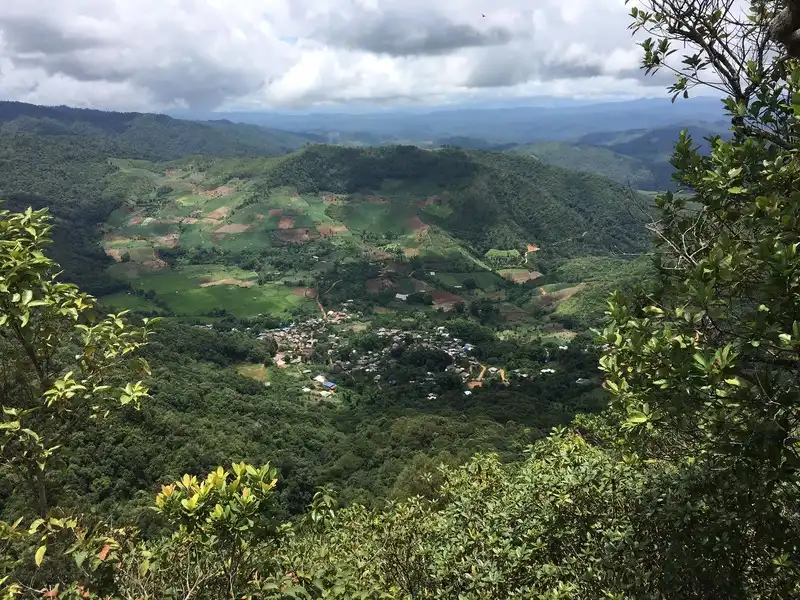
Upon reaching the summit, many visitors are drawn to the open panoramic views that allow several nearby villages to be seen at once, including Ban Pa Kluai, Ban Pang Kia, Ban Huai Khi Puea, Ban Khun Mae Yot, Ban Pang Ung in Mae Suek Subdistrict, and Ban Huai Pha in Mae Na Chon Subdistrict. This perspective adds meaning beyond visual beauty, offering insight into settlement patterns and how communities truly live alongside the mountains.
Another highlight that brings attention to Doi Pong Ka during the cool season is the presence of rhododendrons at the summit. These flowers typically bloom from December to March each year. Their colors and forms, set against mountain ridges and open skies, make this period especially appealing for nature lovers and photographers. As weather conditions can change rapidly, visitors should prepare windproof or warm clothing, sufficient drinking water, and sturdy footwear to ensure safe ascent and descent.
The essence of Doi Pong Ka lies in its “living sacredness.” If visitors arrive on a day when the community is conducting prayer ceremonies or gatherings, respect for the space is essential. Keep noise to a minimum, refrain from playing music, do not leave trash behind, and always ask permission before photographing people or rituals. Those genuinely interested in cultural learning will gain deeper understanding by listening to local stories, realizing that rain-invoking rituals are not “exotic customs,” but long-standing practices of people who have lived with mountains and seasons for generations.
Getting There The distance from the village to the summit of Doi Pong Ka is approximately 2.5 kilometers and requires hiking uphill. Parts of the trail have been improved with stairways by the local community. It is recommended to start early in the morning, allow time for rest breaks, and descend before dark. During the cool season, allow extra time for fog and cold temperatures near the summit.
| Place Name | Doi Pong Ka (community area of Ban Khun Mae Ruam / Kalayaniwattana District, Chiang Mai) |
| Highlights | Sacred mountain of the community, annual rain-invoking prayer rituals, panoramic village views from the summit, rhododendron blooms during the cool season (approx. Dec–Mar) |
| Hiking Distance to Summit | Approximately 2.5 km (very steep trail, with stairways in some sections) |
| Best Time to Visit | December–March (cool weather and potential rhododendron blooms), or early morning in other seasons when rainfall is light |
| Facilities | Natural community trail (visitors should prepare drinking water, windproof clothing, flashlight, personal medication, and proper hiking shoes) |
| Current Status | Generally a community-based hiking destination (recommended to check weather conditions and local information before visiting) |
| Local Contact | Chaem Luang Subdistrict Administrative Organization, Tel. +66 53-699-100 |
| Nearby Attractions (Approximate Distance) | Pong Sayaeng Waterfall (Kalayaniwattana area) approx. 15 km Wat Chan Pine Forest (Kalayaniwattana area) approx. 55 km Royal Project Ban Wat Chan (Kalayaniwattana area) approx. 55 km Ban Huai Hom Village (Kalayaniwattana area) approx. 25 km Community-based attractions in Ban Khun Mae Ruam approx. 5 km |
| Nearby Restaurants (Distance + Phone) | TOKI Organic FARM (Ban Khun Mae Ruam area) approx. 5 km, Tel. +66 98-813-3291 Kalayaniwattana Memorial Food Center approx. 30 km, Tel. +66 65-028-5466 Pakayor Coffee at Wat Chan Pine Forest approx. 55 km (no verified phone number available) |
| Nearby Accommodations (Distance + Phone) | Yeedora Homestay (Ban Khun Mae Ruam) approx. 5 km, Tel. +66 98-813-3291 FIO Watchan – Wat Chan Pine Forest approx. 55 km, Tel. +66 86-181-3388 Sawa Hostel (Kalayaniwattana area) approx. 35 km, Tel. +66 90-329-6660 |
Frequently Asked Questions (FAQ)
Q: What is Doi Pong Ka?
A: It is a sacred mountain revered by the Ban Khun Mae Ruam community, used for annual rain-invoking prayer rituals and as a viewpoint overlooking surrounding villages.
Q: How far is the hike to the summit?
A: The distance from the village to the summit is approximately 2.5 kilometers, with a very steep trail. Adequate time and rest breaks are recommended.
Q: When is the best time to see rhododendrons?
A: Typically during the cool season, from December to March, depending on weather conditions in each year.
Q: Are there any special precautions?
A: Be cautious of steep and slippery trails, especially after rain. Prepare sufficient drinking water, wear proper footwear, and avoid hiking late in the day.
Q: How should visitors behave if a community ceremony is taking place?
A: Respect the area, keep noise low, ask permission before photographing people or rituals, and help keep the trail clean by not leaving trash behind.
 Doi Pong Ka Map
 Category:
  Group:
  Last Update: 1 HourAgo
Comment
 Nearby Attractions
| Keyword (Advance) |
 Region
|
 Muang Chiang Mai(