

 Home
Home Chiang Mai(










Rating: 2.5/5 (11 votes)
 |
|  Map
Map 
 Have Map
  No Map
Chiang Mai attractions
Attractions in Thailand
Open Days: Daily (recommended to contact/arrange an appointment in advance if you want an in-depth visit or to observe work inside artisans’ homes/workshops)
Opening Hours: Recommended 08.30–17.00 (mornings are best for an easy walk and for speaking with artisans)
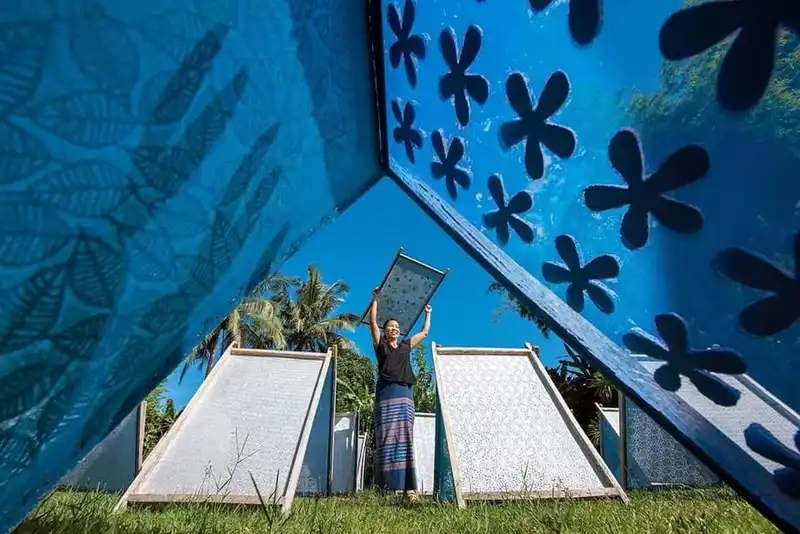
Ban Ton Pao is a village in Ton Pao Subdistrict, San Kamphaeng District, Chiang Mai Province. Craft lovers often smile the moment they hear the words “saa paper” (paper mulberry paper), because this is a community where the know-how of making saa paper has been passed down for over 100 years. It hasn’t remained only at the stage of producing sheets for sale; it has evolved into a wide range of handmade craft products in many colors and styles, adapted to the needs of both domestic and international markets across different eras.
When people think of the San Kamphaeng area, many picture “Bo Sang” first. But if you look at the whole system, Ban Ton Pao is one of the key gears in this region’s handicraft economy. The community’s past connections are especially clear: Ton Pao residents used to make saa paper, fold it into fans, and sell them at the Bo Sang market because the villages are adjacent. Bo Sang makers also purchased saa paper from this area to further develop it into umbrellas. This shows that “saa paper” was never an isolated craft—it was a foundational material that once supported umbrella-making and souvenir culture throughout the entire district.
Still, craft traditions don’t move in a straight line. As umbrella and souvenir markets shifted, newer materials became more popular. Community stories often note that around 1973, umbrella-making began to use fabric instead of saa paper more frequently, gradually reducing demand for saa paper. Over time, saa paper became quieter and quieter, until Ban Ton Pao itself had very few makers left—only a handful of families continued to hold on and keep the craft alive.
What makes Ban Ton Pao memorable as a cultural travel stop isn’t only the fact that it “almost disappeared” and returned. It’s the community mindset: people used their more-than-100-year bond with saa paper and transformed it into a real livelihood again. The important turning point was the willingness to “update the face” of saa paper so it could walk confidently into the modern market—from simple solid-color paper and traditional items to new patterns, embedding natural materials into the paper pulp, and designs that fit today’s needs for gifts, home decor, packaging, and artistic craftwork.
One chapter that gives Ban Ton Pao real depth is the “development of products through patterns embedded within the paper itself.” In the past, saa paper production focused on plain colors; dyeing existed, but it was still mainly single-tone. Later, the community developed ways to build patterns into the paper, such as adding flowers, leaves, or other materials into the pulp. Early processes were quite complicated because they required making two layers of paper: after forming the first layer, artisans placed floral elements or motifs, then covered them with another layer so the design appeared truly “embedded” in the paper.
Today, that original idea has been updated in more contemporary directions: selecting materials that hold up better in the pulp, composing designs that feel minimalist or Lanna-inspired, and, importantly, improving techniques so the paper becomes thicker and more even. This helps the paper work in many modern applications—notebooks, lampshades, framed art, shop decor, and even custom orders where clients request specific colors or textures.
If you visit Ban Ton Pao and want to bring home something “more than just a souvenir,” the best way is to look at saa paper the way a craft-minded person would. Notice the thickness and consistency of the sheet. Look at whether the fibers feel smoothly distributed (a sign of careful work). Check the sharpness of color and how naturally the embedded materials blend into the paper. And ask the artisans how each pattern is made—the answers often reveal that a single sheet of saa paper is not created by labor alone, but by skill and patience built up over many years.
Ban Ton Pao tends to feel like a real working community rather than a staged tourist spot. So simple community-travel manners make the experience better: if you want to take photos in working areas, ask first; don’t touch pieces that are still drying or waiting for the next step; and if you receive knowledge or time from artisans, supporting products directly from the makers is the fairest way to give back. It keeps money circulating in the community and helps the craft remain sustainable.
Another layer that has helped Ban Ton Pao become more widely known is support from local organizations. Ton Pao Subdistrict Municipality has played a role in publicity and in organizing activities to promote saa paper products and community tourism. One name used to communicate the overall image is “Mahatsajan Lanna: Ban Ton Pao, the City of Saa Paper” (“มหัศจรรย์ล้านนา เมืองกระดาษสาบ้านต้นเปา”). The idea has been used continuously to help the public remember Ban Ton Pao as a center of saa paper craft, and to show younger generations that this kind of artisan skill can still create real income today.
Getting There If you drive, from San Kamphaeng District take Highway 1006 toward the city. After passing the Bo Sang intersection, continue for about 1 km to around kilometer marker 8. Look for Ban Nong Khong School on the left; the turn into Ban Ton Pao is directly opposite the school. This landmark is very helpful because the San Kamphaeng route is easy to drive, and you can plan a half-day or one-day trip: visit Ban Ton Pao, continue to Bo Sang, or head onward to the San Kamphaeng–Mae On area (such as the hot springs), then return to Chiang Mai city comfortably.
In summary, Ban Ton Pao is a great destination for anyone who wants to see a “living craft tradition” in action. You get to hear how the community moved through a period of decline and found its way back to being a viable livelihood again—and you can take home products with a clear origin, real hands behind them, and a piece of San Kamphaeng’s local economic history quietly embedded within.
| Name | Ban Ton Pao (Saa Paper Craft Community) – Ton Pao Subdistrict, San Kamphaeng District |
| Location | Ton Pao Subdistrict, San Kamphaeng District, Chiang Mai Province |
| Characteristics | A community producing saa paper and saa-paper handicrafts for over 100 years, known for developing patterns “embedded in the paper” and expanding into many product types |
| Period / Development | A long-standing craft tradition (100+ years) that slowed as umbrella materials shifted, then revived through product development and modern marketing |
| Key Evidence | Local knowledge of saa paper production, embedded-flower/pattern techniques, and improved methods for thicker and more uniform paper sheets |
| Name Origin | Ban Ton Pao is a village within Ton Pao Subdistrict and is widely recognized for its long-inherited saa paper craftsmanship |
| Travel | From San Kamphaeng District, take Highway 1006 toward the city; pass the Bo Sang intersection for about 1 km to around km.8; look for Ban Nong Khong School (the entrance to Ban Ton Pao is opposite) |
| Current Status | An active community producing and developing saa paper crafts; recommended to contact local offices or artisan groups in advance for in-depth visits |
| Contact Number | Ton Pao Subdistrict Municipality Office: 053-338-048 |
| Nearby Tourist Attractions (approx. distance) | Bo Sang Umbrella Village / Umbrella Center (2 km) MAIIAM Contemporary Art Museum (3 km) (052-081-737) Tha Phae Gate / Chiang Mai Old City (12 km) San Kamphaeng Hot Springs (23 km) (065-963-0137) Mae Takhrai National Park (35 km) (052-000-0832) Mae Kampong Village (34 km) |
| Popular Restaurants Nearby (approx. distance) | Bo Sang Kang Jhong (2 km) (082-459-7779) Ruen Lada (6 km) (080-499-8826) GUSTO SITE (6 km) (087-657-9889) Tasty Leaf Cafe (10 km) (052-000-508) mumika toast & milk bar (2 km) (096-926-3644) |
| Popular Accommodations Nearby (approx. distance) | The Vet Boutique Hotel (3 km) (052-011-179) Khum Phaya Resort & Spa (12 km) (053-415-555) Brique Hotel Chiang Mai (11 km) (052-012-555) Thantara Resort Chiang Mai (14 km) (053-215-008) Horizon Village & Resort (23 km) (053-292-381) |
| Facilities | Community area and craft shops in the San Kamphaeng zone, near dining, attractions, and accommodations (details depend on the specific spots you visit) |
| Fees | Generally a community visit (workshops/activities and purchases depend on each shop or artisan group’s terms) |
| Related Tradition / Festival | Local promotional activities for saa paper crafts under the concept “Mahatsajan Lanna: Ban Ton Pao, the City of Saa Paper” (event dates may vary by year and local announcements) |
Frequently Asked Questions (FAQ)
Q: What is Ban Ton Pao best known for, and why should I stop by?
A: It’s best known for saa paper and saa-paper handicrafts passed down for over 100 years, plus modern techniques that embed patterns and natural materials in the paper. You can gain real craft insight and take home gifts with a story.
Q: How is Ban Ton Pao connected to Bo Sang?
A: Historically, Ton Pao residents made saa paper and folded it into fans sold at the Bo Sang market, and saa paper was also purchased for umbrella-making in the Bo Sang area because the villages are adjacent.
Q: How do I choose good-quality saa paper?
A: Check thickness and consistency, look for smooth and even fiber distribution, inspect colors/patterns for durability, and if materials are embedded in the sheet, make sure they feel firmly sealed in and not prone to peeling.
Q: What time is best to visit?
A: Morning is recommended for comfortable walking, softer light for photos, and better chances to speak with artisans in detail.
Q: Where should I go next to make a worthwhile one-day trip?
A: Continue to Bo Sang, or stop by MAIIAM, then head to San Kamphaeng Hot Springs in the afternoon before returning to Chiang Mai city.
 Tel: 053338048-9
 Ban Ton Pao Map
 Category:
  Group:
  Last Update: 11 HourAgo
Comment
 Nearby Attractions
| Keyword (Advance) |
 Facebook Fanpage
 Region
 Art, Culture and Heritage
 Historical Sites and Monuments(
 Landmarks and Memorials(
 Royal Palace(
 Art, Craft Centres, Tradition(
 Museums(
 Educational Places
 Museum for Study(
 Educational Gardens, Farm(
 Training Center(
 University
 Places of Worship
 Temple(
 Mosque(
 Other religious and spiritural sites(
 Research and Development
 Royal Project(
 Local Market(
 Nature and Wildlife
 National Parks and Marine Reserves(
 Mountain (Doi)(
 Dam, Reservoir, Lake(
 Waterfalls(
 Hot Springs(
 Caves(
 River, Canal(
 Other natural attractions(
 Entertainment and Agricultural
 Zoos and Aquariums(
 Animal camps and shows(
 Stadium(
 Farm, Parks, Gardens and Ecotourism(
 Waterpark(
 Theater(
 Outdoor and Adventure Activities(
 Shopping
 Shopping and Night Market(
 Restaurant
 Michelin Star(
 Michelin Guide(
 Call Customer Service in Tourism
 Call Customer Service in Tourism(
 Travel Articles, Recipes
 Travel Review, Food Review(
 Food Menu, North Recipes(
 Thai Desserts, North Recipes(