

 Home
Home Chiang Mai(










Rating: 4/5 (5 votes)
 |
|  Map
Map 
 Have Map
  No Map
Chiang Mai attractions
Attractions in Thailand
Open Days: Generally daily (subject to weather, area management, and any notices from the community/Royal Project Ban Nong Hoi)
Opening Hours: Recommended 05:30 – 18:00 (early morning to late afternoon offers the best light, mist layers, and safer driving)
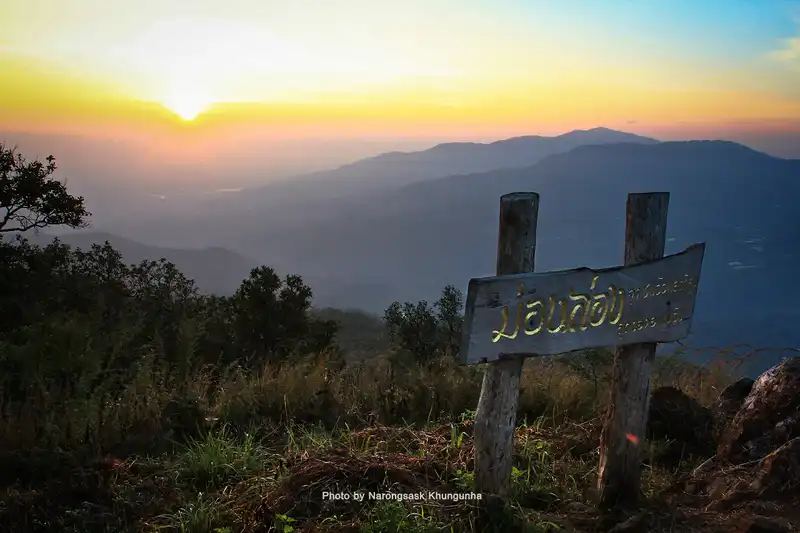
Doi Mon Long (Mon Kwam Long) is a viewpoint ridge on the Mae Rim side where the “geometry of mountains” reads cleanly to the naked eye. The charm here isn’t only seeing Chiang Mai from above, but seeing how the city, valleys, ridgelines, and highland farms sit in one frame—especially along the Mae Rim–Samoeng road and the upland communities such as Mae Sa Mai, Pong Yaeng, and Sam Lang, which appear like a chain of settlements along shoulders of the range. It’s not a standalone pretty view; it’s a view that quietly explains how people live with steep land.
From Doi Mon Long you will often catch wide sightlines across Mae Rim and Samoeng, and recognizable landmarks around Mae Rim such as Queen Sirikit Botanic Garden, plus the spread of resorts and cafes in the Pong Yaeng–Mon Jam area. What makes the panorama feel “sharp” is the layered terrain: ridges draw multiple horizons, while valleys act as corridors for wind and moisture. In late rainy season into winter, mist tends to pool in the hollows before sunrise, then slowly lifts along the slopes into a soft “sea of clouds” effect—especially in the earliest hours before the sun strengthens.
Locals also call this area “Mon Kwam Long” (literally, “the overturned coffin”), tied to the legend of Khun Luang Wirangka and a coffin (“long”) said to have overturned here during a royal funeral journey along the ridgeline. That story is why this spot feels like more than a check-in point: it carries a shared local memory. In the retold version, Wirangka is described as a Lawa (Lua) ruler of Raming Nakhon, famed for strength and spear-throwing (“sen”), whose life narrative intersects with the legend of Queen Jamadevi of Hariphunchai. After war, defeat, and fatal injury, the wish was to be buried where Hariphunchai could be clearly seen—yet the body could not be carried across the river. The procession took the ridgeline instead, and the coffin was said to have overturned at this very ridge, giving rise to the name used by the community.
Another place people often mention is the small shrine/spot associated with Wirangka’s burial tradition in local belief. On the ground, many visitors treat it as much a place of respect as a photo stop—because arriving there feels like standing at the “last chapter” of the story. When a mountain holds a legend, the landscape stops being only scenery and becomes meaning, which is why some people come to pay respects, not just to take a picture.
In terms of setting, Doi Mon Long connects with Ban Nong Hoi (Mae Rim), an upland community associated with Hmong highland life and the broader Royal Project context. Reading the place this way matters: the beauty of the view is inseparable from real systems of living and land management—cold-climate vegetable plots, water use, soil care on steep slopes, and roads that must survive heavy rains. When you travel around Mon Jam–Nong Hoi, the deeper story beneath the photos is about adaptation, livelihood shifts, and everyday reliance on the mountain’s limits.
The “Royal Project” angle becomes more compelling when you treat it as more than a tourist label. In practice, it’s a long-term mechanism aimed at helping highland communities build stable incomes while reducing pressure on forests and fragile slopes. What you see in the fields isn’t there to look cute in pictures—it’s there because altitude, temperature, and water conditions make certain crops viable, and because knowledge, trials, and market links help turn that viability into real livelihood. In that sense, the landscape you admire is also the result of work: people and mountains negotiating with each other, season after season.
The “ethnicity” angle also deserves respect rather than romantic framing. Hmong highland communities carry practical mountain knowledge—how to read seasons, how families and kin networks structure work, and how belief and ritual can be woven into everyday life. You may notice this through food, handicrafts, clothing, or the rhythm of the village. If you move carefully and with respect, you will see nuance; if you rush, you will only see a backdrop and miss the point.
For “visual geography,” Doi Mon Long is fun because you can trace the distant ridge of Doi Suthep–Doi Pui like a natural wall separating the city basin from major forest. Standing high enough, you start noticing patterns: where the drainage lines run, where ridges hold, where farms cluster, and where forest begins. It’s a simple skill, but once you get it, mountain views become a kind of map-reading—and this spot gives you time and clarity to practice it.
The best window is typically late rainy season into winter (depending on the year) because visibility and mist chances are higher. Still, mountain roads here can be steep, winding, narrow in sections, and slippery after rain. Safety comes first: use a well-maintained vehicle (brakes/tires), drive slowly, use low gear on descents, and avoid night driving if you’re not confident on mountain routes.
Getting There From Chiang Mai city, head toward Mae Rim District, then take the Mae Rim–Samoeng route (Mae Raem/Pong Yaeng zone). Continue uphill toward the Mon Jam–Ban Nong Hoi area (using “Mon Jam/Royal Project area” as your main reference), then follow signs or map pins for “Mon Long / Mon Kwam Long”. Some segments are narrow mountain roads, so drive cautiously and give way oncoming traffic where needed.
If you want a “full picture” in one day, a workable flow is: sunrise at Doi Mon Long for light and mist, then descend to cafes or restaurants around Pong Yaeng–Mon Jam, and finish with Queen Sirikit Botanic Garden or Mae Sa Waterfall if weather and time allow. If you want the experience to sink in, staying overnight around Mon Jam/Pong Yaeng is worth it—the next morning shows you the mountain “waking up” in a way day trips often miss.
Responsible travel here is pretty straightforward: keep noise down (for both community and wildlife), take all trash back (including cigarette butts and food scraps), don’t block village roads with parking, and ask before photographing people, homes, or working plots. These are living spaces, not props—and this basic respect is what keeps tourism compatible with local life.
In short: if you like places that offer both scenery and story, Doi Mon Long is a strong pick. The more you understand the Royal Project context, highland community life, and the ridge-and-valley geography, the more you feel that this view didn’t “appear by itself”—it was shaped by mountains, people, and time working together for a long while.
| Place Name | Doi Mon Long (Mon Kwam Long), Ban Nong Hoi, Mae Rim District, Chiang Mai |
| Location / Area | Mon Jam – Ban Nong Hoi zone (Mae Rim–Samoeng route), Mae Rim, Chiang Mai |
| Highlights | Ridge viewpoint with layered mountains; views toward Mae Rim/Samoeng corridors and distant Doi Suthep–Doi Pui ridge; local legend tied to “Mon Kwam Long” and Khun Luang Wirangka |
| Approx. Elevation | About 1,450 m above sea level (commonly published figure) |
| Best For | Viewpoint lovers, sunrise/mist photography, travelers who want context around highland farming and community life |
| Getting There | Chiang Mai city → Mae Rim → Mae Rim–Samoeng route (Mae Raem/Pong Yaeng) → Mon Jam–Ban Nong Hoi → follow signs/pin for “Mon Long / Mon Kwam Long” (winding mountain road; drive carefully) |
| Nearby Tourist Attractions (Approx. Distance) | Mon Jam – 3 km Royal Project (Nong Hoi area / Mon Jam zone) – 3 km Pongyang Jungle Coaster & Zipline – 10 km Baan Mon Muan – 8 km Queen Sirikit Botanic Garden – 15 km Mae Sa Waterfall – 18 km Mae Sa Mai Village – 6 km |
| Popular Restaurants Nearby (Approx. Distance + Phone) | Pongyang Jungle Coaster & Zipline (food/cafe zone) – 10 km – 053-106-237, 062-268-4222 Mon Chom Chan Halal Restaurant (Mon Jam zone) – 5 km – 062-626-2995 Hmong Doi Pui Coffee – 32 km – 081-130-5895 Baan Mae Cafe & Restaurant (Chiang Mai city) – 30 km – 091-854-7289 Baan Mon Muan (restaurant/cafe on-site) – 8 km – 083-318-6444, 083-318-6555 |
| Popular Accommodations Nearby (Approx. Distance + Phone) | Nong Hoi Camp (Mon Jam) – 4 km – 064-559-1642, 097-328-6124 Swankiri Resort (Pong Yaeng) – 9 km – 088-5577-626 Panviman Chiang Mai Spa Resort (Pong Yaeng) – 12 km – 053-879-540, 084-378-6986 Baan Mon Muan – 8 km – 083-318-6444, 083-318-6555 Phuchuanlong Mon Jam – 6 km – 061-090-8004 Phutawan-Ban Tha Chan (Mon Jam) – 6 km – 093-555-1259 Mon Sai Lom (Mon Jam) – 6 km – 061-461-1352 |
| Safety Note | Steep, winding mountain roads; extra caution after rain. Drive slowly, use low gear on descents, and avoid night driving if inexperienced. |
Frequently Asked Questions (FAQ)
Q: Are Doi Mon Long and Mon Kwam Long the same place?
A: In everyday local usage, they refer to the same viewpoint area around Ban Nong Hoi – Mon Jam. “Mon Kwam Long” is the name tied to the legend of the overturned coffin, and it’s commonly used alongside “Mon Long.”
Q: When is the best time to see a sea of mist?
A: Late rainy season into winter (varies by year), ideally at dawn before the sun gets strong. Mist often pools in valleys and fades as temperatures rise.
Q: Can I drive up by myself, and what kind of vehicle is recommended?
A: Most visitors drive up, but the route is mountainous with many curves and some narrow sections. Use a well-maintained vehicle (good brakes/tires), drive slowly, and use low gear—especially in wet conditions.
Q: What should I pair with Doi Mon Long for a fuller trip including Royal Project context?
A: A strong pairing is Mon Jam and the Nong Hoi Royal Project area, then Pong Yaeng for cafes/activities, and Queen Sirikit Botanic Garden for nature learning if time allows.
Q: How do I visit respectfully around local communities?
A: Keep noise down, take your trash back, don’t block community roads with parking, and ask before photographing people, homes, or working plots.
 Doi Mon Long Map
 Category:
  Group:
  Last Update: 3 HourAgo
Comment

Photo Gellery(18) 
 Thank you photo(6) from: Moon Salt