

 Home
Home Chiang Mai(




Rating: 3.6/5 (7 votes)
 |
|  Map
Map 
 Have Map
  No Map
Phranakhon Si Ayutthaya attractions
Attractions in Thailand
Open Days: Please Arrange An Appointment In Advance (No Officially Verifiable Open-Day Information Found)
Opening Hours: Please Arrange An Appointment In Advance (No Officially Verifiable Opening-Hour Information Found)
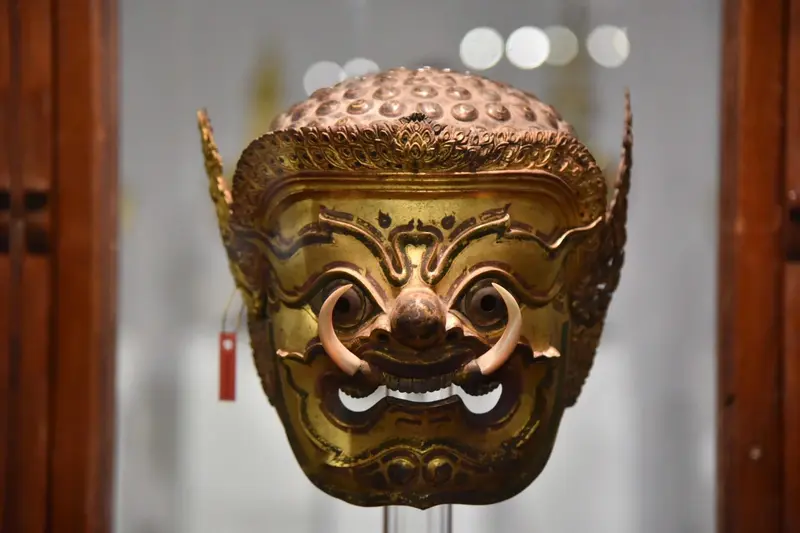
Baan Hua Laem is one of Ayutthaya’s cultural stops for travelers who want to see the city through the lens of craftsmanship rather than only through brick ruins and ancient stupas. This place brings you close to something that is genuinely alive in the present: Thai handicraft—built from skill, training, and patience. The signature work most often associated with Baan Hua Laem is the Khon Mask, an artistic object Thai people recognize from the classical performing art of Khon. For many visitors today—especially younger travelers and international tourists—a khon mask is no longer just stage equipment. It becomes a tangible expression of “Thainess,” a home décor piece with a story, and a collectible whose finer details reveal themselves the longer you look. Visiting here is therefore not merely “stopping by to buy a souvenir,” but an encounter with why certain Thai crafts endure over time—and why the subtle details on a khon mask can hold enough visual power to captivate people from around the world.
To put it plainly, a khon mask is a head mask created to be worn on the head and to cover the performer’s face in Khon. Its structure allows audiences to recognize characters instantly—through emotion, eyes, expression, patterns, and the imposing ornamentation on the head. What makes khon masks especially compelling is that they are typically designed to match the facial identity and personality of characters from Thai literature, particularly the Ramakien. That is why popular forms often include demon heads and Hanuman heads, along with many other familiar faces from the epic. When khon masks are presented in a travel context like Baan Hua Laem, visitors are not only looking at beauty; they are seeing the logic of Thai visual art—hidden in facial proportions, the crispness of lines, and the balance that can make a single character feel as if it “comes alive” on an object that remains physically still in front of you.
Many khon masks seen in homes, restaurants, hotels, or contemporary Thai-style interiors function less as simple decoration and more as “storytelling objects.” They connect viewers to performance culture, character beliefs and symbolism, the narrative energy of the Ramakien, and the level of craftsmanship that requires long experience. For international tourists in particular, a khon mask can feel like encountering “Thailand” in a form they can take home. They may not understand every Thai word, but they can read the object through their eyes: it is difficult to make, it takes time, and it carries an identity unlike masks from other cultures. That is why khon masks go beyond being mere souvenirs; for many people, they become culturally meaningful collectibles—valuable both as art and as narratives carried on the surface of the craft.
The reason khon masks do not feel like typical craft items is that they demand serious training. A piece is not finished simply by making it “look like” a character—it must “be” that character. This identity is built from many small, hidden decisions: facial proportions, the relationship between eyes and brows, the precision of the mouth line, the weight of emotion, and the patterns and ornaments that declare a character’s status. A demon head must project heaviness, authority, and dignity, while Hanuman must feel lively, powerful, and agile—within a single face. This is the visual language of Thai artistry that makers must practice and accumulate until it becomes expertise. Khon masks are detail-dense; a tiny misstep can shift the character’s emotional presence across the entire piece, and the maker will feel that change immediately.
Baan Hua Laem in Ayutthaya has been spoken of as a place where interested visitors can come to view the work, or purchase khon masks to display and decorate their homes. One name frequently mentioned in connection with khon-mask craftsmanship here is M.R.W. Jaroon-sawat Suksawat, whose reputation reinforces the idea that Baan Hua Laem is not merely a “shop,” but a true artisan home with a distinct body of work. The appeal of an artisan home is the atmosphere—different from formal tourist attractions—because visitors often get to see the work up close: the surface texture, the neatness of finishing, and the reason why what appears to be a single mask can require extensive skill to achieve a dignified, well-balanced presence. Located in Tha Wasukri Subdistrict, Phra Nakhon Si Ayutthaya District, Baan Hua Laem can be woven into Ayutthaya’s main travel zones without difficulty. It suits travelers who want to switch pace—moving from walking under the sun among ancient sites to observing craft that rewards careful looking and unhurried time.
The charm of appreciating a khon mask lies in changing how you look—from asking “Is it beautiful?” to asking “What makes this difficult?” and “What is the artisan communicating through the face?” Start with the eyes and eyebrows, because these are the primary language of emotion. Then move to the mouth line and facial shape, which form character and status. After that, examine the sharpness of lines and the cleanliness of pattern work. Carefully made khon masks usually show confident lines, patterns that end neatly, and balance that feels stable from any angle—never as if the face “falls” or “tilts” into the wrong emotional direction. The closer you look, the more you see the hand-made nature: no two pieces are identical in every detail. That subtle difference is what gives many khon masks the charm of being “one of a kind,” which collectors value because it is not something you can simply pick from an assembly line.
For those intending to bring a khon mask home, choosing “well” is not always about selecting the most popular design, but about choosing what fits your home and your personal feeling. A khon mask has strong visual presence. In a clean modern interior, selecting a piece with the right tone and character makes it a focal point without overpowering the space. In a Thai-contemporary home, it can elevate a corner into a narrative space immediately. The most important factors are the neatness of workmanship up close, the balance of the face, and how it feels when you look at it for a long time. A khon mask is something you live with daily, not something you glance at once and forget. Spending a little more time in front of the piece matters, and if possible, choosing the one that truly feels “alive” will make the purchase not only an object you take home, but a story and attachment you carry with it.
Another aspect people often overlook is etiquette when visiting an artisan home. Baan Hua Laem involves delicate, intricate work, so visitors should ask permission before photographing or touching any pieces, and be especially cautious around fine facial details, because this kind of craft can be damaged more easily than typical décor. Speaking respectfully and listening attentively to the stories behind the work improves the experience for both visitors and makers, and makes cultural travel feel more meaningful than simply passing through. In a broader view, Baan Hua Laem is not only a “place to visit,” but a space that helps people understand that Thai art is not distant or confined to the stage—it also exists in the hands of working artisans and in the sustained effort that becomes mastery over time.
In the context of Ayutthaya, Baan Hua Laem completes the city’s picture. Ayutthaya should not be read only as an old capital frozen in the past; it can also be read as a living city of artisans, makers, and craft that continues to create value today. Shifting your travel rhythm from temples and ruins to a khon-mask artisan home adds dimension immediately. You return with the feeling that you have seen multiple faces of Ayutthaya—both the grandeur of history and the cultural refinement hidden in small, meticulous work that requires immense time and patience to become real.
Getting There to Baan Hua Laem in Tha Wasukri Subdistrict can be planned by first arriving in Ayutthaya town, then traveling into Tha Wasukri via whichever route is most convenient. Driving is the most flexible option, as it allows you to structure a seamless day that connects Ayutthaya’s island area, museums, and restaurants. This is especially suitable for travelers who want a day that combines “history” and “craft.” If you are not using a private car, you can plan from key hubs such as Ayutthaya Railway Station or your accommodation, then use a hired car, taxi, or ride service to reach the destination comfortably. The key point is to arrange an appointment in advance, so the visit is organized and does not disrupt the artisan’s work process.
Ultimately, what makes Baan Hua Laem special is that it brings the khon mask closer to everyday life. Even those who have never watched Khon can still appreciate the beauty and the emotion a character can project through a single face. Those interested in culture will gain a deeper view of how performing arts depend on skilled craft and artisan labor behind the scenes. And those who love home décor or collecting will find pieces that are not only beautiful, but rooted, storied, and enduring. On your next trip to Ayutthaya, if you want to return with a “story” that feels different, Baan Hua Laem is a destination that can reshape how you see Thai art—and deepen your understanding of why truly good handcraft is never ordinary.
| Place Name | Baan Hua Laem (Khon Mask Craft Spot) Ayutthaya |
| Address | Tha Wasukri Subdistrict, Phra Nakhon Si Ayutthaya District, Phra Nakhon Si Ayutthaya Province |
| Place Summary | A cultural-and-craft destination in Ayutthaya for visitors interested in Thai khon masks—ideal for viewing, selecting/purchasing, and understanding the value of high-skill Thai craftsmanship and meticulous detail. |
| Key Highlights | Highly detailed, distinctive khon-mask craftsmanship; ideal for Thai art/Ramakien enthusiasts; suitable for meaningful cultural home décor purchases; offers an artisan-focused view of Ayutthaya beyond temples and ruins. |
| Latest Operator | M.R.W. Jaroon-sawat Suksawat (Khon Mask Artisan) |
| Open Days | Please Arrange An Appointment In Advance |
| Opening Hours | Please Arrange An Appointment In Advance |
| Fees | No Verifiable Information Found (Please Ask When Arranging An Appointment) |
| Contact | No Officially Verifiable Public Phone Number Found (Appointment Recommended) |
| Travel | Base yourself in Ayutthaya town/Ayutthaya Island area, then travel to Tha Wasukri by private car or hired transport for flexibility, and arrange an appointment before visiting. |
| Current Status | Recommended To Confirm And Arrange An Appointment Before Visiting |
| Nearby Tourist Attractions With Distance | 1) Ayutthaya Historical Park (Approx. 4 km) Tel. 035-242-525 2) Chao Sam Phraya National Museum (Approx. 4 km) Tel. 035-241-587 3) Ayutthaya Historical Study Centre (Approx. 5 km) Tel. 035-245-123 4) Wat Phanan Choeng Worawihan (Approx. 6 km) Tel. 035-241-708 5) Wat Chaiwatthanaram (Approx. 9 km) Tel. 035-242-286 |
| Popular Restaurants Nearby With Distance | 1) The Summer House Ayutthaya (Approx. 5 km) Tel. 094-224-2223 2) Baan Mai Rim Nam Ayutthaya (Approx. 6 km) Tel. 035-242-248 3) Baan Pom Phet (Approx. 6 km) Tel. 035-242-242 4) Malakor Kitchen And Cafe (Approx. 7 km) Tel. 091-779-6475 5) Ruay Kung Phao (Approx. 16 km) Tel. 086-007-1451 |
| Popular Accommodations Nearby With Distance | 1) Krungsri River Hotel (Approx. 5 km) Tel. 035-244-333 2) Sala Ayutthaya (Approx. 6 km) Tel. 035-242-588 3) Classic Kameo Ayutthaya (Approx. 6 km) Tel. 035-212-535 4) Kantary Hotel Ayutthaya (Approx. 7 km) Tel. 035-337-177 5) Centara Ayutthaya (Approx. 7 km) Tel. 035-706-777 |
Frequently Asked Questions (FAQ)
Q: Who Is Baan Hua Laem Suitable For?
A: It is ideal for travelers interested in Thai handicrafts and Khon culture, those looking for meaningful Thai art décor, international visitors seeking story-rich collectibles, and anyone who wants to see an artisan-focused side of Ayutthaya beyond ancient sites.
Q: How Is A Khon Mask Different From A Regular Mask?
A: A khon mask is designed as the “face of a character” for Khon performance, so proportions, emotion, and patterns must clearly communicate identity and status. Each piece requires advanced skill and meticulous craftsmanship across many small details.
Q: If I Want To Buy A Khon Mask, What Should I Look For?
A: Look for facial balance, crisp and clean linework, neat finishing at close range, and the character’s emotional presence when viewed for a longer time—so you choose a piece that remains compelling and “lives” well in your home.
Q: How Much Time Should I Plan For The Visit?
A: If you plan to view details and select a piece, allow about 1–2 hours, and arrange an appointment in advance for a smoother visit.
Q: What Nearby Places Can I Visit Next?
A: You can continue your trip with Ayutthaya’s museum and old-city zone, such as Ayutthaya Historical Park, Chao Sam Phraya National Museum, Ayutthaya Historical Study Centre, or key temples like Wat Phanan Choeng and Wat Chaiwatthanaram.
 Ban Hua Laem Map
 Category:
  Group:
  Last Update: 3 DayAgo
Comment
 Nearby Attractions
| Keyword (Advance) |
 Facebook Fanpage
 Region
 Art, Culture and Heritage
 Historical Sites and Monuments(
 Landmarks and Memorials(
 Royal Palace(
 Art, Craft Centres, Tradition(
 Museums(
 Educational Places
 Museum for Study(
 Educational Gardens, Farm(
 Training Center(
 University
 Places of Worship
 Temple(
 Church(
 Mosque(
 Other religious and spiritural sites(
 Research and Development
 Royal Project(
 Local Market(
 Floating Market(
 Nature and Wildlife
 Dam, Reservoir, Lake(
 River, Canal(
 Islands(
 Other natural attractions(
 Entertainment and Agricultural
 Animal camps and shows(
 Farm, Parks, Gardens and Ecotourism(
 Travel Articles, Recipes
 Travel Review, Food Review(