

 Home
Home Chiang Mai(




Rating: 2.8/5 (27 votes)
 |
|  Map
Map 
 Have Map
  No Map
Phranakhon Si Ayutthaya attractions
Attractions in Thailand
Open Days: Daily
Opening Hours: 08.00 – 17.00
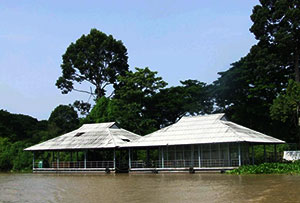
Koh Phra is a community island in the middle of the Chao Phraya River, located in Moo 5 and Moo 7, Ban Pho Subdistrict, Bang Pa-in District, Phra Nakhon Si Ayutthaya Province. The first thing most visitors notice is how different the atmosphere feels from Ayutthaya’s popular tourist spots on the city island. This place is not “staged” for tourism. It is a real, lived-in island community—quiet in the way riverside neighborhoods often are—with its own pace shaped by the flow of the Chao Phraya. That rhythm makes Koh Phra a good stop for travelers who want to step away from the rush, stroll slowly, understand the place through local stories, and then continue to nearby Bang Pa-in attractions without going far.
The island’s identity as an “island in the river” is at the core of its charm. Here, the Chao Phraya is not only scenic—it was also a major route for transport and trade since the Ayutthaya period. Having a community settled on an island makes the relationship between people and water especially visible: riverside homes, travel that depends on water levels and safety conditions, and the practical knowledge of living with the seasons. In particular, during years of severe flooding, island communities can be heavily affected—sometimes to the point where boats become essential for daily movement and livelihoods. These realities underline that Koh Phra is not merely a “check-in spot” but a living place with ordinary days as well as days shaped by nature’s challenges.
As for local historical memory, the source information notes that Koh Phra once served as a resting point for Chinese merchants who sailed junk ships into Ayutthaya to trade with local people. In the context of water travel in earlier times, a “stopover” meant more than a brief docking. It could involve waiting for water conditions, replenishing supplies, repairing vessels, exchanging news, and building trading networks. When river commerce was central to Ayutthaya’s economy, a well-positioned midstream island naturally had the potential to become a receiving point for travelers from different places. This story is one reason Koh Phra is remembered as a “rest-and-pass” space for river travelers, and it helps explain why layers of shared memory can overlap within the same small landscape.
The name “Koh Phra” itself is also explained through multiple oral traditions, which is common in community places where memory is passed down through storytelling rather than official documents. One account says there used to be a temple and merit-making throughout the year, and that shrines or sacred points were established at several locations—at the head of the island, the middle, and the tail. The presence of dispersed “points of faith” suggests a deep bond between people and place through belief and protection, similar to many riverside communities that look to local sacred traditions for reassurance and moral support when living close to water and nature.
Another account explains the name through the river-trade context. It says that in the era of water commerce, certain points along the route collected taxes or fees from passing boats, but this island was a place where there was “no collection.” As a result, it came to be called “Koh Phra” in a sense associated with exemption or mercy. Even if this remains an oral tradition rather than documentary proof, it is valuable as a reflection of collective memory, and it gives Koh Phra more depth than a simple riverside view. Visitors often find themselves asking why one island is remembered with a word that conveys sacredness, respect, or a special exception within the rules of historical river travel.
Seen from the perspective of present-day community life, the Ban Pho area and the island context reflect a diversity of local ways of living. Local sources mention a Muslim community with homes along the riverside and places used for religious activities. This context suggests that visiting Koh Phra should not be treated as merely “taking photos,” but as visiting a lived cultural space with its own patterns of coexistence. Travelers should therefore be mindful of politeness and appropriate behavior, especially when walking through community areas or near spaces used for local activities, and should avoid disturbing the privacy of riverside homes.
For a relaxed traveler, the experience of Koh Phra often begins with “walking slowly” and letting the place set the tempo. That might mean strolling along spots with wide river views, sitting to catch the breeze and letting your thoughts drift back to the era when junk ships moved along the same waterway, or noticing small community details such as riverside paths and the transition between piers and homes. The simplicity here is not about grand structures; it offers an “other side of Ayutthaya” that many people may not recognize from textbook images of monuments. Photography on Koh Phra therefore tends to suit mood, atmosphere, and everyday riverside life more than fast-paced landmark collecting.
What makes Koh Phra especially compelling for story-minded visitors is the attempt to “read the island’s name from the place itself.” If the tradition of a former temple and year-round merit-making is what people remember, the island may once have functioned as a communal focal point in one form or another, or at least as a spiritual anchor for residents whose lives depended on water and seasonal change. At the same time, the story of not collecting taxes at this point invites reflection on the rules, power dynamics, and governance embedded in historical trade routes. In that sense, a trip to Koh Phra can take you farther than a photo, because it encourages you to think about the “reasons” a place was named and remembered.
In general, the best time to visit Koh Phra is from morning to late afternoon. The light tends to be soft, reflections on the water are beautiful, and the river breeze is often comfortable, making walks and photography pleasant. If you are visiting mainly for the atmosphere, half a day is typically enough. If you want a fuller itinerary, it is easy to connect to nearby Bang Pa-in landmarks, which can round out the day with both the calm of a living island community and the grandeur of Ayutthaya-area historical sites.
Getting There can be planned using Road 3477 as the main access route into the area, following the source information. From there, continue toward Ban Pho Subdistrict and look for the crossing point to the island. Since Koh Phra is an island in the middle of the river, it is wise to allow extra time for crossing and to take special care around the pier area, especially if traveling with children or older adults, or on rainy days when surfaces can be slippery. From Bangkok, reaching Bang Pa-in is straightforward, and you can easily plan a day trip—keeping the pace unhurried and prioritizing respectful behavior in a community setting.
To make the visit more meaningful and story-rich, consider setting small observation prompts as you walk: notice how the Chao Phraya looks from the island compared with the riverbank, watch how space in front of riverside homes is used, or if you come across shrines or sacred points, observe respectfully without touching objects, climbing, or leaving litter behind. Approaching the island this way helps keep the experience warm and safe for both visitors and residents.
One more point worth keeping in mind is the “riverside nature” of the area, which can change the atmosphere by season. Some periods bring higher water, others lower water, affecting viewpoints and movement patterns. If you want comfortable walking and good photos, choose a day with clear weather and lighter rain, and check conditions in advance as a basic precaution. This does not make Koh Phra complicated—it simply improves the quality of the trip, because visiting a living riverside community goes hand in hand with understanding and respecting the area’s practical limitations.
If you want to continue your trip in the same zone, Bang Pa-in has several well-known places, such as Bang Pa-in Royal Palace and Wat Niwet Thammaprawat, which can add strong “history and architecture” dimensions to your day. This kind of route lets you experience both the quiet calm of an island community and the beauty of major Ayutthaya-area landmarks in a single day, without long drives or constant area-hopping.
Ultimately, Koh Phra is most enjoyable when you treat it as visiting a “community” rather than merely a “place.” With that mindset, simplicity becomes the main highlight. Everything from the river views to the stories people pass down becomes a backdrop for rest and reflection—and a reminder that Ayutthaya is not only about monuments on land, but also about another kind of life that has grown along the Chao Phraya for generations.
| Name | Koh Phra, Ban Pho Subdistrict, Bang Pa-in District, Phra Nakhon Si Ayutthaya Province |
| Address | Moo 5 and Moo 7, Ban Pho Subdistrict, Bang Pa-in District, Phra Nakhon Si Ayutthaya 13160 |
| Place Summary | A quiet community island in the Chao Phraya River, ideal for slow travel, riverside atmosphere, and local stories; easy to connect with Bang Pa-in attractions |
| Highlights | 1) Chao Phraya River views and island community life 2) Oral history of river trade and Chinese junk-ship merchants 3) Multiple local origin stories behind the name “Koh Phra” 4) A short, flexible stop that pairs well with Bang Pa-in landmarks |
| Latest Steward | Ban Pho Subdistrict Administrative Organization (SAO), Bang Pa-in District, Phra Nakhon Si Ayutthaya |
| Travel | Use Road 3477 to reach the Ban Pho area, then proceed to the crossing point to the island (midstream island; allow extra time and use caution around the pier area) |
| Current Status | A living community area that can be visited depending on weather and river conditions (practice respectful community tourism) |
| Nearby Attractions (Approx. Distance) | 1) Bang Pa-in Royal Palace – approx. 12 km 2) Wat Niwet Thammaprawat Ratchaworawihan – approx. 13 km 3) St. Joseph’s Church, Ayutthaya – approx. 20 km 4) Wat Phanan Choeng Worawihan – approx. 22 km 5) Wat Mahathat (Ayutthaya Historical Park) – approx. 24 km 6) Japanese Village, Ayutthaya – approx. 23 km |
| Nearby Restaurants (Approx. Distance + Phone) | 1) Baan Por Bang Pa-in – approx. 12 km – 085-197-6767 2) Tonnam Riverview – approx. 13 km – 035-261-006 3) Krua Baan Suan Rim Khlong – approx. 15 km – 089-240-8250 4) Suan Lung Daeng – approx. 16 km – 063-662-9222 5) The Artisans Ayutthaya – approx. 20 km – 061-195-9514 6) sala bang pa-in eatery and bar – approx. 18 km – 035-246-388 |
| Nearby Accommodations (Approx. Distance + Phone) | 1) sala bang pa-in – approx. 18 km – 035-246-388 2) Bang Pa-in Resort – approx. 17 km – 061-561-9889 3) Ayutthaya Garden River Home – approx. 17 km – 035-704-582 4) Bang Pa-in Place – approx. 14 km – 035-269-986 5) At Ayutthaya Hotel – approx. 24 km – 035-346-747 6) Green Residence Hotel Ayutthaya – approx. 26 km – 086-424-5663 |
Frequently Asked Questions (FAQ)
Q: Where is Koh Phra in Ayutthaya?
A: Koh Phra is located in Moo 5 and Moo 7, Ban Pho Subdistrict, Bang Pa-in District, Phra Nakhon Si Ayutthaya Province. It is a community island in the middle of the Chao Phraya River.
Q: Do I need to take a boat to reach Koh Phra?
A: Since it is a midstream island, you should allow extra time for crossing and take care around the pier area, especially on rainy days or when river conditions change.
Q: Why is it called “Koh Phra”?
A: There are multiple local oral traditions. One says there used to be a temple and year-round merit-making with several shrine points on the island. Another says that in the era of river trade, taxes were collected at certain points, but not here, so it came to be called “Koh Phra.”
Q: What is the best time to visit Koh Phra?
A: Morning to late afternoon is generally best for comfortable walking and soft light for photos. Avoid heavy rain days and be mindful during high-water seasons.
Q: What can I do on Koh Phra?
A: It is ideal for a slow walk to enjoy the riverside atmosphere, view the Chao Phraya, take mood-and-lifestyle photos, and learn local stories about river trade history and the island’s name.
Q: Where can I go after visiting Koh Phra?
A: You can easily continue in the Bang Pa-in area, such as Bang Pa-in Royal Palace and Wat Niwet Thammaprawat, or head into central Ayutthaya if you have more time.
Q: Are there any etiquette or safety tips for visiting Koh Phra?
A: Respect residents’ privacy, keep noise low, do not litter, use caution around slippery pier areas, and ask permission before photographing people or private homes.
 Tel: 035795660
 Koh Phra Map
 Category:
  Group:
  Last Update: 2 DayAgo
Comment
 Nearby Attractions
| Keyword (Advance) |
 Region
|
 Phranakhon Si Ayutthaya(